The Bachelor of Electrical and Electronics Engineering is a bachelor's-level engineering program offered by Pokhara University School of Engineering under the Faculty of Science and Technology of Pokhara University.
The program is one of seven undergraduate engineering options available at SOE. It has an intake capacity of 48 seats and sits alongside Civil Engineering, Civil and Rural Engineering, Computer Engineering, Software Engineering, Information Technology Engineering, and Mechanical Engineering within the undergraduate portfolio.
For students, the program title is important: Bachelor of Electrical and Electronics Engineering is a distinct degree within SOE. Applicants should therefore consider it as a separate engineering choice rather than grouping it with Computer Engineering, Software Engineering, or other technology-oriented programs.
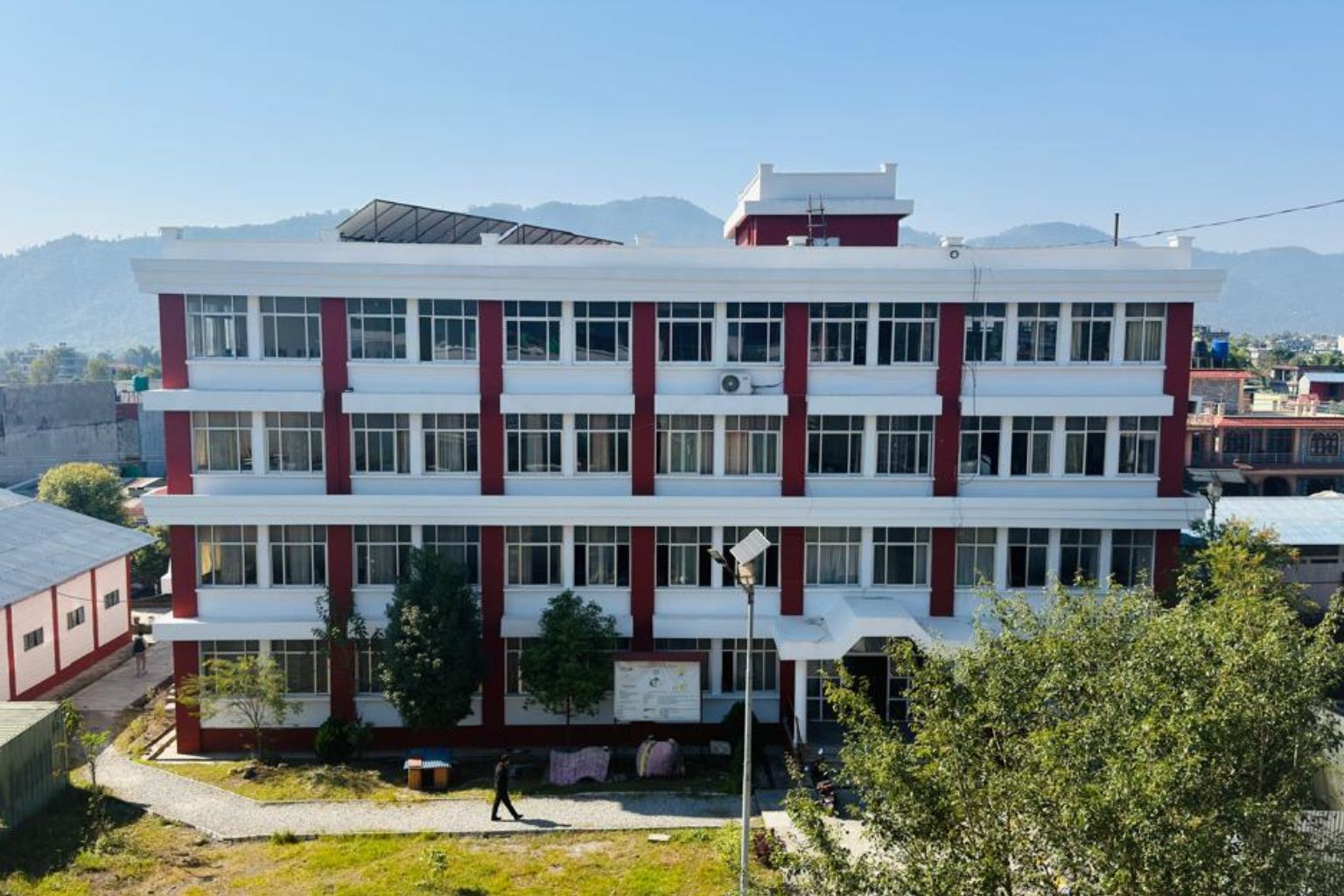
| Particular | Details |
|---|---|
| Course | Bachelor of Electrical and Electronics Engineering |
| Institution | Pokhara University School of Engineering |
| University | Pokhara University |
| Faculty | Faculty of Science and Technology |
| Level | Bachelor's |
| Seats | 48 |
| Institution Type | Constituent School |
| Location | Pokhara-30, Khudi, Kaski, Nepal |
SOE was established in 2009 as a constituent school under Pokhara University's Faculty of Science and Technology. Its undergraduate program range covers several branches of engineering, including Electrical and Electronics Engineering.
The program belongs to Pokhara University's Science and Technology engineering stream. Pokhara University's undergraduate program list identifies Bachelor of Electrical and Electronics Engineering as a separate engineering degree within Science and Technology.
Electrical and Electronics Engineering forms one part of a wider engineering environment at SOE. The undergraduate portfolio includes infrastructure-oriented, computing-oriented, mechanical, electrical, electronics, software, and information technology programs.
That institutional mix gives students a clear distinction between the engineering branches available during admission. An applicant interested in Bachelor of Electrical and Electronics Engineering selects a different academic route from a student entering BE Computer, BE Software, BE IT, BE Civil, BE Civil and Rural, or BE Mechanical Engineering.
SOE also runs master's-level programs in several technical areas. Of particular relevance to Electrical and Electronics Engineering graduates is the postgraduate pathway in Electrical Engineering in Power System. This creates a direct academic connection between the bachelor's degree and a specialized master's option available within the same Faculty of Science and Technology.
The course may be considered by students who meet Pokhara University's engineering eligibility requirements and specifically want to study within the electrical and electronics engineering discipline.
It may be relevant to students who prefer an engineering route rather than a general computing, management, or non-engineering degree. The program is positioned within the same engineering faculty as computer, software, information technology, civil, rural, and mechanical programs, so applicants have several technical routes to compare before selecting a course.
A practical decision begins with the exact degree title. Students should consider whether their intended academic direction is Electrical and Electronics Engineering rather than choosing only on the basis of the broader term "engineering."
The academic entry requirements also make mathematics, physics, and chemistry important before admission. Students need the specified Science background and subject grades to enter Pokhara University's engineering stream.
Applicants for Science and Technology engineering programs at Pokhara University are required to have completed Grade 12 in the Science stream or an equivalent qualification from a recognized institution.
The academic eligibility requirements include:
Completion of Grade 12 Science or an equivalent qualification.
Study of Physics, Chemistry, and Mathematics.
At least one course carrying a minimum of 100 full marks or 5 credits in each of Physics, Chemistry, and Mathematics.
A minimum C grade or 45 percent in each of Physics, Chemistry, and Mathematics at Grade 12.
An overall GPA of at least 2.0 on a 4.0 scale or equivalent.
Mathematics carrying at least 100 marks in Grade 11 or Grade 12.
These conditions form the academic entry threshold for engineering programs under Pokhara University's Science and Technology stream. Meeting the academic requirement allows an applicant to proceed through the applicable admission process, while actual enrollment also depends on entrance performance, merit, program preference, and seat availability.
Pokhara University's undergraduate admission framework includes an online application, entrance examination, merit-based selection, and enrollment.
Applicants submit personal information, academic history, and program preferences during the application process. Academic transcripts, citizenship documentation, and a passport-sized photograph are among the records used during the online application process.
Eligible applicants then participate in the entrance examination. Admission is based on merit ranking and the availability of seats in the selected program. Successful candidates complete the required enrollment formalities after selection.
For Bachelor of Electrical and Electronics Engineering at SOE, the stated intake is 48 seats. The seat figure makes an important distinction between eligibility and admission: fulfilling the Grade 12 requirements does not by itself represent final enrollment in the program.
SOE operates a credit-semester academic system across its engineering environment. Its undergraduate programs are associated with theoretical study, practical learning, projects, internships, laboratories, workshops, research activities, and technology-supported academic resources.
These features describe the wider SOE learning environment rather than a separate curriculum specification for Bachelor of Electrical and Electronics Engineering.
For students, this distinction is useful. Institutional facilities and learning arrangements provide the setting in which the program operates, while the academic requirements of the degree are determined by its program-specific curriculum.
SOE identifies laboratories and workshops for practical learning, digital resources for teaching, and opportunities involving projects and internships within its engineering environment. The institution also encourages student involvement in research, innovation, and co-curricular academic activities.
Students applying to SOE can choose from several undergraduate engineering programs. These should not be treated as interchangeable degrees simply because some of them operate within related technical areas.
| Program | Academic Position |
|---|---|
| Electrical and Electronics Engineering | Electrical and electronics engineering route |
| Computer Engineering | Separate computing-engineering degree |
| Software Engineering | Separate software-oriented engineering degree |
| Information Technology Engineering | Separate IT engineering degree |
| Civil Engineering | Separate civil engineering degree |
| Civil and Rural Engineering | Separate civil and rural engineering degree |
| Mechanical Engineering | Separate mechanical engineering degree |
SOE maintains these as individual bachelor's programs.
For an applicant, this means the choice should be made at the program level. A student selecting Electrical and Electronics Engineering is not enrolling in a general first-stage engineering program that later becomes BE Computer, BE Software, or BE IT.
The same principle applies when considering postgraduate study. Master's programs may specify exact qualifying bachelor's degrees, so preserving the correct undergraduate degree title becomes important when checking future eligibility.
One clearly defined postgraduate route for graduates of Electrical and Electronics Engineering is the M.Sc. in Electrical Engineering in Power System offered at SOE.
Applicants to that master's program must hold a bachelor's degree in Electrical Engineering, Electrical and Electronics Engineering, or an equivalent degree or program from a recognized university or institution.
The master's-level academic requirement is:
A minimum CGPA of 2.0 at bachelor's level for graduates of Pokhara University; or
A minimum second division or equivalent grade at bachelor's level from another recognized university or institution.
This postgraduate eligibility creates a specific academic progression for Bachelor of Electrical and Electronics Engineering graduates who later want to move into power-system-focused graduate study.
Admission to the master's program remains a separate process with its own entrance examination, merit requirements, and intake arrangements.
Applicants should first check whether they satisfy the Science-stream eligibility conditions. Physics, Chemistry, Mathematics, minimum subject grades, overall GPA, and the specified Mathematics requirement are all part of the engineering admission framework.
The next decision is program fit. SOE provides several engineering degrees, so students should compare the official program names rather than treating all technical degrees as similar.
Important points include:
Whether Electrical and Electronics Engineering matches the student's intended engineering direction.
Whether the applicant meets the Grade 12 Science eligibility requirements.
Performance in Physics, Chemistry, and Mathematics.
Readiness for an engineering admission process that includes an entrance examination.
Competition within the 48-seat intake.
Interest in continuing later into an electrical engineering specialization such as Power System at the master's level.
Students planning postgraduate study should also pay attention to how bachelor's qualifications are named. SOE explicitly accepts Electrical and Electronics Engineering as a qualifying background for M.Sc. in Electrical Engineering in Power System.
Pokhara University includes Bachelor of Electrical and Electronics Engineering among its Science and Technology undergraduate programs. At SOE, it is offered as one of the constituent school's undergraduate engineering degrees.
This gives the program two clear institutional identifiers: it is a Pokhara University engineering degree and it is offered through SOE under the Faculty of Science and Technology.
SOE is located at Pokhara-30, Khudi, Kaski, Nepal. Students joining the program study within the same university academic environment that houses other bachelor's engineering programs and specialized graduate programs.
For applicants comparing universities or institutions, keeping these identifiers together helps avoid confusion between the university, the faculty, the constituent school, and the degree itself.
Students preparing for admission should approach the process in a practical sequence:
Check Grade 12 Science eligibility.
Confirm that Physics, Chemistry, and Mathematics meet the minimum grade requirements.
Check the overall GPA requirement.
Confirm the Mathematics study requirement from Grade 11 or Grade 12.
Select Bachelor of Electrical and Electronics Engineering as the intended program.
Complete the applicable online application.
Sit for the entrance examination.
Follow the merit and enrollment process for the available 48 seats.
The process is merit-based, so academic eligibility and admission selection are separate stages.
Bachelor of Electrical and Electronics Engineering provides a defined undergraduate route within SOE and also connects with the graduate-level M.Sc. in Electrical Engineering in Power System.
Students considering the degree should therefore evaluate both their immediate interest in the electrical and electronics engineering discipline and their longer academic plans.
Those interested in later specialization can use the postgraduate eligibility structure as one reference point when planning further study. The bachelor's degree is specifically named as an eligible background for the Power System master's program at SOE.
The decision to choose the course should ultimately be based on academic eligibility, interest in the discipline, entrance preparation, available seats, and the student's intended direction after the bachelor's level.
Yes. It is one of the bachelor's engineering programs offered by SOE under the Faculty of Science and Technology of Pokhara University.
The program has 48 seats at SOE.
Applicants need Grade 12 Science or an equivalent qualification with Physics, Chemistry, and Mathematics and must meet the prescribed subject-grade, GPA, and Mathematics requirements.
No. The undergraduate admission framework includes an entrance examination and merit-based selection, with admission also dependent on available seats.
Yes. M.Sc. in Electrical Engineering in Power System accepts graduates with bachelor's degrees in Electrical Engineering, Electrical and Electronics Engineering, or an equivalent qualification, subject to the stated graduate admission requirements.
SOE is located at Pokhara-30, Khudi, Kaski, Nepal.