MSc in Bioinformatics is a two-year, four-semester, full-time postgraduate program offered by Pokhara University School of Engineering under the Faculty of Science and Technology of Pokhara University. The program carries 60 credits and combines computational biology, omics science, computer science, statistics, artificial intelligence, molecular biology, and research training.
The curriculum is designed for students entering from different scientific and computing backgrounds. Its first semester provides a common foundation, while later semesters move into computational genomics, structural bioinformatics, artificial intelligence, machine learning, molecular design, systems biology, specialized electives, directed research or internship, and a 15-credit thesis.
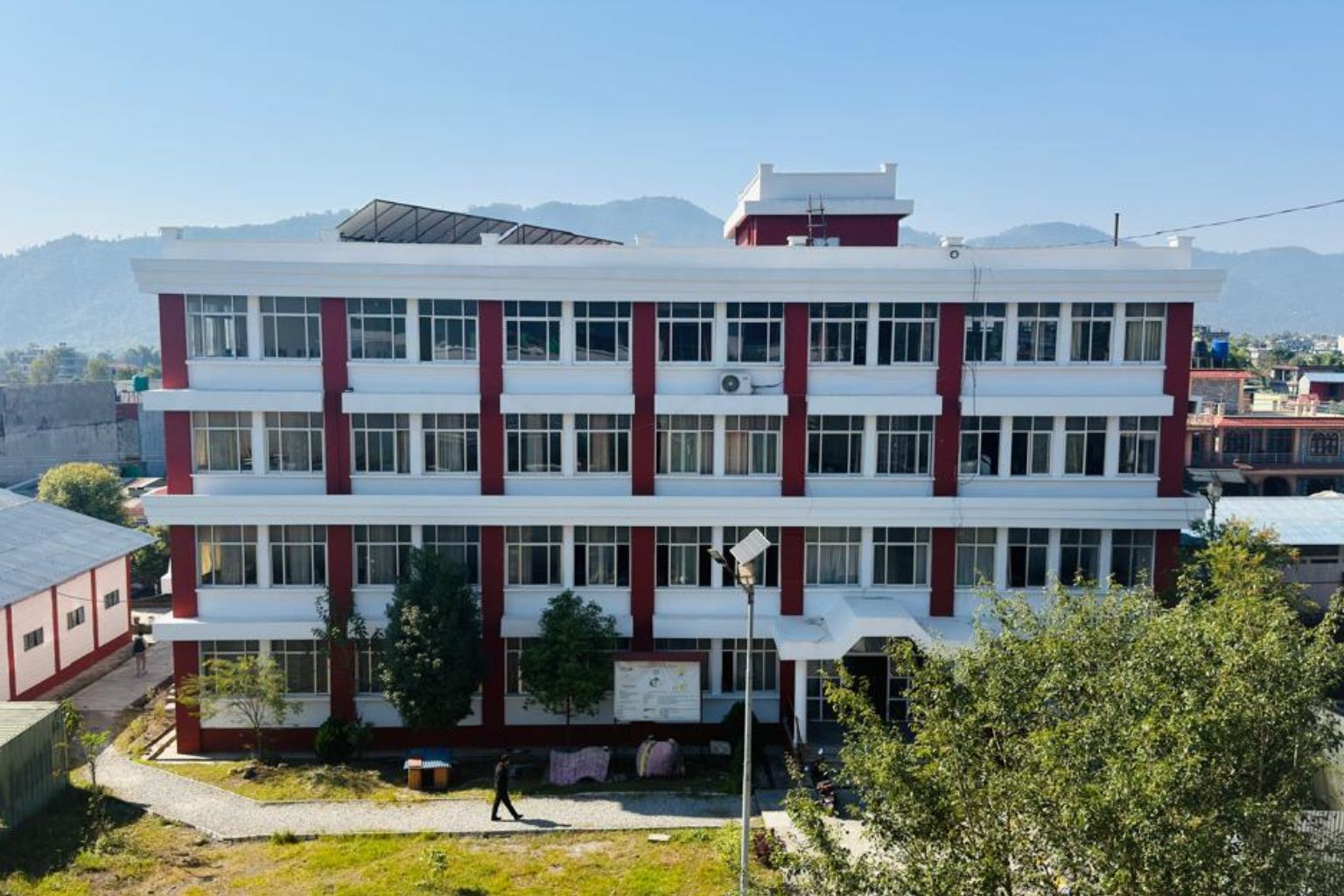
| Particular | Details |
|---|---|
| Course | MSc in Bioinformatics |
| Institution | Pokhara University School of Engineering |
| University | Pokhara University |
| Faculty | Faculty of Science and Technology |
| Level | Master's |
| Duration | 2 Years / 4 Semesters |
| Study Mode | Full-time |
| Total Credits | 60 |
| Seats | 15 |
| Fee-paying Seats | 13 |
| Scholarship Seats | 2 |
| Thesis | 15 Credits |
| Location | Pokhara-30, Khudi, Kaski, Nepal |
The graduate admission structure allocates 15 seats to MSc in Bioinformatics, consisting of 13 fee-paying and 2 scholarship-quota seats.
Bioinformatics brings biological science together with computing, mathematics, statistics, and data analysis. At SOE, the program is structured to develop competence in both biological interpretation and computational analysis rather than treating either area as a small supporting component.
The first year establishes a shared academic base. Students study bioinformatics foundations, biostatistics, Python programming, molecular biochemistry, computational genomics, structural bioinformatics, artificial intelligence, cloud computing for biological data, and molecular biology.
The second year moves into Machine Learning for Bioinformatics, Computational Molecular Design, Systems Biology, specialized electives, research placement, and thesis work. The fourth semester is dedicated entirely to an independent supervised research project carrying 15 credits.
Applicants must have completed a four-year bachelor's degree in one of the accepted academic areas or an equivalent degree or program from a recognized university or institution.
Eligible backgrounds include:
Basic Sciences
Computer Science
Information Technology
Computer Engineering
Medical Laboratory Technology
Pharmacy
Microbiology
Biochemistry
Biotechnology
Public Health
Nursing
BDS
MBBS
An equivalent degree or program
Pokhara University graduates require a minimum CGPA of 2.0 at bachelor's level. Applicants from another recognized university or institution require at least second division or an equivalent grade.
The broad eligibility reflects the interdisciplinary nature of Bioinformatics. Students may enter from computing, life sciences, laboratory sciences, health sciences, or other accepted scientific backgrounds and then develop a common foundation through the first-year curriculum.
Admission is based on an entrance examination and merit.
The graduate admission framework includes:
Application for the entrance examination.
Participation in the entrance examination by eligible candidates.
Publication of a merit list.
Correction of the merit list where applicable.
Publication of a revised merit list where required.
Spot-admission notification.
Admission according to merit order.
Completion of document review and enrollment formalities.
MSc in Bioinformatics applicants must satisfy both the academic eligibility requirements and the entrance-based selection process.
The 60-credit curriculum is divided equally across four semesters, with 15 credits in each semester. Taught courses generally carry three credits, while the final thesis carries 15 credits.
| Semester | Main Academic Components | Credits |
|---|---|---|
| I | Bioinformatics, Biostatistics, Python, Molecular Biochemistry, leveling course | 15 |
| II | Computational Genomics, Structural Bioinformatics, AI, Cloud Computing, Molecular Biology | 15 |
| III | Machine Learning, Molecular Design, Systems Biology, two electives | 15 |
| IV | Thesis | 15 |
Semester I contains:
Foundations of Bioinformatics
Advanced Biostatistics
Programming in Python
Molecular Biochemistry
One leveling course
Students choose between Data Structure and Algorithm and Cell Biology and Genetics according to their previous academic background.
Computing entrants take Cell Biology and Genetics, while life-science entrants take Data Structure and Algorithm. This arrangement is designed to bring students from different disciplines toward a shared foundation before more specialized study begins.
This semester establishes three central areas used throughout the program: biological understanding, statistical analysis, and scientific programming.
Semester II includes:
Computational Genomics
Structural Bioinformatics
AI for Bioinformatics
Cloud Computing on Biological Data
Frontiers in Molecular Biology
Artificial intelligence becomes a core part of the curriculum at this stage rather than appearing only as an elective. Students also study the computing infrastructure required for handling biological data at scale.
Laboratory sessions accompany the core courses, while assessment combines continuous internal evaluation with semester-end examinations under Pokhara University regulations.
Semester III carries 15 credits and includes:
Machine Learning for Bioinformatics
Computational Molecular Design
Systems Biology
Elective I from Pool A
Elective II from Pool B
The first elective is selected from a pool of specialized subject courses. Options include:
Population and Evolutionary Genomics
Genetic Engineering
Microbial Genomics
Plant Functional Genomics
Medical Informatics and Translational Medicine
Chemoinformatics
Protein Engineering
Cancer Genomics
Deep Learning in Bioinformatics
Drug Design and Discovery
Data Science and Mining
Mathematical Modeling for Bioinformatics
Research Methodology
The second elective is either Internship or Directed Research. This component places students in a host organization or under research supervision before the final thesis semester.
Semester IV is devoted entirely to the 15-credit thesis.
Students complete an independent supervised research project involving proposal development, research execution, preparation of the written thesis, and an oral defense before a board of examiners.
The thesis follows three semesters of coursework, laboratory learning, specialization, and research preparation. It therefore serves as the main independent academic work of the program.
The program identifies several research areas for thesis and directed-research work:
RNA and DNA sequence analysis
Protein structure prediction
Molecular dynamics and drug design
Machine learning in genomics
Systems biology and network modeling
Gene expression profiling
Next-generation sequencing analysis
Structural bioinformatics
Students may also work on topics outside these areas where suitable supervision is available.
These research themes show the interdisciplinary range of the degree. A project may involve biological sequencing, statistical modeling, machine learning, molecular structures, computational drug discovery, network analysis, or other data-intensive biological problems.
Semester III gives students two research-placement options.
Directed Research consists of supervised work on a defined research problem, with continuous assessment and a final report.
The Internship option is a structured and graded placement in a host organization. It also includes an academic and professional study visit connected with research institutions and industry.
Both pathways prepare students for the final thesis but provide different forms of experience. Directed Research emphasizes supervised investigation, while the internship places students within an external organizational setting.
The curriculum is structured around practical computational and research abilities.
Students work with areas such as:
Scientific programming in Python
Genomic data analysis
Biostatistics
Machine-learning models
Computational genomics
Protein structure analysis
Biological databases
Cloud-based analytical workflows
Molecular design
Systems biology
Research design
Scientific communication
Expected graduate abilities include assembling and comparing genomes, working with sequencing data, training and evaluating machine-learning models on biological datasets, building reproducible analytical pipelines, analyzing protein structures, integrating biological databases, and explaining computational findings to biological or clinical audiences.
The program prepares graduates for technical, analytical, research, and academic work across bioinformatics and related interdisciplinary fields.
Possible roles identified for graduates include:
Bioinformatics Analyst
Computational Biologist
Genomics Data Scientist
Clinical Bioinformatician
Machine Learning Engineer in life sciences
Structural Bioinformatician
Drug Design Scientist
Genomic Epidemiologist
Biostatistician
Scientific Software or Pipeline Engineer
Agricultural Genomics Specialist
Research Fellow
Relevant sectors include universities, research centers, biotechnology and pharmaceutical organizations, hospitals and diagnostic laboratories, public health and epidemiology units, information technology and data science, agricultural genomics, biomedical research, and biological database-related work.
The 15-credit thesis also provides a research foundation for further doctoral study in areas such as computational biology, biomedical informatics, genomics, and data science.
Career outcomes depend on technical competence, research experience, specialization, further training, and available opportunities.
The program runs for two years across four semesters and is offered in full-time mode.
MSc in Bioinformatics carries 60 credits, with 15 credits assigned to each semester.
The program has 15 seats: 13 fee-paying seats and 2 scholarship-quota seats.
Yes. Computer Engineering is specifically included among the eligible bachelor's backgrounds.
Yes. These qualifications are included among the accepted four-year bachelor's backgrounds, subject to the stated academic requirements.
Yes. AI for Bioinformatics is taught in Semester II, while Machine Learning for Bioinformatics is a core Semester III course. Deep Learning in Bioinformatics is also available as an elective.
Students choose either Internship or Directed Research in Semester III.
Yes. Semester IV is dedicated to a 15-credit supervised thesis and oral defense.