The MSc in Construction Management is a two-year postgraduate program offered by Pokhara University School of Engineering under the Faculty of Science and Technology of Pokhara University. The program is organized across four semesters and carries a total of 60 credit hours.
The academic structure combines 45 credit hours of coursework with 15 credit hours of research project work. Its curriculum brings together analytical study, core construction-management subjects, functional courses, capstone work, electives, and a substantial research component involving fieldwork and empirical analysis. MSc in Construction Management has 30 seats at SOE.
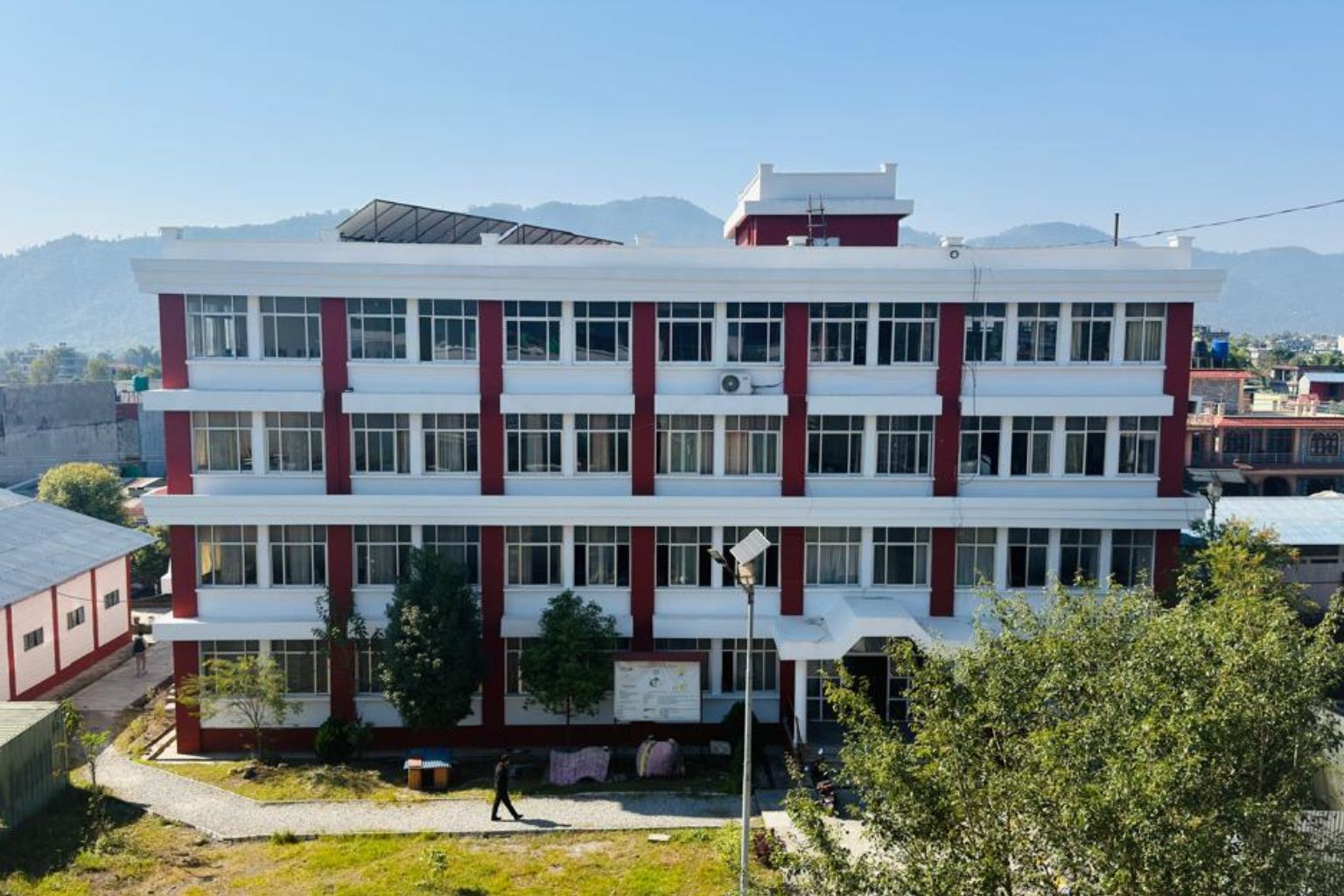
| Particular | Details |
|---|---|
| Course | MSc in Construction Management |
| Institution | Pokhara University School of Engineering |
| University | Pokhara University |
| Faculty | Faculty of Science and Technology |
| Level | Master's |
| Duration | 2 Years / 4 Semesters |
| Total Credits | 60 |
| Coursework | 45 Credits |
| Research Project Work | 15 Credits |
| Seats | 30 |
| Electives | Two electives of 3 credits each |
| Location | Pokhara-30, Khudi, Kaski, Nepal |
MSc in Construction Management is structured as graduate study for applicants entering from defined engineering and architecture backgrounds. It combines advanced coursework with research rather than relying entirely on classroom-based subjects.
The 60-credit structure is divided between coursework and research. Forty-five credits are assigned to coursework, while the remaining 15 credits are devoted to research project work. This gives research a substantial place within the overall degree.
The coursework itself is organized into several academic components. These include foundation and analytical courses, core and functional courses, capstone study, and electives. Students take two electives, each carrying three credits.
The program therefore progresses through analytical and management-oriented academic study before placing significant emphasis on independent research and project work.
Applicants must hold a bachelor's degree in one of the specified academic areas or an equivalent qualification from a recognized university or institution.
Eligible backgrounds include:
Civil Engineering
Civil and Rural Engineering
Hydropower Engineering
Architecture
An equivalent degree or program
Graduates of Pokhara University must have a minimum CGPA of 2.0 at bachelor's level.
Applicants who completed their bachelor's degree at another recognized university or institution require at least second division or an equivalent academic result.
The eligibility requirement means the program is not an open-entry management master's degree for graduates from any discipline. Previous study in Civil Engineering, Civil and Rural Engineering, Hydropower Engineering, Architecture, or an accepted equivalent forms part of the admission requirement.
Graduates of Bachelor of Civil Engineering and BE Civil and Rural fall within the specifically identified academic backgrounds for entry.
The program runs over four semesters within a two-year period.
A regular semester consists of 15 weeks of academic work, excluding examinations. Within this structure, students complete the coursework, elective, capstone, and research requirements that make up the 60-credit degree.
| Academic Component | Credit Structure |
|---|---|
| Coursework | 45 Credits |
| Research Project Work | 15 Credits |
| Total | 60 Credits |
The 45-credit coursework component is not limited to one category of management study. It is organized to include foundation and analytical subjects, core and functional study, capstone work, and elective courses.
The 15-credit research component gives the program a substantial research requirement relative to the total degree. Research activity includes fieldwork, empirical analysis, and thesis preparation.
The foundation and analytical component supports the academic base required for graduate-level construction management.
Students enter from technical backgrounds such as Civil Engineering, Civil and Rural Engineering, Hydropower Engineering, and Architecture. The graduate structure then adds analytical study relevant to the management and evaluation of construction-related work.
This part of the program establishes a basis for the core, functional, capstone, and research components that follow.
The emphasis on analytical coursework is also consistent with the postgraduate level of the degree. Students are expected to work beyond undergraduate technical foundations and engage with construction-management problems through structured academic analysis.
Core and functional courses form another major part of the coursework structure.
These components place the focus more directly on construction management as a graduate field. Rather than treating the course as an extension of a single undergraduate engineering branch, the structure brings technical backgrounds into a management-oriented postgraduate framework.
The curriculum also incorporates decision-making, leadership, communication, and project-management study. These areas sit alongside the analytical and construction-management components of the program.
For students coming from engineering or architecture, this creates a shift from primarily discipline-specific undergraduate study toward a broader graduate approach that includes the organization and management of construction-related work.
Capstone study forms part of the academic structure and provides another stage between regular coursework and the larger research requirement.
Students also complete two elective courses. Each elective carries three credits, giving a total of six elective credits within the program.
The elective component allows part of the coursework to extend beyond the fixed core and analytical requirements. It gives students room within the academic structure to take approved elective study alongside the compulsory components of the degree.
The program therefore combines prescribed graduate study with a limited element of academic choice.
Research is a major component of MSc in Construction Management.
The program assigns 15 credit hours to research project work, representing one-quarter of the total 60-credit degree. This distinguishes the research requirement from a small supplementary assignment attached to regular coursework.
The research component includes:
Fieldwork
Empirical analysis
Research project development
Thesis preparation
Students are therefore required to work with a research problem beyond classroom discussion and coursework.
Fieldwork provides an applied dimension to the research process, while empirical analysis requires students to work systematically with information gathered for the project. Thesis preparation brings that work into a formal postgraduate research output.
The research requirement follows the wider academic structure of the program, in which analytical, core, functional, capstone, and elective studies contribute to the preparation for independent project work.
MSc in Construction Management uses several teaching and learning methods rather than depending only on conventional lectures.
The academic approach includes:
Classroom discussion
Presentations
Group work
Case analysis
Guest lectures
Off-campus research project work
Classroom discussion allows graduate-level subjects to be examined through interaction rather than one-way instruction alone. Presentations add a communication component, while group work introduces collaborative academic activity.
Case analysis connects theoretical and analytical study with defined construction-management situations. Guest lectures bring additional academic or professional perspectives into the learning process.
Off-campus research project work is particularly relevant to the research component because the program includes fieldwork and empirical analysis as part of its 15-credit research requirement.
One of the clearest features of the program is the balance between taught coursework and research.
The first 45 credits provide the academic structure through foundation, analytical, core, functional, capstone, and elective study. The remaining 15 credits require more sustained research engagement.
This distribution means students are not assessed solely through regular semester coursework. A substantial part of the degree depends on the ability to undertake research, work with field-based information, conduct empirical analysis, and develop a thesis.
For prospective students, this is an important consideration when comparing MSc in Construction Management with programs that may place less emphasis on independent research.
Fee-paying master's admission at SOE follows an entrance and merit-based procedure.
The process includes:
Application for the entrance examination.
Participation in the entrance examination by eligible applicants.
Publication of a merit list of successful candidates.
A correction period for the merit list where applicable.
Publication of a revised merit list where required.
Notice for spot admission.
Admission according to merit rank and the applicable schedule.
Completion of document review and enrollment formalities.
Applicants who satisfy the academic eligibility requirements still need to participate in the entrance and merit process. Eligibility therefore establishes the academic basis for application but does not by itself confirm admission.
The program has 30 seats at SOE.
During spot admission, successful applicants are required to present the applicable identification and academic records.
These include:
Citizenship, national identity, or another identity certificate and a copy for Nepali applicants.
Passport and/or national identity card and a copy for foreign applicants.
Academic transcript.
Degree certificate.
Character certificate.
Equivalent academic records where applicable.
Two passport-size photographs.
Completed admission form.
Proof of the required admission payment.
Sponsorship letter where applicable.
Candidates or their guardians attend the scheduled spot-admission process, and admission proceeds according to merit rank.
The program is relevant to graduates who already have a technical foundation in Civil Engineering, Civil and Rural Engineering, Hydropower Engineering, Architecture, or an equivalent academic field and want to continue into construction-management-focused postgraduate study.
Students should be prepared for more than regular coursework. The degree includes analytical study, group work, presentations, case analysis, electives, off-campus research activity, empirical analysis, and a 15-credit research project.
Applicants may therefore want to consider their readiness for:
Graduate-level analytical study
Construction and project-management coursework
Group and presentation-based academic work
Case analysis
Field-based research
Empirical analysis
Thesis preparation
The two-year structure requires sustained work across both taught and research components.
The program runs for two years across four semesters.
MSc in Construction Management carries 60 credit hours. The structure consists of 45 credits of coursework and 15 credits of research project work.
The program has 30 seats at Pokhara University School of Engineering.
Eligible backgrounds include Civil Engineering, Civil and Rural Engineering, Hydropower Engineering, Architecture, or an equivalent degree or program from a recognized institution.
Pokhara University graduates need a minimum bachelor's-level CGPA of 2.0. Graduates from another recognized university or institution need at least second division or an equivalent result.
Yes. Students take two electives, each carrying three credits.
Yes. Research project work carries 15 credits and includes fieldwork, empirical analysis, and thesis preparation.
Each regular semester consists of 15 weeks, excluding examinations.
The academic approach includes classroom discussion, presentations, group work, case analysis, guest lectures, and off-campus research project work.
No. Master's admission includes an entrance examination and merit-based admission in addition to the academic eligibility requirements.