Bachelor of Civil Engineering (BE Civil) at Pokhara University School of Engineering is a four-year undergraduate engineering program organized across eight semesters. The curriculum carries 129 credits and moves from mathematics, applied science, mechanics, drawing, and programming into structures, geotechnical engineering, transportation, water resources, surveying, construction management, sanitation, hydropower, project work, and internship.
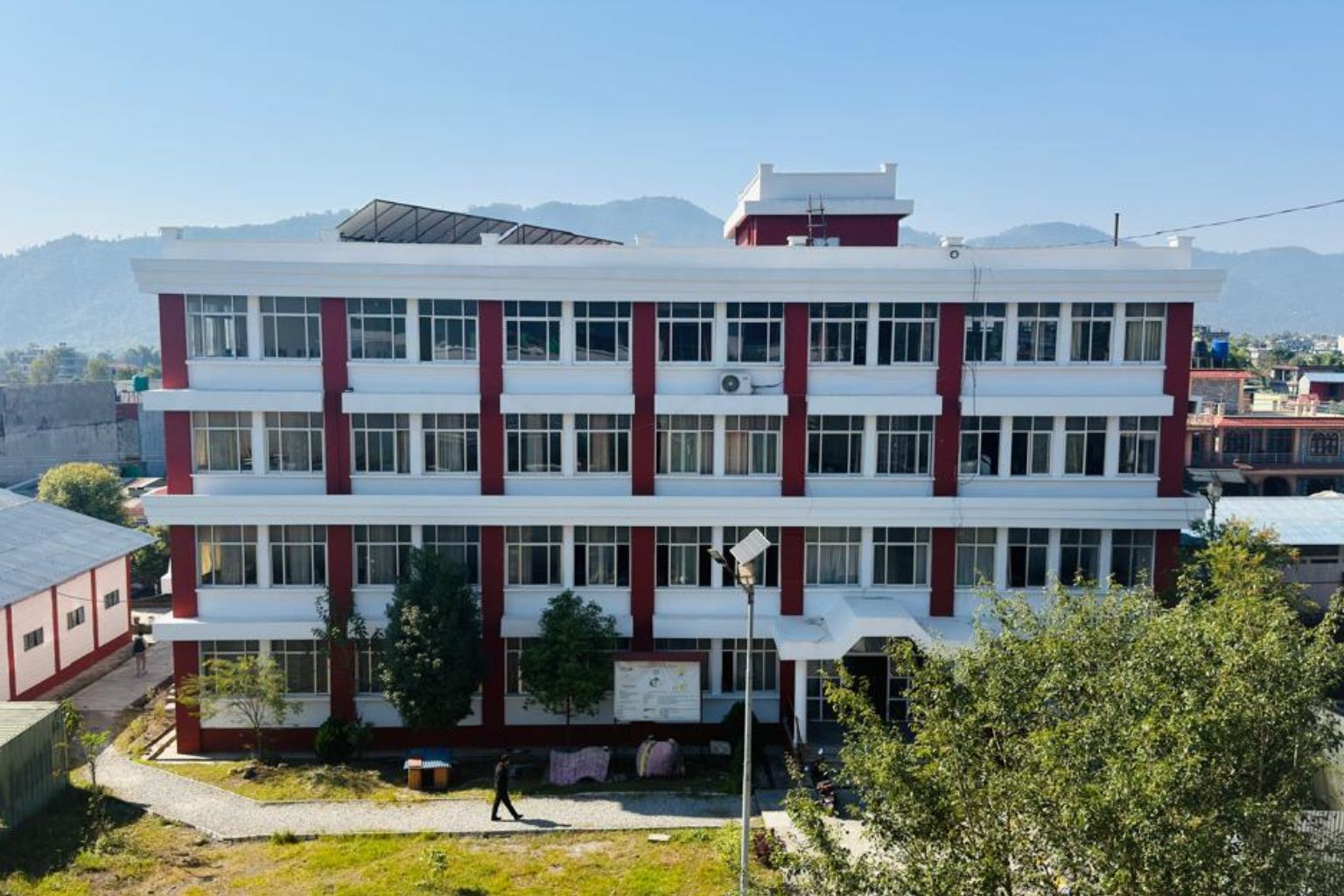
The program is offered by SOE under the Faculty of Science and Technology of Pokhara University. SOE is a constituent school of the university and is located at Pokhara-30, Khudi, Kaski, Nepal. BE Civil has 115 seats in the current program capacity used for SOE.
| Particular | Details |
|---|---|
| Course | Bachelor of Civil Engineering (BE Civil) |
| Institution | Pokhara University School of Engineering |
| University | Pokhara University |
| Faculty | Faculty of Science and Technology |
| Level | Bachelor's |
| Duration | 4 Years / 8 Semesters |
| Total Credits | 129 |
| Seats | 115 |
| Location | Pokhara-30, Khudi, Kaski, Nepal |
| Study format | Coursework, practical work, projects, surveying, field work, and internship |
BE Civil covers the main academic areas involved in the planning, analysis, design, construction, and management of civil infrastructure. Rather than beginning immediately with specialized design subjects, the curriculum builds the required base through chemistry, physics, mathematics, computer programming, engineering drawing, mechanics, geology, and electrical and electronics engineering.
Civil engineering subjects become more prominent as students progress. The curriculum introduces materials, surveying, fluid mechanics, strength of materials, hydraulics, soil mechanics, structural analysis, hydrology, foundation engineering, transportation, water supply, concrete technology, irrigation, sanitation, construction management, structural design, valuation, and hydropower.
This progression gives students exposure to several branches of civil engineering before the final stages of project work, professional practice, electives, and internship. The 2025 curriculum totals 129 credits across all eight semesters.
BE Civil may suit students who are interested in the technical side of buildings, roads, bridges, water systems, transportation networks, construction, surveying, hydropower, and other physical infrastructure.
The course involves mathematics and engineering analysis, but it is not limited to classroom calculations. Surveying, laboratories, drawing, field activities, projects, design-oriented subjects, and internship are built into the curriculum.
Students considering the program should therefore be comfortable with a mix of:
Mathematics and applied science
Technical drawing and engineering calculations
Structural and material behaviour
Surveying and field-based work
Water and transportation systems
Soil and foundation engineering
Construction and project-related study
Practical assignments and project work
Applicants for engineering programs under Pokhara University's Science and Technology stream are required to have completed Grade 12 in the Science stream or an equivalent qualification from a recognized institution.
The academic requirements include:
Physics, Chemistry, and Mathematics in Grade 12.
At least one course of a minimum 100 full marks or 5 credits in each of Physics, Chemistry, and Mathematics.
A minimum C grade or 45 percent in each of Physics, Chemistry, and Mathematics.
An overall GPA of at least 2.0 on a 4.0 scale or equivalent.
Mathematics of at least 100 marks studied in Grade 11 or Grade 12.
Undergraduate admission follows the Pokhara University and SOE intake process applicable to the admission cycle. General undergraduate guidance includes online application, entrance examination, merit-based ranking, and enrollment according to available seats.
Applicants are expected to complete the required academic and personal information during the application process and participate in the relevant entrance examination. Final enrollment follows the applicable admission procedure and seat availability.
With 115 seats, BE Civil has the largest undergraduate intake among the SOE bachelor's programs included in the finalized institutional context.
The BE Civil curriculum begins with foundational science and engineering subjects before moving into increasingly specialized civil engineering study.
| Semester | Credits | Main Subjects |
|---|---|---|
| I | 15 | Applied Chemistry, Applied Physics, Calculus I, Computer Programming, Engineering Drawing, Applied Mechanics (Statics) |
| II | 16 | Algebra and Geometry, Applied Mechanics (Dynamics), Basic Electrical and Electronics Engineering, Civil Engineering Materials, Civil Engineering Workshop, Engineering Geology, Introduction to Energy Engineering |
| III | 16 | Building Technology, Calculus II, Fluid Mechanics, Numerical Methods, Strength of Materials, Surveying I |
| IV | 17 | Project I, Hydraulics, Probability and Statistics, Communication Techniques, Soil Mechanics, Structural Analysis I, Surveying II |
| V | 18 | Engineering Hydrology, Survey Field Project, Foundation Engineering, Structural Analysis II, Transportation Engineering I, Water Supply Engineering, Concrete Technology and Masonry Structure |
| VI | 18 | Engineering Economics, Design of Steel and Timber Structure, Elective I, Irrigation and Drainage Engineering, Sanitary Engineering, Transportation Engineering II |
| VII | 18 | Project II, Construction Project Management, Design of R.C.C. Structures, Estimating and Valuation, Elective II, Hydropower Engineering |
| VIII | 11 | Elective III, Engineering Professional Practice, Internship |
The complete structure totals 129 credits.
The first two semesters establish the scientific and technical base needed for later civil engineering study.
Students begin with Applied Chemistry, Applied Physics, Calculus I, Computer Programming, Engineering Drawing, and Applied Mechanics (Statics). These subjects introduce mathematical analysis, physical principles, computational work, engineering representation, and mechanics.
Semester II begins to connect that general foundation with civil engineering. Civil Engineering Materials, Civil Engineering Workshop, and Engineering Geology appear alongside Algebra and Geometry, Applied Mechanics (Dynamics), Basic Electrical and Electronics Engineering, and Introduction to Energy Engineering.
Semester III includes Building Technology, Fluid Mechanics, Strength of Materials, Surveying I, Calculus II, and Numerical Methods.
This stage marks a clear shift toward the subjects used in civil engineering analysis and field work. Surveying introduces measurement and site-related work, while Strength of Materials and Fluid Mechanics establish concepts used later in structures and water-related engineering.
Semester IV continues with Hydraulics, Soil Mechanics, Structural Analysis I, and Surveying II. It also includes Probability and Statistics, Communication Techniques, and Project I.
The presence of Project I during the second year introduces formal project-based academic work before students enter the more advanced design and management subjects of the final two years.
The fifth and sixth semesters bring several civil engineering areas together.
Semester V includes Engineering Hydrology, Foundation Engineering, Structural Analysis II, Transportation Engineering I, Water Supply Engineering, and Concrete Technology and Masonry Structure. It also includes a Survey Field Project.
Semester VI adds Engineering Economics, Design of Steel and Timber Structure, Irrigation and Drainage Engineering, Sanitary Engineering, Transportation Engineering II, and an elective.
By this stage, students are working across structural, geotechnical, transportation, environmental, water-resource, and construction-related subjects rather than remaining within one narrow branch.
The seventh semester includes Project II, Construction Project Management, Design of R.C.C. Structures, Estimating and Valuation, Hydropower Engineering, and an elective.
These subjects bring technical design together with construction planning, cost-related study, project activity, and infrastructure systems.
The final semester has a lighter classroom credit load because it includes a six-credit Internship. Students also take Engineering Professional Practice and Elective III.
The internship gives the curriculum a formal practical component in the eighth semester, while Project I, Survey Field Project, and Project II introduce project and field activity earlier in the degree.
Across the eight semesters, students encounter several connected areas of civil engineering:
Structural analysis and structural design
Building technology and construction materials
Soil mechanics and foundation engineering
Surveying and survey field work
Fluid mechanics and hydraulics
Hydrology, irrigation, and drainage
Water supply and sanitary engineering
Transportation engineering
Construction project management
Estimating and valuation
Hydropower engineering
Engineering economics and professional practice
This range is one reason the course cannot be reduced to building design alone. Its academic coverage includes structures, land measurement, soils, water, transportation, construction, and infrastructure management.
Practical study is distributed across the curriculum rather than concentrated only at the end.
Engineering Drawing carries a substantial practical component in the first semester. Civil Engineering Workshop and Surveying introduce workshop and field-oriented work in the early stages. Later semesters add Project I, Survey Field Project, laboratory-linked engineering subjects, Project II, and the final internship.
Through this structure, students may develop abilities related to engineering calculation, surveying, technical drawing, structural interpretation, data handling, project work, construction planning, and technical communication. The actual level of competence depends on academic performance, practical engagement, project experience, and individual learning.
Graduates may explore work connected with construction, engineering consulting, design, water resources, transportation, hydropower, environmental management, housing, and public infrastructure. The course background also supports progression toward specialized postgraduate study and research in civil engineering-related fields.
Possible professional areas include:
Construction and infrastructure projects
Structural and design-related work
Transportation and road projects
Water supply and water-resource projects
Irrigation and hydropower
Geotechnical and foundation-related work
Surveying and project implementation
Construction management and consulting
Research and higher study
Career outcomes vary with technical ability, academic performance, practical experience, specialization, location, and available opportunities.
A student entering BE Civil studies much more than structures. The early mathematics and science courses support later analytical work; mechanics and strength of materials lead toward structural subjects; fluid mechanics develops into hydraulics, hydrology, irrigation, and water-related study; geology and soil mechanics lead toward foundation engineering; and surveying develops through classroom and field components.
The later curriculum then adds construction management, valuation, hydropower, professional practice, projects, electives, and internship.
For students choosing BE Civil, this broad subject range is an important consideration. The program requires sustained work across mathematics, design, field measurement, materials, structures, soils, water systems, transportation, construction, and professional practice throughout four academic years.