The MSc in Public Health and Disaster Engineering (MSc PH) is a master's-level program offered by Pokhara University School of Engineering under the Faculty of Science and Technology of Pokhara University. It forms part of the postgraduate academic portfolio of SOE alongside programs in engineering, computing, construction, power systems, hydropower, sanitary engineering, structural engineering, and bioinformatics.
The program has 15 seats at SOE. Within the institutional program structure, Public Health and Disaster Engineering is maintained as a distinct master's offering rather than being grouped under Civil Engineering, Sanitary Engineering, Hydropower Engineering, or another graduate degree.
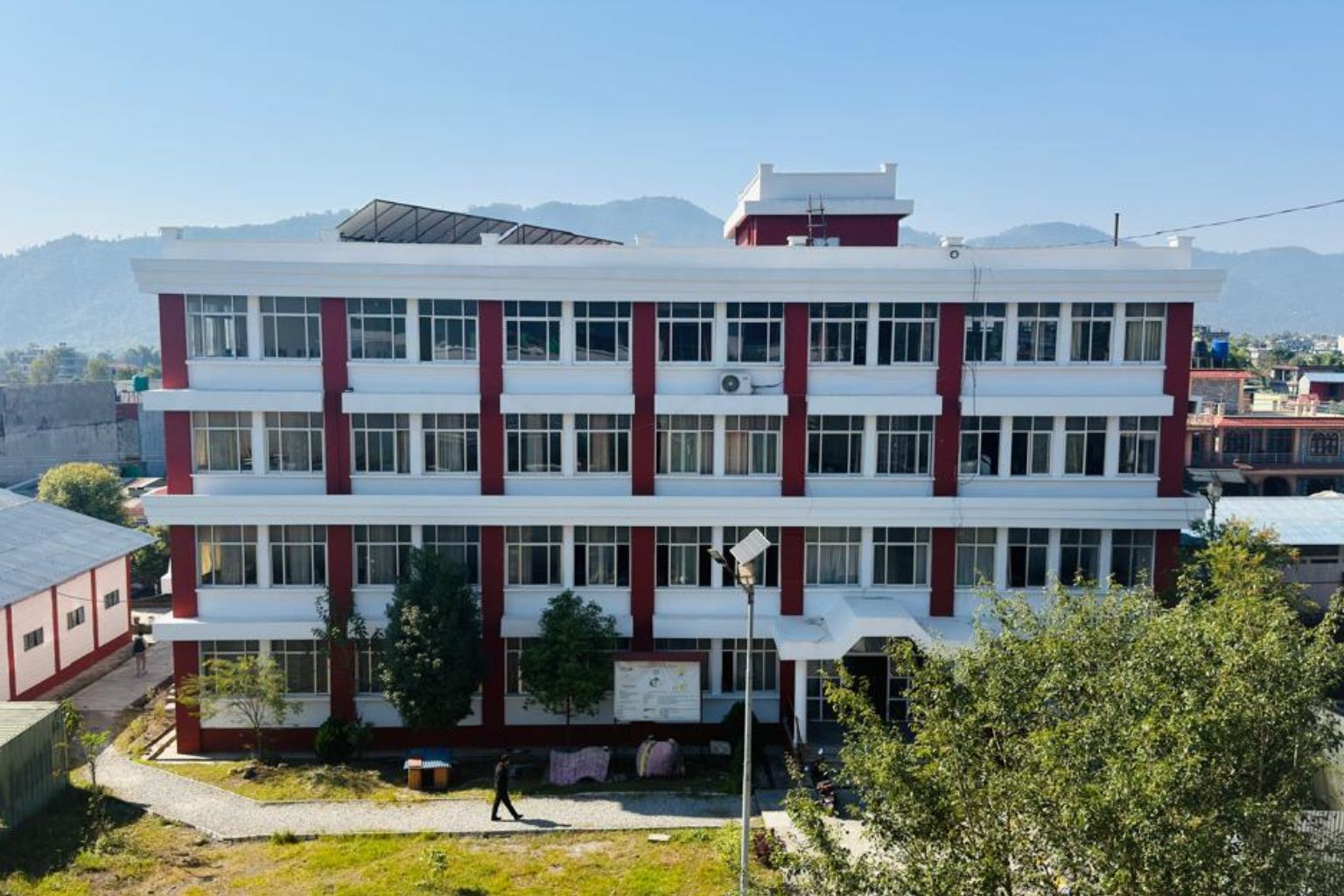
| Particular | Details |
|---|---|
| Course | MSc in Public Health and Disaster Engineering (MSc PH) |
| Institution | Pokhara University School of Engineering |
| University | Pokhara University |
| Faculty | Faculty of Science and Technology |
| Level | Master's |
| Seats | 15 |
| Institution Type | Constituent School |
| Location | Pokhara-30, Khudi, Kaski, Nepal |
SOE was established in 2009 as a constituent school under the Faculty of Science and Technology of Pokhara University. Its academic portfolio includes both undergraduate and postgraduate programs, with Public Health and Disaster Engineering identified among the graduate offerings.
MSc in Public Health and Disaster Engineering sits within a broad graduate environment at SOE.
Other postgraduate programs include:
Master of Computer Engineering
MSc in Computer Science
MSc in Structural Engineering
MSc in Sanitary Engineering
MSc in Construction Management
MSc in Electrical Engineering in Power System
MSc in Hydropower Engineering
MSc in Bioinformatics
Public Health and Disaster Engineering therefore represents its own postgraduate route within an institution that also offers specialized programs in computing, infrastructure, construction, water-related engineering, electrical power systems, and biological computing.
For students comparing postgraduate courses at SOE, the exact degree title is important. MSc PH should be treated as a separate course choice rather than as an alternative title for Sanitary Engineering, Structural Engineering, Hydropower Engineering, or Construction Management.
SOE operates under Pokhara University's Faculty of Science and Technology and is located at Pokhara-30, Khudi, Kaski, Nepal.
Across its academic environment, SOE uses a credit-semester system and places practical learning, research activity, projects, and interdisciplinary academic work within its wider approach to engineering and technology education.
The graduate portfolio brings together students from different technical and scientific areas within one constituent school. Public Health and Disaster Engineering is part of this postgraduate setting.
This institutional context distinguishes the program from a general public-health degree offered outside an engineering academic environment. Its official placement is within the School of Engineering and the Faculty of Science and Technology.
MSc in Public Health and Disaster Engineering has 15 seats at SOE.
The defined intake places the program among the smaller postgraduate offerings within the current SOE program capacity. Seat capacity is relevant during course selection because postgraduate enrollment takes place within the available intake rather than through academic interest alone.
Applicants should therefore distinguish between selecting the program as an intended postgraduate route and securing a place through the applicable graduate admission procedure.
Fee-paying master's admission at SOE follows an entrance and merit-based framework.
The institutional graduate admission sequence includes:
Call for applications for the entrance examination.
Participation in the entrance examination by eligible applicants.
Publication of a merit list of successful candidates.
A correction period for the merit list where applicable.
Publication of a revised merit list where required.
Notice for spot admission.
Admission according to merit ranking and the applicable schedule.
Completion of document review and enrollment formalities.
This structure makes the entrance examination and merit ranking important parts of postgraduate admission at SOE.
The SOE graduate admission framework uses spot admission after publication of the applicable merit list.
Candidates or their guardians attend according to the announced schedule. Candidates are called according to merit rank and proceed through the required admission formalities.
The process includes review of identification and academic records before enrollment is completed.
This means admission has several stages: application, entrance participation, merit listing, spot admission, and completion of the required enrollment procedure.
The SOE master's admission process includes the following records during spot admission:
Citizenship, national identity, or another identity certificate and a copy for Nepali applicants.
Passport and/or national identity card and a copy for foreign applicants.
Academic certificates and copies.
Transcript.
Degree certificate.
Character certificate.
Equivalent academic records where applicable.
Two passport-size photographs.
Completed admission form.
Proof of the required admission payment.
Official sponsorship letter where applicable.
These records form part of the wider master's admission procedure used by SOE.
SOE offers several postgraduate programs that may appear related because they operate within engineering, infrastructure, environmental, health-related, and disaster-related academic areas. They remain separate degrees.
For example, MSc in Sanitary Engineering is independently identified in the graduate portfolio. MSc in Hydropower Engineering and MSc in Structural Engineering are also separate courses, as is MSc in Construction Management.
MSc in Public Health and Disaster Engineering should therefore be considered under its own official program title.
This distinction is important when students compare master's programs because a course name identifies a specific postgraduate route. Similarity between broad subject areas does not make two master's degrees interchangeable.
Students looking at the SOE postgraduate portfolio can organize their choices according to the degree they want to pursue.
| Academic Area | SOE Master's Program |
|---|---|
| Public health and disaster engineering | MSc in Public Health and Disaster Engineering |
| Structural engineering | MSc in Structural Engineering |
| Water and sanitation | MSc in Sanitary Engineering |
| Hydropower | MSc in Hydropower Engineering |
| Construction | MSc in Construction Management |
| Electrical power systems | MSc in Electrical Engineering in Power System |
| Computing engineering | Master of Computer Engineering |
| Computer science | MSc in Computer Science |
| Bioinformatics | MSc in Bioinformatics |
The table reflects the separate program identities within SOE rather than suggesting that the degrees have the same curriculum or admission requirements.
MSc PH is relevant to applicants specifically seeking the Public Health and Disaster Engineering postgraduate route available through SOE.
When comparing it with other graduate programs, the most useful starting point is the exact academic direction indicated by the degree title. A student interested in Structural Engineering would be selecting a different master's program, just as applicants interested in Sanitary Engineering, Hydropower Engineering, Construction Management, or Power Systems would follow their respective program routes.
The same principle applies to MSc PH: it should be selected as Public Health and Disaster Engineering rather than treated as a general label covering other SOE graduate programs.
SOE brings undergraduate and postgraduate engineering and technology programs together within the Faculty of Science and Technology. The institution's graduate offerings extend across traditional engineering branches, computing, interdisciplinary science, and specialized postgraduate areas.
The school operates from Pokhara-30, Khudi, Kaski, Nepal. Within this setting, MSc PH forms part of the master's-level academic portfolio rather than the undergraduate engineering program structure.
For applicants researching Pokhara University courses, this institutional hierarchy is useful:
Pokhara University is the parent university.
Faculty of Science and Technology is the faculty.
Pokhara University School of Engineering is the constituent school.
MSc in Public Health and Disaster Engineering is the master's program.
This helps distinguish the university, faculty, institution, and course when reviewing postgraduate study options.
Yes. MSc in Public Health and Disaster Engineering is identified among the master's programs offered through Pokhara University School of Engineering under the Faculty of Science and Technology.
It is a master's-level program.
MSc in Public Health and Disaster Engineering has 15 seats at SOE.
The program is offered through Pokhara University School of Engineering under Pokhara University.
Pokhara University School of Engineering operates under the Faculty of Science and Technology.
SOE is located at Pokhara-30, Khudi, Kaski, Nepal.
No. MSc in Public Health and Disaster Engineering and MSc in Sanitary Engineering are listed as separate graduate programs at SOE.
No. Hydropower Engineering is maintained as a separate master's program within the SOE graduate portfolio.
SOE's fee-paying graduate admission framework includes an entrance examination, publication of a merit list, and merit-based spot admission.