



NEB Grade 11 Biology Book: Curriculum, Structure, and Content Overview
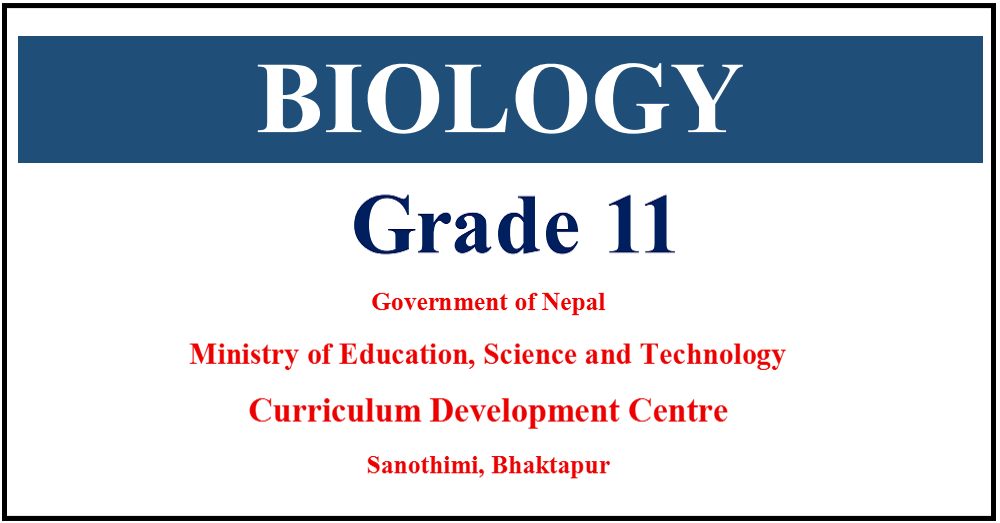
The NEB Grade 11 Biology Book is a core textbook for Class 11 science students in Nepal. The book is officially titled Biology Grade 11 and is published by the Government of Nepal, Ministry of Education and Sports, Curriculum Development Centre, Sanothimi, Bhaktapur.
The textbook introduces students to Biology from the molecular level to the ecosystem level. It covers biomolecules, cell biology, plant diversity, microbiology, ecology, vegetation, evolution, animal diversity, environmental biology, and conservation. The book also includes diagrams, activities, project work, tables, examples, exercises, and application-based questions that help students understand biological concepts more clearly.
Table of Content
- NEB Grade 11 Biology Book: Curriculum, Structure, and Content Overview
- About the Grade 11 Biology Textbook
- NEB Grade 11 Biology Book Unit List
- Structure and Content of the Book
- Learning Approach and Exercise Pattern
- Why This Book Is Important for Grade 11 Students
- PDF Use and Responsible Access
- Conclusion
- Download
About the Grade 11 Biology Textbook
The Biology Grade 11 textbook is designed as a major classroom resource for secondary-level science students. It explains living organisms from different angles: their chemical basis, cellular organization, diversity, classification, evolution, relationship with the environment, and need for conservation.
The book was prepared and edited by an academic team that includes Mr. Suraj Babu Ghimire, Mr. Sumant Kumar Ranjit, Mr. Pashupati Shrestha, and Mr. Lav Dev Bhatta. The language editing was done by Mr. Basu Dev Osti. The first edition of the book was published in 2024.
A noticeable feature of the textbook is its activity-based structure. Many lessons begin with observation questions, discussion prompts, diagrams, or real-life examples. This helps students connect the subject with living organisms, human health, biodiversity, environment, and scientific inquiry.
NEB Grade 11 Biology Book Unit List
| Unit No. | Unit Name |
|---|---|
| 1 | Biomolecules and Cell Biology |
| 2 | Floral Diversity |
| 3 | Introduction to Microbiology |
| 4 | Ecology |
| 5 | Vegetation |
| 6 | Introduction to Biology |
| 7 | Evolutionary Biology |
| 8 | Faunal Diversity |
| 9 | Biota and Environment |
| 10 | Conservation Biology |
 Structure and Content of the Book
The Grade 11 Biology book contains 10 main units. The sequence is practical because it first builds the foundation of life at the molecular and cellular level, then moves toward plants, microorganisms, ecology, evolution, animals, environmental issues, and conservation.
The first unit, Biomolecules and Cell Biology, introduces the chemical and cellular basis of life. It includes biomolecules, cell structure, and cell division. Students study carbohydrates, amino acids, proteins, lipids, nucleic acids, minerals, enzymes, and water. The cell biology section explains prokaryotic and eukaryotic cells, cell wall, plasma membrane, mitochondria, plastids, endoplasmic reticulum, Golgi complex, lysosomes, ribosomes, nucleus, chromosomes, and cell inclusions. The cell division section covers the cell cycle, mitosis, meiosis, cytokinesis, and the biological importance of cell division.
The second unit, Floral Diversity, introduces students to the diversity of plants and plant-like organisms. It explains classification, three domains of life, binomial nomenclature, taxonomy, and the five-kingdom system. The unit then discusses fungi, lichens, algae, bryophytes, pteridophytes, gymnosperms, and angiosperms. This section helps students understand how plants and related organisms are grouped, named, and studied.
The third unit, Introduction to Microbiology, focuses on microorganisms and their significance. It includes Monera, viruses, and the impact of biotechnology in microbiology. Students learn about bacteria, cyanobacteria, viral structure, and the practical importance of microorganisms in medicine, agriculture, food production, biotechnology, and disease.
The fourth unit, Ecology, explains the relationship between organisms and their environment. It covers ecosystem ecology, ecological adaptation, and ecological imbalance. Students study ecosystem components, food chains, food webs, energy flow, ecological pyramids, population interactions, adaptation, and environmental imbalance. This unit is important because it connects Biology with real environmental conditions.
The fifth unit, Vegetation, deals with plant communities and vegetation patterns. It helps students understand how plant life changes according to geography, climate, altitude, and ecological conditions. For students in Nepal, this unit is especially useful because the country has wide ecological variation from the Terai to the Himalayan region.
The sixth unit, Introduction to Biology, presents Biology as a scientific discipline. It explains the meaning, scope, branches, and importance of Biology. This unit helps students see Biology not only as an exam subject but also as a field connected with medicine, agriculture, biotechnology, conservation, environment, genetics, health, and research.
The seventh unit, Evolutionary Biology, explains the origin and development of life. It includes life and its origin, evidence of evolution, theories of evolution, and human evolution. Students learn how biological diversity developed over time and how scientific evidence supports evolutionary ideas.
The eighth unit, Faunal Diversity, focuses on animal diversity. It includes Protista, Plasmodium vivax, Animalia, earthworm, and frog. This unit helps students understand classification, structure, life processes, and representative organisms. The earthworm and frog sections are useful for learning animal anatomy, physiology, and comparative biology.
The ninth unit, Biota and Environment, connects organisms with their surroundings. It includes animal adaptation, animal behaviour, and environmental pollution. Students learn how animals survive in different habitats, how behaviour supports survival, and how pollution affects living organisms and ecosystems.
The tenth unit, Conservation Biology, focuses on biodiversity protection and wildlife. It explains the need for conservation, threats to biodiversity, conservation methods, protected areas, and wildlife-related issues. This unit is highly relevant in Nepal, where forests, wetlands, mountains, national parks, and wildlife are closely linked with ecological balance and national development.
Learning Approach and Exercise Pattern
The textbook follows a practical and learner-focused approach. Many chapters begin with questions that ask students to observe, think, and discuss before reading the main lesson. For example, the biomolecule chapter asks students to think about the molecules that unite all living things and the biomolecules present in daily food. The cell division chapter connects the lesson with reproduction, growth, wound healing, and evolution.
The book includes diagrams, tables, “Do you know?” sections, project work, group activities, and laboratory-style tasks. Students are asked to create models, draw biological structures, observe cells, compare organisms, prepare posters, collect information, and discuss findings. This approach makes Biology more practical and less dependent on rote learning.
The exercises are also varied. Students find multiple-choice questions, very short questions, short questions, diagrammatic questions, and project work. This pattern is useful for examination preparation because Biology requires both memory and understanding. Students need to define terms, explain processes, compare structures, identify diagrams, describe functions, and apply ideas in real situations.
Why This Book Is Important for Grade 11 Students
The Class 11 Biology Book builds the foundation for Grade 12 Biology and higher studies in medicine, agriculture, forestry, veterinary science, biotechnology, laboratory science, environmental science, public health, and related fields.
The textbook begins with the basic chemical and cellular structure of life. It then expands into biodiversity, microorganisms, ecology, evolution, animals, environment, and conservation. This gradual structure helps students move from small-scale biological concepts to larger ecological and evolutionary ideas.
For exam preparation, students should not depend only on notes or summaries. They should read the textbook carefully, study diagrams, practise exercises, and complete project work. Biology becomes easier when students understand the connection between structure and function. For example, cell organelles are easier to remember when students relate them to energy production, protein synthesis, digestion, transport, and heredity.
Students should give special attention to diagrams such as cell structure, DNA, RNA, mitochondria, chloroplast, ribosome, cilia and flagella, chromosomes, mitosis, meiosis, and representative organisms. These diagrams support both understanding and exam writing.
PDF Use and Responsible Access
The PDF version of the NEB Grade 11 Biology Book is useful for students who want to study from a mobile phone, tablet, laptop, or printed copy. It helps students access the textbook anywhere, revise chapters, check diagrams, practise questions, and prepare for exams when the printed book is not available.
The book should be used responsibly. The copyright page states that the publication belongs to the Curriculum Development Centre and that no part of it may be reproduced or transmitted in any form without written permission from the publisher, except photocopying for teacher training or other non-profit purposes.
Conclusion
The NEB Grade 11 Biology Book is a complete textbook for Class 11 science students in Nepal. It covers major areas of Biology, including biomolecules, cell biology, plant diversity, microbiology, ecology, vegetation, evolution, animal diversity, environmental biology, and conservation.
The textbook is useful because it combines theory with diagrams, activities, tables, exercises, and project work. Students preparing for Grade 11 Biology should use it as a full learning resource, not only as an exam guide. Reading each unit carefully, understanding diagrams, practising questions, and connecting lessons with real organisms and environments will make Biology clearer, more practical, and easier to remember.


Wow amazing