



NEB Grade 11 Nepali Book: Curriculum, Structure, and Content Overview
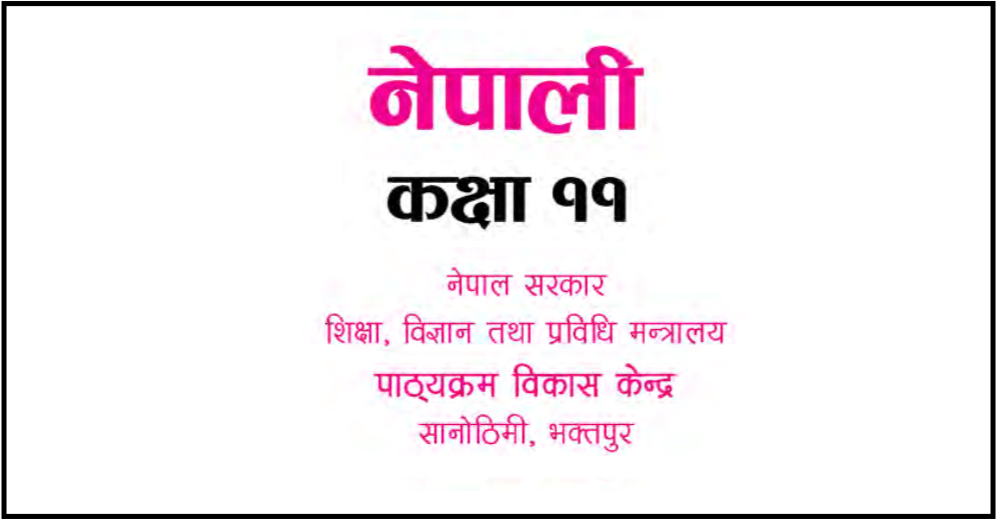
The NEB Grade 11 Nepali Book (कक्षा ११ नेपाली पुस्तक) is a compulsory Nepali textbook used by Class 11 students in Nepal. The book is officially titled नेपाली कक्षा ११ and is published by the Government of Nepal, Ministry of Education & Sports, Curriculum Development Centre, Sanothimi, Bhaktapur.
The textbook is designed to strengthen students’ Nepali language ability, literary understanding, cultural awareness, grammar knowledge, and practical writing skills. It includes poetry, story, essay, biography, letter writing, one-act play, reportage-style writing, dialogue, diary writing, and speech-based composition. This variety makes the book useful not only for examination preparation but also for improving expression, reading habits, and communication in Nepali.
Table of Content
- NEB Grade 11 Nepali Book: Curriculum, Structure, and Content Overview
- About the Grade 11 Nepali Textbook
- NEB Grade 11 Nepali Book Unit List
- Structure and Content of the Book
- Learning Approach and Exercise Pattern
- Why This Book Is Important for Grade 11 Students
- PDF Use and Responsible Access
- Conclusion
- Download Book
About the Grade 11 Nepali Textbook
The नेपाली कक्षा ११ textbook is prepared according to Nepal’s school-level curriculum direction. The preface explains that education should help learners develop knowledge, skills, values, creative thinking, social awareness, national identity, and practical life abilities. The textbook reflects this purpose by combining literary texts with language activities and applied writing.
The textbook is developed by the Curriculum Development Centre with the contribution of writers, editors, language experts, illustrators, designers, and education specialists. Its structure shows a clear effort to make Nepali learning more skill-based, readable, and connected with students’ social and cultural life.
The book is not only a collection of literary texts. Each lesson includes vocabulary work, comprehension questions, analysis, grammar, writing activities, and project-style tasks. This helps students move from reading to understanding, interpretation, expression, and independent writing.
NEB Grade 11 Nepali Book Unit List
| Unit No. | Unit Name | Genre |
|---|---|---|
| 1 | वीर पुर्खा | कविता |
| 2 | गाउँको माया | कथा |
| 3 | संस्कृतिको नयाँ यात्रा | निबन्ध |
| 4 | योगमाया | जीवनी |
| 5 | साथीलाई चिठी | चिठी |
| 6 | त्यो फेरि फर्कला? | कथा |
| 7 | पर्यापर्यटनका सम्भावना र आयाम | निबन्ध |
| 8 | लौ आयो ताजा खबर | लघु नाटक |
| 9 | सफलताको कथा | रिपोर्टाजमूलक रचना |
| 10 | कृषिशालामा एक दिन | संवाद |
| 11 | रारा भ्रमण | दैनिकी |
| 12 | जलस्रोत र ऊर्जा | वक्तव्य |
Structure and Content of the Book
The Grade 11 Nepali book contains 12 main lessons and an appendix. The lessons are arranged across different genres so that students can experience Nepali language in literary, practical, cultural, social, and informational forms.
The first lesson, “वीर पुर्खा,” is a poem. It introduces students to patriotic feeling, history, courage, and respect for ancestors. The poem helps students understand poetic language, rhythm, imagery, national consciousness, and emotional expression. It also encourages learners to connect literature with identity and memory.
The second lesson, “गाउँको माया,” is a story. It presents rural life, attachment to birthplace, social relationships, and emotional connection with village culture. This lesson helps students understand character, setting, narration, dialogue, and the emotional force of memory and belonging.
The third lesson, “संस्कृतिको नयाँ यात्रा,” is an essay. It focuses on culture, change, and continuity. Students learn how essays present ideas in an organized way. This lesson is useful for developing analytical reading and paragraph-based explanation.
The fourth lesson, “योगमाया,” is a biography. It introduces students to the life, struggle, and contribution of Yogmaya. Biography as a genre helps learners understand how a person’s life can be connected with social reform, courage, justice, and historical awareness.
The fifth lesson, “साथीलाई चिठी,” focuses on letter writing. This lesson is practical because students learn how to express personal feelings, share information, and communicate in written Nepali. It also helps them understand format, tone, address, opening, body, and closing in a letter.
The sixth lesson, “त्यो फेरि फर्कला?”, is a story. It encourages students to read narrative writing with attention to plot, character, conflict, suspense, and message. The question-like title creates curiosity and prepares students for interpretive reading.
The seventh lesson, “पर्यापर्यटनका सम्भावना र आयाम,” is an essay on ecotourism. This lesson connects Nepali learning with environment, tourism, local resources, and sustainable development. It is useful for students because Nepal’s geography, biodiversity, and tourism sector are directly connected with national development.
The eighth lesson, “लौ आयो ताजा खबर,” is a short play. It introduces dramatic structure, dialogue, character interaction, and stage-based expression. Through this lesson, students learn how language works in conversation, performance, humour, conflict, and social situations.
The ninth lesson, “सफलताको कथा,” is a reportage-style composition. It helps students understand how real-life events, people, effort, achievement, and social context can be presented in an informative and readable way. This lesson is useful for students who need to develop report-writing and factual presentation skills.
The tenth lesson, “कृषिशालामा एक दिन,” is written in dialogue form. It connects language learning with agriculture, observation, practical knowledge, and conversation. Dialogue helps students understand spoken expression, question-answer flow, and exchange of ideas.
The eleventh lesson, “रारा भ्रमण,” is a diary-style lesson. It introduces students to personal record writing, travel experience, description of place, feeling, observation, and time-based narration. This lesson is especially useful for learning how to write a diary or travel-based reflection.
The final lesson, “जलस्रोत र ऊर्जा,” is a speech-based text. It deals with water resources and energy, two important themes in Nepal’s development context. Through this lesson, students learn how to present ideas in a formal structure with introduction, explanation, argument, and conclusion.
Learning Approach and Exercise Pattern
The textbook follows a skill-based and activity-oriented approach. Each lesson is followed by exercises that help students understand vocabulary, sentence meaning, grammar, text interpretation, and writing.
The exercises generally include vocabulary and word meaning, comprehension questions, analytical questions, grammar activities, pronunciation and spelling practice, sentence transformation, writing exercises, and creative or project-based tasks.
This structure is useful because Nepali learning requires more than memorizing answers. Students need to read carefully, understand the main idea, identify genre, explain meaning, use correct grammar, and write their own responses.
The textbook also gives attention to grammar and language structure. Students practise वर्ण, उच्चारण, शब्द, वाक्य, अनुच्छेद, and expression through examples taken from the lessons. This helps grammar feel connected with actual language use instead of appearing as a separate mechanical section.
Why This Book Is Important for Grade 11 Students
The Class 11 Nepali Book is important because Nepali is both a compulsory subject and a major language of academic, social, and public communication in Nepal. Students need strong Nepali reading and writing skills for examinations, official communication, higher education, public speaking, essay writing, report writing, and daily expression.
The book gives students exposure to different genres. Poetry develops emotional and symbolic understanding. Stories improve narrative reading. Essays build analytical thinking. Biography connects literature with social life. Letter writing, diary writing, dialogue, speech, and report-style writing build practical communication skills.
For exam preparation, students should not depend only on short summaries. They should read the original lessons, understand the central message, revise vocabulary, practise grammar, and write answers in their own words. The unit exercises are important because they show the kind of reading, interpretation, grammar, and writing practice expected from Grade 11 students.
Students should also pay attention to genre. A poem should not be studied in the same way as a letter or a speech. Each genre has its own structure, tone, and purpose. Understanding this difference helps students write better answers in exams.
PDF Use and Responsible Access
The PDF version of the NEB Grade 11 Nepali Book is useful for students who want to study from a mobile phone, tablet, laptop, or printed copy. It helps students access lessons, unit lists, grammar exercises, writing tasks, and revision materials when the printed book is not available.
The book should be used responsibly. The copyright note states that written permission from the Curriculum Development Centre is required for commercial reproduction, translation, adaptation, modification, publication, storage, or copying of the full or partial content. Students may use the PDF for study and reference, but websites should be careful while hosting or redistributing the file without proper permission.
Conclusion
The NEB Grade 11 Nepali Book is a complete textbook for Class 11 students in Nepal. It combines literature, grammar, practical writing, social themes, cultural awareness, and communication skills in one structured volume.
From “वीर पुर्खा” to “जलस्रोत र ऊर्जा,” the textbook helps students improve reading, writing, interpretation, grammar, and expression in Nepali. Its mix of कविता, कथा, निबन्ध, जीवनी, चिठी, लघु नाटक, रिपोर्टाजमूलक रचना, संवाद, दैनिकी, and वक्तव्य makes it useful for both academic learning and practical language development.
Students preparing for Grade 11 Nepali should use this book as a full learning resource. Reading each lesson carefully, practising exercises, understanding grammar, and writing original answers will make Nepali easier, clearer, and more useful for further study.


Comments 0
No comments yet. Be the first to start the conversation.