




Artificial intelligence tools can explain ideas, generate practice questions, respond to mistakes, translate material, and provide feedback. These capabilities may support learning, but speed, convenience, and polished output do not prove that learning has occurred. A student can complete better work with AI yet understand less once the tool is removed.
The central question is whether the technology keeps the learner thinking.
AI acts as a scaffold when it offers a hint, asks a question, adapts practice, identifies an error, or makes material easier to access. It becomes a shortcut when it supplies completed work that the learner accepts without understanding.
Current evidence supports this conditional view. Purpose-built tutoring has produced positive results in specific settings, while unrestricted answer generation has improved assisted task performance but weakened later unassisted performance in another setting. Outcomes depend on the tool, subject, learner, task design, safeguards, and method used to measure learning.
An AI tool is a system that uses artificial intelligence to perform or assist with tasks such as explanation, feedback, translation, assessment, or practice. A general-purpose chatbot can answer many types of questions but may not understand a course’s curriculum, assessment rules, or learner history.
An educational AI tutor is designed or configured around learning objectives. It may provide structured hints, guided questions, practice sequences, progress checks, or limits on direct answers.
Scaffolding means temporary support that helps a learner complete a task and later perform independently. Cognitive offloading occurs when a person transfers part of a mental task to a tool. Offloading can be useful, but it may weaken learning when it removes the practice needed to develop knowledge or skill.
Answer summary: AI tools can improve learning when they support active effort through accurate feedback, adaptive practice, questioning, explanation, retrieval, reflection, and access. They can weaken learning when they replace effort, provide unchecked answers, or create dependence. The clearest test is whether the learner can later explain, remember, and apply the material without AI.
Table of Content
- Better Work Is Not Always Better Learning
- General Chatbots and Educational AI Tutors Are Different
- How AI Tools Can Improve Learning
- What the Research Shows
- When AI Can Weaken Learning
- A Five-Step Method for Using AI as a Tutor
- How to Tell Whether AI Is Supporting Learning
- AI and Teachers Serve Different Roles
- Who May Benefit and Who Needs More Support
- Final Answer
Better Work Is Not Always Better Learning
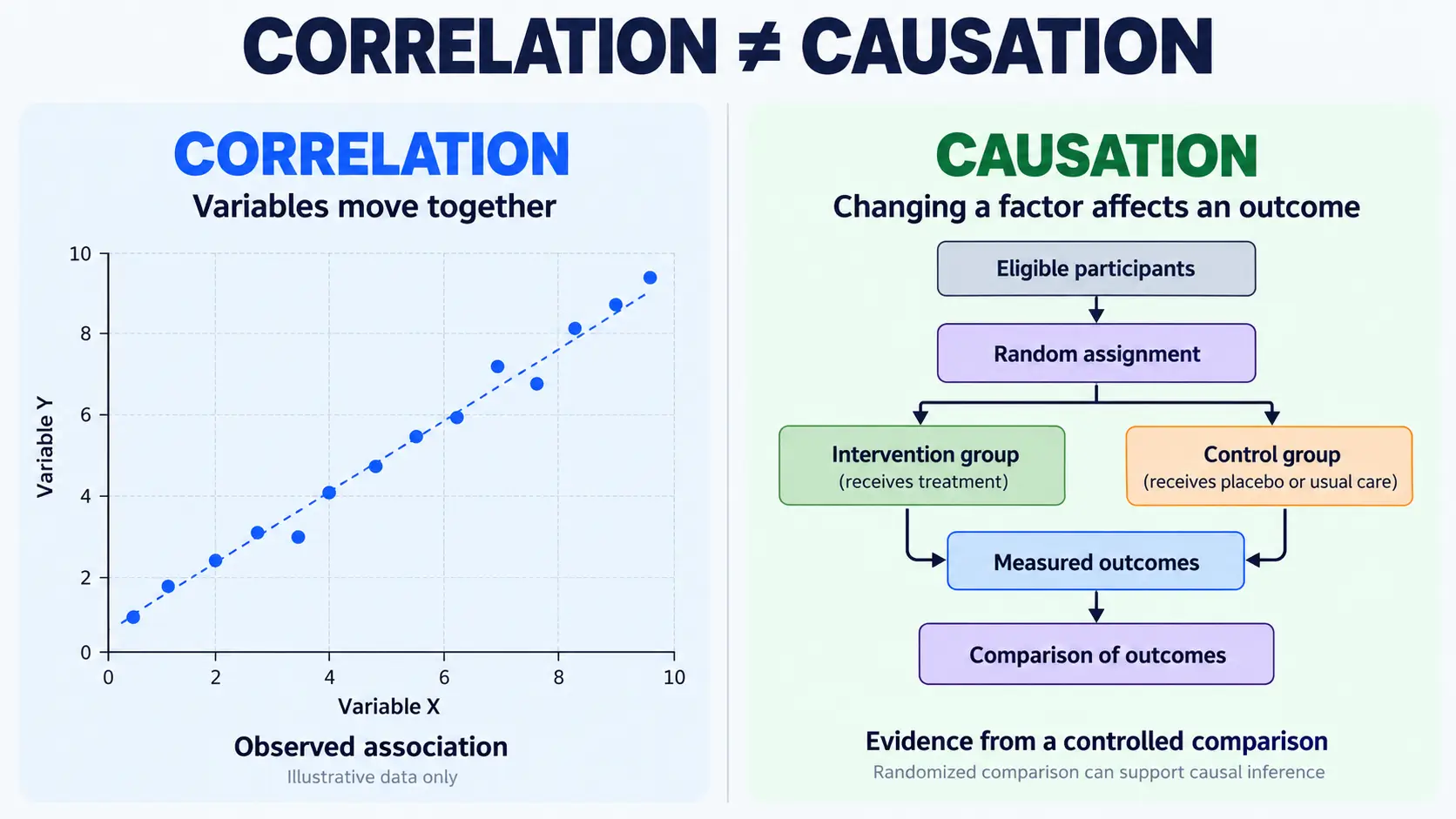
A polished answer, completed worksheet, or faster assignment shows what a learner can produce while assistance is available. It does not necessarily demonstrate durable learning.
Learning includes understanding, later recall, transfer to a different problem, and independent performance after support is removed.
The OECD Digital Education Outlook 2026 distinguishes educational uses that support learning from uses that mainly outsource a task. The high-school mathematics experiment by Bastani and colleagues illustrates the same difference: unrestricted GPT access improved supported practice, but the group performed worse than the control group on a later unassisted examination.
| Measure | AI-Supported Performance | Durable Learning |
|---|---|---|
| Main question | Can the learner complete the task with AI? | Can the learner perform after AI is removed? |
| Possible evidence | Better output, greater speed, or successful supported practice | Recall, transfer, explanation, and independent application |
| Useful check | Review the AI-assisted product | Test a new or delayed task without assistance |
Fluent explanations can also create a false sense of mastery. A learner may recognize every step while reading an AI response but be unable to reconstruct the reasoning alone.
A practical learning check is to close the tool and explain the idea from memory or solve a related problem without assistance.
Readers who want a closer examination of retention, transfer, and assessment can review how AI affects student learning outcomes. The page was verified as an active and directly relevant Collegenp resource.
General Chatbots and Educational AI Tutors Are Different
General chatbots and educational tutors may use related technology, but their instructional purposes and controls can differ.
A general-purpose chatbot normally tries to answer the request it receives. When asked for a solution, it may provide one directly. A structured educational tutor may instead ask diagnostic questions, restrict direct answers, align activities with learning objectives, provide staged hints, or monitor progress.
| Aspect | General-Purpose Chatbot | Educational AI Tutor |
|---|---|---|
| Typical purpose | Respond to a wide range of requests | Support defined learning objectives |
| Possible interaction | Explanation, content generation, or direct answers | Hints, questions, guided practice, and reduced support |
| Main risk | Answer outsourcing and weak curriculum alignment | Poor instructional design, inaccurate feedback, or unsuitable adaptation |
The word “tutor” is not evidence that a system is effective. A learning tool should be judged by the accuracy of its material, the quality of its feedback, the thinking it requires, its alignment with the curriculum, and the learner’s performance after assistance ends.
How AI Tools Can Improve Learning
AI supports learning through the activities it enables, not through the technology alone. The most relevant mechanisms involve feedback, practice, explanation, self-correction, reflection, and access.
| Learning Support | Why It May Help | Main Safeguard |
|---|---|---|
| Adaptive support | Responds to errors, prior knowledge, pace, or goals | Let learners or teachers correct faulty assumptions |
| Timely feedback | Allows revision while the task is active | Check accuracy and require the learner to revise |
| Interactive explanation | Supports questions, rephrasing, and dialogue | Require an independent explanation afterward |
| Guided practice | Generates examples, hints, and retrieval tasks | Include unaided attempts and delayed testing |
| Metacognitive prompts | Encourages confidence and error checks | Compare confidence with actual performance |
| Accessibility functions | Offers translation, captions, or alternative formats | Check quality, privacy, inclusion, and availability |
1. Adapting Support to a Learner’s Current Needs
AI systems can vary explanations, examples, or task difficulty in response to prior answers, mistakes, pace, goals, and access needs. A system might provide a simpler example after an error, increase difficulty after repeated success, or offer a targeted hint instead of repeating an entire lesson.
This form of personalization concerns a learner’s current knowledge and performance. It should not be confused with the claim that every learner has a fixed “learning style” that an AI system can identify and match.
Adaptation can also fail. A system may misdiagnose a mistake, treat a lucky answer as mastery, or direct the learner toward material that does not fit the curriculum. Reviews of intelligent tutoring systems show varied designs, study methods, and outcomes, so the label alone does not establish effectiveness.
Learners should be able to correct the system’s assumptions. In formal education, teachers should remain able to review the sequence, difficulty, content, and intended learning outcome.
2. Providing Feedback While Revision Is Possible
Feedback may help when it is timely, specific, accurate, and followed by revision. An AI tool can point to a missing step, identify a repeated error, compare possible approaches, or ask the learner to reconsider a conclusion.
A 2024 PLOS ONE experiment compared ChatGPT-generated hints, human tutor-authored hints, and other forms of help across four mathematics domains. The study included 274 adults recruited through Amazon Mechanical Turk. It found no statistically significant difference between the learning gains associated with ChatGPT-generated and human-authored hints in the tested tasks.
That finding requires qualification. The researchers’ review found that raw ChatGPT hints failed at least one quality criterion on 32% of the problems. Additional self-consistency checks reduced errors, but performance varied by mathematics domain. The study also used a crowdsourced adult sample rather than a school classroom and experienced substantial participant attrition.
The evidence therefore supports a narrow conclusion: reviewed AI-generated hints can help in bounded mathematics tasks. It does not establish that open-ended AI tutoring is equivalent to human tutoring.
3. Supporting Interactive Explanation
An interactive system can respond when a learner understands a procedure but not the reason behind it. It can rephrase an idea, divide a process into smaller steps, provide a contrasting example, or ask a diagnostic question.
The educational value comes from what the learner must do during the exchange. Questions that require prediction, comparison, justification, or explanation demand more thinking than a request for a completed answer.
A randomized college physics study used a custom tutor informed by research-based instructional practices. Students achieved greater immediate learning gains in less time than during the active-learning comparison lessons tested in the study. The finding applies to the specific tutor, lessons, learners, and study design; it is not evidence that every chatbot produces the same result.
Useful prompts include:
-
Which step in my attempt is incorrect?
-
What assumption does my answer depend on?
-
Ask me a question that helps me choose the method.
-
Give me a contrasting example rather than the solution.
-
Check my explanation without rewriting it for me.
After receiving help, the learner should restate the reasoning without copying the tool’s language.
4. Creating Guided Practice and Retrieval
AI can generate practice questions, vary examples, provide hints, and reduce assistance over time. One sequence might begin with a worked example, remove several steps in the next problem, and then ask the learner to solve a new problem independently.
The 2025 PNAS high-school mathematics study involved nearly 1,000 students at one school in Turkey. Students using unrestricted GPT support performed better during assisted practice but worse than the control group on an unassisted examination. A version developed with teacher-informed safeguards largely reduced the negative examination effect, but it did not produce a positive examination effect.
The study measured short-term learning through the later examination. It does not establish long-term effects, and its findings should not be generalized to all countries, subjects, age groups, or tutoring systems.
AI-generated questions should normally be treated as practice material unless they have been reviewed for accuracy, wording, difficulty, and curriculum alignment. A generated quiz is not automatically a validated assessment.
5. Supporting Metacognition and Self-Regulation
Metacognition involves monitoring one’s understanding and deciding what to do next. AI can prompt a learner to estimate confidence, identify an error pattern, compare an original answer with a revision, or plan further practice.
Useful reflection prompts include:
-
What did I misunderstand in my first attempt?
-
Which part can I explain without assistance?
-
What evidence would show that my answer is wrong?
-
How confident am I, and does my performance support that confidence?
-
Give me another problem that tests the same principle.
These activities can support self-monitoring, but a tool should not assume that a learner has mastered a concept simply because the learner reports confidence or answers one question correctly.
6. Reducing Some Access Barriers
AI functions can support translation, captioning, speech-to-text, text-to-speech, simplified wording, and alternative presentation formats. These functions may help some language learners and students who use accessibility support.
The UNESCO guidance on generative AI in education and research addresses access alongside privacy, age appropriateness, equity, human oversight, and human-centred educational design. It is guidance rather than evidence that every accessibility function works equally well.
Quality differs among languages, subjects, disabilities, interfaces, and tools. Paid access, connectivity, device availability, and data costs can also create unequal conditions.
AI can support access, but it does not make education equally accessible by itself. Institutions still need accessible course design, non-AI alternatives, technical support, and policies that do not disadvantage learners who cannot use a particular system.
What the Research Shows
Current research supports a conditional conclusion: structured educational use can help in specific settings, while unrestricted use can undermine independent performance.
| Evidence | Verified Finding | Important Limit |
|---|---|---|
| Kestin et al., 2025 | A custom tutor produced greater immediate learning gains in less time than the active-learning comparison lessons. | Specific subject, learners, lessons, prompts, materials, and tutor design |
| Bastani et al., 2025 | Unrestricted GPT improved assisted practice but reduced later unassisted examination performance. | One Turkish high school, mathematics, and a short-term outcome |
| Pardos and Bhandari, 2024 | Learning gains from ChatGPT hints were not significantly different from gains using human-authored hints in the tested tasks. | Adult crowdsourced sample, substantial attrition, and frequent raw-hint quality failures |
| Experimental meta-analysis, 2026 | The authors reported a moderate pooled positive effect across 35 experimental studies and 4,193 participants. | Very high heterogeneity and limited primary-school evidence |
These studies do not conflict as directly as their headlines might suggest.
The physics intervention used a carefully designed tutor, expert-created instructional material, and structured activities. The mathematics study tested both unrestricted access and a version with instructional safeguards. The hint study examined bounded help rather than unrestricted tutoring.
The 2026 meta-analysis provides broader support but reports substantial variation across studies. Its pooled result should not be interpreted as evidence that every learner, subject, or AI system benefits equally.
The evidence remains limited in several areas. Many studies are short, systems change rapidly, and secondary or higher education receives more attention than primary education. Evidence is also less developed across low-resource settings, many languages, disability contexts, non-STEM subjects, and long-term transfer after AI support ends.
When AI Can Weaken Learning
AI can weaken learning when it removes reasoning, practice, verification, or independent recall.
| Risk | Possible Effect | Practical Safeguard |
|---|---|---|
| Answer outsourcing | Removes practice and productive effort | Attempt the task before requesting help |
| Inaccurate output | Builds reasoning on false facts or faulty logic | Verify consequential claims and calculations |
| Overconfidence | Creates familiarity without mastery | Complete a later no-AI task |
| Shallow prompting | Encourages passive acceptance | Ask for hints, questions, and error analysis |
| Integrity violations | Replaces assessed student work | Follow the course policy and disclose use |
| Privacy or bias | Exposes data or produces unfair output | Limit personal data and review representation |
AI systems can generate inaccurate, misleading, biased, or overly confident responses. Fluent language is not proof that a claim, reference, calculation, or explanation is correct.
Academic-integrity rules differ among institutions, courses, teachers, and assignments. Tutoring, brainstorming, feedback, or practice may be permitted in one context and restricted in another. Students should check the relevant policy, disclose assistance when required, and submit their own reasoning.
Collegenp’s guide to the ethical and practical use of AI tools for students explains how students can use assistance without misrepresenting authorship or bypassing the work being assessed
Learners should avoid entering unnecessary personal data, private grades, confidential assignments, unpublished work, health information, or another person’s information into public systems. Younger learners should use school-, teacher-, or guardian-approved tools under the rules that apply to them.
Developing AI literacy for students includes checking output, protecting data, recognizing bias, following assessment rules, and knowing when human guidance is needed.
A Five-Step Method for Using AI as a Tutor
A structured process can preserve the learner’s effort while allowing AI to provide support.
1. Attempt the Task First
Write what you know, solve the first step, or identify the exact point of confusion. An incomplete attempt still gives the tutor evidence of the learner’s thinking.
A useful request is:
“Here is my attempt. Identify the first incorrect step, but do not complete the problem for me.”
2. Ask for a Hint or Question
Request the smallest amount of help needed to continue. Ask for one clue, a diagnostic question, a simpler example, or a comparison.
For example:
“Ask me one question that will help me decide which method applies.”
3. Explain the Idea Independently
After receiving help, restate the reasoning without copying the response. Ask the tool to evaluate the logic rather than rewrite the answer.
For example:
“I think the concept means ____. Identify one gap in my explanation and ask me to correct it.”
4. Verify Important Information
Check facts, references, calculations, quotations, and policy-sensitive statements using reliable sources. Course materials, official documents, and teacher guidance should normally take priority over a general chatbot.
Verification matters most when the output affects assessment, privacy, safety, institutional rules, or public claims.
5. Retrieve and Apply Without AI
Close the tool and return to the idea after a delay. Explain it from memory or solve a new problem without assistance.
A final request can be:
“Create one new problem that tests the same principle. Do not provide hints unless I ask.”
How to Tell Whether AI Is Supporting Learning
The most useful test is what the learner can do after using the tool.
Ask:
-
Did I attempt the task before requesting assistance?
-
Did the tool support my reasoning or replace it?
-
Can I explain the answer without copying its wording?
-
Did I verify important facts, references, or calculations?
-
Can I solve a related problem without AI?
-
Can I identify what remains uncertain?
-
Does my use follow the relevant course or assessment policy?
When most answers are yes, the tool is more likely to be acting as a scaffold.
When the learner cannot explain the result, verify the information, or continue without assistance, the level of support may be too high. The learner can return to an independent attempt and request a smaller hint.
Students and educators comparing other classroom technologies can also consult Collegenp’s guide to technology tools for teaching and learning. It emphasizes matching tools to learning goals, access, privacy, teacher capacity, and assessment purpose.
AI and Teachers Serve Different Roles
Evidence and policy guidance support using AI as an instructional aid rather than treating it as a replacement for teachers.
AI can provide repeated practice, rapid responses, alternative explanations, and support outside scheduled class time. Teachers contribute curriculum knowledge, professional judgment, relationships, motivation, safeguarding, accountability, and awareness of the learner’s wider circumstances.
Teachers can decide when struggle is productive, when a misconception needs direct instruction, when an assessment must be completed without assistance, and when a student needs social, emotional, or safeguarding support.
AI use can also create additional work. Educators may need to review generated material, establish rules, investigate errors, protect student information, monitor access, and adjust assessment practices.
Collegenp’s discussion of AI in teaching and learning examines these complementary roles and their limits in more detail.
Who May Benefit and Who Needs More Support
Learners who can evaluate explanations, verify claims, and resist copying may be better positioned to use open-ended AI tools independently.
Language learners may use translation or rephrasing as a bridge, provided they check meaning and subject-specific vocabulary. Students who use captions, speech conversion, or alternative formats may gain another route into material, although accessibility and accuracy should be tested rather than assumed.
Novices and younger learners may need closer guidance because they have less subject knowledge for detecting errors. Results also vary according to system design, comparison condition, intervention length, and study quality.
Teacher-approved tools, clear boundaries, supervised use, and regular no-AI checks can reduce risk.
Parents and educators can look for observable evidence of productive use. A learner should be able to:
-
Describe what the tool helped with.
-
Show an original attempt.
-
Explain the result independently.
-
State how important information was checked.
-
Complete a related task without assistance.
-
Identify remaining uncertainty.
Warning signs include copying polished text, being unable to explain basic steps, increasing dependence on prompts, hiding prohibited use, or submitting information that has not been checked.
Final Answer
AI tools can improve learning when they help learners engage in useful cognitive activity. They can adapt practice, provide feedback, ask questions, support retrieval, prompt reflection, and reduce some access barriers.
The same tools can weaken learning when they provide completed work, encourage unchecked trust, remove independent practice, violate assessment rules, or create dependence.
The practical test is independence. After using AI, can the learner explain the idea, verify the evidence, remember it later, and apply it to a new problem without assistance?
When the answer is yes, AI has acted as a scaffold. When the learner cannot continue without it, the tool has replaced too much of the learning process.





Comments 0
No comments yet. Be the first to start the conversation.