



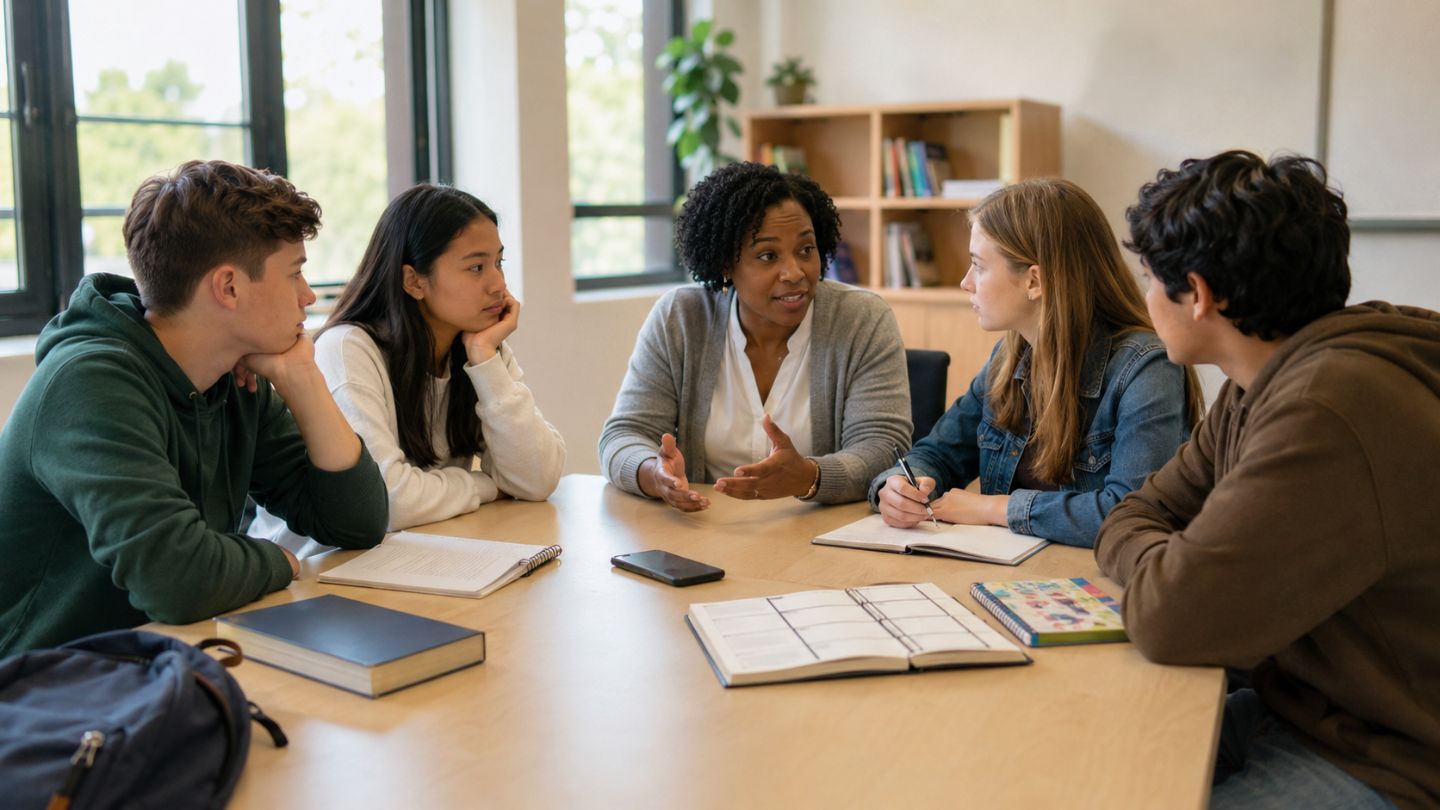
School problems are not only about marks, homework, or classroom discipline. Many students also face exam stress, bullying, peer pressure, digital distraction, poor attendance, family pressure, emotional stress, and difficulty understanding lessons.
This guide explains the major problems faced by students in school and solutions that students, parents, teachers, counselors, and school leaders can use. The focus is practical: identify the problem early, understand the cause, and choose support that fits the student’s situation.
The CDC describes school connectedness as students feeling that adults and peers at school care about their learning and about them as individuals. CDC also links stronger school connectedness with better attendance, grades, test scores, and graduation outcomes.
Answer Summary:
The major problems faced by students in school include academic pressure, bullying, peer pressure, lack of concentration, digital distraction, poor time management, low motivation, emotional stress, absenteeism, learning gaps, family barriers, and unsafe school environments. Real solutions include structured study plans, safe reporting systems, adult support, phone-free routines, attendance follow-up, remedial learning, parent-teacher communication, and a school culture where students feel safe, respected, and able to ask for help.
Table of Content
- What are the major problems faced by students in school?
- 1. Academic pressure and exam stress
- 2. Bullying and peer pressure
- 3. Lack of concentration and digital distraction
- 4. Poor time management and homework overload
- 5. Low motivation and loss of interest in studies
- 6. Mental health and emotional stress
- 7. Absenteeism and irregular attendance
- 8. Learning gaps and difficulty understanding lessons
- 9. Family, financial, and social problems
- 10. Unsafe or unsupportive school environment
- Real solutions by role
- When should students ask for help?
- Simple action plan for this week
- Conclusion
Key Takeaways:
-
Student problems often have academic, social, emotional, and family causes.
-
Bullying should be treated as a safety issue, not a minor conflict.
-
Exam stress improves with planning, feedback, rest, and realistic goals.
-
Digital distraction needs clear routines at home and school.
-
Absenteeism should be handled by finding the cause early.
-
Learning gaps grow when students hide confusion.
-
Schools respond better when students feel connected and supported.
What are the major problems faced by students in school?
The major problems faced by students in school are academic pressure, bullying, peer pressure, digital distraction, poor time management, low motivation, emotional stress, absenteeism, learning gaps, family barriers, and weak school support. These problems often overlap.
A student who misses school may also be facing bullying, transport barriers, family pressure, illness, or difficulty understanding lessons. A student who appears careless may be anxious, confused, tired, or afraid of asking questions.
| Problem | Student Action | Parent Action | Teacher or School Action |
|---|---|---|---|
| Exam stress | Use a weekly study plan | Praise effort, not only marks | Space tests and give feedback |
| Bullying | Tell a trusted adult | Listen and document concerns | Keep a clear reporting system |
| Digital distraction | Use phone-free study blocks | Set device routines | Set fair classroom rules |
| Homework overload | Rank tasks by deadline | Check workload patterns | Coordinate major assignments |
| Low motivation | Set small learning goals | Notice effort | Make lessons relevant |
| Emotional stress | Ask for support early | Watch routine changes | Connect students to support |
| Absenteeism | Share the real reason | Build a morning routine | Follow up early and privately |
| Learning gaps | Ask questions early | Provide study time | Offer remedial lessons |
| Family barriers | Speak to a trusted adult | Inform the school when support is needed | Link families to available help |
| Unsafe school climate | Report safety concerns | Attend school meetings | Improve reporting, supervision, and support |
1. Academic pressure and exam stress
Academic pressure becomes a problem when students feel their value depends only on marks, rank, or exam results. Healthy challenge can support learning, but constant pressure can reduce focus, confidence, sleep, and interest in school.
Students may feel pressure from frequent tests, homework, tuition, family expectations, comparison with classmates, or fear of failure. OECD’s PISA 2022 Results Volume II reports that students who felt safe and were not exposed to bullying or school risks had a stronger sense of belonging at school on average across OECD countries.
Signs of exam stress
Exam stress may need attention when a student:
-
Avoids studying even when exams are near
-
Panics before tests
-
Loses sleep before exams
-
Stops asking questions
-
Becomes irritable or withdrawn
-
Says the work feels too much to start
-
Studies for long hours but cannot recall what they learned
Real solutions for exam stress
Students can divide revision into small blocks: read one topic, close the book, recall the main points, solve practice questions, and review mistakes. This is more useful than rereading notes without checking understanding.
Parents can ask, “Which part was difficult?” instead of only asking about marks. This keeps attention on learning, not fear.
Teachers can reduce exam pressure by sharing rubrics, giving practice questions, explaining common errors, and avoiding several major tests in the same week when scheduling allows.
Students who need a broader study routine can also review effective learning strategies for school students and adapt the methods to their subjects and timetable.
2. Bullying and peer pressure
Bullying and peer pressure affect safety, confidence, attendance, and learning. They should not be dismissed as normal school life.
UNESCO has called for better protection of students from violence and bullying in schools, including physical, verbal, and psychological aggression. CDC’s 2023 Youth Risk Behavior Survey reported that, among U.S. high school students, being bullied at school increased from 15% in 2021 to 19% in 2023, while missing school because of safety concerns increased from 9% to 13%.
What bullying can look like
Bullying may include repeated name-calling, exclusion, rumors, threats, intimidation, online harassment, or humiliation. Peer pressure may push students to act against their values, hide problems, or avoid classmates.
A student may stop sitting with friends, avoid certain places at school, hide messages, lose interest in class, or ask to stay home. These changes should be handled calmly and privately.
Real solutions for bullying and peer pressure
Students should report bullying to a trusted adult: a parent, teacher, school counselor, class teacher, principal, or another responsible adult. Reporting is necessary when behavior is repeated, threatening, humiliating, or affecting attendance.
Parents should listen calmly, record dates and details, save relevant messages when appropriate, and contact the school through official channels.
Teachers and schools should respond early, protect the reporting student from retaliation, document concerns, monitor risk areas, and follow up after the first report. A school bullying response should include prevention, reporting, investigation, support, and review.
3. Lack of concentration and digital distraction
Lack of concentration often comes from stress, poor sleep, unclear lessons, noisy classrooms, weak routines, or unmanaged device use. Digital tools can help learning, but they can also interrupt attention when rules are unclear.
OECD’s report on students, digital devices, and success found that students distracted by peers using digital devices in some, most, or every mathematics class scored lower in mathematics tests, on average across OECD data.
Common causes of poor focus
Students may lose focus because:
-
They do not understand the lesson
-
They are afraid to ask questions
-
Their phone keeps interrupting them
-
They sleep late
-
The classroom is noisy
-
The task feels too large
-
They do not know where to start
-
They are worried about problems outside school
Real solutions for digital distraction
Students can use phone-free study blocks of 25 to 40 minutes. The phone should be away from the study table, not only face down.
Parents can set shared rules for device use during homework, meals, and sleep time. Rules work better when adults explain the reason: attention, rest, and learning.
Teachers can explain when devices are allowed for learning and when they are not. Schools can use clear device policies that apply fairly and teach responsible use rather than relying only on punishment.
Sleep also affects attention. Students with late-night screen habits may benefit from a realistic sleep hygiene routine for students.
4. Poor time management and homework overload
Time management becomes difficult when students cannot balance homework, revision, activities, family duties, rest, and travel time. Homework overload may also reflect weak coordination between subjects.
A student may spend too much time on a low-priority task and leave exam revision unfinished. Another student may delay work because the task feels too large or unclear.
Why workload feels unmanageable
Workload often feels heavier when students do not know what to do first. A project, a test, classwork correction, and a reading task may all feel urgent when no plan exists.
Some students also confuse being busy with learning. Copying notes for two hours may look productive, but it may not improve understanding if the student does not practice recall or solve questions.
Real solutions for time management
Students can divide tasks into three groups:
-
Urgent: due soon
-
Important: affects exams or core learning
-
Quick: takes less than 10 minutes
A simple evening plan can include one urgent task, one revision block, and one short review of tomorrow’s lessons.
Parents can help students list assignments in one notebook or calendar.
Teachers can make deadlines clear, avoid unclear instructions, and coordinate large assignments when possible. Students who need a broader routine can review time management skills every student needs and adapt them to schoolwork.
5. Low motivation and loss of interest in studies
Low motivation often means the student does not see purpose, feels behind, fears failure, or lacks connection with school. Motivation improves when students experience small success and understand why learning matters.
A student who repeatedly scores low may stop trying to avoid embarrassment. A student who finds lessons too easy may also lose interest. In both cases, the solution is not only more pressure; the student needs a better learning target.
Why students lose interest
Students may lose interest when:
-
They do not understand earlier lessons
-
They feel compared with others
-
They rarely receive useful feedback
-
Lessons feel disconnected from life
-
They are tired or emotionally stressed
-
They fear failure
-
They do not feel included in school activities
Real solutions for motivation
Students can set one small goal per subject, such as solving five questions, reading two pages, or asking one question in class.
Parents can notice effort, regular attendance, and improved habits, not only final marks.
Teachers can connect lessons to real examples, projects, discussion, and student interests. Schools can support motivation through clubs, arts, sports, mentoring, and student participation.
6. Mental health and emotional stress
Mental health and emotional stress can affect attendance, concentration, relationships, and school performance. This section is for general information only and is not medical advice. Students with serious, lasting, or safety-related concerns should speak with trusted adults and qualified professionals.
WHO reports in its mental health of adolescents fact sheet that globally, one in seven 10–19-year-olds experiences a mental disorder, and depression, anxiety, and behavioural disorders are among the leading causes of illness and disability among adolescents.
When emotional stress needs adult support
Students should ask for help when stress affects sleep, attendance, appetite, friendships, safety, or daily schoolwork.
Warning signs may include sudden withdrawal, frequent crying, strong anger, repeated refusal to attend school, fear of going to class, or major changes in daily routine.
Real solutions for emotional support
Students can speak privately with a trusted adult and explain what is happening.
Parents can avoid harsh comparison, listen carefully, and seek qualified support when stress continues.
Teachers can check in privately, avoid public shaming, and connect students with school counselors or support staff where available. For school-level support, educators can also review guidance on how teachers support students’ mental health.
UNICEF provides classroom activities that can reduce stress and support student well-being, including activities aimed at positive coping strategies.
7. Absenteeism and irregular attendance
Absenteeism becomes serious when missed school days create learning gaps, weak routines, and social disconnection. Attendance problems should be handled by finding the cause, not by punishment alone.
The U.S. Department of Education defines chronic absenteeism as missing 10% or more of school and reports that the U.S. chronic absenteeism rate reached about 31% in the 2021–22 school year and decreased to 28% in 2022–23.
Common causes of absence
Attendance Works groups common reasons for absence into four categories: barriers to attendance, aversion to school, disengagement from school, and misconceptions about the effect of absences. Its guidance on the root causes of absence recommends understanding why students do or do not attend before choosing an intervention.
Barriers may include transport, health, poverty, caregiving duties, disability, migration, or lack of supplies. Aversion may include bullying, fear, academic struggle, or conflict with school staff.
Real solutions for attendance problems
Students should tell a trusted adult the real reason they are missing school.
Parents should build a morning routine and inform the school when attendance problems are linked to health, transport, family duties, or safety.
Schools should track patterns, contact families early, and check whether bullying, learning gaps, transport, or health problems are involved. A useful attendance response is private, early, and focused on support.
8. Learning gaps and difficulty understanding lessons
Learning gaps happen when students miss or misunderstand earlier skills needed for current lessons. These gaps can grow quietly because students may feel embarrassed to ask basic questions.
The World Bank defines learning poverty as being unable to read and understand a simple text by age 10.
Why learning gaps grow
A student who does not understand fractions may later struggle with algebra. A student who reads slowly may struggle in science, social studies, and exam questions.
Learning gaps grow when students copy homework without understanding it or when schools continue the syllabus without checking whether students have learned earlier concepts.
Real solutions for learning gaps
Students can mark confusing topics and ask for help before exams.
Parents can ask teachers which specific skill needs practice instead of saying only, “Study harder.”
Teachers can use short diagnostic questions, small-group help, peer explanation, and remedial lessons. The Education Endowment Foundation’s guidance on metacognition and self-regulated learning recommends teaching pupils how to plan, monitor, and evaluate their learning.
Schools can also create bridge classes, reading support, peer tutoring, and revision sessions after long absences or learning disruptions.
9. Family, financial, and social problems
Family, financial, and social problems can affect school performance even when a student is capable and willing to learn. A student may struggle because of poverty, migration, household duties, family conflict, disability, discrimination, or lack of study space.
How home conditions affect school life
A student without a quiet place to study may appear careless but may be doing schoolwork in difficult conditions. Another student may miss school because of transport, family duties, or caregiving responsibilities.
Teachers should avoid public judgment when a student lacks supplies, misses homework, or appears tired. A private conversation is more useful than public criticism.
Real solutions for family and social barriers
Students should speak to a trusted adult if home duties, money problems, discrimination, or family stress affect school.
Parents should inform the school when a child needs flexibility or support.
Schools can connect families to available support such as scholarships, supplies, counseling, transport help, or local services where these exist.
For Nepal-focused readers, broader context on quality of education in Nepal can help connect student-level problems with system-level barriers.
10. Unsafe or unsupportive school environment
A safe and supportive school environment is one where students feel protected, respected, included, and able to ask for help. School climate affects learning because fear and disconnection reduce attention and attendance.
A supportive school does not depend only on rules. It also depends on how adults listen, how students report concerns, how bullying is handled, and whether struggling learners receive help before they fall further behind.
What a supportive school looks like
A supportive school has:
-
Clear rules
-
Respectful teacher-student communication
-
Safe reporting channels
-
Fair discipline
-
Inclusive activities
-
Adult supervision in risk areas
-
Early academic support
-
Access to counseling or referral support where available
Real solutions for school climate
Schools can train staff to notice early signs of distress, bullying, absenteeism, and learning gaps.
Teachers can greet students, learn names, give clear feedback, and avoid sarcasm or public humiliation.
Parents can attend meetings, share concerns, and support routines at home. School-family cooperation is especially useful when a student’s problem has both academic and emotional causes. Collegenp’s guide on how schools and families build emotional intelligence in students can support this wider discussion.
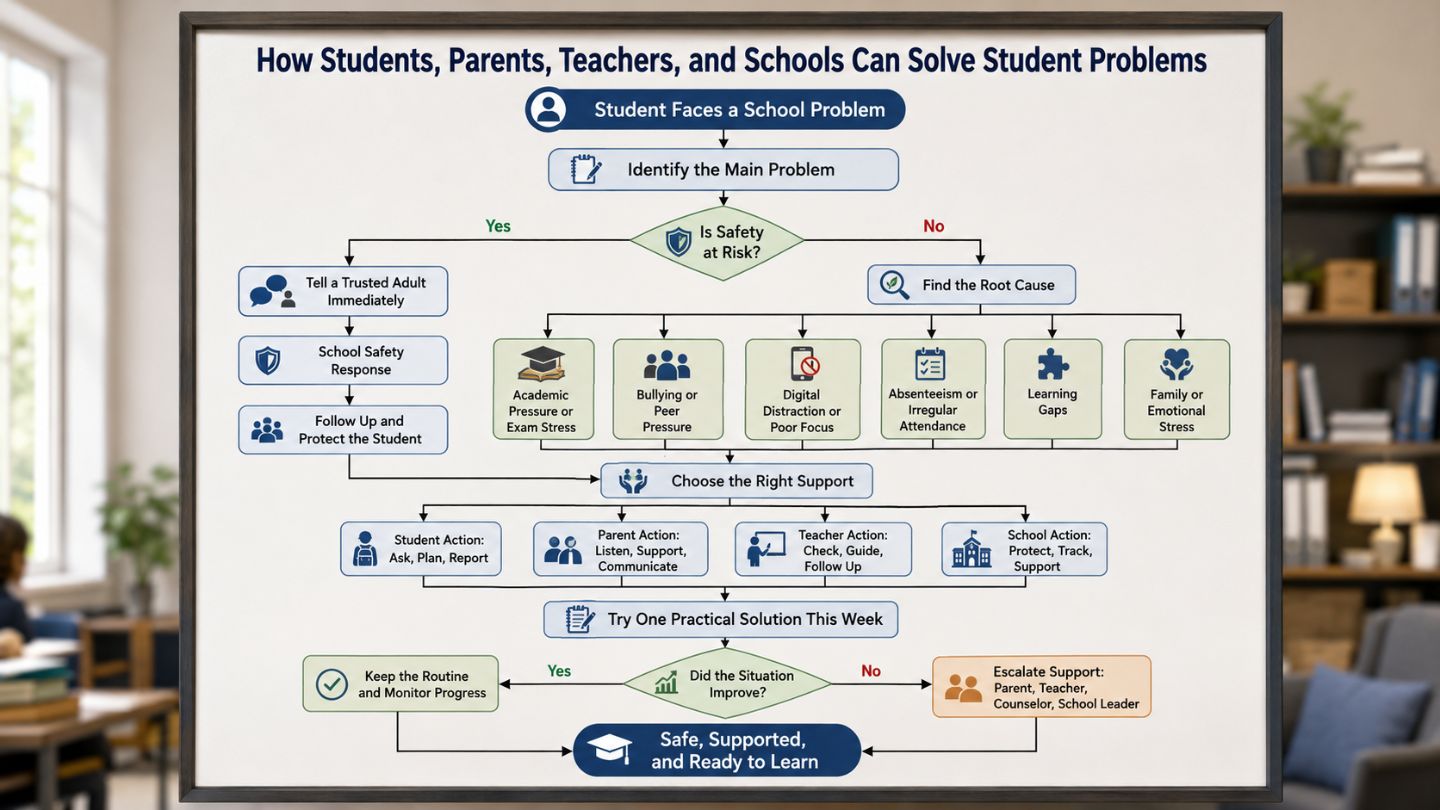
Real solutions by role
Student problems are easier to solve when responsibility is shared. Students can speak up and build routines, parents can provide structure and support, teachers can identify needs early, and schools can create safe systems.
| Role | Practical Actions |
|---|---|
| Student | Ask questions early, report bullying, plan study blocks, reduce device distraction, track attendance |
| Parent | Listen calmly, set routines, communicate with teachers, monitor stress signs, support sleep and study time |
| Teacher | Check understanding, respond to bullying, give clear deadlines, follow up on absences |
| School | Maintain reporting systems, track attendance, provide counseling links, coordinate homework, offer remedial help |
A practical solution should be specific. “Study more” is vague. “Revise chapter two for 30 minutes, solve five questions, and ask the teacher about question four” is useful.
When should students ask for help?
Students should ask for help when a problem affects safety, attendance, sleep, concentration, friendships, or learning. Early support can prevent a small problem from becoming harder to manage.
Students should speak to a trusted adult if they:
-
Feel unsafe at school
-
Are being bullied
-
Miss school often
-
Cannot understand lessons
-
Feel constant pressure
-
Are afraid to attend class
-
Cannot manage homework or exams
-
Notice major changes in mood, sleep, or routine
If a student faces immediate danger, they should contact a trusted adult or local emergency support right away.
Simple action plan for this week
Students, parents, and teachers can start with one problem instead of trying to fix everything at once.
-
Write down the main problem.
-
List when it happens.
-
Identify one likely cause.
-
Choose one action for this week.
-
Tell one trusted person.
-
Review after seven days.
Example: If a student is missing homework because they do not understand mathematics, the first action should not be punishment. A better first action is to identify the missing topic and schedule one short help session with a teacher or classmate.
Conclusion
The major problems faced by students in school are connected. Exam stress can link to learning gaps. Absenteeism can link to bullying, family barriers, health, or low motivation. Digital distraction can link to poor sleep, weak routines, or unclear rules.
A useful response is practical and shared: identify the problem, understand the cause, act early, and involve the right people. Students need safe ways to speak up. Parents need clear communication with schools. Teachers need time and systems to respond early. Schools need routines that make safety, learning, and belonging part of daily practice.






Comments 0
No comments yet. Be the first to start the conversation.