



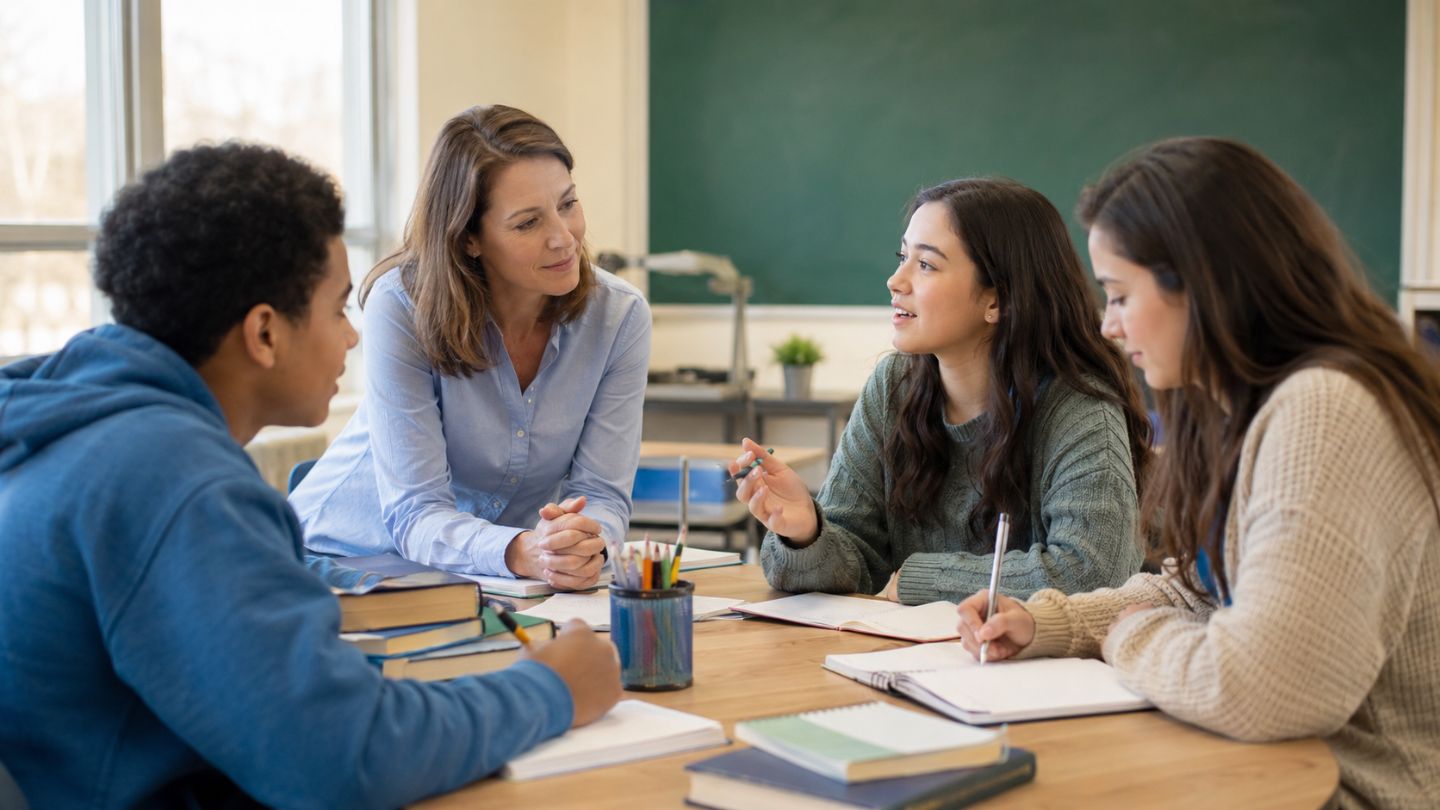
Student-teacher relationships affect learning because they shape how safe, motivated, and willing students feel to participate. When students trust a teacher, they are more likely to ask questions, accept feedback, try again after mistakes, and stay involved in class.
A positive relationship does not guarantee high grades. Learning also depends on curriculum quality, teaching skill, practice, attendance, assessment, peer climate, family context, school resources, and student effort. The relationship matters because it affects the conditions in which learning takes place.
Research supports this balanced view. The American Psychological Association (APA) states that improving students’ relationships with teachers has positive and long-lasting implications for academic and social development. AERO describes positive teacher-student relationships as supportive and fair, built in learning environments where students feel safe, understood, and appreciated.
Answer Summary:
Student-teacher relationships affect learning through trust, motivation, engagement, feedback, classroom behavior, emotional safety, and belonging. Positive relationships help students ask questions, learn from mistakes, and stay involved. Poor relationships can lead to silence, avoidance, stress, and lower participation. The strongest relationships are professional, fair, respectful, consistent, and focused on learning.
Table of Content
- What Is a Student-Teacher Relationship?
- Why Does the Relationship Matter for Learning?
- How Student-Teacher Relationships Affect Learning
- What Research Says About the Link
- Positive and Poor Student-Teacher Relationships
- Examples of Healthy Student-Teacher Relationships
- How Teachers Can Build Better Learning Relationships
- What Students and Parents Can Do
- Limits of the Evidence
- Conclusion
Key Takeaways:
-
Student-teacher relationships shape participation and effort.
-
Trust helps students ask questions and accept feedback.
-
Fairness matters as much as warmth.
-
Poor relationships can reduce confidence and engagement.
-
Teacher support is linked with belonging and motivation.
-
Strong relationships need professional boundaries.
-
Relationships support learning best when paired with strong teaching.
What Is a Student-Teacher Relationship?
A student-teacher relationship is the professional connection between a learner and a teacher. It includes respect, fairness, communication, expectations, feedback, trust, and emotional safety.
A good relationship is not the same as friendship. It does not mean favoritism, relaxed standards, or personal dependence. In education, the relationship should help students learn while keeping clear professional boundaries.
What a healthy relationship includes
A healthy student-teacher relationship includes respect, fairness, consistency, and academic support. Students should understand what the teacher expects, feel able to ask for help, and receive feedback that helps them improve.
AERO connects positive teacher-student relationships with respect, trust, empathy, routines, consistency, and high expectations. Its guidance also says students need learning environments where they feel safe, understood, and appreciated.
What it does not include
A healthy relationship does not mean the teacher treats some students as favorites. It also does not mean avoiding correction. Students need support, but they also need clear expectations.
For example, a teacher can say, “This answer is not complete yet; here is how to improve it,” without embarrassing the student. That is different from ignoring mistakes or lowering the task.
Why boundaries matter
Boundaries protect students, teachers, and the learning environment. A teacher can be kind and approachable while keeping communication appropriate, transparent, and focused on learning.
Professional boundaries also protect fairness. Every student should have access to help, not only the most confident, high-performing, or socially close students.
Why Does the Relationship Matter for Learning?
The relationship matters because learning requires participation. Students often learn more when they feel safe enough to ask, answer, revise, and try again.
The pathway is usually indirect. A supportive relationship can increase engagement. Better engagement can improve how students use lessons, practice, and feedback. A poor relationship can interrupt this process when students become silent, anxious, resistant, or disconnected.
Trust affects classroom participation
Trust helps students take learning risks. Asking a question, giving an answer, admitting confusion, or revising weak work all require some level of safety.
A student who expects sarcasm or unfair treatment may hide confusion. A student who expects respectful correction may ask sooner. That difference can affect how quickly learning problems are noticed and addressed.
Fairness affects motivation
Students pay attention to fairness. If rules change from student to student, trust weakens. If the teacher corrects one learner harshly but excuses another, students may see the classroom as biased.
Fairness does not mean every learner receives the same support. Some students need more help at certain times. Fairness means expectations are transparent, dignity is protected, and support is based on learning need.
Feedback works better when students trust the source
Feedback is easier to use when students believe the teacher is trying to help rather than judge them. A trusted teacher can point out errors without damaging a student’s sense of capability.
For example, “Your paragraph has a clear point, but the evidence does not yet prove it” gives the student a path. “This is poor work” does not.
For related reading on learning methods, see effective learning strategies for school students.
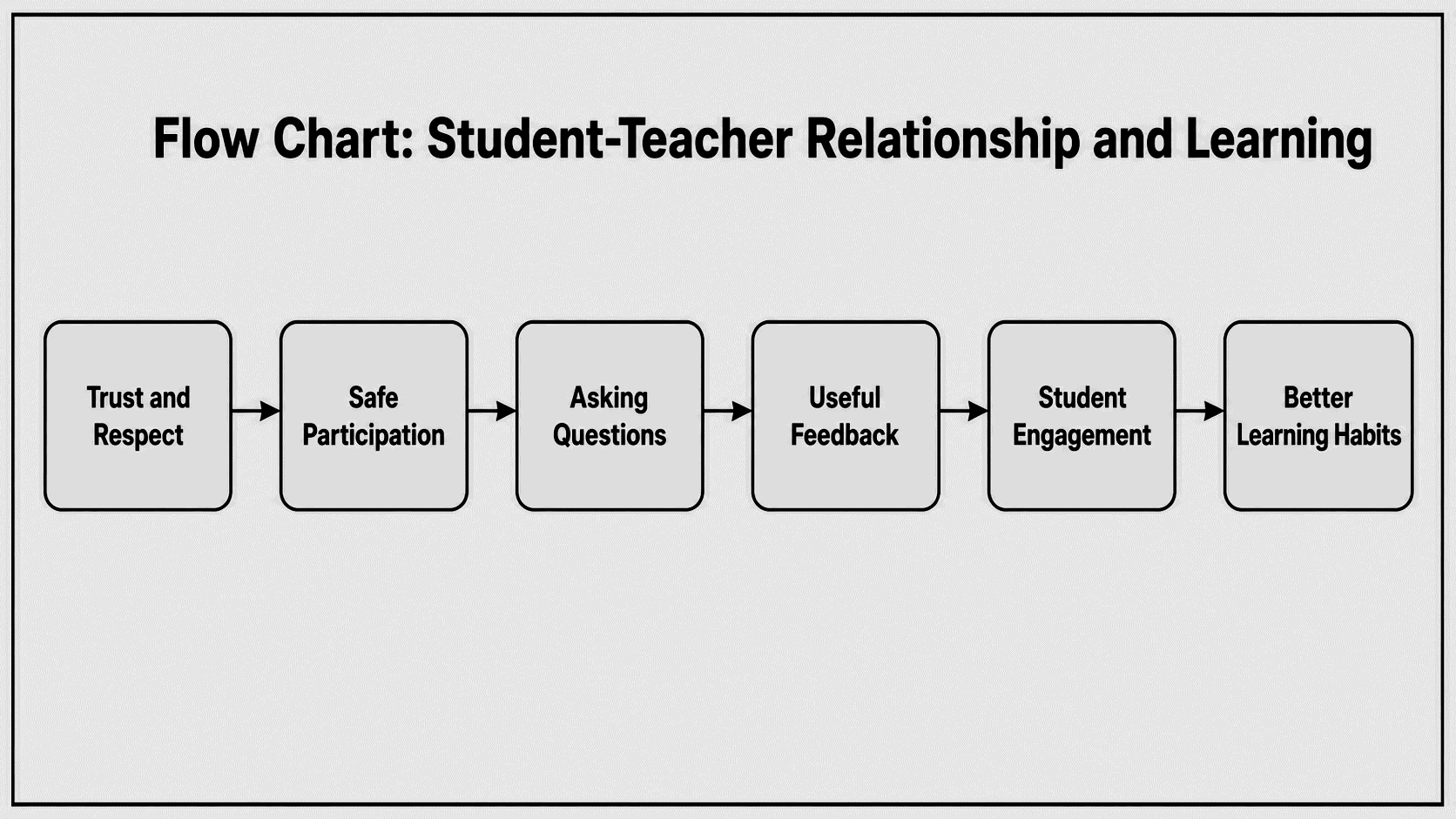 How Student-Teacher Relationships Affect Learning
Student-teacher relationships affect learning through several connected routes: motivation, engagement, help-seeking, feedback, behavior, emotional safety, and belonging.
Motivation and effort
Supportive relationships can strengthen motivation by helping students feel capable and connected. Ryan and Deci’s Self-Determination Theory identifies autonomy, competence, and relatedness as basic psychological needs linked with motivation and well-being.
In the classroom, this means students often try harder when they feel respected, see a path to improvement, and believe their effort is noticed. Motivation does not come from praise alone. It grows when students receive clear tasks, useful feedback, and appropriate challenge.
Students who want a broader academic motivation guide can read how motivation affects academic performance.
Engagement and attention
Engagement is one of the strongest pathways between relationships and learning. Engaged students listen, participate, practice, discuss, revise, and stay mentally involved.
Roorda and colleagues’ 2017 meta-analytic update examined 189 studies involving 249,198 students from preschool to high school. It found that engagement partly mediated the association between teacher-student relationships and achievement.
This means relationship quality is not separate from learning behavior. It can shape whether students take part in the work that learning requires.
Teachers looking for classroom activity ideas can refer to student engagement activities in the classroom.
Asking questions and seeking help
A good relationship makes help-seeking easier. Students are more likely to ask questions when they expect the teacher to respond respectfully.
This matters for quiet students, students learning in a second language, students who have fallen behind, and students who fear looking weak in front of classmates. A teacher who normalizes questions can catch confusion early.
Learning from mistakes
Students learn from mistakes when correction feels safe and useful. If mistakes lead to embarrassment, students may avoid participation. If mistakes are treated as information, students can use them to improve.
Teachers do not need to soften every correction. They need to make correction specific, respectful, and connected to the task.
Classroom behavior
Positive relationships can support better classroom behavior because students understand expectations and trust that rules are applied fairly. AERO connects trust with routines, consistency, reliability, and high expectations.
This does not mean every behavior problem disappears. It means fair relationships can reduce unnecessary conflict and make correction easier to accept.
Confidence and academic self-belief
Students often build academic confidence through repeated experiences of effort, feedback, and improvement. A teacher’s response can help or damage that process.
When a teacher says, “You are not there yet, but this part is improving,” the student receives both honesty and direction. When a teacher labels the student instead of the work, confidence may decline.
For a related discussion on motivation and learning beliefs, see growth mindset vs empty motivation in learning.
Belonging and emotional safety
Belonging helps students feel that school is a place where they can participate. OECD’s PISA 2022 analysis reported that students who felt supported by teachers in mathematics lessons had higher mathematics scores, stronger belonging, and less mathematics anxiety, on average across OECD countries after accounting for socio-economic profiles.
Belonging does not mean every student enjoys every class. It means students are less likely to feel invisible, unwanted, or unsafe in the learning environment.
What Research Says About the Link
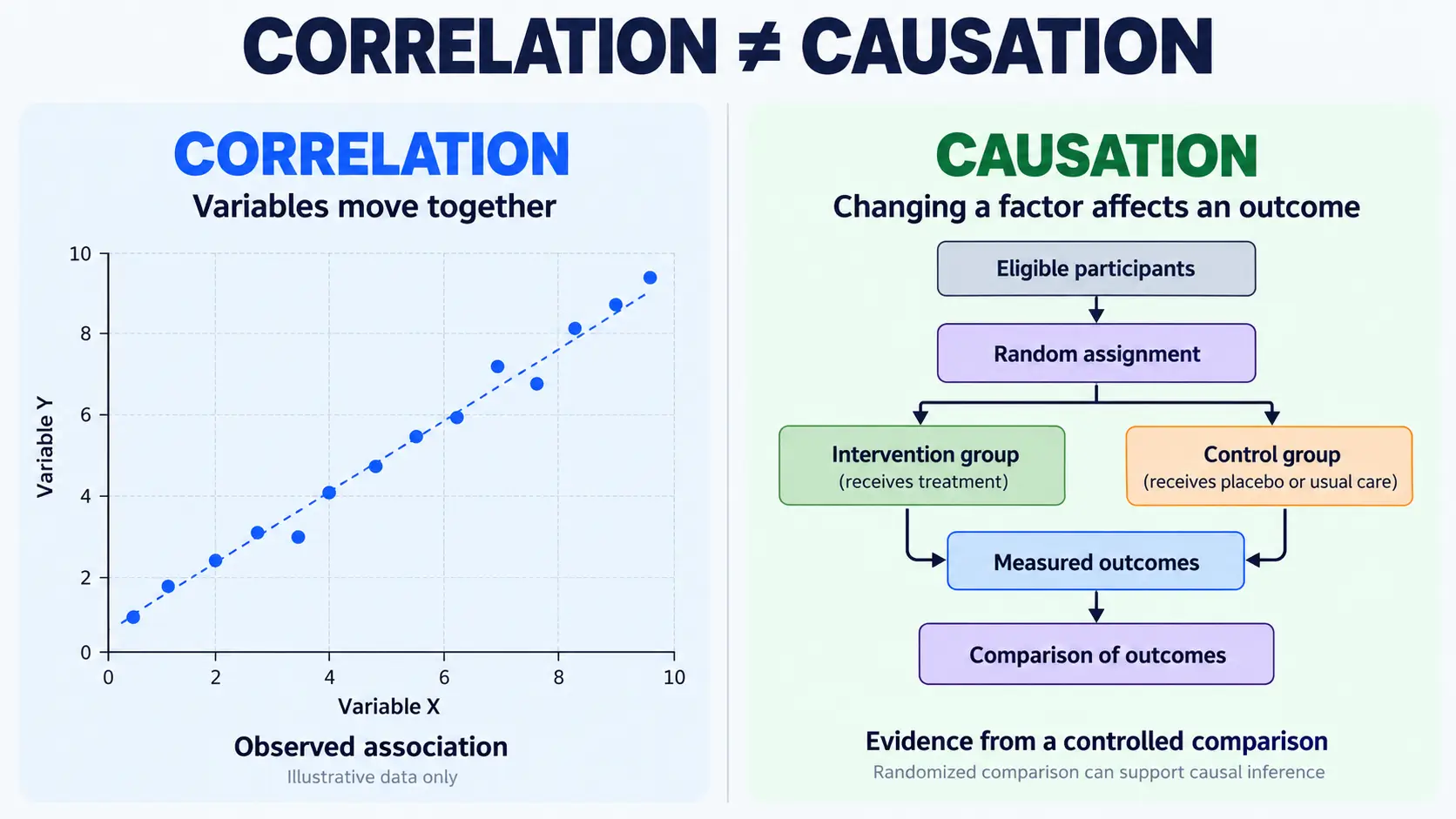
Research generally supports a connection between teacher-student relationship quality and student engagement, achievement, behavior, and development. The evidence is useful, but it should be read with care because many findings are associations, not simple proof of direct cause.
Evidence from meta-analyses
Roorda, Koomen, Spilt, and Oort’s 2011 meta-analysis reviewed 99 studies involving students from preschool to high school. The study found that positive and negative teacher-student relationship qualities were associated with engagement and achievement. The associations with engagement were stronger than those with achievement.
This helps explain why relationships often affect learning through behavior first. Students must engage with lessons before achievement can change.
Evidence from early childhood
Student-teacher relationships appear important in early schooling. SRCD summarized research using a nationally representative U.S. sample of about 14,370 children from the Early Childhood Longitudinal Study–Kindergarten Class of 2010–2011. The study examined relationship closeness and conflict from kindergarten to third grade and reported links with early learning and development.
Young children rely heavily on adults for routines, emotional regulation, and classroom adjustment. A supportive teacher can help children learn how to participate, wait, ask, share, and recover from frustration.
Evidence from college and university learning
Relationships still matter in higher education, though they look different. University students may need academic guidance, timely feedback, respectful communication, and access to support rather than daily emotional reassurance.
A 2024 Frontiers in Psychology study found that teacher-student relationship quality was positively associated with university students’ academic engagement. It also found that perceived social support and academic pressure helped explain the association. The authors noted that the cross-sectional design limits causal interpretation.
This matters because college learners often manage heavier academic pressure. Respectful teacher access and clear guidance can help students stay engaged.
College readers can also use effective learning strategies for college students.
Positive and Poor Student-Teacher Relationships
Positive and poor student-teacher relationships differ in fairness, communication, expectations, support, and emotional safety.
| Area | Positive relationship | Poor relationship |
|---|---|---|
| Communication | Clear and respectful | Dismissive or unclear |
| Feedback | Specific and useful | Vague, harsh, or personal |
| Rules | Consistent | Unpredictable |
| Mistakes | Treated as part of learning | Treated as failure |
| Support | Available and fair | Uneven or absent |
| Expectations | High with guidance | High without support, or low |
| Student response | More participation | Avoidance or silence |
Signs of a positive relationship
A positive relationship is visible when students ask questions, accept correction, participate in class, and understand expectations. It is also visible when quiet students receive attention, not only outspoken students.
Signs include:
-
students know how to ask for help;
-
the teacher corrects work without humiliating students;
-
classroom routines are predictable;
-
feedback explains what to improve;
-
high expectations apply to all students;
-
the teacher listens without sarcasm;
-
support is not limited to favorite students.
Signs of a poor relationship
A poor relationship is visible when students stop asking questions, avoid class participation, expect unfairness, or believe mistakes will be used against them.
Signs include:
-
students hide confusion;
-
feedback feels personal rather than academic;
-
rules are applied unevenly;
-
students fear being mocked;
-
some learners feel ignored;
-
classroom correction becomes public embarrassment.
Poor relationships can affect learning even when the teacher knows the subject well. A student may still avoid the work if the classroom feels unsafe or unfair.
Examples of Healthy Student-Teacher Relationships
Healthy relationships appear in ordinary teaching moments. They are built through repeated patterns, not one special conversation.
Example 1: Fair correction
A student gives an incomplete answer. The teacher says, “You have the main idea, but you need evidence. Look at the second paragraph and try again.”
This response protects dignity and redirects the student toward learning.
Example 2: Respectful listening
A student asks a question that others already understand. The teacher answers without sarcasm and checks whether the student can continue.
This tells the class that asking questions is allowed.
Example 3: Clear routines
The teacher begins each class with a short review, explains the task, sets time expectations, and tells students how to ask for help.
Routines reduce confusion. Students spend less energy guessing what to do and more energy learning.
Example 4: Support without favoritism
A teacher notices that the same confident students answer every question. The teacher creates time for individual writing before discussion, giving quieter students a way to prepare.
This supports participation without putting students on the spot.
How Teachers Can Build Better Learning Relationships
Teachers can build stronger learning relationships through consistency, respect, clarity, and useful feedback. The goal is not to become popular. The goal is to create a classroom where students can learn with dignity.
Be consistent
Students trust classrooms that feel predictable. Consistency applies to routines, deadlines, behavior expectations, grading criteria, and correction.
When students know what to expect, they can focus more on learning and less on guessing the teacher’s reaction.
Use respectful correction
Correction should target the work or behavior, not the student’s worth. A teacher can be firm without being insulting.
Better: “This section needs evidence.”
Worse: “You did not understand anything.”
The first gives a path. The second may close one.
Give feedback students can use
Useful feedback is specific. It tells students what is missing, what is working, and what to do next.
For example:
-
“Add one example.”
-
“Explain why this evidence supports your point.”
-
“Check the formula before solving the next step.”
-
“Revise the opening sentence so the main idea is clear.”
Keep expectations high and support visible
High expectations help when students also receive guidance. If expectations are high but support is missing, students may feel pressure without direction. If expectations are low, students may feel the teacher has stopped believing in them.
The balanced approach is challenge with support.
For a related teaching discussion, see teach students don’t make them memorize.
Notice quiet learners
Quiet students are not always disengaged. Some are thinking, anxious, unsure, or waiting for a safer way to participate.
Teachers can support them by using written responses, small-group discussion, wait time, and private check-ins.
For a broader teaching-methods topic, see impact of teaching styles on student learning and engagement.
What Students and Parents Can Do
Students and parents can support learning relationships by focusing on clear communication and observable learning needs.
What students can do
Students can start with specific academic requests. Instead of saying, “I do not understand,” they can say, “I understand the first step, but I get lost when the example changes.”
Useful student questions include:
-
“What is one part I should improve first?”
-
“Can you show an example?”
-
“Which mistake should I fix before the next assignment?”
-
“What does a stronger answer include?”
Students should not be expected to solve relationship problems alone, especially if they feel mistreated. In that case, they can speak with a trusted adult, school counselor, class teacher, coordinator, or parent.
What parents can do
Parents can help by describing the learning problem clearly. Instead of starting with blame, they can ask what support would help the student participate.
A useful message might be: “My child is avoiding questions in class because they are afraid of being wrong. What can we try so they can ask for help earlier?”
This keeps the conversation focused on learning behavior and support.
Limits of the Evidence
The evidence supports the importance of student-teacher relationships, but it does not prove that relationships alone determine academic results.
Many studies are correlational. This means relationship quality and outcomes move together, but the study may not prove one caused the other. Stronger students may form easier relationships with teachers, and supportive teachers may help students become more engaged. Both directions can operate.
The clearest conclusion is this: student-teacher relationships are a meaningful learning condition. They do not replace good teaching, curriculum, assessment, practice, attendance, or school resources.
Conclusion
Student-teacher relationships affect learning by shaping how students participate, ask questions, receive feedback, handle mistakes, and stay engaged. A positive relationship gives students a safer path into learning. A poor relationship can make students withdraw, avoid help, or lose confidence.
The most useful relationship is not casual friendliness. It is professional care: respect, fairness, consistency, clear expectations, appropriate support, and strong boundaries. When these conditions are present, students are more likely to take part in the work that learning requires.




Comments 0
No comments yet. Be the first to start the conversation.