



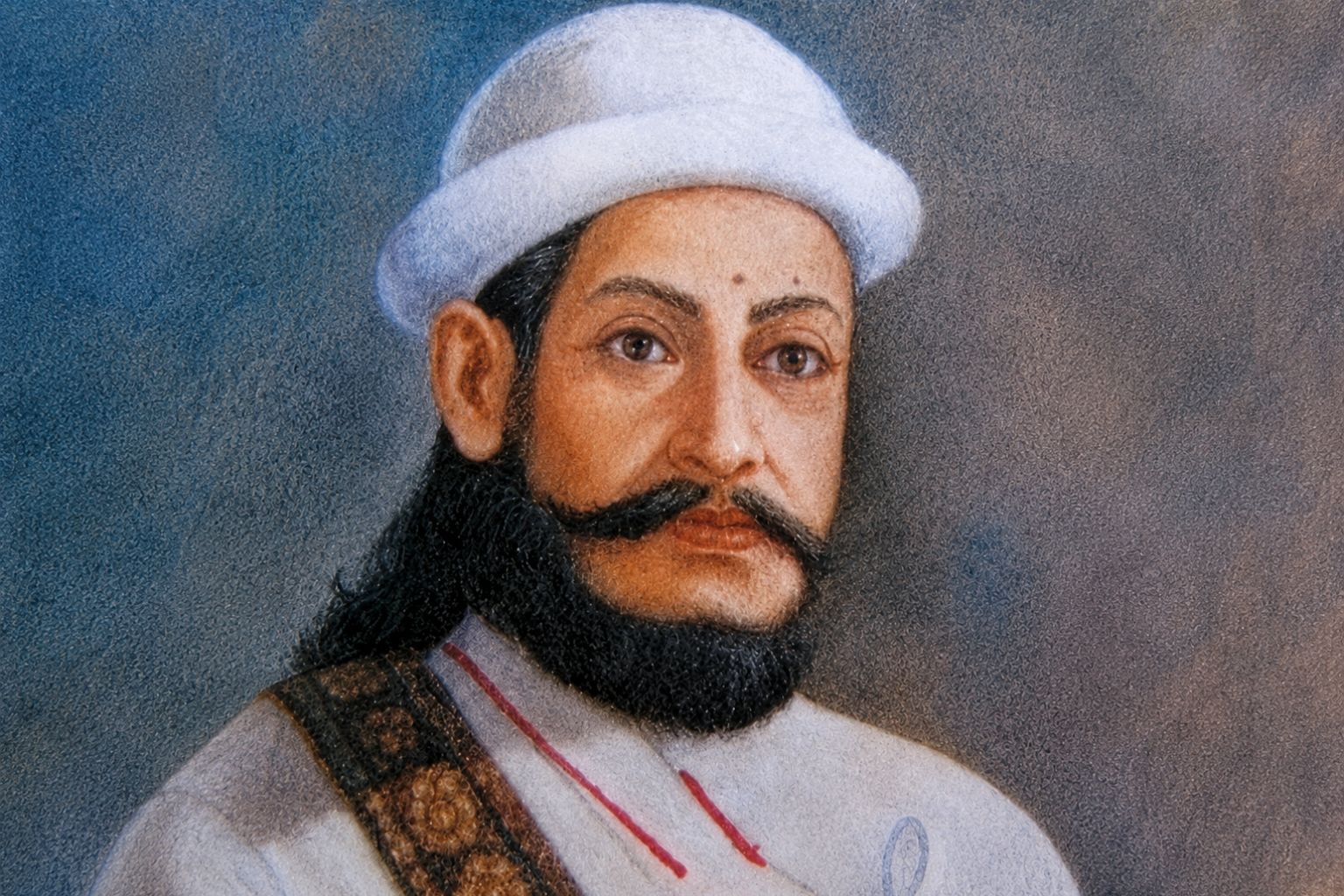
Detailed Biography of Bada Kaji Amar Singh Thapa: The Immortal Story of a National Luminary and the ‘Living Tiger’
Bada Kaji Amar Singh Thapa (बडाकाजी अमरसिंह थापा) is one of the great figures in Nepal’s history whose name immediately evokes a vivid image of patriotism, indomitable courage, and military skill. He was not merely a military commander but also a strong pillar of Nepal’s geographical unification and a vigilant defender of its national integrity.
His contribution to the great campaign to unite Nepal, which was divided among the Baise and Chaubise principalities, was unparalleled. He devoted his life particularly to extending Nepal’s western frontier as far as Kumaon and Garhwal and turning the vision of a greater Nepal into reality. Because of his bravery, loyalty, firm character, and refusal to yield to temptation, he is still honoured as the ‘Living Tiger.’
Key Highlights of Bada Kaji Amar Singh Thapa
-
Full name: Bada Kaji Amar Singh Thapa
-
Born: 12 Shrawan 1805 BS
-
Birthplace: Siranchok, Gorkha, Nepal
-
Parents: Bhim Singh Thapa and Uma Devi Thapa
-
Historical identity: Military commander, national unification leader, and National Luminary of Nepal
-
Popular title: “Living Tiger” for his courage, loyalty, and refusal to surrender before foreign forces
-
Military service: Entered military service at a young age and served Nepal until his death
-
Major contribution: Led Nepal’s western territorial expansion into Jumla, Doti, Kumaon, Garhwal, Dehradun, Srinagar, and the Kangra region
-
Leadership role: Served as the principal defender and administrator of Nepal’s territories west of the Mahakali River
-
Strategic strength: Built and strengthened hill forts that enabled Nepali forces to resist larger and better-equipped armies
-
Anglo-Nepal War: Commanded Nepali resistance during the Anglo-Nepal War of 1814–1816 AD
-
National loyalty: Rejected British offers and inducements, placing Nepal’s sovereignty and dignity above personal benefit
-
Religious contribution: Credited with constructing the Gangotri Temple in present-day Uttarakhand, India
-
Social contribution: Established temples, rest houses, public shelters, and dharmashalas for travellers and local communities
-
Final years: Travelled to Gosainkunda after the Treaty of Sugauli and spent his final period in religious devotion
-
Died: 16 Shrawan 1873 BS at Gosainkunda
-
Age at death: 64 years
-
Legacy: Remembered as a symbol of patriotism, military courage, national integrity, and unwavering service to Nepal
Birth and Family Background
Bada Kaji Amar Singh Thapa was born on 12 Shrawan 1805 BS. He is believed to have been born in Siranchok, Gorkha district, on the day of Rishi Panchami Purnima. His father was Bhim Singh Thapa, and his mother was Uma Devi Thapa.
As Bhim Singh Thapa was himself involved in the military profession, Amar Singh inherited a spirit of courage and bravery from birth. According to his lineage, he was a 24th-generation descendant of Kaji Kaluram Thapa.
An interesting legend is associated with Amar Singh’s childhood. When he was young, he would make a small wooden sword and play with it. On one occasion, he was striking the ridge of a rice seedbed with the sword. His father asked him, “Why are you doing this?”
The young Amar Singh replied with a smile, “To deliver the happy news that a grandson has been born. When he hears the news of the grandson’s birth, he will happily say, ‘May the child remain immortal.’”
The child’s confidence and words themselves seemed to indicate that he would become immortal in Nepal’s history.
Dispute and Historical Evidence Regarding His Birthplace
Historians have expressed differing opinions regarding Amar Singh Thapa’s birthplace. Renowned historian Surya Bikram Gyawali stated in his book Amar Singh Thapa, published in 2000, that Amar Singh was born in Gorkha. However, the marital and political relations between Gorkha and the neighbouring state of Lamjung at the time created some confusion regarding the matter.
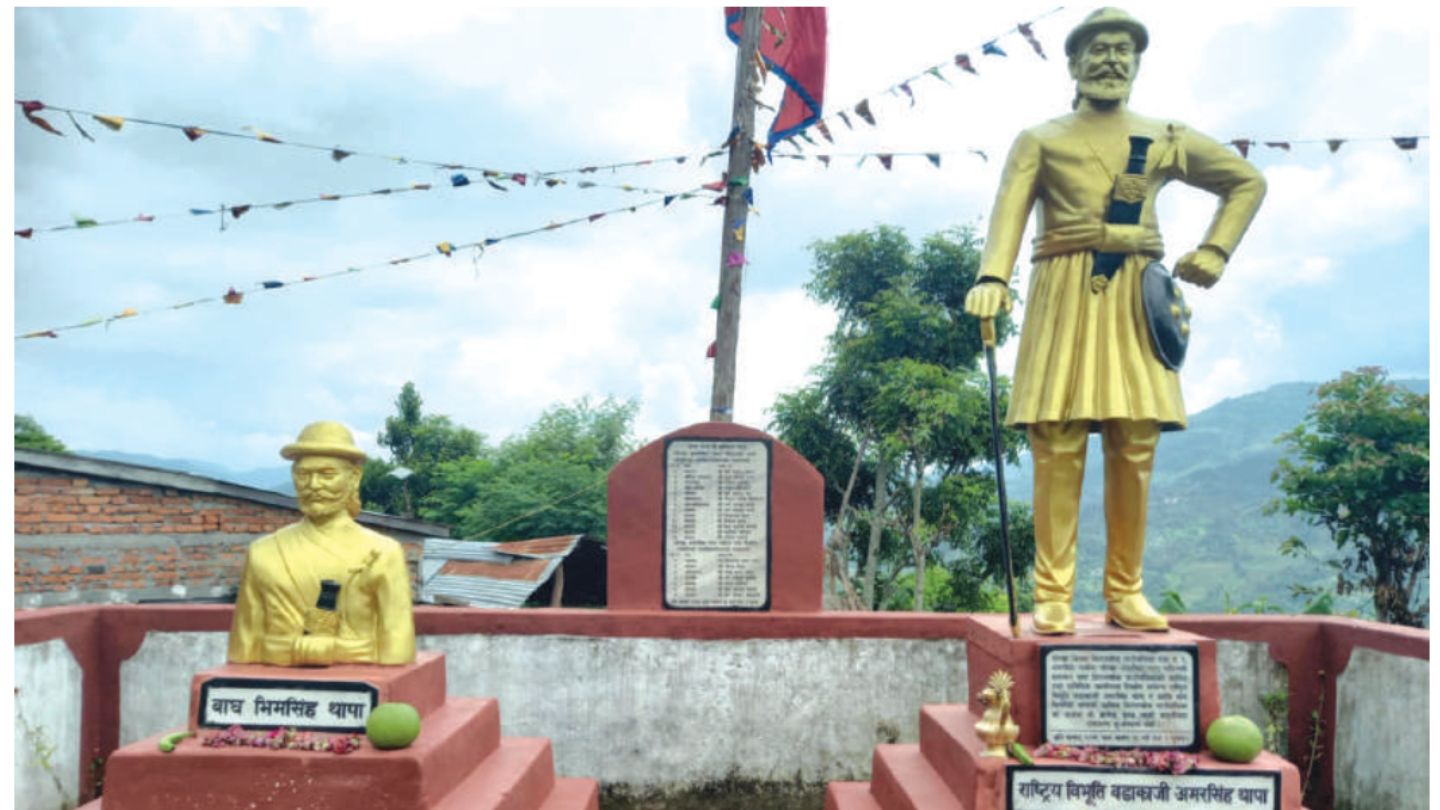
Historical evidence and local oral traditions, however, confirm that he was from Siranchok in Gorkha. In recognition of this fact, Siranchok Rural Municipality decided on 15 Shrawan 2081 BS to declare a public holiday every year on 16 Shrawan.
This decision has further strengthened Amar Singh Thapa’s historical identity at the local level. Temples, rest houses, public shelters, and forts established by Amar Singh Thapa still exist in Siranchok, confirming his deep connection with the area. A plan has also been proposed to build a park containing his statue in Siranchok and develop it as a tourist destination.
Nepal’s Unification and Military Leadership
Amar Singh Thapa’s main contribution was demonstrated during Nepal’s geographical unification. He played a leading role, particularly in the expansion of Nepal’s western frontier.
His strategic skill was a major reason Nepal’s victory flag was raised across Kumaon, Garhwal, Dehradun, Srinagar, and as far as Kangra. He constructed extremely strong forts in elevated locations throughout these regions. Even the British forces of the time could not easily overcome them.
Under his leadership, Nepal successfully incorporated states including Jumla, Doti, and Kumaon. He also served as the protector of the territories west of the Mahakali River. During the conflict with Punjab’s King Ranjit Singh, he courageously led the Nepali forces.
The Anglo-Nepal War and the Title ‘Living Tiger’
The Anglo-Nepal War of BS 1871–1873, corresponding to 1814–1816 AD, was the most challenging period of Amar Singh Thapa’s life. The British attempted to win over the Nepali forces by offering various temptations.
Using the friendship between David Ochterlony’s son and Amar Singh’s son, Ranjor Thapa, the British tried to persuade Amar Singh to join their side. However, placing national dignity and the motherland above everything else, Amar Singh firmly rejected every offer and temptation presented by the British.
From the mountainous regions and forts, he offered strong resistance to the well-equipped British forces armed with modern weapons. Amar Singh’s contribution was central to the stories of bravery demonstrated by the Nepali Army at places such as Nalapani, Jaithak, and Malaun.
Because of his unwavering courage, patriotism, and refusal to bow before the enemy, even the British respected him and described him as the ‘Living Tiger.’
Religious and Social Contributions
In addition to being a skilled military commander, Amar Singh Thapa was equally active in religious and social work. He established the magnificent Gangotri Temple at Gangotri, the source of the Ganges River in Uttarakhand, India.
The temple remains one of the principal religious sites among the four Dhams of the Indian Himalayas. He also constructed public rest houses, shelters, and dharmashalas in Siranchok, Gorkha, and other places for the convenience of local communities.
The National Luminary Amar Singh Thapa Foundation has been established in Battisputali, Kathmandu, in his memory. It conducts research and public awareness activities concerning his life and contributions. Temples dedicated to the clan deities that he established are also being preserved at the local level.
Final Days and Death
Amar Singh Thapa became deeply disappointed and distressed after the Treaty of Sugauli was signed in BS 1873. The pain of losing territories acquired through his blood and labour was unbearable to him.
He subsequently renounced worldly attachments and travelled to Gosainkunda. He remained there for nearly two months, immersed in devotion and meditation. He had travelled there from Kathmandu to attend the Dashahara fair held in Jestha 1873 BS.
While staying at Gosainkunda, he fell ill. After remaining continuously ill for approximately 10 to 12 days, he died at 11:55 p.m. on 16 Shrawan 1873 BS at the age of 64. His youngest wife, Dhan Kumari, also became sati in fulfillment of her marital duty. News of his death brought profound grief to Nepal and its people at the time.
Conclusion and National Pride
Bada Kaji Amar Singh Thapa’s entire life was dedicated to the integrity, expansion, and dignity of his motherland. He entered military service at the age of 11 and continued serving the nation unwaveringly until the age of 64.
His role in shaping the map of greater Nepal, stretching from the Teesta River in the east to Kangra in the west, will always be remembered.
According to historian Surya Bikram Gyawali, the courage displayed by Amar Singh Thapa and his loyalty to his homeland will remain a constant source of inspiration for Nepalis. He was a fearless and honourable military commander before whom even foreign powers bowed in respect.
Amar Singh Thapa remains revered in the hearts of Nepalis as a symbol of national pride and patriotism. The story of his sacrifice, devotion, and bravery has made him immortal in Nepal’s history, and his legacy will remain alive for generations.






Comments 0
No comments yet. Be the first to start the conversation.