



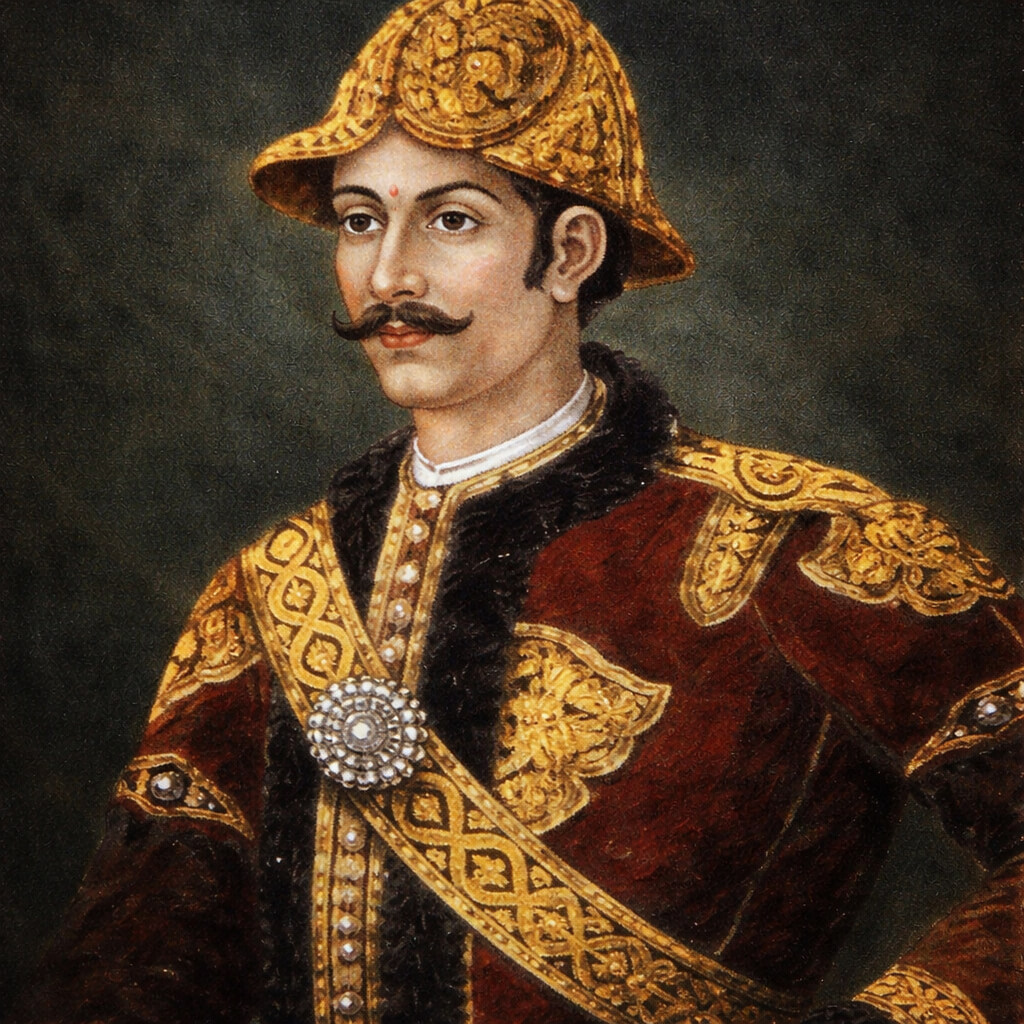
General Bhimsen Thapa Biography and Legacy
General Bhimsen Thapa was a long-serving ruler, reformer, and nationalist statesman in modern Nepal. He is widely known informally as Nepal’s first prime minister and officially as the Mukhtiyar.
During the period of expanding British Empire influence in South Asia, he is credited with leading efforts to safeguard Nepal’s independence and sovereignty, for which the Government of Nepal recognized him as a national hero.
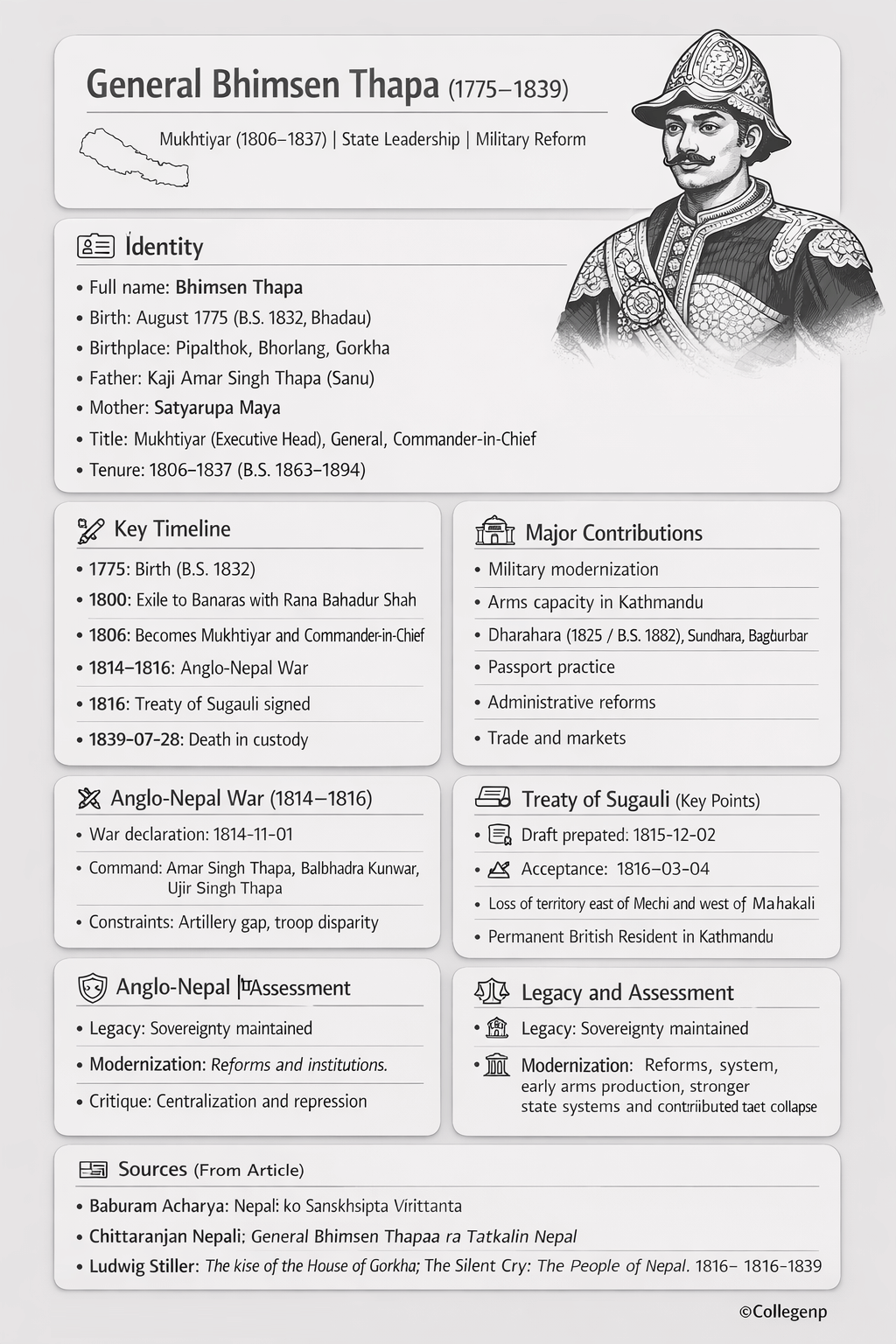
Identity
Full Name: Bhimsen Thapa (in Nepali: भीमसेन थापा)
Birth: August 1775 (B.S. 1832, Bhadau)
Birthplace: Pipalthok, Bhorlang, Gorkha
Father: Kaji Amar Singh Thapa (Sanu)
Note: Bada Kaji Amar Singh Thapa (who led the western front) and Bhimsen’s father are different individuals.
Mother: Satyarupa Maya
Position/Title: Mukhtiyar (Executive Head), General, Commander-in-Chief
Tenure: 1806 to 1837 (B.S. 1863-1894)
Major Contributions: Modernizing the army, building heritage structures including Dharahara, and leading during the Nepal–British war.
Early Life and Background
Bhimsen Thapa was born into an established military family in Gorkha. His father, Amar Singh Thapa (Sanu), served as a trusted and high-ranking Bharadar of the then Gorkha state. From childhood, Bhimsen had close ties to the royal court.
He was a contemporary of Rana Bahadur Shah, and the source notes a friendship between them from an early age. While firm details of formal education are not available, his later work is presented as evidence of traditional military training and administrative capability.
Banaras Exile and Political Rise
A major turning point began in 1800 (B.S. 1857). After Rana Bahadur Shah abdicated in favor of his one-and-a-half-year-old son Girvan Yuddha Bikram Shah, Bhimsen accompanied the former king to exile in Varanasi (Varanasi/Banaras).
Impact of the Banaras stay
-
Observation of British power: He observed the strength, expansionist policy, and military organization of the East India Company, which the source links to his anti-British outlook and emphasis on building a modern army.
-
Diplomatic exposure: He gained knowledge of Indian politics and British diplomacy.
After Rana Bahadur Shah returned to Nepal in 1804 (B.S. 1861), Bhimsen also returned to court politics. Following the execution of Damodar Pande, the source states that Bhimsen’s influence increased.
Events of 1806 (B.S. 1863)
Rana Bahadur Shah was killed by his stepbrother Sher Bahadur Shah. Afterward, the episode known as the Bhandarkhal Parva occurred, during which Bhimsen eliminated opponents and consolidated power. He then became Mukhtiyar and Commander-in-Chief.
The source states he ruled for 31 years by making Queen Lalita Tripurasundari the regent.
Major Contributions
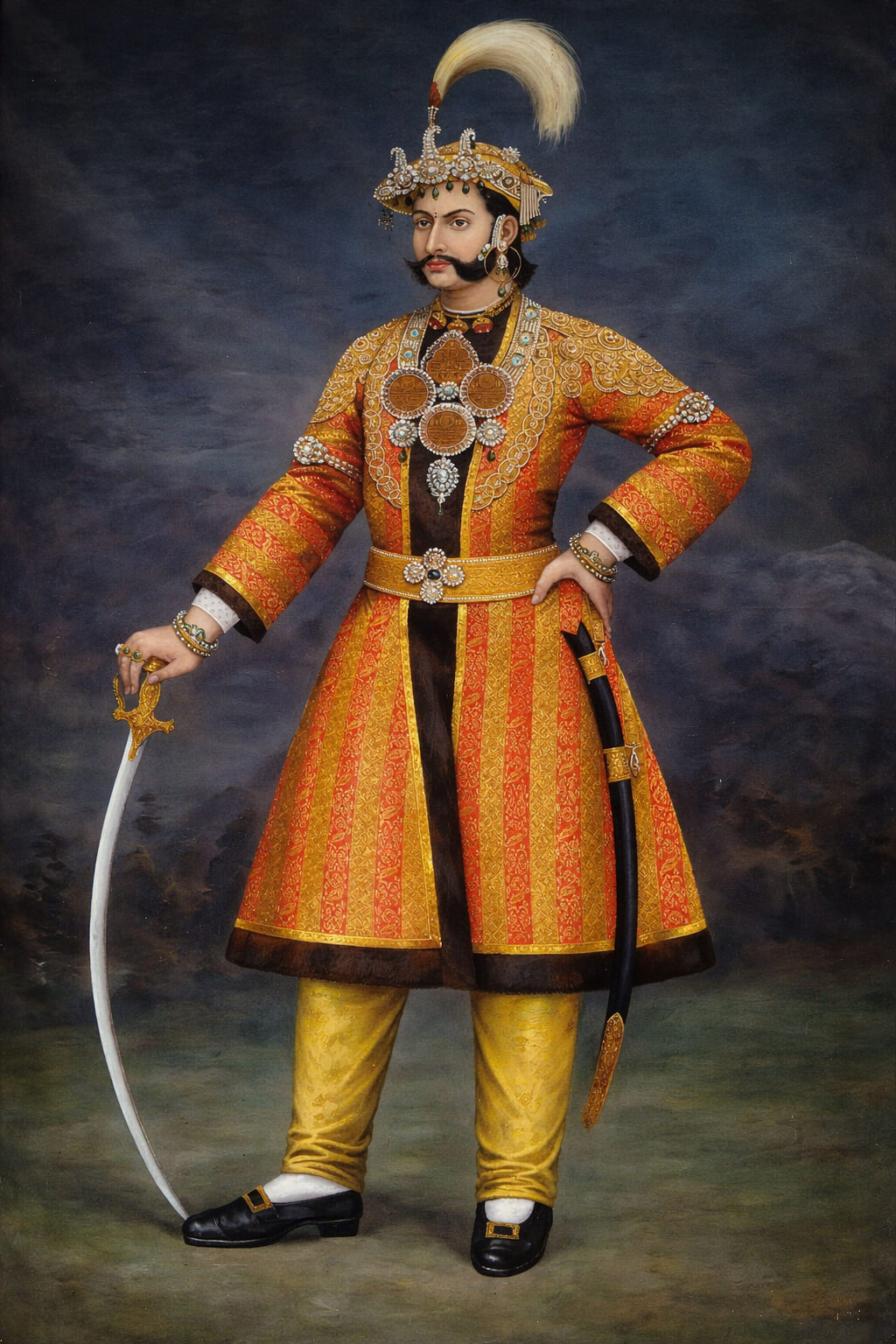
The source presents Bhimsen Thapa’s tenure as focused on reforms, construction, and strengthening national capacity.
a) Military Modernization
-
Reorganized the Gorkhali army in a modern structure.
-
Brought French military personnel (mechanics and trainers) to support weapons-making, training, and barracks management.
-
Systematized the Bagchali Nisan and service arrangements to manage soldiers’ pay and benefits.
-
Built modern arms storage (magazine) facilities and a gunpowder arsenal in Kathmandu.
b) Infrastructure and Heritage
-
Dharahara (Bhimsen Stambha): Built in 1825 (B.S. 1882) in memory of Queen Lalita Tripurasundari and as a symbol of state power. The source notes it was reduced to nine storeys in the 1890 earthquake and later collapsed in the 2015 earthquake.
-
Sundhara and Bagdurbar: Built Sundhara and the grand Bagdurbar as his residence.
-
Emphasized building and maintenance of roads, bridges, and public rest structures (pati–pauwa), including routes linking Kathmandu to the Tarai.
c) Introduction of Passport Practice
The source credits Bhimsen Thapa with initiating Nepal’s first passport practice. It states that permission letters were required to cross borders, especially for travel to India, primarily to control espionage and manage movement.
d) Legal and Administrative Reforms
-
Enforced standardized measures by strictly applying the “mana–pathi” system.
-
Strengthened administrative uniformity through the use of the “Lalmohar” (royal seal) and improved record management.
e) Market and Trade Expansion
The source states that he encouraged Newar traders to open shops and establish settlements, contributing to places such as Palpa, Pokhara, and Dhankuta developing into trade centers.
Anglo-Nepal War and the Treaty of Sugauli
The most difficult and decisive phase of Bhimsen Thapa’s 31-year rule is presented as the Anglo-Nepal War of 1814-1816, described as a struggle between Gorkha expansion and British imperial ambitions.
a) Causes and Background
Under the expansion drive linked to Bhimsen Thapa, the source states Nepal’s borders extended east to the Teesta River and west to the Sutlej River. This rapid expansion is described as raising suspicion within the East India Company.
The source cites disputes over Butwal and Syuraj ownership and Nepal being an obstacle to the Company’s desire to trade with Tibet as immediate causes. It states that Bhimsen did not seek war but was unwilling to compromise national dignity.
b) Conduct of War and Strategy
On November 1, 1814, Governor-General Lord Hastings declared war against Nepal. The source states Bhimsen directed strategic command from Kathmandu, while commanders such as Amar Singh Thapa, Balbhadra Kunwar, and Ujir Singh Thapa led at the fronts.
Nepali forces are described as showing strong resistance in battles including Nalapani, and in defensive fighting at Jaitak and Makwanpur Gadhi. The source attributes Nepal’s eventual defensive position to lack of modern artillery, a large gap in troop numbers, and disruption of logistics on the western front.
c) Treaty Draft, Delay, and Outcome
A draft of the Treaty of Sugauli was prepared on December 2, 1815. The source states Bhimsen initially refused to sign because it would cost Nepal about one-third of its territory. It describes unsuccessful attempts to secure international support and delays in approval, after which the British resumed attacks aimed toward Kathmandu.
On March 4, 1816 (B.S. 1872), when British forces reached Makwanpur, Nepal was compelled to accept the treaty.
Key outcomes described in the source:
-
Nepal lost territories east of Mechi and west of Mahakali.
-
A permanent British Resident was to be stationed in Kathmandu, limiting Nepal’s diplomatic freedom.
Downfall and Death
After the Treaty of Sugauli, the source states Bhimsen Thapa’s power gradually weakened, driven by court intrigue and foreign influence.
a) Court Polarization
In 1832, the death of Queen Lalita Tripurasundari is presented as a major setback, as she was his key protector. The source describes King Rajendra Bikram Shah as politically unstable, and the court dividing into factions, including a Pande faction and an anti-Thapa front supported by the then British Resident Brian Houghton Hodgson.
b) The “Poison Case” and Dismissal
In 1837, the king’s younger son (a six-month-old prince) died suddenly. The source describes opponents making an unsubstantiated allegation involving a poisonous medicine. Based on this, Bhimsen was removed from the posts of Mukhtiyar and Commander-in-Chief, his property was confiscated, and he was imprisoned.
c) Death in Custody
The source states that although he was later released, the same case was revived in 1839 and he was imprisoned again in Jhyalkhana. It describes severe prison conditions and deliberate humiliation threats. It states that on July 28, 1839 (B.S. 1896, Shrawan 16), he died in custody, described as suicide.
The source further states that he was denied customary funeral rites, which it characterizes as a disgracing episode in Nepali history.
Legacy and Historical Assessment
The source presents Bhimsen Thapa as a diplomat, reformer, and nationalist statesman, while also noting serious criticisms.
a) Defender of Sovereignty
The source argues that at a time when major South Asian powers had come under East India Company control, Nepal remained sovereign and independent, and frames this as Bhimsen Thapa’s most significant legacy. It also states he pursued diplomatic initiatives with China, Burma (Myanmar), and the Marathas to form an “Asian alliance.”
b) Modernization and Institutional Development
The source credits him with introducing “western-style modernization,” including:
-
European-style military uniforms, barracks systems, and early arms production.
-
Greater state involvement in judicial administration and market development.
-
Strengthening the Bagchali system, including structured cash salary or provisioning arrangements for officials.
c) Critical Perspective
The source cites historians such as Baburam Acharya and Ludwig F. Stiller, stating that Bhimsen Thapa centralized power heavily during his 31-year rule. It also states he used harsh suppression against political rivals, especially among Pande and Basnet groups, which intensified court resentment and later contributed to his own downfall.
Conclusion
Despite major political rises and setbacks, the source presents Bhimsen Thapa as a defining figure in safeguarding Nepal’s existence and sovereignty. It argues that the military and administrative foundations built during his tenure contributed to the formation of modern Nepal’s state structure. For this reason, he is remembered with respect as a national figure.
Frequently Asked Questions
Why is Bhimsen Thapa considered Nepal’s first prime minister?
The source states that although his official title was “Mukhtiyar,” he exercised executive authority comparable to a modern prime minister and ruled for 31 years, leading to his historical recognition as the first prime minister.
Who built Dharahara?
The source states that Dharahara (Bhimsen Stambha) was built by Bhimsen Thapa in B.S. 1882, under the authority of Queen Lalita Tripurasundari and in his honor.
How did Bhimsen Thapa die?
The source states that following political accusations and harsh imprisonment, he died in custody in 1839, described as suicide.
During whose reign was the Treaty of Sugauli signed?
The source states the treaty was signed during the reign of King Girvan Yuddha Bikram Shah, while executive authority and war leadership were exercised by Mukhtiyar Bhimsen Thapa.
Sources and Verification Note
This biography is based on the following established sources cited in the original text:
-
Nepal ko Sankshipta Vrittanta
-
General Bhimsen Thapa ra Tatkalin Nepal
-
The Rise of the House of Gorkha and The Silent Cry: The People of Nepal: 1816-1839
-
Historical government documents and royal records
The source note states that some dates and sequences may differ among historians, and that the text presents the most widely accepted facts.





Comments 0
No comments yet. Be the first to start the conversation.