



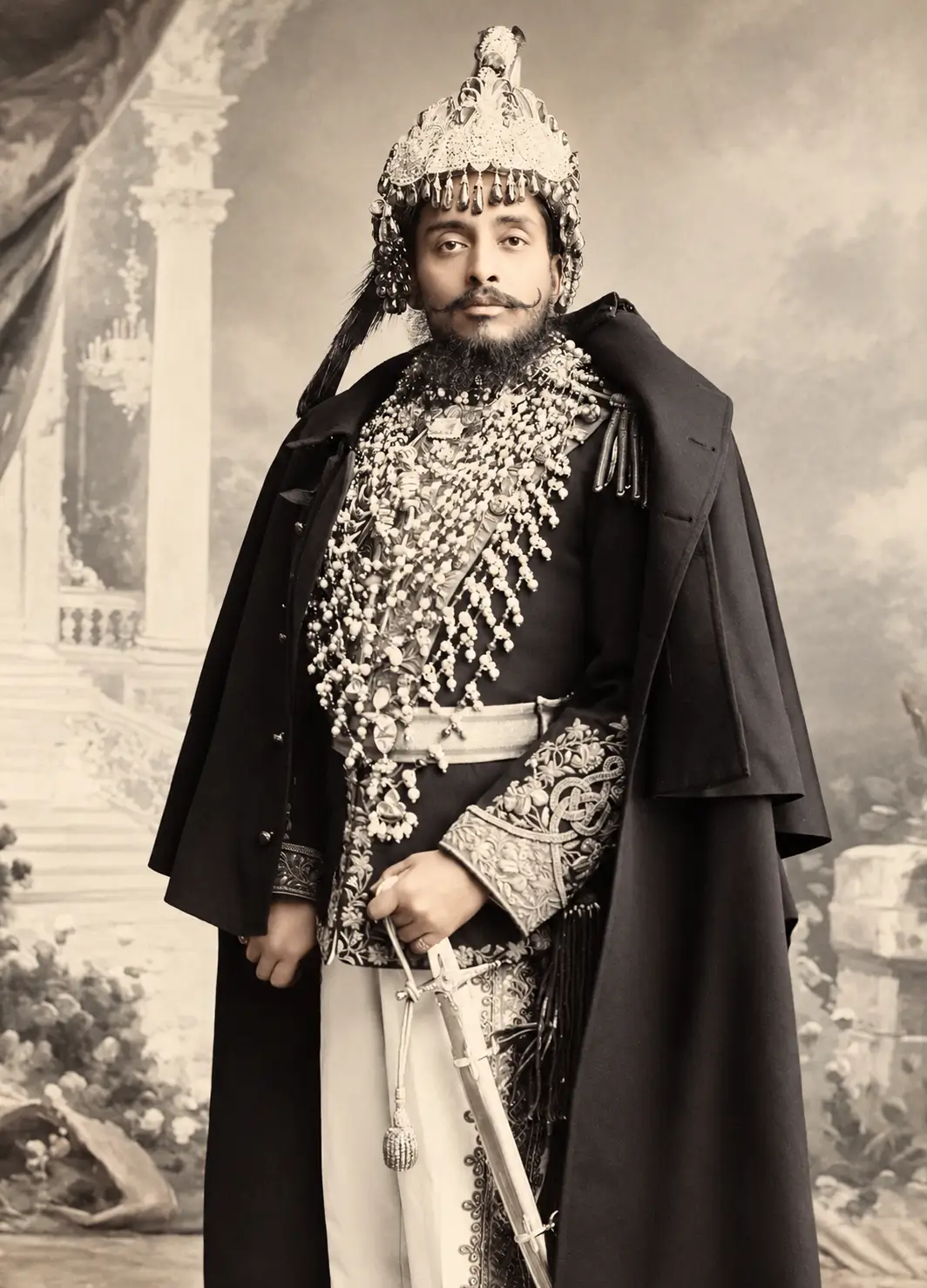
Chandra Shumsher Jung Bahadur Rana (1863–1929) was a Rana prime minister of Nepal who ruled from June 27, 1901, until his death on November 26, 1929. His reign, lasting approximately 28 years and five months, was marked by social reforms, infrastructure development, diplomatic achievements, and the continuation of hereditary autocratic rule.
Chandra Shumsher is particularly remembered for abolishing the sati system in 1920 and initiating the abolition of slavery in 1924, with emancipation taking effect in 1925. His administration also established Tri-Chandra College, Nepal's first institution of higher education, and developed early infrastructure projects, including the Pharping Hydropower Station, Chandra Canal, railway services, and a ropeway for transporting goods.
In foreign relations, the Nepal–Britain Treaty of Friendship, signed on December 21, 1923, became one of the defining diplomatic achievements of his administration. The treaty formally acknowledged Nepal's internal and external independence in its relationship with Britain.
Despite these reforms, Chandra Shumsher maintained the Rana family's control over political power. Public participation in government remained restricted, access to education was limited, and freedom of expression was tightly controlled. The Makai Parva incident involving writer Krishna Lal Adhikari illustrated the restrictions placed on political criticism and intellectual activity.
His historical legacy therefore reflects two contrasting developments: the introduction of important social and administrative reforms and the preservation of an authoritarian political system.
Chandra Shumsher Rana: Quick Facts
|
Particular |
Details |
|---|---|
|
Full name |
Chandra Shumsher Jung Bahadur Rana |
|
Born |
July 8, 1863 |
|
Birthplace |
Kathmandu, Nepal |
|
Died |
November 26, 1929 |
|
Age at death |
66 years |
|
Position |
Prime Minister and Shree 3 Maharaja |
|
Tenure |
June 27, 1901 – November 26, 1929 |
|
Father |
Dhir Shumsher Jung Bahadur Rana |
|
Mother |
Nanda Kumari Devi |
|
Predecessor |
Dev Shumsher Jung Bahadur Rana |
|
Successor |
Bhim Shumsher Jung Bahadur Rana |
|
Monarchs during his rule |
King Prithvi Bir Bikram Shah and King Tribhuvan Bir Bikram Shah |
|
Education |
Matriculation under the University of Calcutta |
|
Major social reforms |
Abolition of sati and slavery |
|
Major educational contribution |
Establishment of Tri-Chandra College |
|
Major diplomatic achievement |
Nepal–Britain Treaty of Friendship, 1923 |
Early Life and Family Background
Chandra Shumsher was born on July 8, 1863, into Nepal's influential Rana family in Kathmandu. He was the son of Dhir Shumsher Jung Bahadur Rana and Nanda Kumari Devi.
His father was a younger brother of Jung Bahadur Rana, the founder of hereditary Rana rule in Nepal.
Chandra Shumsher grew up in a political environment where military authority, administrative appointments, and succession to the premiership were concentrated within the Rana family.
Following Jung Bahadur Rana's death, his brother Ranodip Singh became prime minister. However, competition gradually intensified between Jung Bahadur's descendants and the sons of Dhir Shumsher over political succession.
These internal rivalries influenced Chandra Shumsher's political career. He became involved in the Rana family's struggle for power and eventually secured the premiership.
Education and Intellectual Background
Chandra Shumsher was among the early Rana rulers to receive a formal modern education.
He completed his initial studies at Durbar School and later travelled to Calcutta, British India, for further education.
He passed the matriculation examination conducted under the University of Calcutta. Historical accounts identify him as the first Rana prime minister to have passed a formal matriculation examination.
His knowledge of English helped him undertake administrative and diplomatic responsibilities. His education also familiarized him with aspects of British India's educational and administrative systems.
This background influenced some of the institutional and educational changes introduced during his premiership.
However, his personal access to modern education did not translate into widespread educational opportunities for the general population. Public education remained restricted throughout much of his rule.
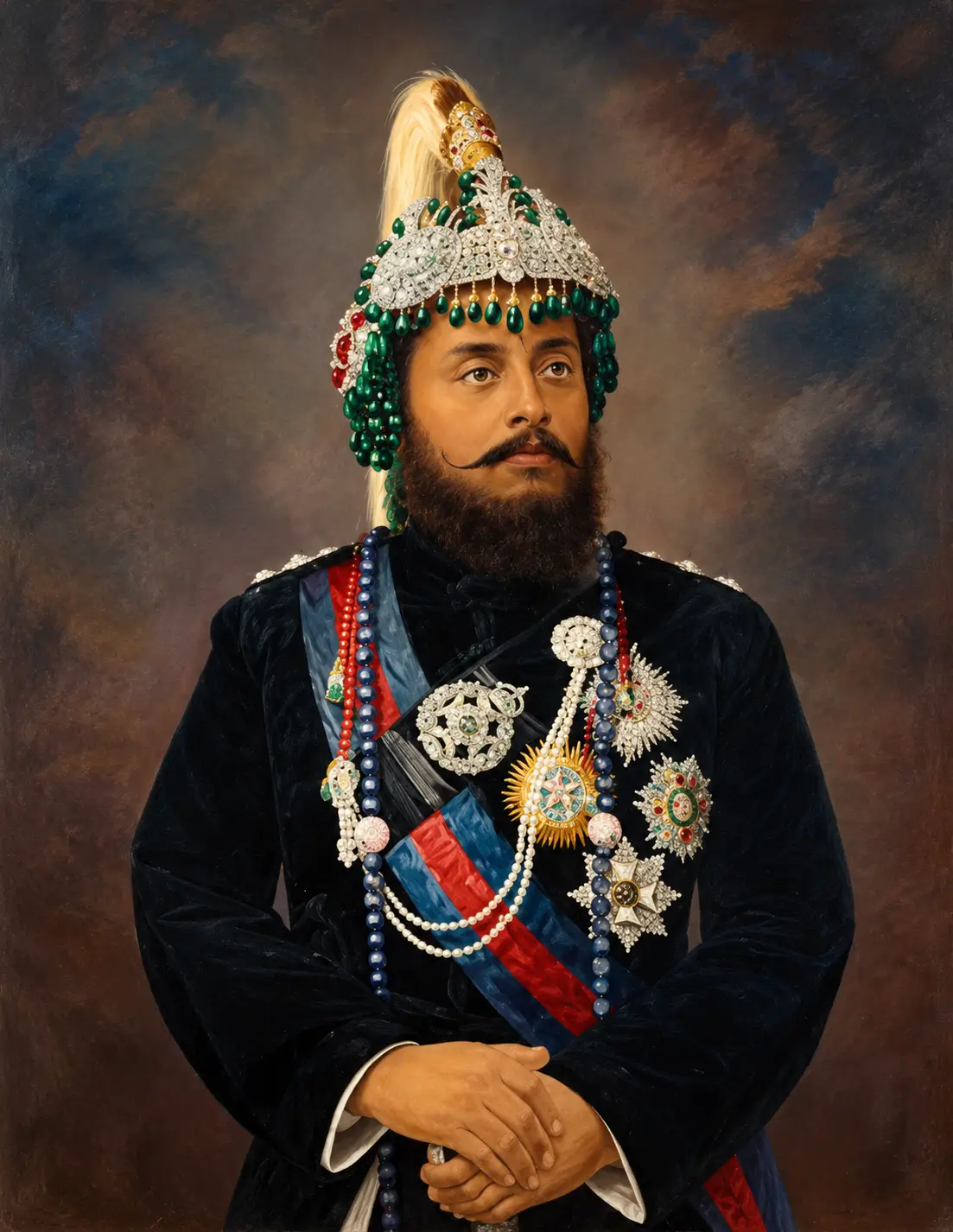
Early Political Career and the 1885 Coup
Chandra Shumsher's rise to power was closely connected to the struggle over succession within the Rana family.
The political upheaval of 1885, known in Nepali history as the 42 Saal Ko Parva, significantly altered the distribution of power among the Ranas.
The 1885 Coup and the Rise of Bir Shumsher
In November 1885, Prime Minister Ranodip Singh was assassinated during a political coup.
Following his death, Bir Shumsher, the eldest son of Dhir Shumsher, became prime minister.
The coup weakened the political influence of Jung Bahadur Rana's descendants and strengthened the position of Dhir Shumsher's sons.
Chandra Shumsher belonged to the faction that gained power after the coup.
Under Bir Shumsher's administration, he received military and administrative appointments that increased his political influence.
Role During Bir Shumsher's Premiership
During Bir Shumsher's rule, Chandra Shumsher became an influential member of the ruling family.
He held various military and administrative responsibilities. His English-language skills and contacts with British officials also contributed to his diplomatic role.
Changes in the Rana succession order eventually placed him among the principal contenders for the premiership.
Chandra Shumsher's Rise to the Premiership
Chandra Shumsher became prime minister on June 27, 1901, after removing his elder brother, Dev Shumsher, from power.
Dev Shumsher's Short Reign
Dev Shumsher became prime minister on March 5, 1901, following Bir Shumsher's death.
He is remembered as a relatively reform-minded Rana ruler.
During his brief premiership, the publication of Gorkhapatra began, and initiatives were introduced to expand access to education.
He also encouraged the establishment of schools and proposed several social and administrative reforms.
These policies, along with concerns about political succession, contributed to opposition within the ruling Rana family.
Removal of Dev Shumsher
On June 27, 1901, Chandra Shumsher, supported by other members of the Rana family, removed Dev Shumsher from office.
Dev Shumsher was initially sent to Dhankuta and later lived in exile in India.
His premiership lasted approximately 114 days.
Following his removal, Chandra Shumsher assumed the positions of prime minister and Shree 3 Maharaja. He remained in power until his death in 1929.
Administrative Reforms and Consolidation of Power
Chandra Shumsher introduced measures to reorganize government administration, although political authority remained concentrated within the Rana family.
The Shah kings retained their position as monarchs, but effective executive power rested with the Rana prime minister.
Construction of Singha Durbar
Singha Durbar is among the most significant historical buildings associated with Chandra Shumsher's administration.
According to ICOMOS Nepal's inventory of architectural heritage, Singha Durbar was constructed in 1903. Engineers Kumar Narasingh Rana and Kishor Narasingh Rana were involved in its design and construction.
The palace reflected European neoclassical architectural influences.
Historical descriptions indicate that the complex originally contained more than 1,000 rooms arranged around seven courtyards.
Singha Durbar was initially constructed as Chandra Shumsher's residence. It later became the official residence of Rana prime ministers and eventually developed into a major centre of government administration.
The building remains an important part of Nepal's administrative and architectural history.
Government Administration and Financial Management
Chandra Shumsher's administration introduced changes in government offices, record management, and financial administration.
Education and training related to accounting, administration, and legal work were given some importance to meet the needs of government institutions.
Changes in administrative and judicial arrangements reflected attempts to improve the functioning of the state.
However, these measures did not establish representative government.
Senior appointments and major policy decisions remained under the control of the Rana administration.
Nepal's First National Census
Nepal conducted its first formal national population census in 1911, during Chandra Shumsher's premiership.
Historical census records maintained by Nepal's national statistical authorities report a total population of 5,638,749 in the 1911 census.
A second national census was conducted in 1920.
These exercises marked the beginning of systematic government collection of national population statistics in Nepal.
Major Social Reforms Under Chandra Shumsher
The abolition of sati and slavery was among the most significant social changes introduced during Chandra Shumsher's administration.
Both reforms altered long-established practices and their legal status in Nepal.
Abolition of the Sati System in 1920
Chandra Shumsher formally abolished the sati system on Ashadh 25, 1977 BS, corresponding to July 8, 1920.
Sati was a historical practice under which widows were expected or pressured to die following their husbands' deaths.
The practice threatened women's lives and reflected serious inequalities affecting widows.
Attempts to restrict sati had been made before Chandra Shumsher's premiership.
Earlier Rana administrations, including those of Jung Bahadur and Bir Shumsher, had introduced certain legal restrictions, but the practice had not been completely abolished.
During Chandra Shumsher's rule, a legal order formally prohibited sati.
This decision removed the practice's legal basis and represented an important development in the protection of widows' lives.
The abolition of sati remains one of the most widely recognized social reforms of his administration.
Abolition of Slavery in 1924–1925
Chandra Shumsher announced a nationwide initiative to abolish slavery on Mangsir 14, 1981 BS, corresponding to November 28, 1924.
At the time, forms of slavery remained in different parts of Nepal.
People could be held as slaves, bought and sold, or compelled to work under the authority of owners.
Slavery was also associated with the terms kamara-kamari and kariya in historical Nepali usage.
Chandra Shumsher's administration introduced measures to abolish this system.
Declaration and Implementation of Emancipation
On November 28, 1924, Chandra Shumsher addressed an assembly at Tundikhel in Kathmandu and announced his intention to abolish slavery.
The declaration was followed by administrative steps concerning the identification of enslaved people, the settlement of owners' compensation claims, and arrangements for emancipation.
The government provided compensation to certain slave owners as part of the process.
Historical accounts also refer to the use of funds associated with the Pashupatinath temple for emancipation.
The abolition was implemented in 1925.
Research published through Heidelberg University's Documenta Nepalica project confirms the 1924 abolition address and identifies 1925 as the year slavery was abolished under Chandra Shumsher.
Social Impact of Emancipation
The abolition of slavery removed the legal basis for treating people as property and engaging in their sale.
Historical accounts indicate that arrangements were made to resettle some formerly enslaved people in the Terai.
The place name Amlekhganj is also associated with the history of emancipation in Nepal.
However, the legal abolition of slavery did not necessarily eliminate all forms of labour exploitation or social inequality.
Economic dependency and unequal social relations could persist even after formal emancipation.
The reform should therefore be understood as a major legal and social achievement without assuming that all related problems disappeared immediately.
Contributions to Education, Nepali Language and Publishing
Chandra Shumsher's educational policies reflected both institutional development and restrictions on public access to learning.
Although the expansion of public schooling remained limited, his administration established Nepal's first institution of higher education.
Limited Expansion of Public Education
The school expansion initiatives introduced during Dev Shumsher's brief premiership were not fully continued under Chandra Shumsher.
During Rana rule, educational opportunities were largely concentrated among members of the ruling family, the administrative elite, and a limited section of society.
Chandra Shumsher nevertheless supported certain forms of education needed for government administration.
Training in accounting and administrative work received attention because it helped prepare personnel for state institutions.
His educational policies thus placed greater emphasis on selected administrative needs than on providing broad access to schooling.
Establishment of the Gorkha Bhasha Prakashini Samiti
The Gorkha Bhasha Prakashini Samiti, or Gorkha Language Publishing Committee, was established in 1970 BS (1913 AD) during Chandra Shumsher's premiership.
Ram Mani Acharya Dixit played an important role in its establishment and early activities.
The committee worked on publishing Nepali-language textbooks, literary materials, and publications intended for educational and administrative purposes.
Operating under government authority, it also exercised regulatory control over publishing.
The institution later became known as the Nepali Bhasha Prakashini Samiti.
Its institutional history eventually continued through Sajha Prakashan, which was established under that name in 2021 BS (1964 AD).
The committee contributed to the development of organized Nepali-language publishing, although its activities remained subject to the political restrictions of the time.
Establishment of Tri-Chandra College in 1918
The establishment of Tri-Chandra College was one of Chandra Shumsher's principal educational achievements.
Established in 1918, Tri-Chandra College is recognized as Nepal's first formal institution of higher education.
According to the official history of Tri-Chandra Multiple Campus, affiliation was granted by Patna University on August 21, 1918.
The institution, originally named Tribhuvan-Chandra College, was established on August 28, 1918, and began teaching.
Its name combined those of King Tribhuvan and Prime Minister Chandra Shumsher.
Initial teaching included subjects such as mathematics, history, and languages.
Science education and degree-level programmes developed later.
The campus's historical records state that the institution was renamed Tri-Chandra College in 1924, when Bachelor of Arts studies were introduced.
Historical Significance of Tri-Chandra College
Before Tri-Chandra College was established, Nepali students seeking higher education generally depended on institutions in British India.
The college created an opportunity to pursue formal higher education within Nepal.
However, its initial enrolment and accessibility were limited.
The institution did not immediately make higher education available to all social and economic groups.
Even with these limitations, its establishment marked the beginning of institutional higher education in Nepal and laid a foundation for later academic development.
Infrastructure and Economic Development
Chandra Shumsher's administration oversaw the construction of several early modern infrastructure projects.
These included hydropower generation, railway transport, a ropeway, a road tunnel, and an irrigation canal.
The projects introduced new engineering technologies and improved selected transport, energy, and agricultural facilities.
Pharping Hydropower Station (1911)
Pharping Hydropower Station was Nepal's first hydropower project.
Also known as Chandrajyoti, the station had an installed capacity of 500 kilowatts.
It was inaugurated by King Prithvi Bir Bikram Shah on May 22, 1911.
The station consisted of two generating units, each with a capacity of 250 kilowatts.
Its establishment marked the beginning of electricity generation in Nepal.
Initially, electricity was supplied to selected areas, including royal residences and government facilities. Access was not widespread.
The Nepal Electricity Authority's historical records confirm the station's inauguration date and installed capacity.
Churiyamai Road Tunnel
A historic road tunnel was constructed in the Churiyamai area of Makwanpur during Chandra Shumsher's premiership.
Engineer Dilli Jung Thapa played a leading technical role in the project.
The tunnel was developed to address transport difficulties created by the terrain of the Chure hills.
It represents an early example of modern road engineering in Nepal.
The project also illustrates efforts to improve transportation between the Terai and the Kathmandu Valley during the Rana period.
Nepal's First Railway Service (1927)
Nepal's first railway service began in 1927 during Chandra Shumsher's administration.
According to Nepal's Department of Railways, the railway connected Raxaul in India with Amlekhganj in Nepal.
The line extended for approximately 48 kilometres.
It supported the movement of passengers and commercial goods between Nepal and India.
At that time, railway services did not extend directly to Kathmandu.
Goods transported by rail to Amlekhganj had to be moved onward using other transport arrangements.
The railway therefore became an important part of the transport network serving Nepal's international trade.
Dhorsing–Matatirtha Ropeway
A ropeway for transporting goods was developed from the Dhorsing area of Makwanpur towards Matatirtha in the Kathmandu Valley during Chandra Shumsher's rule.
It was also known as the Tri-Chandra Nepal Tara Ropeway.
Historical accounts describe the system as approximately 22 kilometres long and indicate that it came into operation around 1927.
The ropeway helped transport goods through difficult hill terrain.
At the time, moving supplies from the Terai to Kathmandu involved a combination of railway services, roads, ropeways, and manual labour.
The ropeway was one of the early efforts to reduce the difficulties associated with moving goods into the Kathmandu Valley.
Construction of Chandra Canal
Chandra Canal was constructed in Saptari district during Chandra Shumsher's premiership.
It is associated with the beginning of government-led modern irrigation development in Nepal.
According to Nepal's Department of Water Resources and Irrigation, construction began in 1979 BS (1922 AD).
Water distribution through the completed canal began in 1985 BS (1928 AD).
The project helped establish organized irrigation facilities for agricultural land in Saptari.
Chandra Canal remains an important historical example of Nepal's early irrigation infrastructure.
Development of Health Services
Some institutional initiatives related to healthcare were also introduced during Chandra Shumsher's rule.
The establishment of the Tri-Chandra Military Hospital in Kathmandu is associated with his premiership.
These efforts reflected the gradual introduction of modern medical institutions.
However, healthcare remained limited in coverage.
Access to medical services was concentrated in Kathmandu and selected administrative centres, while much of the population had limited access to institutional healthcare.
Foreign Policy and Relations with Britain
Maintaining close relations with British India while protecting Nepal's separate political identity was a central feature of Chandra Shumsher's foreign policy.
His administration strengthened diplomatic relations with Britain and sought formal recognition of Nepal's independent status.
Relations with Tibet
Relations among Nepal, Tibet, and British India were an important part of regional politics during Chandra Shumsher's premiership.
In 1904, British forces conducted the Younghusband expedition into Tibet.
During this period, Nepal maintained a cooperative relationship with British India.
Chandra Shumsher treated relations with the British administration as a major foreign policy priority.
Balancing Nepal's traditional ties with Tibet and its diplomatic relationship with Britain remained an important political consideration.
Visit to Britain in 1908
Chandra Shumsher visited Britain in 1908.
The visit was an important event in the history of Nepal–Britain relations.
During his stay, he met British political leaders and senior officials.
He also received an honorary Doctor of Civil Law (DCL) degree from the University of Oxford.
The visit strengthened personal and diplomatic contacts between Nepal's ruling administration and British authorities.
Nepal's Support During the First World War
Nepal provided military and other forms of assistance to Britain during the First World War, which lasted from 1914 to 1918.
Chandra Shumsher supported the recruitment and deployment of Nepali soldiers serving under British command.
A substantial number of Nepalis participated in different theatres of the war.
Their service had significant human and social consequences for the soldiers and their families.
Nepal's wartime support also strengthened the political relationship between the Rana administration and Britain.
This cooperation helped create the diplomatic circumstances that preceded the Nepal–Britain Treaty of Friendship in 1923.
Nepal–Britain Treaty of Friendship, 1923
The Nepal–Britain Treaty of Friendship, signed on December 21, 1923, was one of the principal diplomatic achievements of Chandra Shumsher's administration.
The treaty was signed in Kathmandu.
Prime Minister Chandra Shumsher signed on behalf of Nepal, while Lieutenant-Colonel W. F. T. O'Connor, the British envoy to Nepal, signed on behalf of Britain.
Major Provisions of the Treaty
The treaty contained seven articles.
Article I provided for peace and friendship between the two governments and established their mutual recognition and respect for each other's internal and external independence.
Article II confirmed earlier treaties and agreements, including the Treaty of Sugauli, except where the 1923 treaty altered their provisions.
Therefore, the claim that the 1923 treaty completely abolished or replaced the Treaty of Sugauli is historically inaccurate.
Other articles addressed diplomatic cooperation, mutual security concerns, the importation of military materials, and customs arrangements.
According to the official treaty document published by the British government, the instruments of ratification were exchanged in Kathmandu on April 8, 1925.
Significance for Nepal's Independence
The 1923 treaty formally acknowledged Nepal's independent political status in its bilateral relationship with Britain.
Nepal had existed as a separate political state before the agreement. The treaty should therefore not be interpreted as the event that first established Nepal's independence.
Its principal significance lies in Britain's formal recognition of Nepal's internal and external independence through a written bilateral treaty.
The agreement represented an important diplomatic achievement for Chandra Shumsher's administration.
Nevertheless, Britain's recognition did not eliminate British India's geographical, economic, or political influence over Nepal.
Nepal continued to operate within a regional environment strongly affected by British colonial power.
Political Restrictions and Controversies
Despite significant social reforms and infrastructure projects, Chandra Shumsher's administration remained politically authoritarian.
The hereditary Rana system continued, and ordinary citizens had no meaningful opportunity to participate independently in forming the government or determining major public policies.
Makai Parva and Krishna Lal Adhikari
Makai Parva was a major incident involving censorship and restrictions on expression during Chandra Shumsher's premiership.
The incident arose from Makaiko Kheti (Maize Cultivation), a book written by Krishna Lal Adhikari and published in 1977 BS (1920 AD).
Certain passages in the book were interpreted by the Rana administration as criticism of the ruling authorities.
Officials considered some of its symbolic references and expressions to be political satire directed at the government.
Adhikari was arrested and sentenced to imprisonment.
Copies of the book were confiscated and destroyed.
Historical accounts report that he received a nine-year prison sentence.
He died while imprisoned.
Makai Parva remains an important episode in the history of Nepali literature, censorship, and political repression.
Restrictions on Education and Freedom of Expression
Although Chandra Shumsher established Nepal's first college, his administration did not encourage unrestricted political debate or public criticism.
Publishing activities, written expression, and public discussion remained subject to government control.
This produced a notable contradiction within his administration.
Educational and publishing institutions developed, but citizens did not enjoy corresponding political freedoms.
The restrictions reflected the Rana government's broader intention to preserve its hereditary authority.
Classification Within the Rana Family
During Chandra Shumsher's rule, distinctions developed among members of the Rana family based on lineage, marriage, and family status.
These distinctions influenced political succession and access to senior positions.
The classification system was associated with categories that later became commonly known as A, B, and C classes.
However, the development of these distinctions and their full implementation in succession rules did not necessarily occur at the same time.
Later Rana prime ministers also introduced changes affecting succession and eligibility.
The classification system demonstrated that political privileges were distributed unequally even within the ruling family.
Economic Inequality Under Rana Rule
During Chandra Shumsher's administration, major state resources and decision-making authority remained concentrated among a limited ruling elite.
The construction of large palaces, expenditure by the ruling family, and the management of public funds are important subjects in the economic history of the Rana period.
Historical accounts differ over the exact costs of major construction projects and the division between personal and state expenditure.
Consequently, disputed figures should not be presented as established facts without supporting financial records.
An assessment of Chandra Shumsher's economic policies must consider both investment in public infrastructure and the unequal distribution of resources and opportunities.
Personal Life and Death
Chandra Shumsher belonged to one of the most politically influential families in Nepal and held the premiership for more than 28 years.
Among his children were Mohan Shumsher, Babar Shumsher, and Kaiser Shumsher, all of whom became notable figures in Nepal's history.
Mohan Shumsher later served as Nepal's final hereditary Rana prime minister.
Chandra Shumsher died on November 26, 1929, at the age of 66.
Following his death, Bhim Shumsher Jung Bahadur Rana succeeded him as prime minister under the Rana succession system.
Chandra Shumsher's death ended his long premiership, but hereditary Rana rule continued until 1951.
Historical Contributions and Assessment
Chandra Shumsher's administration can be understood as a period in which significant reforms and authoritarian government existed alongside one another.
His principal achievements were concentrated in social reform, education, infrastructure, public administration, and diplomacy.
|
Area |
Major Initiative or Event |
Historical Significance |
|---|---|---|
|
Social reform |
Abolition of sati in 1920 |
Legal prohibition of the sati system |
|
Emancipation |
Slavery abolition announced in 1924 and implemented in 1925 |
Formal abolition of slavery |
|
Higher education |
Establishment of Tri-Chandra College in 1918 |
Beginning of institutional higher education in Nepal |
|
Electricity |
Pharping Hydropower Station inaugurated in 1911 |
Beginning of hydropower generation in Nepal |
|
Transportation |
Raxaul–Amlekhganj railway opened in 1927 |
Introduction of modern railway services |
|
Goods transportation |
Development of the Dhorsing–Matatirtha ropeway |
Improved transportation across difficult terrain |
|
Irrigation |
Chandra Canal began distributing water in 1928 |
Development of government-managed modern irrigation |
|
Population statistics |
First national census in 1911 |
Beginning of systematic national population enumeration |
|
Diplomacy |
Nepal–Britain Treaty of Friendship, 1923 |
Formal bilateral recognition of Nepal's internal and external independence |
|
Political system |
Continuation of hereditary Rana rule |
Preservation of centralized authoritarian government |
Significance of the Social Reforms
The abolition of sati and slavery represented major legal changes affecting the lives and status of vulnerable groups.
These reforms challenged practices that had existed within Nepalese society for generations.
Their historical significance can be recognized independently of the authoritarian political system under which they were introduced.
Foundations of Modern Infrastructure
The establishment of Tri-Chandra College and Pharping Hydropower Station, along with the construction of Chandra Canal, railway infrastructure, and ropeway facilities, contributed to Nepal's early institutional and technological development.
However, the existence of these projects did not mean that development reached all parts of the country equally.
Access to modern education, healthcare, transportation, and economic opportunities remained limited.
These initiatives were important foundations, but their immediate benefits were concentrated in particular locations and sectors.
Limitations of the Political System
Administrative changes under Chandra Shumsher did not establish a government accountable to the general population.
Political authority remained concentrated within the Rana family.
Independent political organization, public criticism, and unrestricted expression were not permitted.
Incidents such as Makai Parva demonstrated the government's willingness to suppress criticism.
For this reason, describing Chandra Shumsher solely as a reformer or solely as an authoritarian ruler would provide an incomplete historical assessment.
A balanced interpretation must examine his achievements, their social effects, and the political system he preserved.
Conclusion
Chandra Shumsher Jung Bahadur Rana was one of the most consequential prime ministers of Nepal's Rana period.
During his rule from 1901 to 1929, Nepal experienced important developments in social legislation, higher education, hydropower, irrigation, transportation, public administration, and diplomatic relations.
The abolition of sati and slavery stands among his principal social achievements. The establishment of Tri-Chandra College and Pharping Hydropower Station marked important stages in Nepal's institutional development. The 1923 Nepal–Britain Treaty of Friendship strengthened the formal diplomatic recognition of Nepal's independent political status.
At the same time, Chandra Shumsher maintained hereditary Rana rule. Political participation remained restricted, and the government exercised control over public expression and criticism.
His historical legacy therefore lies in both the reforms introduced during his administration and the continuation of the authoritarian political structure that shaped Nepal until the end of Rana rule in 1951.
References and Sources
1. Tri-Chandra Multiple Campus, Tribhuvan University. History of Tri-Chandra Campus. Official Institutional History
2. UK Foreign, Commonwealth & Development Office. Treaty between the United Kingdom and Nepal, Together with Note Respecting the Importation of Arms and Ammunition into Nepal. Treaty Series No. 31, 1925. Original Treaty Document
3. National Statistics Office, Nepal. National Population and Housing Census 2021: Population Composition. Historical Census Statistics
4. Nepal Electricity Authority. Generation Directorate Annual Report, FY 2078/79. Pharping Hydropower Station Records
5. Department of Railways, Government of Nepal. Introduction and History of Railway Services in Nepal. Official Railway History
6. Department of Water Resources and Irrigation, Government of Nepal. Background and History of Irrigation Development. Official Irrigation History
7. ICOMOS Nepal. Inventory of 19th and 20th Century Architectural and Industrial Heritage of Nepal. 2020. Architectural Heritage Inventory
8. Heidelberg University Publishing. Documenta Nepalica 3: Slavery and Unfree Labour in Nepal. Historical Research
9. Heidelberg Academy of Sciences and Humanities. Documents on Slavery, Unfree Labour and Emancipation. Historical Document Collection
10. Gorkhapatra. Sanskriti Pravardhanma Gorkhapatra. Historical Account of Sati Abolition
11. Sajha Prakashan. Institutional Background and History. Official Website
12. Government of Nepal, Department of Irrigation. Irrigation Sector Proceedings. Historical Development of Chandra Canal







Comments 0
No comments yet. Be the first to start the conversation.