The Certificate in Medical Laboratory Technology (CMLT) at Nepal Institute of Health Science (Stupa College) is a three-year technical health program affiliated with the Council for Technical Education and Vocational Training.
The course prepares middle-level laboratory personnel to collect and process specimens, conduct laboratory investigations, work with laboratory instruments, prepare reagents, maintain quality-control procedures, and support diagnostic services.
The 2024 CTEVT curriculum moves from foundational study to medical laboratory subjects and then to hospital- and laboratory-based clinical practice.
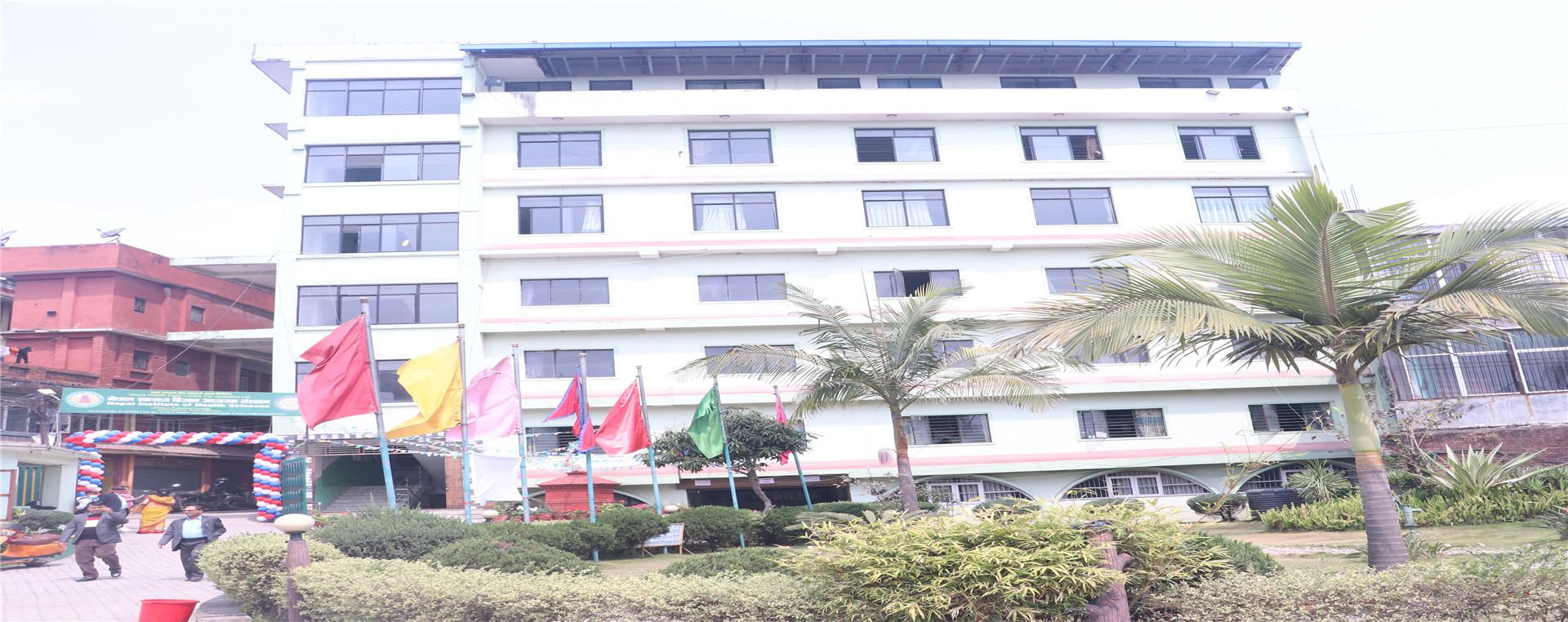
Course: Certificate in Medical Laboratory Technology (CMLT)
College: Nepal Institute of Health Science (Stupa College)
Location: Gokarneswor-05, Bouddha, Tushal, Pipalbot, Kathmandu
Affiliation: Council for Technical Education and Vocational Training (CTEVT)
Duration: 3 academic years
Academic System: Yearly system
Entrance: CTEVT entrance examination
Curriculum Group Size: Maximum 30 students
Main Laboratory Areas: Microbiology, immunology, hematology, blood banking, clinical biochemistry, parasitology, pathology, histopathology, cytopathology, laboratory automation, and laboratory management
Clinical Learning: Hospital- and laboratory-based clinical practice
Professional Council: Nepal Health Professional Council (NHPC)
The current CTEVT curriculum is the third revision, issued in 2024.
CMLT focuses on laboratory work used in health services. Students learn how specimens are collected and processed, how laboratory tests are performed, how reagents are prepared, and how laboratory results are handled within the scope of their training.
The curriculum also covers laboratory quality control, laboratory management, instrument handling, reporting, and supervised practical work. Its stated objectives include performing routine and special laboratory investigations, interpreting results within the training scope, establishing quality-control systems, managing laboratory activities, supervising work, preparing reports, and conducting laboratory-related research.
The academic sequence is deliberate: the first year develops basic science and foundational knowledge, the second year concentrates on medical laboratory disciplines, and the third year applies laboratory knowledge and skills in practical settings.
Eligibility: The 2024 CTEVT curriculum provides the following entry pathways:
SLC, SEE, or equivalent pass with a minimum GPA of 2.0 and grades in compulsory Mathematics, English, and Science; or
TSLC in Medical Laboratory Technology with a minimum of 68.33%.
Candidates must also pass the entrance examination administered by CTEVT.
CMLT is a CTEVT program. Admission follows the CTEVT entrance and admission process; MECEE-BL is not required for this course.
The three-year curriculum moves from foundational study to subject-specific laboratory work and clinical practice.
| Academic Stage | Main Focus |
|---|---|
| First Year | Basic science and foundational subjects |
| Second Year | Core medical laboratory subjects with theory and practical work |
| Third Year | Advanced laboratory subjects, laboratory management, automation, and clinical practice |
Second-year study covers the central laboratory disciplines:
Clinical Microbiology and Immunology
Hematology and Blood Banking
Clinical Biochemistry
Medical Parasitology
Clinical Pathology
Public Health and First Aid
These subjects combine theory and practical work.
Students work with laboratory procedures connected with microorganisms, immune responses, blood analysis, biochemical testing, parasites, clinical pathology, and basic public health and first-aid applications.
The third year brings together advanced laboratory study and workplace-oriented practice. Academic subjects include:
Histopathology and Cytopathology
Automation in Clinical Laboratory
Clinical Laboratory Management
Clinical practice is organized across three major areas:
Microbiology and Parasitology
Hematology and Blood Banking
Biochemistry, Histopathology and Cytopathology
The third-year curriculum therefore shifts much of the emphasis from classroom learning to applying laboratory procedures in hospital and diagnostic laboratory settings.
Clinical practice is a major part of the final stage of CMLT. Students work under supervision in relevant laboratory departments and maintain practical records or logbooks during their postings. Attendance in the clinical departments is also tied to eligibility for the final examination.
In microbiology and parasitology, practical work includes areas such as microscopy, specimen collection, sterilization, staining, culture and sensitivity procedures, serological testing, urine examination, stool examination, and related laboratory investigations.
Hematology and blood banking practice covers areas such as blood counts, hemoglobin estimation, coagulation-related tests, blood grouping, Rh typing, cross-matching, and other hematological procedures.
Biochemistry, histopathology, and cytopathology practice includes reagent preparation, biochemical estimations, microscopy, tissue processing, staining, specimen handling, cytological preparation, and related laboratory procedures.
Assessment combines internal evaluation with final examinations.
Each subject has three internal assessments during the year. Written and practical assessments are used according to the nature of the subject, while practical performance is also evaluated continuously. Students must complete the internal assessment requirements before appearing in the final examination.
Theory Pass Mark: Minimum 40%
Practical Pass Mark: Minimum 50%
Students must pass both theory and practical components where applicable. A student who does not pass a subject may appear in a CTEVT re-examination according to the applicable provisions.
Final practicum evaluation considers attendance, logbook maintenance, practical performance, and viva voce.
The curriculum requires a minimum of 90% attendance in each subject to appear in the respective final examination.
Clinical postings also require at least 90% attendance in the allotted departments. Students are expected to maintain practical records and have their work signed periodically by the supervising instructor or departmental staff.
Students who successfully pass all components of all subjects across the three academic years complete the program and are awarded the Certificate in Medical Laboratory Technology.
After completing CMLT, graduates must meet the applicable professional registration and licensing requirements of the Nepal Health Professional Council (NHPC) before entering regulated professional practice.
The CTEVT curriculum identifies eligibility for registration with the relevant health professional council according to the provisions of the applicable council framework.
CMLT graduates may pursue laboratory-related work after completing the applicable professional registration requirements.
Work settings identified within the curriculum include:
Hospitals
Diagnostic laboratories
Clinics
Blood banks
Research centers
Industry
Physicians' offices
Crime investigation laboratories
The course prepares graduates for laboratory technician-level responsibilities involving specimen processing, laboratory investigations, equipment handling, quality control, and laboratory documentation. Career entry depends on professional registration, recruitment criteria, practical competence, experience, and available positions.
Address: Gokarneswor-05, Bouddha, Tushal, Pipalbot, Kathmandu
Phone: +977-1-4917557, +977-1-4917558, +977-1-4917720
Email: info@stupahealth.org.np
Website: www.stupahealth.org.np
CMLT stands for Certificate in Medical Laboratory Technology.
The program runs for three academic years under the yearly system of CTEVT.
No. CMLT is a CTEVT program. Admission follows the CTEVT entrance process rather than MECEE-BL.
Yes. Candidates must pass the entrance examination administered by CTEVT.
Applicants may enter with SLC, SEE, or equivalent with a minimum GPA of 2.0 and grades in compulsory Mathematics, English, and Science, or through TSLC in Medical Laboratory Technology with at least 68.33%.
Yes. The third year includes clinical practice in microbiology and parasitology, hematology and blood banking, and biochemistry, histopathology and cytopathology.
Students must secure at least 40% in theory and 50% in practical components, along with the required internal and final assessment passes.
The relevant professional body is the Nepal Health Professional Council. Graduates must meet the applicable NHPC licensing and registration requirements before regulated professional practice.



.png)