



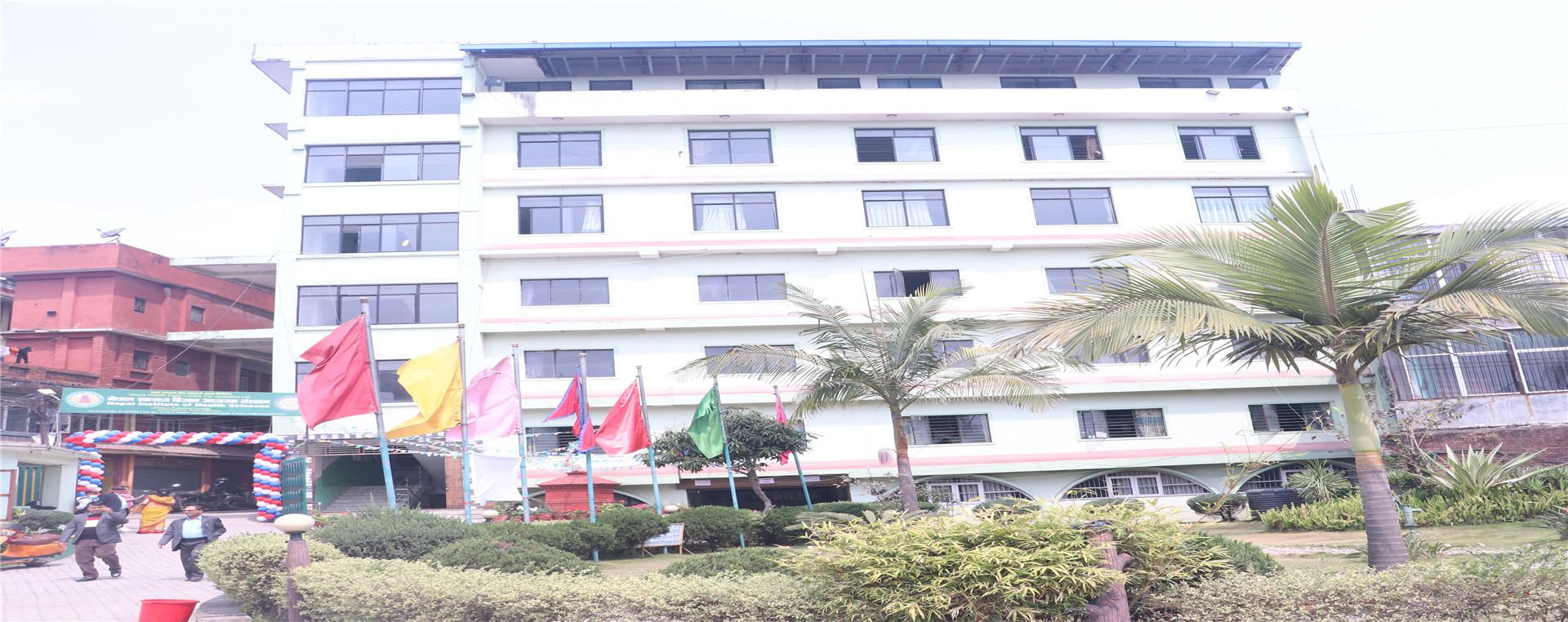
The Proficiency Certificate Level in General Medicine, commonly associated with the Health Assistant (HA) pathway, at Nepal Institute of Health Science (Stupa College) is a three-year technical health program affiliated with the Council for Technical Education and Vocational Training (CTEVT).
The program follows a yearly system and combines general and clinical medicine with surgery, primary health care, family health, environmental health, health education, epidemiology, health management, clinical practice, and community fieldwork. The 2024 CTEVT curriculum is structured to prepare middle-level technical personnel for clinical and community health responsibilities.
Course: Proficiency Certificate Level in General Medicine
Common Reference: Health Assistant (HA)
College: Nepal Institute of Health Science (Stupa College)
Location: Gokarneswor-05, Bouddha, Tushal, Pipalbot, Kathmandu
Affiliation: CTEVT
Duration: 3 academic years
Academic System: Yearly system
Medium of Instruction: English and/or Nepali
Entrance: CTEVT entrance examination
Attendance: Minimum 90% in each subject to appear in the respective final examination
Main Practical Components: Clinical practice, primary health care practicum, laboratory and medical procedures, and community field practicum
Professional Council: Nepal Health Professional Council
The 2024 curriculum sets the program group size at a maximum of 40 students.
The HA program is centred on practical health services at clinical and community levels. Students are trained in patient assessment, provisional diagnosis, referral, treatment support, medical investigation, first aid, maternal and child health, nutrition, family planning, health education, and management of health services.
The curriculum also covers administrative responsibilities relevant to Health Posts and Primary Health Care Centers, including health records, supervision, logistics, national health programs, quality assurance, and health service management.
Eligibility: The 2024 CTEVT curriculum specifies the following entry pathways:
SLC, SEE, or equivalent with a minimum GPA of 2.0 and grades in compulsory Mathematics, English, and Science; or
CMA-equivalent qualification with a minimum of 68.33%.
Candidates must pass the entrance examination administered by CTEVT.
PCL in General Medicine is a CTEVT program. Admission follows the CTEVT entrance and admission system. MECEE-BL is not required for admission to this course.
The program runs for three academic years under the yearly system. One academic year consists of 35 academic weeks, including the evaluation period.
The first stage builds the general basic science foundation, while later study moves into applied medicine, surgery, public health, primary health care, clinical practice, and community work.
The second-year curriculum includes:
Medicine-I
Surgery-I
Basic Medical Procedures and First Aid
Clinical Pathology
Pharmacology and Pharmacy
Environmental Health
Health Education
Primary Health Care and Family Health, including maternal and child health, family planning, and nutrition
These subjects combine theory and practical study according to the curriculum structure.
Third-year study includes:
Medicine-II
Surgery-II
Health Management
Epidemiology, Demography and Community Diagnosis
Comprehensive Clinical and PHC Practicum
Comprehensive Community Field Practicum
The comprehensive clinical and PHC practicum runs for 16 weeks, while the comprehensive community field practicum runs for eight weeks.
Medicine-II includes pediatrics, neonatology, psychiatry, and dermatology. Surgery-II incorporates ENT, dentistry, and ophthalmology.
Practical training is an important part of the HA curriculum. Students work with clinical procedures, pathology, pharmacology, first aid, environmental health, family health, epidemiology, community diagnosis, and primary health care before moving into comprehensive practicum.
At Stupa College, the wider clinical and field learning environment includes hospitals, health facilities, primary health care settings, health posts, and community locations. Exposure areas associated with the college include Stupa Community Hospital, Bhaktapur District Hospital, Nepal Orthopedic Hospital, Gokarna PHCC, Kapan Health Post, Nayapati Health Post, and Indrayani Health Post, together with community field areas in Kathmandu and other districts.
The curriculum develops practical competencies connected with the responsibilities assigned to middle-level general medicine personnel. Students work on areas such as:
Patient assessment and provisional diagnosis
Identification and referral of cases
Basic medical and surgical procedures
First aid and common emergency management
Routine medical investigations
Maternal and child health services
Nutrition and family planning services
Community health programming
Health education and counseling
Health Post and primary health care management
Medical record keeping and reporting
Supervision and health service coordination
These competencies are developed through theory, guided practical work, clinical exposure, and community-based learning.
Completion of the academic program is followed by the applicable professional council process. Health Assistant graduates must meet the licensing and registration requirements of the Nepal Health Professional Council (NHPC) before entering professional practice under the relevant regulatory framework.
The HA curriculum also covers the role and responsibilities of NHPC and professional practice within health management study.
After completing the program and meeting the applicable professional council requirements, graduates may seek Health Assistant and related middle-level health roles according to recruitment criteria and available positions.
Working settings associated with the qualification include:
Hospitals
Polyclinics
Primary Health Care Centers
Health Posts
Other government and non-government health institutions
Career entry depends on professional registration, recruitment requirements, competence, experience, and available vacancies.
The qualification may also support progression to bachelor-level study where the candidate meets the admission and eligibility requirements of the chosen program.
Address: Gokarneswor-05, Bouddha, Tushal, Pipalbot, Kathmandu
Phone: +977-1-4917557, +977-1-4917558, +977-1-4917720
Email: info@stupahealth.org.np
Website: www.stupahealth.org.np
The official curriculum title is Proficiency Certificate Level in General Medicine. The program is commonly associated with the Health Assistant pathway.
The program runs for three academic years under the yearly system.
No. PCL in General Medicine is a CTEVT program, and admission follows the CTEVT entrance system rather than MECEE-BL.
Yes. Candidates must pass the entrance examination administered by CTEVT.
Students need a minimum of 90% attendance in each subject to appear in the respective final examination.
Yes. The curriculum includes practical study throughout the program and a 16-week comprehensive clinical and PHC practicum in the third year.
Yes. Third-year study includes an eight-week comprehensive community field practicum.
The relevant professional body is the Nepal Health Professional Council. Graduates must meet the applicable NHPC licensing and registration requirements before professional practice.


.png)





