Nepal Engineering Council (NEC) provides official services related to engineering profession regulation and engineering education oversight in Nepal. Its service areas include engineer registration, General Registered Engineer Registration Examination processing through AMIS, Professional Engineer registration, PEng renewal and CPD record review, engineering education recognition, institutional inspection and monitoring, and professional conduct administration.
NEC operates under the Nepal Engineering Council Act, 2055 and Nepal Engineering Council Rules, 2057.
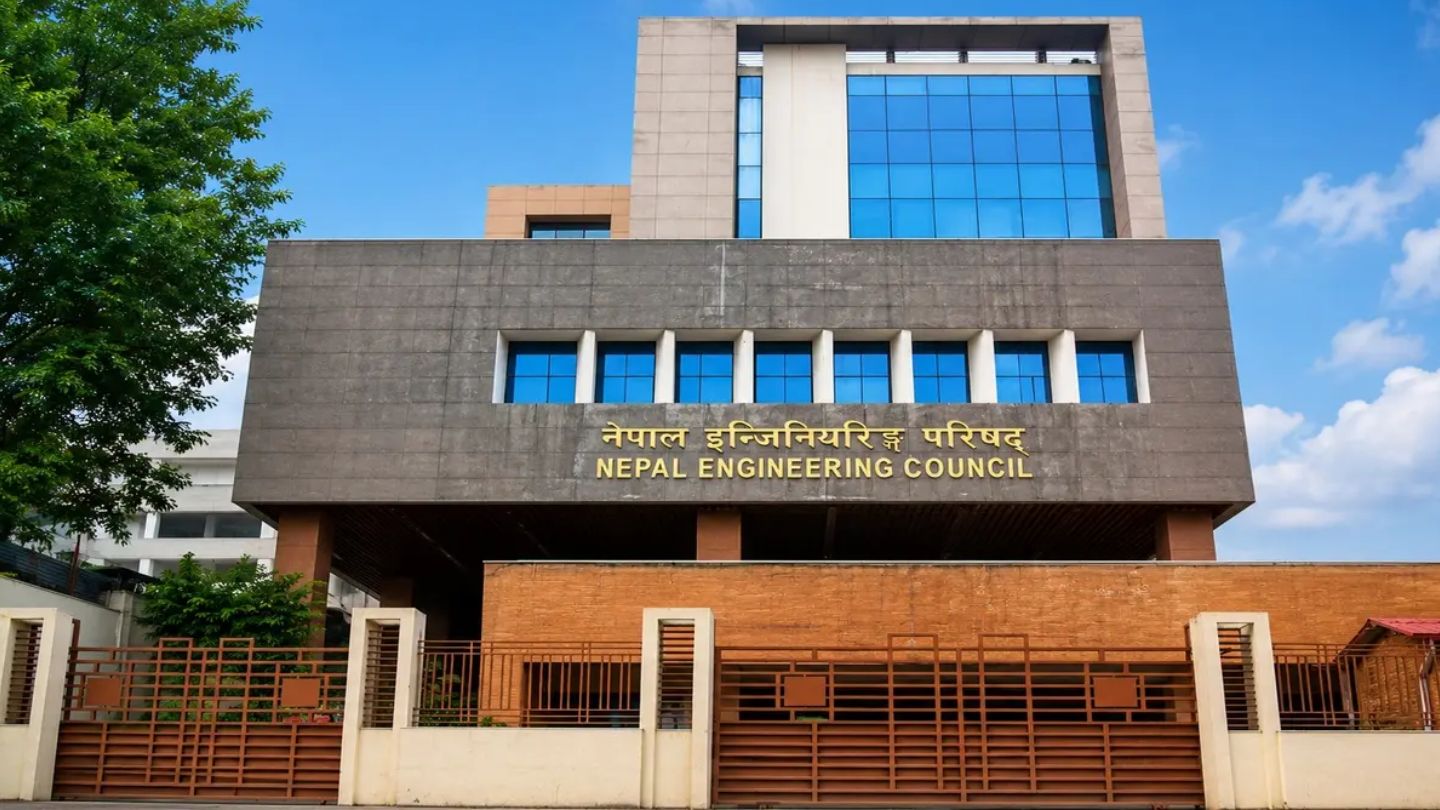
| Area | Details |
|---|---|
| Institution | Nepal Engineering Council |
| Abbreviation | NEC |
| Service scope | Engineering profession and engineering education regulation |
| Location | Minbhawan, New Baneshwor, Kathmandu, Nepal |
| Registration categories | General Registered Engineer, Professional Engineer, Non-Nepali Registered Engineer |
| Online examination system | Application Management Information System (AMIS) |
| Professional Engineer title | PEng (NPL) |
| Phone | +977-1-4520655, +977-1-4520656 |
| necgov@ntc.net.np | |
| Website | www.nec.gov.np |
Engineer registration is a core service of Nepal Engineering Council. Engineers practicing in Nepal are required to register with the Council under the Act. The registration system connects engineering practice with recognized qualifications and professional conduct requirements.
NEC Rules 2057 define three engineer registration categories:
General Registered Engineer
Professional Engineer
Non-Nepali Registered Engineer
Engineers working with government bodies, diplomatic missions, private sectors, NGOs, INGOs, academic institutions, and consulting firms must register with NEC and follow its Code of Conduct.
NEC uses the Application Management Information System for the General Registered Engineer Registration Examination. Candidates who have completed a Bachelor’s Degree in Engineering from universities recognized by Nepal Engineering Council can submit examination applications online.
The AMIS process includes logging in through the dashboard, paying the required fee through the available payment gateways, filling in the application details, selecting the examination center, and submitting the application.
After successful submission, candidates receive a confirmation notification or email. Candidates who have previously appeared in the NEC examination can reapply through their dashboard by completing payment and resubmitting the application.
The examination fee is Rs. 2,500. After passing the examination, the registration fee is Rs. 5,000 and the ID card charge is Rs. 200, making the total Rs. 5,200 after passing. Fees once deposited are not refunded.
The General Registered Engineer Registration Examination application requires notarized copies of the Nepalese Citizenship Certificate, SEE Mark Sheet, SEE Character Certificate, 10+2 Transcript, 10+2 Character Certificate, Bachelor’s Degree Transcript, Bachelor’s Character Certificate or documents showing duration of study, and Degree or Provisional Certificate of Bachelor’s Degree issued by the university.
Candidates who studied abroad must submit an equivalence certificate issued by an authorized agency of the Government of Nepal where applicable. One passport-size photo is also required. Approved uploaded documents cannot be changed once approved by NEC.
NEC administers professional conduct rules for registered engineers. NEC Rules 2057 lay down the Professional Code of Conduct for engineers registered with the Council.
The conduct requirements include working within the field related to the engineer’s study or acquired knowledge and skills, recommending a relevant expert for work outside the engineer’s professional area, and accepting personal responsibility for engineering work. Engineers signing engineering documents such as maps, designs, specifications, and estimates must mention their name, position, and registration number clearly.
The conduct rules also restrict false or fake reports and work performed with negligence or recklessness.
NEC provides services related to recognition of engineering degrees, academic certificates, and educational institutions. The NEC Act, 2055, as amended in 2079, includes provisions on recognition of engineering degrees or academic certificates, recognition of educational institutions, and regular monitoring of educational institutions.
NEC also sets norms and standards for engineering education in Nepal. It grants permission and approval to engineering colleges and institutions that meet required norms and standards and recognizes their degrees and certificates.
NEC monitors and inspects the quality of engineering education provided by engineering colleges and institutions. The Recognition and Monitoring Guidelines for Engineering Colleges apply to undergraduate and graduate engineering programs.
The monitoring criteria include Institutional Policy, Governance and Leadership; Curriculum Management and Teaching Learning Process; Research, Knowledge Generation and Extension; Physical Resources; Human Resources; and Student Welfare and Support Services. These criteria are used for field inspection and regular monitoring of engineering colleges.
Recognition stages include temporary recognition, continuation of temporary recognition, recognition of additional programs or additional class size, permanent recognition, and continuation of permanent recognition.
Temporary recognition for a new institute or college requires a minimum of 50 percent in each criterion and 60 percent total average. Continuation of temporary recognition, recognition of additional programs or additional class size, permanent recognition, and continuation of permanent recognition each require a minimum of 60 percent in each criterion and 70 percent total average.
For Bachelor’s degree engineering programs, NEC has set minimum enrolment requirements. Students must pass I.Sc. or 10+2 in the Science stream from Higher Secondary Schools, or hold a Diploma in Engineering degree. Students must have secured at least second division or an equivalent grade point result.
Degrees from abroad must be recognized by the respective authorities in Nepal. Universities regulate enrolment for Bachelor’s engineering programs within their jurisdiction.
Engineering programs are conducted in the semester system, with two semesters in an academic year. Colleges must maintain the number of students according to approved class size and number of classes. For Bachelor’s engineering programs, the maximum class size is 48 students.
NEC provides Professional Engineer registration under the Professional Engineers’ Registration Working Procedure, 2025. The Professional Engineer title is denoted as PEng (NPL).
The PE Standard Route requires a Master’s degree in an engineering discipline from a recognized university, seven years of professional experience after the Master’s degree, at least two years of significant responsibility in the profession, and assessment through competence standards, written examination, and interview. The title is valid for five years and must be renewed after that period based on CPD records and the working procedure.
The PE Registered Route applies to applicants with a four-year BE from a recognized university, a Master’s degree in the relevant engineering subject, seven years of professional experience after the Master’s degree, and a PE title from an internationally competent institution that is a member of the IEA.
The PE registration procedure starts with submission of the application and supporting documents. The application form includes sections on applicant details, application route, background and expertise, registered engineer information, documents submitted, declaration, and supporters’ names and addresses.
Two engineers who hold the PE title or professional membership from IPEA member engineering bodies must support the application. The application file also includes personal identification documents and a copy of the general registration as an engineer.
The PEng title awarded by Nepal Engineering Council is valid for five years. Engineers holding the PEng (NPL) title must apply for renewal before the five-year validity period expires. Renewal requires active engineering practice, Continuous Professional Development, and a supporter’s recommendation on the submitted CPD record and application.
At the time of the award of PEng (NPL), individuals receive guidance to maintain CPD records and submit them to the Council every year. CPD records are indexed, filed, reviewed each year by the Evaluation Committee, and used as a main criterion for renewal of the PE title.
Professional Engineers are required to complete a minimum of 30 hours of CPD per year. CPD activities include formal education in engineering, continuing education and trainings, authoring books, mentoring subordinate or junior engineers, writing technical papers or reports, and contribution to professional societies.
Professional engineering services are defined as engineering services that require judgment, knowledge, skill, and application of mathematical and scientific principles. These services may include consultation, evaluation, engineering studies, design of engineering works and systems, design drawings, specifications, modelling, simulations, reviews, advice, technical submissions, review of drawings and specifications, and assessment of proposed modifications that may affect the basis of design.
For Professional Engineers, CPD may include performance in the certified field, seminars related to the certified field, research and development, publication of technical articles, and knowledge related to professional qualification and competence requirements in international agreements and treaties.
For General Registered Engineer Registration Examination support, NEC provides the contact number 9767472423 from Monday to Friday, 9:00 AM to 5:00 PM. The examination support email is exam_support@nec.gov.np.
Payment-related contacts are listed for Khalti, eSewa, and Connect IPS. Candidates can pay examination and registration fees through Khalti, eSewa, and Connect IPS gateways available in their dashboard.
Contact: Nepal Engineering Council
Location: Minbhawan, New Baneshwor, Kathmandu, Nepal
Phone: +977-1-4520655, +977-1-4520656
Email: necgov@ntc.net.np
Website: www.nec.gov.np
Exam support: 9767472423
Exam support email: exam_support@nec.gov.np
Nepal Engineering Council provides services related to engineer registration, General Registered Engineer Registration Examination processing, professional conduct, engineering education recognition, inspection and monitoring of engineering institutions, Professional Engineer registration, PEng renewal, and CPD records.
The engineer registration categories are General Registered Engineer, Professional Engineer, and Non-Nepali Registered Engineer.
Candidates who have completed a Bachelor’s Degree in Engineering from universities recognized by Nepal Engineering Council can submit the examination application online through AMIS.
The examination fee is Rs. 2,500. After passing the examination, the registration fee is Rs. 5,000 and the ID card charge is Rs. 200, making the total Rs. 5,200 after passing.
PEng (NPL) is the Professional Engineer title awarded by Nepal Engineering Council under the Professional Engineers’ Registration Working Procedure, 2025.
The PEng title is valid for five years. Engineers holding the title must apply for renewal before the validity period expires.
Professional Engineers are required to complete a minimum of 30 CPD hours per year.
NEC sets norms and standards for engineering education, grants permission and approval to engineering colleges and institutions that meet required standards, recognizes degrees and certificates, and monitors the quality of engineering education.
The maximum class size for Bachelor’s engineering programs is 48 students.

.png)
.jpg)