



Table of Content
- Digital Divide in Nepal: Reality, Impact and Solutions
- What Is the Digital Divide?
- Three Levels of the Digital Divide in Nepal
- Major Impacts of the Digital Divide in Nepal
- Measures to Reduce the Digital Divide
- Conclusion
Digital Divide in Nepal: Reality, Impact and Solutions
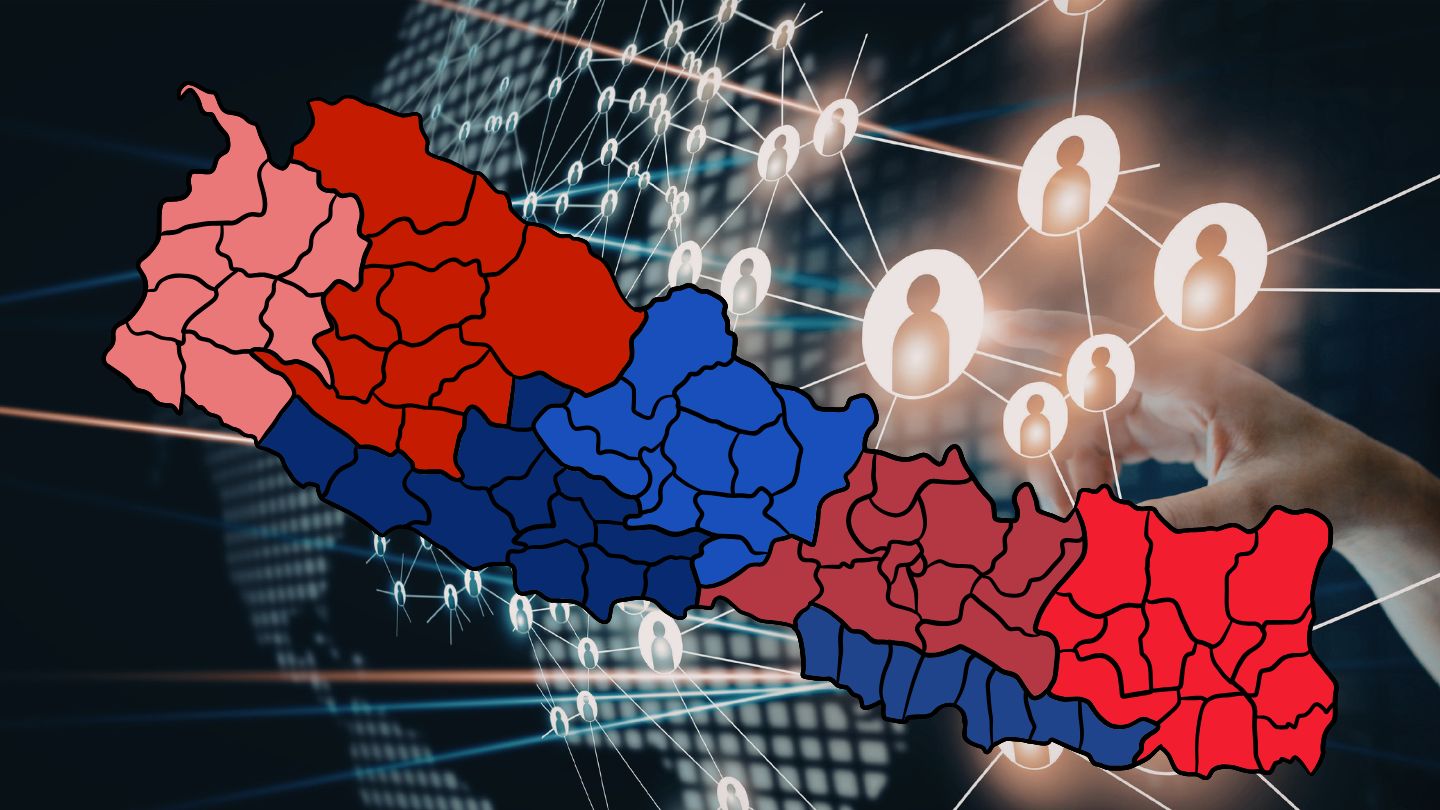
Information and communication technology is now directly connected with education, employment, administration, business, banking, health services, and citizen participation. However, access to technology, the ability to use it, and the opportunity to benefit from it are not equal for all citizens. This inequality is called the digital divide.
The digital divide is not only a question of whether someone has internet access or a mobile phone. In a country like Nepal, with geographic, economic, and social diversity, this issue is linked to infrastructure, skills, language, income, education, gender status, and opportunity. If it is not reduced on time, it can seriously affect education, employment, good governance, and social inclusion.
What Is the Digital Divide?
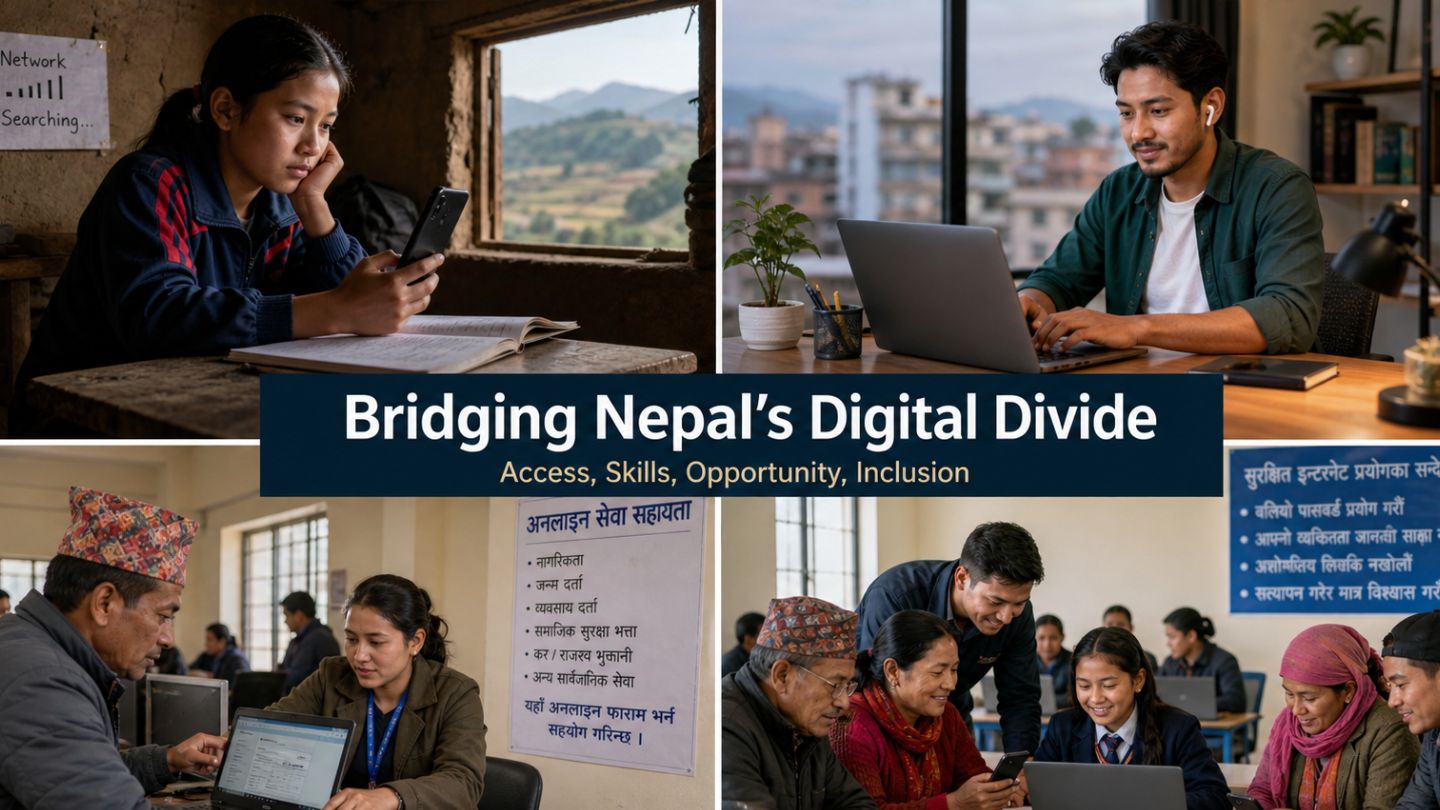
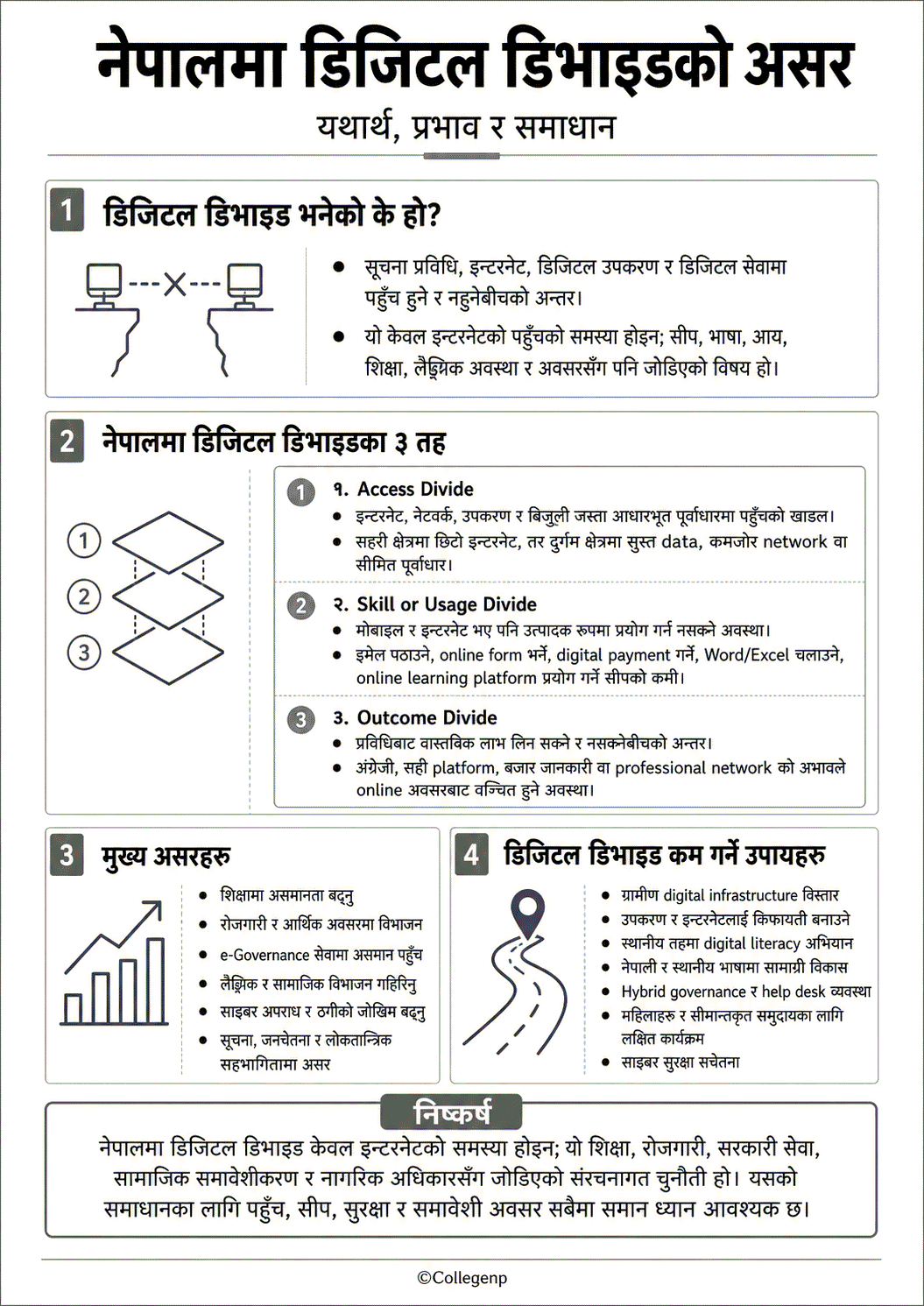
The digital divide means the gap between individuals, communities, or regions that have access to information technology, the internet, digital devices, and digital services and those that do not. Its scope can be understood at three levels.
Three Levels of the Digital Divide in Nepal
1. Access Divide: Gap in Infrastructure and Access
The first level refers to the gap in access to basic infrastructure such as the internet, network, devices, and electricity. Kathmandu, Pokhara, and other urban areas may have access to optical fiber or fast internet. However, remote Himalayan and hilly areas may face slow mobile data, weak networks, or limited digital infrastructure.
This directly affects education, health services, government services, and business opportunities.
2. Skill or Usage Divide: Gap in Skills and Use
Digital empowerment does not happen automatically just because the internet and smartphones are available. Many users mainly use mobile phones and the internet for social media, videos, or entertainment. However, they may not have the skills to send emails, search for reliable information, fill out online forms, make digital payments, use Word or Excel, or access an online learning platform.
This gap creates barriers to the productive use of technology.
3. Outcome Divide: Gap in Results and Opportunity
The third level refers to the gap between those who can gain real benefits from technology and those who cannot. Even if someone has both internet access and skills, a lack of English language ability, the right platform, market information, or a professional network may prevent them from connecting with online opportunities, remote work, e-commerce, or freelance work.
Therefore, it is not enough to view the digital divide only as a problem of network coverage.
Major Impacts of the Digital Divide in Nepal
1. Increasing Inequality in Education
The most serious impact of the digital divide is seen in education. During the COVID-19 pandemic, students in urban areas were able to use online classes, Zoom, learning management systems, and digital resources. However, many students from rural and low-income families could not participate equally because of a lack of devices, internet access, or digital skills.
This can widen the learning gap among students. While one group gains access to coding, AI, online courses, and digital research, another group has to depend on basic textbooks and limited school resources. If this situation continues for a long time, inequality may increase in higher education, competitive examinations, and employment. Stronger digital education in Nepal can help reduce this gap.
2. Division in Employment and Economic Opportunities
Young people with digital skills can enter fields such as freelancing, outsourcing, e-commerce, online services, digital marketing, remote work, and the gig economy. However, opportunities may remain limited for young people without digital access and skills.
Farmers, small business owners, and local entrepreneurs may also lose opportunities to expand their markets if they do not know how to use digital markets, online payments, e-commerce listings, social media marketing, or digital banking. This affects local business, income generation, and economic inclusion. For many youths, understanding IT careers from Nepal can open access to remote work and portfolio-based opportunities.
3. Unequal Access to E-Governance Services
In Nepal, passport forms, national identity card services, PAN registration, driving license forms, college admissions, and many other government services have started moving to online systems. This is a positive change, but it can also create new difficulties for citizens without digital literacy.
Citizens who do not know how to fill out online forms, make digital payments, or use portals may have to depend on cyber cafés, stationery shops, or intermediaries. This can increase extra costs, delays, and inequality in access to services.
4. Deepening Gender and Social Divides
The digital divide is also connected with gender, class, and social inequality. In some families, only male members may have smartphones, data access, or digital decision-making power. This can push women behind in education, employment, information, digital banking, and online business opportunities.
Similarly, technology cannot become inclusive for economically disadvantaged people, marginalized communities, Dalit communities, senior citizens, and persons with disabilities if digital devices, assistive technology, simple language, and user-friendly design are not available.
5. Increased Risk of Cybercrime and Fraud
Users without digital literacy may face risks such as phishing, fake lotteries, OTP fraud, fake job offers, account hacking, cyberbullying, and misinformation. People who have recently started using the internet may not know about password security, privacy settings, suspicious links, digital payment safety, or how to identify online scams.
This can cause financial loss, mental stress, social defamation, and distrust toward digital services. Practical cyber security habits are therefore essential for everyday digital safety.
6. Impact on Information, Awareness, and Democratic Participation
Citizens with digital access and literacy can easily obtain information about government notices, news, policies, public services, and civic rights. However, users with limited digital skills may depend on a small social media circle, viral videos, rumors, or misinformation.
This can affect public debate, citizen decision-making, electoral awareness, government accountability, and democratic participation.
Measures to Reduce the Digital Divide
1. Expand Rural Digital Infrastructure
Reliable broadband, mobile networks, optical fiber, and public digital access points should be expanded in remote and rural areas. Resources such as the Rural Telecommunication Development Fund should be used effectively to provide quality internet access to schools, health institutions, ward offices, and community centers.
2. Make Devices and Internet Affordable
Mobile data, broadband, laptops, tablets, and computers may be expensive for many families. Concessions, tax exemptions, or targeted support for devices and internet packages for education, research, and community use can help increase access.
Affordability policies are especially necessary for students, teachers, rural families, and low-income communities.
3. Run Digital Literacy Campaigns at the Local Level
Digital literacy should not be limited only to computer subjects. Practical digital literacy campaigns should be conducted through schools, wards, community organizations, and local levels.
These campaigns can include:
-
Writing and sending emails
-
Filling out online forms
-
Making digital payments safely
-
Identifying fake news and scams
-
Protecting passwords and privacy
-
Using Word, Excel, and basic productivity tools
-
Using online learning resources
-
Using government portals and citizen apps
Building digital literacy skills is essential for meaningful digital inclusion.
4. Develop Content in Nepali and Local Languages
When most digital knowledge is available in English, rural citizens, senior citizens, and people with limited English knowledge may fall behind. Information related to agriculture, health, education, business, government services, and legal matters should be available in Nepali and local languages.
Government websites, apps, and digital forms should also be available in simple language, with clear instructions and mobile-friendly design.
5. Arrange Hybrid Governance and Help Desks
If all government services are made fully digital at once, citizens without digital literacy may be left out. Therefore, free digital help desks should be placed in government offices, ward offices, schools, and service centers.
Along with online systems, support desks, manual support, and trained facilitators should be arranged for some time. This can reduce dependence on intermediaries.
6. Targeted Programs for Women and Marginalized Communities
Digital inclusion programs should be designed according to the needs of women, rural students, Dalit communities, economically disadvantaged families, senior citizens, and persons with disabilities. Infrastructure expansion alone is not enough; devices, training, language, accessibility, and safety must all be included.
7. Cybersecurity Awareness
Cyber safety should also be taught along with digital literacy campaigns. Users should learn not to share OTPs, not to open unknown links, not to trust fake lotteries or fake job offers, to keep passwords secure, to use two-factor authentication, and to report online harassment.
This can help increase trust in digital services.
Conclusion
The digital divide in Nepal is not only an internet-related problem. It is a structural challenge connected with education, employment, government services, social inclusion, and civic rights. If inequality in digital access, skills, and opportunities continues, students, rural citizens, women, low-income communities, and small business owners may fall further behind.
To address this issue, Nepal needs rural broadband expansion, affordable devices and internet access, practical digital literacy, content in Nepali and local languages, e-governance help desks, cyber safety education, and targeted inclusive programs. To make digital technology a tool for development, its access and use must be practical, safe, and inclusive for all citizens.





Comments 0
No comments yet. Be the first to start the conversation.