



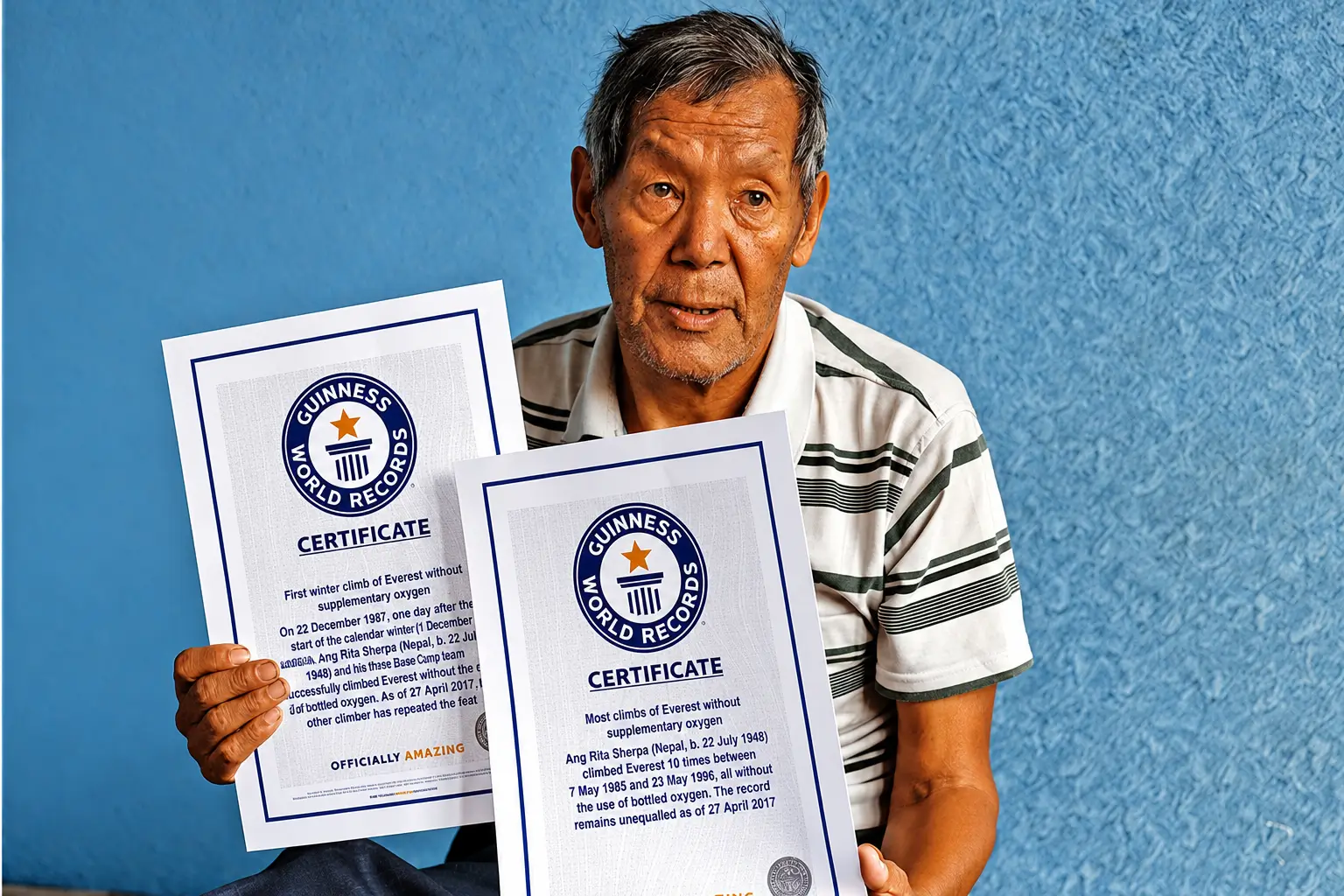
Ang Rita Sherpa (July 27, 1948 – September 21, 2020) was a record-holding Nepali mountaineer and high-altitude guide. Widely known as the "Snow Leopard," he successfully climbed Mount Everest, the world's highest peak, 10 times between 1983 and 1996. Guinness World Records recognizes all 10 ascents as having been completed without supplemental oxygen.
Another historic achievement came on December 22, 1987, when he reached the summit of Everest alongside a South Korean climber. Guinness World Records recognizes this ascent as the first winter climb of Mount Everest without supplemental oxygen.
Born in a mountain village in Solukhumbu, Ang Rita entered the mountaineering profession as a porter. He later became a high-altitude worker and guide on international expeditions. Beyond Everest, he also successfully climbed other peaks above 8,000 meters, including Dhaulagiri I, Cho Oyu, and Kangchenjunga.
His life provides an important perspective on the role of Nepali high-altitude guides in mountaineering history, the skills acquired through practical experience, and the occupational risks associated with working in the world's highest mountains.
Ang Rita Sherpa: Quick Facts
| Details | Information |
|---|---|
| Full Name | Ang Rita Sherpa |
| Popular Nickname | The Snow Leopard |
| Date of Birth | July 27, 1948 |
| Birthplace | Yelajung, Khumbu region, Solukhumbu, Nepal |
| Date of Death | September 21, 2020 (Ashoj 5, 2077 BS) |
| Place of Death | Jorpati, Kathmandu |
| Age at Death | 72 years |
| Nationality | Nepali |
| Profession | Mountaineer and high-altitude guide |
| First Everest Ascent | May 7, 1983 |
| Final Everest Ascent | May 23, 1996 |
| Total Successful Everest Ascents | 10 |
| Major World Records | Ten Everest ascents recognized without supplemental oxygen and the first winter Everest ascent without supplemental oxygen |
| Date of Historic Winter Ascent | December 22, 1987 |
| Other Major Peaks Climbed | Dhaulagiri I, Cho Oyu, and Kangchenjunga |
| Major Honours | Two Guinness World Records, Gorkha Dakshina Bahu First Class, and Tri Shakti Patta First Class |
These details are based on Guinness World Records, the Himalayan Database, and contemporary news archives.
Birth, Family Background, and Early Life
Ang Rita Sherpa was born on July 27, 1948, in Yelajung, a village in the Khumbu region of Solukhumbu district in eastern Nepal. He grew up in a Sherpa family traditionally engaged in animal husbandry.
At the time, many families in Khumbu depended on agriculture, yak herding, mountain trade, and porter work for their livelihoods. Ang Rita spent much of his childhood helping his family with everyday responsibilities.
From an early age, he herded yaks and carried loads along mountain trails. These experiences familiarized him with the demanding Himalayan terrain and provided practical preparation for his later mountaineering career.
Traditional trade routes connecting Nepal and Tibet were an important part of the economic life of Himalayan communities during that period. Working under difficult geographical conditions was a significant aspect of Ang Rita's early life.
Practical Experience Rather Than Formal Education
Ang Rita acquired most of his mountaineering knowledge through direct work and experience.
While working as a porter and expedition assistant, he learned about mountain routes, weather conditions, climbing equipment, and the demands of working at high altitude.
His professional development was closely connected to the labour system that supported Himalayan expeditions at the time. What began as a job carrying supplies eventually developed into a career in high-altitude guiding.
Entry into Mountaineering
Ang Rita Sherpa began working as a porter on mountaineering expeditions at approximately 15 years of age.
At the time, food, tents, equipment, and other expedition supplies had to be carried over long distances by porters. Roads and modern transportation facilities were limited, making porters essential to the operation of Himalayan expeditions.
Ang Rita initially took responsibility for transporting supplies. As his experience increased, he gained opportunities to work at higher elevations.
His early mountaineering career was associated with expeditions in the Dhaulagiri region. Working with various international climbing teams helped him develop practical knowledge of Himalayan mountaineering.
By the late 1970s, he was already active in high-altitude expeditions. In subsequent years, successful ascents of Dhaulagiri and other peaks above 8,000 meters expanded his professional experience.
Ascents of Other 8,000-Meter Peaks
Ang Rita Sherpa's mountaineering achievements were not limited to Mount Everest. He also successfully climbed Dhaulagiri I, Cho Oyu, and Kangchenjunga.
According to Guinness World Records, he completed nine successful ascents across these three mountains.
However, the French mountaineering organization Groupe de Haute Montagne, citing information from the Himalayan Database, records eight ascents. The difference mainly concerns the number of successful climbs attributed to him on Dhaulagiri.
Dhaulagiri I
Dhaulagiri I stands at 8,167 meters and is the world's seventh-highest mountain. It is located in western Nepal.
Guinness World Records states that Ang Rita successfully climbed Dhaulagiri I four times between 1979 and 1982.
However, Groupe de Haute Montagne, using records from the Himalayan Database, counts three successful Dhaulagiri ascents.
The source of the record therefore needs to be identified when discussing his total number of Dhaulagiri summits.
His 1982 Dhaulagiri ascent with a Belgian expedition was a notable event in his professional career.
Speaking to The Kathmandu Post, Ang Tshering Sherpa, a former president of the Nepal Mountaineering Association, said that the success associated with this expedition helped Ang Rita secure an opportunity to join an Everest expedition in 1983.
Cho Oyu
Cho Oyu is an 8,188-meter mountain located along the Nepal–China border. It is the world's sixth-highest peak.
Ang Rita successfully climbed Cho Oyu four times. His recorded successful ascents took place in 1984, 1987, 1994, and 1995.
These expeditions were significant achievements in his high-altitude mountaineering career.
Kangchenjunga
Kangchenjunga, standing at 8,586 meters, is the world's third-highest mountain.
Ang Rita successfully climbed Kangchenjunga on October 24, 1986.
According to an expedition report published in the American Alpine Journal in 1987, Ang Rita and Josep Parmañé reached the summit that day.
The ascent was completed via Kangchenjunga's southwest route.
Ang Rita Sherpa's 10 Successful Everest Ascents
Ang Rita Sherpa reached the summit of Mount Everest 10 times between May 7, 1983, and May 23, 1996.
His ascents took place during the spring, autumn, and winter climbing seasons. He climbed Everest using different routes from Nepal and also reached the summit from Tibet via the northern route.
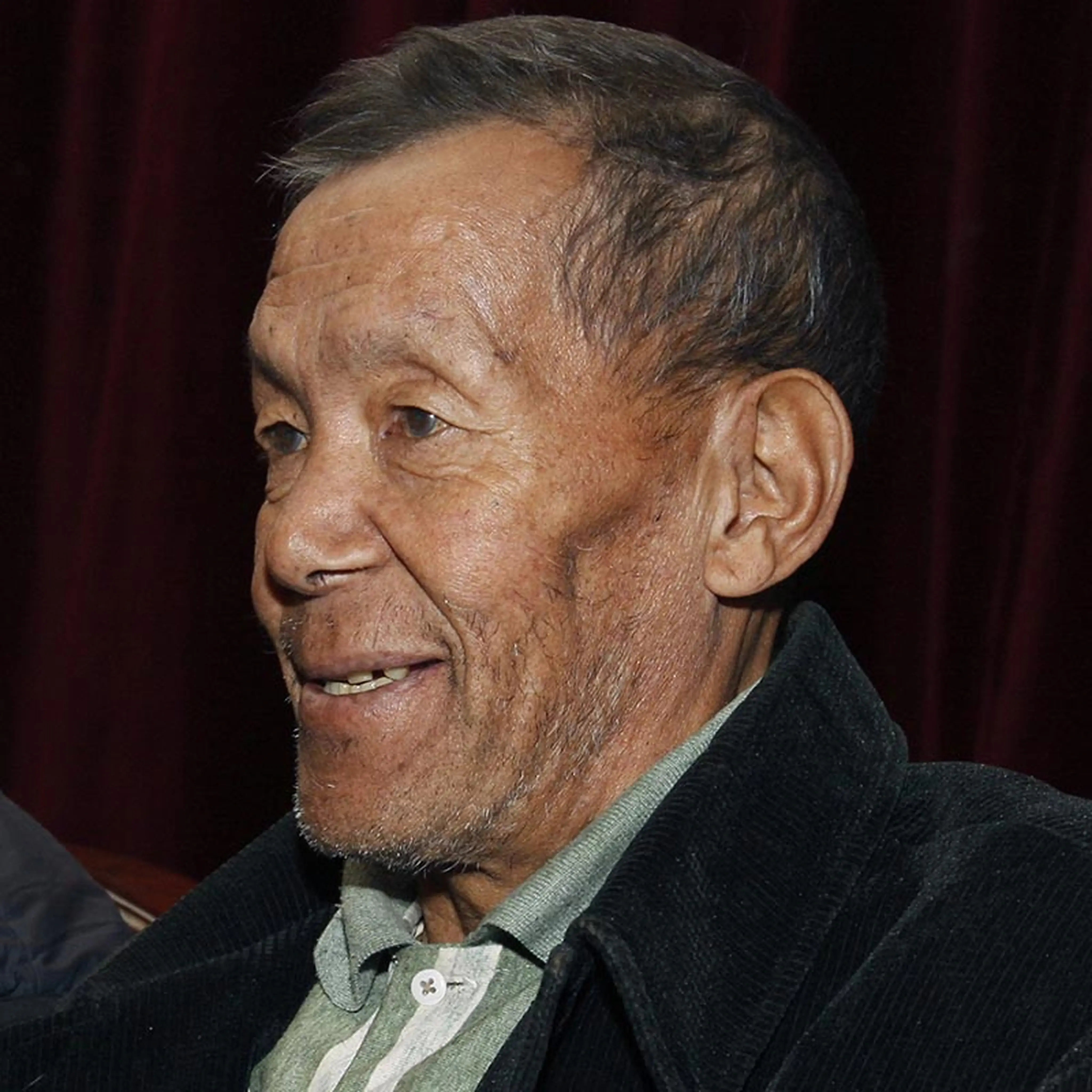
Guinness World Records lists him as the record holder for the most successful ascents of Mount Everest without supplemental oxygen.
Dates and Details of His 10 Everest Ascents
| No. | Summit Date | Major Details |
|---|---|---|
| 1 | May 7, 1983 | First Everest ascent via the Southeast Ridge |
| 2 | October 15, 1984 | Ascent via the South Pillar route |
| 3 | April 29, 1985 | Ascent with a Norwegian expedition |
| 4 | December 22, 1987 | Historic winter ascent without supplemental oxygen |
| 5 | October 14, 1988 | Fifth successful ascent |
| 6 | April 23, 1990 | Ascent associated with a Royal Nepalese Army expedition |
| 7 | May 15, 1992 | Seventh successful ascent |
| 8 | May 16, 1993 | Eighth successful ascent |
| 9 | May 13, 1995 | Ascent via the northern route from Tibet |
| 10 | May 23, 1996 | Tenth and final successful Everest ascent |
These dates correspond to expedition records in the Himalayan Database.
For his seventh Everest ascent in 1992, the Himalayan Database records May 15 as the summit date. That date has therefore been used here.
First Everest Ascent: May 7, 1983
Ang Rita first successfully climbed Mount Everest on May 7, 1983, as part of a German-American expedition.
He reached the summit via the Southeast Ridge. The Himalayan Database records his successful ascent.
This expedition marked the beginning of his record-setting association with Mount Everest.
Second Everest Ascent: October 15, 1984
On October 15, 1984, Ang Rita climbed Everest for the second time with an expedition from the former Czechoslovakia.
The team used the South Pillar route.
The Himalayan Database records this ascent as having been completed without supplemental oxygen.
Third Everest Ascent: April 29, 1985
During the spring climbing season of 1985, Ang Rita joined a Norwegian expedition.
He reached the summit of Everest for the third time on April 29.
He participated in the expedition as a high-altitude worker.
Fourth Everest Ascent: December 22, 1987
Ang Rita Sherpa's fourth Everest ascent was one of the most important achievements of his mountaineering career.
On December 22, 1987, he reached the summit with South Korean climber Heo Young-Ho.
According to an expedition report published by the American Alpine Club in 1988, the two climbers reached the summit at 2:20 p.m.
The report confirms that the South Korean climber used supplemental oxygen, while Ang Rita did not.
During the descent, difficult conditions forced both climbers to spend a night at approximately 8,600 meters without the equipment normally required for an overnight bivouac. They subsequently returned safely to lower elevations.
Guinness World Records recognizes this achievement as the first winter ascent of Mount Everest without supplemental oxygen.
Fifth to Eighth Everest Ascents: 1988–1993
Ang Rita continued participating in Everest expeditions after his historic winter ascent.
On October 14, 1988, he completed his fifth successful ascent.
On April 23, 1990, he reached the summit for the sixth time while participating in an expedition associated with the then-Royal Nepalese Army.
His seventh successful Everest ascent took place on May 15, 1992.
The following year, on May 16, 1993, he reached the summit for the eighth time.
Following his eighth ascent, the nickname "Snow Leopard" attracted particular attention in Nepali news coverage.
Ninth Everest Ascent: May 13, 1995
On May 13, 1995, Ang Rita climbed Everest from the Tibetan side via the North Col–Northeast Ridge route.
His previous successful Everest ascents had been completed from the Nepalese side.
The ascent from the northern route was another important achievement in his mountaineering career.
Tenth Everest Ascent: May 23, 1996
On May 23, 1996, Ang Rita reached the summit of Mount Everest for the tenth time.
This became his final successful Everest ascent.
Guinness World Records identifies this date as the day he completed his record of 10 Everest ascents without supplemental oxygen.
He subsequently retired from active high-altitude mountaineering.
Differences in Records Concerning Supplemental Oxygen
Some details concerning Ang Rita Sherpa's use of supplemental oxygen differ between Guinness World Records and the Himalayan Database.
Guinness World Records recognizes all 10 of his Everest ascents between 1983 and 1996 as having been completed without supplemental oxygen.
However, the Himalayan Database includes statements by American mountaineer David Breashears in its expedition records for 1983 and 1985.
According to Breashears, Ang Rita did not use supplemental oxygen during the main summit climb in 1983. However, he used oxygen while sleeping at a high camp on the South Col.
Similarly, Breashears' account of the 1985 Norwegian expedition states that Ang Rita did not use oxygen on summit day but used it while sleeping at a high camp.
The expedition records for 1993 also mention that oxygen was administered when health problems occurred. Nevertheless, Ang Rita's individual climbing record for that expedition identifies him as having reached the summit without oxygen.
These details illustrate an important distinction between not using supplemental oxygen during the summit climb and not using oxygen under any circumstances throughout an entire expedition.
Therefore, Ang Rita's achievement should be understood by considering both the Guinness World Records recognition of his 10 Everest ascents and the more detailed expedition accounts preserved in the Himalayan Database.
Why Was Ang Rita Sherpa Called the "Snow Leopard"?
Ang Rita Sherpa's nickname, "Snow Leopard," was associated with his mountaineering ability and repeated successful ascents of Mount Everest.
After his eighth Everest ascent in May 1993, the Nepali newspaper Kantipur published a report about his achievement.
According to an article published in The Kathmandu Post on September 21, 2020, journalists Narayan Wagle and Ramyata Limbu used the name "Snow Leopard" in their reporting about Ang Rita.
The nickname subsequently became widely used in Nepal and the international mountaineering community.
Throughout his climbing career, Ang Rita gained experience on different Everest routes, in varying weather conditions, and across numerous high-altitude expeditions.
This background helped establish the association between his mountaineering achievements and the nickname by which he became widely known.
Retirement from Mountaineering and Health Problems
Ang Rita Sherpa retired from active mountaineering after his tenth successful Everest ascent in 1996.
He was experiencing health problems during that period. Contemporary news accounts reported that his condition had been deteriorating.
According to a report published by Nepal's National News Agency in 2020, then-King Birendra, after learning about his declining health, sent a message through Crown Prince Dipendra advising him to stop climbing mountains.
The report, which cited family sources, stated that Ang Rita did not resume active mountaineering afterward.
Medical Treatment and Financial Difficulties
Reports about Ang Rita's health problems and financial difficulties emerged during the later years of his life.
According to The Kathmandu Post, his health deteriorated while he was in Solukhumbu in 1999.
Ang Tshering Sherpa, a former president of the Nepal Mountaineering Association, arranged for him to be transported to Kathmandu by helicopter for treatment.
In April 2017, Ang Rita suffered a stroke.
Following treatment, he received his Guinness World Records certificate later that year.
Reports also indicated that the Nepal Mountaineering Association provided assistance during periods of financial hardship.
His later life raised broader questions about healthcare, medical treatment, and social protection for mountaineers and guides who spend many years working at high altitude.
Personal and Family Life
Ang Rita Sherpa's family also had close connections to mountaineering.
His eldest son, Karsang Namgyal Sherpa, was an active mountaineer who had successfully climbed Everest several times.
Karsang died at Everest Base Camp during an expedition in April 2012.
The loss had a profound effect on Ang Rita's family life.
Another son, Chhewang Dorje Sherpa, was also involved in mountaineering.
During the final years of his life, Ang Rita lived at his daughter's residence in Jorpati, Kathmandu.
When he died in 2020, he was survived by two sons and a daughter, according to The Kathmandu Post.
Awards, Honours, and World Records
Ang Rita Sherpa's name is associated with two major mountaineering achievements recognized by Guinness World Records.
1. Most Everest Ascents Without Supplemental Oxygen
Guinness World Records recognizes Ang Rita Sherpa for completing 10 ascents of Mount Everest without supplemental oxygen.
He completed this record on May 23, 1996.
2. First Winter Everest Ascent Without Supplemental Oxygen
Guinness World Records recognizes his December 22, 1987, ascent as the first successful winter climb of Mount Everest without supplemental oxygen.
This ascent remains one of the principal historical achievements of his mountaineering career.
3. Guinness World Records Certificate
In June 2017, Ang Rita received an official certificate recognizing his record.
According to The Kathmandu Post, he received the certificate approximately 21 years after his final Everest ascent.
4. National Honours
The Government of Nepal honoured Ang Rita Sherpa with the Gorkha Dakshina Bahu First Class and the Tri Shakti Patta First Class.
These national decorations recognized his contributions to mountaineering.
Death and Funeral of Ang Rita Sherpa
Ang Rita Sherpa died on September 21, 2020 (Ashoj 5, 2077 BS), at his daughter's residence in Jorpati, Kathmandu.
He was 72 years old and had experienced health problems for an extended period before his death.
Following his death, mountaineering organizations, climbers, and representatives of Nepal's tourism sector paid tribute to him.
His funeral was held on September 23, 2020, at the confluence of the Bagmati and Bishnumati rivers in Teku, Kathmandu.
The Government of Nepal decided to conduct his funeral with state honours in recognition of his contribution to mountaineering.
During the funeral, then-Minister for Culture, Tourism and Civil Aviation Yogesh Bhattarai draped the national flag over his body.
A security contingent also presented a ceremonial salute.
Ang Rita Sherpa's Contribution to Nepali Mountaineering History
Ang Rita Sherpa's contribution to mountaineering extends beyond the number of times he reached the summit of Mount Everest.
His career also demonstrates the important role played by Nepali high-altitude workers and guides in international mountaineering expeditions.
On May 8, 1978, Reinhold Messner and Peter Habeler became the first climbers to summit Mount Everest without supplemental oxygen.
In the years that followed, Ang Rita repeatedly reached Everest's summit and established his place in the history of high-altitude mountaineering.
Several aspects of his career are particularly significant.
First, he progressed from working as a porter to becoming a high-altitude guide. His professional development illustrates the importance of direct experience and practical skills in mountaineering.
Second, he successfully climbed Everest via routes from both Nepal and Tibet. These expeditions demonstrate his experience across different mountain approaches and climbing conditions.
Third, his historic winter ascent in 1987 and his 10 successful Everest ascents by 1996 established his name in international mountaineering records.
Fourth, the health problems and financial difficulties he experienced in later life highlighted the need to consider the long-term safety and welfare of people working in the mountaineering profession.
His life provides an important example of the relationship between the labour and experience of Nepal's Himalayan communities and the history of international mountaineering.
Conclusion
Ang Rita Sherpa was an important figure in Nepal's mountaineering history.
Born in a mountain village in Solukhumbu, he began his professional life as a porter and went on to complete 10 successful Everest ascents and earn international recognition for his mountaineering records.
His principal achievements include the historic winter ascent of Everest on December 22, 1987, his tenth Everest summit on May 23, 1996, and his participation in expeditions to several other mountains above 8,000 meters.
Known as the "Snow Leopard," Ang Rita helped bring greater international recognition to the contributions of Nepali high-altitude guides.
His life also draws attention to the importance of considering mountaineers' health, financial circumstances, and occupational protection alongside their climbing achievements.
References
-
Guinness World Records. Most climbs of Everest without supplementary oxygen. Official record of Ang Rita Sherpa's 10 Everest ascents and his achievements on other 8,000-meter peaks.
-
Guinness World Records. First winter climb of Everest without supplementary oxygen. Official record of the December 22, 1987, winter ascent.
-
Connie Suggitt. Record-breaking mountaineer Ang Rita Sherpa dies aged 72. Guinness World Records, September 23, 2020.
-
The Himalayan Database. Everest 1983: S Col–SE Ridge Expedition. Technical expedition records concerning his first Everest ascent and supplemental oxygen use.
-
The Himalayan Database. Everest 1985: S Col–SE Ridge Expedition. Expedition details concerning his 1985 ascent and oxygen use.
-
The Himalayan Database. Everest 1987: S Col–SE Ridge Expedition. Records concerning the winter ascent, expedition members, and oxygen use.
-
The Himalayan Database. Everest 1992: S Col–SE Ridge Expedition. Records concerning the date and details of his seventh Everest ascent.
-
The American Alpine Journal. Asia, Nepal, Kangchenjunga. 1987. Expedition account of Ang Rita's 1986 Kangchenjunga ascent.
-
The American Alpine Journal. Asia, Nepal, Everest. 1988. Expedition report concerning the historic winter ascent of 1987.
-
Sangam Prasain. Ang Rita Sherpa, who climbed Everest 10 times without bottled oxygen, dies at 72. The Kathmandu Post, September 21, 2020.
-
Onlinekhabar. Nepal's celebrated mountaineer Ang Rita Sherpa cremated with state honours. September 23, 2020.
-
Groupe de Haute Montagne. Ang Rita Sherpa: Historical Mountaineering Profile. 2020. Historical mountaineering profile and comparative records of his ascents of peaks above 8,000 meters.


Comments 0
No comments yet. Be the first to start the conversation.