



Introduction
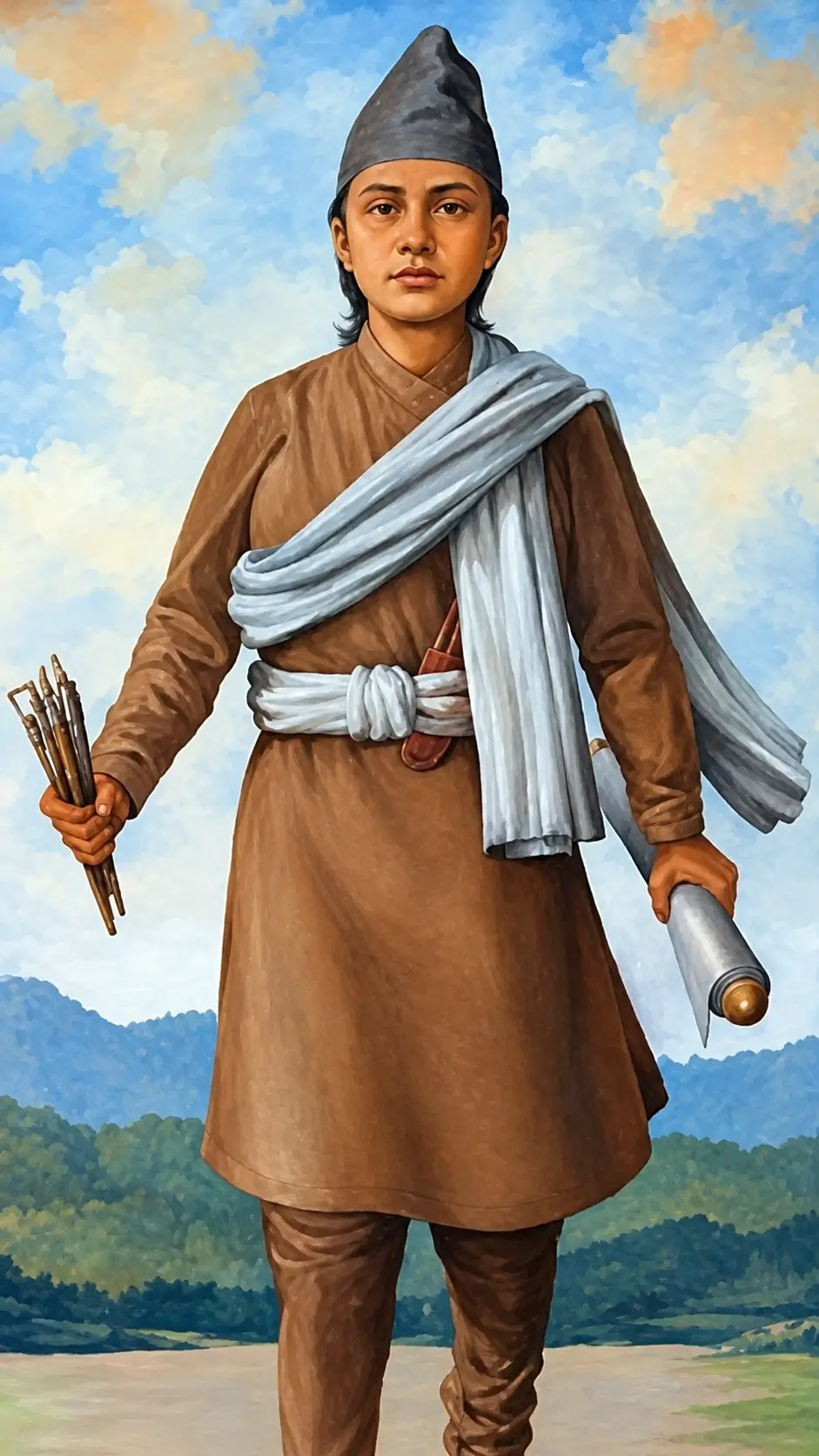
Araniko (also known as Aniko or Anige, c. 1244/1245–1306) was a medieval Nepali architect, sculptor, painter, and metalworker. During the 13th century, he traveled from Nepal to China through Tibet. Working at the imperial court of the Mongol ruler Kublai Khan, Araniko made significant contributions to Buddhist architecture, sculpture, and the administration of imperial construction projects during the Yuan Dynasty.
Araniko's most notable architectural work is the White Stupa of Miaoying Temple in Beijing, China. Constructed between 1271 and 1279, the stupa is an important example of Yuan Dynasty architecture. During his time in China, Araniko also held senior imperial positions involving the management of artists and craftsmen.
Much of what is known about his life comes from Chinese historical records. His exact birth year, birthplace within Nepal, original name, and personal authorship of certain artworks remain subjects of scholarly disagreement. Nevertheless, his contribution to medieval artistic and cultural exchanges between Nepal and China is historically established. Nepal recognizes him as a National Luminary.
Araniko: Quick Facts
|
Detail |
Information |
|---|---|
|
Name |
Araniko (Aniko) |
|
Name in Chinese records |
Anige (阿尼哥) |
|
Birth |
Around 1244/1245 CE |
|
Birthplace |
Nepal Mandala; associated with the Kathmandu Valley, but the exact location is unknown |
|
Death |
1306 CE |
|
Place of death |
China |
|
Main fields |
Architecture, sculpture, painting, metalwork, and arts administration |
|
Journey to Tibet |
Around 1260 CE |
|
Associated Mongol ruler |
Kublai Khan |
|
Major architectural work |
White Stupa of Miaoying Temple, Beijing |
|
Other notable construction |
Construction work associated with the White Stupa at Mount Wutai |
|
Major imperial responsibilities |
Management of artists and craftsmen and supervision of imperial construction |
|
Posthumous honors |
Titles including Taishi, Liang Guogong, and Minhui |
|
Recognition in Nepal |
National Luminary |
Araniko's Name and Historical Sources
Araniko appears in Chinese historical records under the name Anige. In Nepali historical writing, he is also known by the names Araniko, Aniko, and Arniko.
His original name in Nepali or Nepal Bhasa has not been conclusively established. Scholars have offered different interpretations based on the pronunciation and transliteration of his name as recorded in Chinese sources. However, none of these interpretations can be regarded as definitively proven.
Two historical sources are particularly important for studying Araniko's life.
The first is a funerary inscription written in 1316 by the Chinese scholar Cheng Jufu. Known as Liangguo Minhui Gong Shendaobei, this inscription contains information about Araniko's life, artistic work, and imperial responsibilities.
The second is Yuan Shi, the official history of the Yuan Dynasty, compiled in 1370. Volume 203 includes a biography of Araniko.
These sources provide the basis for understanding major events in his life. However, personal praise recorded in funerary inscriptions and imperial biographies must be interpreted in the context of the historical writing traditions of their time.
Araniko's Birth, Family, and Childhood
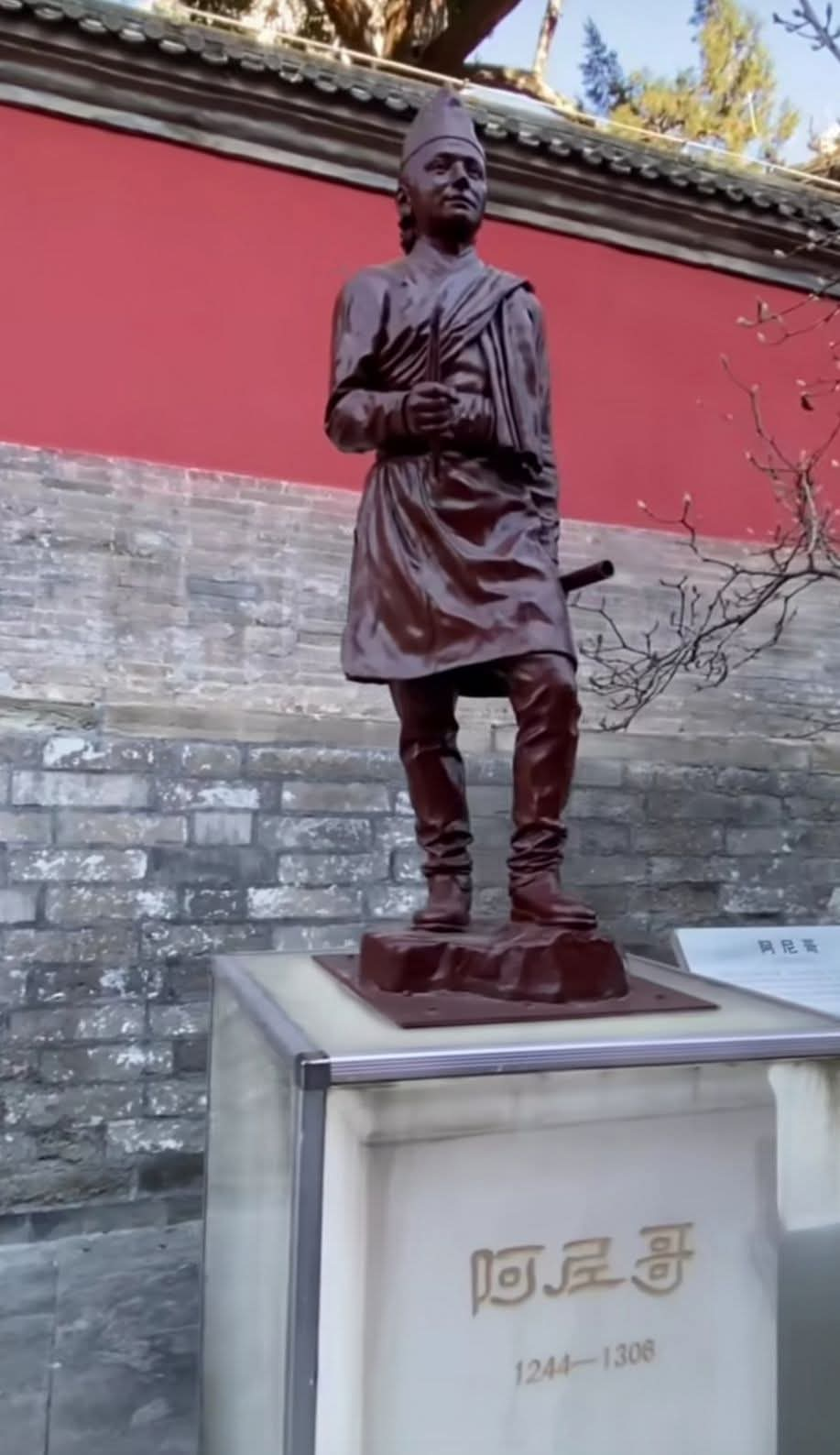
Araniko was born in Nepal around the middle of the 13th century. His birth year is commonly given as 1245, although some modern historical studies identify 1244.
This difference may be related to the distinction between traditional Chinese age reckoning and modern methods of calculating age.
Araniko's Birthplace
Although Araniko is generally believed to have been born in the Kathmandu Valley, historical evidence does not clearly establish his exact birthplace within the valley.
Yuan Shi identifies him as a native of Nepal. Modern art-historical studies associate him with the Newar artistic tradition of Nepal Mandala.
However, historical sources do not agree on whether he was born in Lalitpur, Kathmandu, or Bhaktapur. It would therefore be inappropriate to identify any one of these cities as his confirmed birthplace.
Family and Early Life
Chinese historical records provide some information about Araniko's family. However, the original Nepali names of his ancestors and details of his social background remain incompletely understood.
According to Yuan Shi, Araniko developed an interest in studying Buddhist scriptures during childhood. He also acquired knowledge of the measurements and proportions used in making religious images.
The record describes his ability to remember information from texts on artistic measurements after hearing their contents discussed by other artists.
He later became skilled in painting, sculpture, and metal casting.
There is insufficient information about where he received his artistic training, who taught him, or how long his training lasted. Nevertheless, historical accounts of his appointment to lead a construction project while still in his teens indicate that his artistic abilities were recognized at an early age.
Journey to Tibet and Leadership of 80 Nepali Artists
Araniko's international artistic career began around 1260, when he became involved in a project to construct a Buddhist stupa in Tibet.
According to Yuan Shi, the Mongol ruler Kublai Khan assigned the Buddhist religious leader Phags-pa Lama responsibility for constructing a golden stupa in Tibet.
The original plan was to arrange for 100 artists from Nepal. However, only 80 artists were eventually available.
When a leader was being selected for the group, Araniko volunteered for the responsibility. At the time, he was 17 years old according to traditional Chinese age reckoning.
There was initial hesitation about appointing him because of his young age. However, historical accounts state that Araniko expressed confidence in his abilities and was subsequently chosen to lead the team.
Construction of the Golden Stupa in Tibet
After reaching Tibet, Araniko worked with Phags-pa Lama, a religious leader of the Sakya Buddhist tradition.
According to Yuan Shi, Phags-pa Lama assessed Araniko's artistic and construction skills and entrusted him with supervising the stupa's construction.
The historical record states that the construction was completed the following year.
After completing the project, Araniko wanted to return to Nepal. However, Phags-pa Lama encouraged him to visit the Mongol imperial court.
During this period, Araniko also adopted the life of a Buddhist monk for some time.
The construction project in Tibet ultimately provided him with an opportunity to enter the imperial court of Kublai Khan.
Araniko at the Court of Kublai Khan
After traveling from Tibet to China, Araniko entered the imperial court of Kublai Khan. Yuan Shi records details of his first meeting and conversation with the emperor.
According to the historical account, Kublai Khan asked Araniko about his artistic skills. Araniko responded that he was proficient in painting, sculpture, and metal casting.
To test his abilities, the emperor assigned him the task of repairing a damaged copper human figure.
Repair of a Copper Human Figure
One of Araniko's earliest notable achievements at the imperial court was the repair of a copper human figure.
Such figures were used in traditional Chinese medical education to identify acupuncture points on different parts of the human body.
Some parts of the figure had deteriorated after prolonged use. Araniko accepted responsibility for repairing it.
According to Yuan Shi, he completed the restoration in 1265. The record describes how the fine craftsmanship and technical quality of the repair impressed metalworkers at the imperial court.
A historical account published by the National Museum of China also mentions that a Nepali craftsman was commissioned to repair a similar figure during Kublai Khan's reign.
However, the figure presented in the museum's account is considered a later reproduction made during the Qing Dynasty. It should not be mistaken for the original figure repaired by Araniko.
This episode provides a historical example of Araniko's knowledge of metalworking and the restoration of intricate structures.
Major Architectural Contributions of Araniko
Araniko worked on various Buddhist stupas, monasteries, religious images, and imperial construction projects in the Yuan Empire.
Among his most notable architectural contributions are the White Stupa of Miaoying Temple in Beijing and the White Stupa at Mount Wutai in China's Shanxi Province.
1. White Stupa of Miaoying Temple, Beijing
The White Stupa of Miaoying Temple is the most significant surviving architectural monument associated with Araniko.
The stupa is located in Xicheng District, Beijing, China.
According to the Beijing Municipal Cultural Heritage Bureau, Kublai Khan selected the site for the White Stupa in 1271. The Nepali artist Anige was subsequently entrusted with its design and construction.
Construction was completed in 1279.
According to a study by historian Isabelle Charleux published in the Rubin Museum of Art's Project Himalayan Art, Araniko and the Buddhist religious leader Rinchen Gyeltsen were involved in designing and supervising the construction.
The White Stupa should therefore be understood not only as an example of Araniko's individual artistic contribution but also as the result of imperial patronage, religious leadership, and the collective efforts of other craftsmen.
Architecture of the White Stupa
The White Stupa of Miaoying Temple follows the Tibetan Buddhist stupa tradition.
According to the Rubin Museum's research, the structure stands approximately 51 meters high. Its architectural features include a polygonal base, lotus-petal decorations, a rounded main body, and progressively smaller tiers in the upper section.
The exterior surface is covered with white lime plaster. The upper section includes a canopy, metal bells, and a crowning finial.
The structure reflects the influence of Himalayan Buddhist stupa traditions. However, its design is not identical to that of stupas found in Nepal.
Art-historical studies have also discussed possible influences from Tibetan, Indian Pala-period, and Tangut architectural traditions.
The White Stupa of Miaoying Temple is therefore studied as a historical combination of different Buddhist architectural traditions rather than simply a direct reproduction of Nepali architecture.
Reconstruction and Conservation of the White Stupa
Throughout its long history, the White Stupa of Miaoying Temple has experienced several periods of damage, repair, and restoration.
After the stupa was completed in 1279, Kublai Khan ordered the construction of an imperial Buddhist monastery around it. The monastery was named Da Shengshou Wan'an Si.
In 1368, a fire destroyed many of the monastery's structures, but the White Stupa survived.
In 1457, the reconstructed monastery was given the name Miaoying.
According to the Rubin Museum's research, the stupa's canopy and metal finial were replaced in 1753. Therefore, not every part of the structure visible today should be assumed to date from its original construction in 1279.
The White Stupa was also affected by the 1976 Tangshan earthquake. Conservation and repair work was subsequently carried out.
In 1961, the Chinese government included the White Stupa of Miaoying Temple in its first list of Major Historical and Cultural Sites Protected at the National Level.
2. White Stupa at Mount Wutai
The White Stupa at Mount Wutai in China's Shanxi Province is another historical structure associated with Araniko.
According to research published by the Rubin Museum, the stupa was constructed in 1301 during the reign of the Yuan emperor Temür.
Both Araniko and the Buddhist religious leader Dampa are associated with its construction.
Although the structure has certain similarities to the White Stupa in Beijing, differences can be observed in its base, main body, and upper sections.
During the Ming Dynasty, the stupa was reconstructed and its height increased in 1407. Consequently, the entire structure visible today does not correspond exactly to its original Yuan-period form.
The White Stupa at Mount Wutai is a historical example of the expansion of Tibetan Buddhist architecture during the Yuan Dynasty.
3. Other Monasteries and Imperial Construction Projects
Araniko's architectural contributions were not limited to the White Stupas in Beijing and at Mount Wutai.
Research prepared by Isabelle Charleux, based on Araniko's funerary inscription, describes several construction projects associated with his career.
These include three stupas, nine major Buddhist monasteries, two places of worship associated with the Confucian tradition, and one Taoist temple.
In addition, various religious images and artworks were produced for members of the imperial family and other patrons.
However, the historical record does not establish that Araniko personally constructed every structure mentioned in these accounts.
Considering his senior imperial responsibilities, his role in many projects is understood to have involved design, construction supervision, and the management of artists and craftsmen.
Contributions to Sculpture and Metalwork
In addition to being an architect, Araniko was a sculptor and metalworker. Yuan Shi records his proficiency in painting, image-making, and metal casting.
He applied the artistic knowledge acquired in Nepal to construction and artistic projects in Tibet and China.
Influence of Himalayan Buddhist Sculpture
During the Yuan Dynasty, Buddhist artists from different regions worked at the Chinese imperial court.
Interactions among Nepali, Tibetan, Tangut, and Chinese artistic traditions encouraged the use of different styles in the creation of religious images.
Araniko contributed to this process as an artist and construction administrator.
However, it would be historically inaccurate to conclude that Araniko personally initiated every Himalayan artistic influence visible in Yuan-period Buddhist sculpture. Exchanges among different Buddhist artistic traditions had already been taking place before his arrival.
Training Other Artists
Araniko's contribution extended beyond the artworks he personally produced.
According to Yuan Shi, the Chinese sculptor Liu Yuan acquired knowledge of Buddhist image-making from Araniko.
Liu Yuan subsequently became a notable sculptor of the Yuan Dynasty and worked on various religious images.
This indicates that the artistic traditions practiced by Araniko were also transmitted through his students.
Araniko's Contributions to Painting
Araniko was also skilled in painting. Yuan Shi contains accounts of his painting abilities and artistic work related to producing portraits of imperial figures.
During the Yuan Dynasty, portraits of members of the imperial family and artworks prepared on silk held particular importance.
Portraits of Kublai Khan and Empress Chabi
Historical portraits of Kublai Khan and Empress Chabi are preserved at the National Palace Museum in Taipei, Taiwan.
In a study published in 1994, art historian Anning Jing examined the possible connection between these portraits and Araniko.
However, it has not been conclusively established that Araniko personally painted these portraits.
Research published by the Rubin Museum also notes that none of the paintings and sculptures associated with Araniko can be definitively identified as his individual creations.
It is therefore more historically appropriate to describe such artworks as works associated with or attributed to Araniko rather than presenting his personal authorship as an established fact.
Araniko's Imperial Positions and Administrative Responsibilities
Araniko served the Yuan Empire not only as an artist but also as a senior imperial official.
He was assigned responsibilities involving the management of artists and craftsmen and the supervision of imperial construction projects.
Appointment in 1273
According to Yuan Shi, Araniko was appointed to the position of Renjiang Zongguan in 1273, a title associated with the chief management of craftsmen.
The record states that he was also given a silver seal and an official credential bearing a tiger emblem as symbols of imperial authority.
This appointment gave him formal responsibility for administering craftsmen.
Appointment to Higher Positions in 1278
In 1278, Araniko received additional senior imperial positions and titles.
Yuan Shi records that he was granted titles including Guanglu Dafu and Da Situ.
He was also given responsibility for Jiangzuo Yuan, an imperial institution associated with construction activities.
These appointments demonstrate his administrative standing and the confidence placed in him by the Yuan imperial court.
However, the authority and responsibilities attached to historical Chinese offices were not necessarily equivalent to those of modern government positions. It would therefore be inappropriate to identify these titles directly with contemporary ministerial or departmental posts.
Araniko's Personal and Family Life
Most information about Araniko's personal life comes from Chinese historical records.
During his journey from Tibet to China, he adopted the life of a Buddhist monk. He later returned to lay life.
According to Yuan Shi, an imperial order directed him to return to lay life in 1278.
The historical record mentions that Araniko had six sons. Among them, the names and imperial responsibilities of Asengge and Ashula are recorded.
Asengge obtained a senior imperial position, while Ashula was involved in administrative work related to managing artists and craftsmen.
These accounts indicate that some of Araniko's children were also associated with the administrative system of the Yuan Empire.
The original Nepali names and complete personal histories of other members of his family have not been definitively established.
Araniko's Death and Posthumous Honors
Araniko died in China in 1306.
He had fulfilled imperial responsibilities during the reigns of Kublai Khan and his successor, Temür Khan.
Following his death, the Yuan imperial court recognized his contributions by granting him various posthumous honors.
Among the principal titles recorded in Yuan Shi are Taishi, Liang Guogong, and Minhui.
In 1316, Cheng Jufu prepared a funerary inscription commemorating Araniko.
This inscription remains one of the major historical sources for studying his life, imperial service, artistic achievements, and personal history.
Recognition and Remembrance of Araniko in Nepal
Araniko is recognized as a National Luminary of Nepal.
He holds an important place in history as a figure who connected medieval Nepali artistic traditions with Tibet and China.
Nepal's Ministry of Foreign Affairs has also recognized his contribution as an important example of historical cultural relations between Nepal and China.
Araniko Highway
The Araniko Highway, named after him, connects the Kathmandu Valley with the Tatopani–Kodari border area toward China.
Official bilateral documents between Nepal and China also refer to the road as the Araniko Highway.
The highway's name continues to commemorate Araniko's historical contributions in Nepal.
Historical Remembrance of Araniko in China
In China, Araniko's contribution is primarily associated with the history of Yuan-period architecture and Buddhist art.
The White Stupa of Miaoying Temple in Beijing is the principal surviving heritage monument associated with his work.
The Government of Nepal has also presented the stupa as a symbol of historical cultural relations between Nepal and China.
In a press release issued on June 16, 2026, Nepal's Ministry of Foreign Affairs described the White Stupa of Miaoying Temple as a monument designed by Araniko and a symbol of Nepal–China friendship.
Araniko's Importance in the Art History of Nepal and China
Araniko's historical importance extends beyond his individual artistic achievements. His life demonstrates the exchange of artistic skills and technical knowledge among medieval Nepal, Tibet, and China.
Expansion of Nepali Artistic Traditions
During the 13th century, artists from Nepal Mandala participated in religious and architectural projects across the Himalayan region.
Araniko is among the artists of this period whose lives are documented in considerable detail in historical records.
After traveling from Nepal to Tibet, he worked on Buddhist stupa construction. He subsequently entered the Mongol imperial court in China, where he contributed to imperial construction and arts administration.
His career demonstrates that the skills of Nepali artists were valued and applied beyond their places of origin.
Contributions to Yuan Dynasty Buddhist Art
During Araniko's career, the Yuan imperial court supported Buddhist artists and craftsmen from various regions.
Religious monuments and artworks produced during this period reflect interactions among different artistic traditions.
Araniko played an important role in this process as an architect, artist, and construction administrator.
However, it would be inappropriate to conclude that he single-handedly transformed the entirety of Yuan Dynasty Buddhist art. His contributions must be evaluated within the broader religious, cultural, and artistic connections of the period.
Contributions to Nepal–China Cultural Relations
Araniko lived several centuries before the establishment of formal diplomatic relations between Nepal and China.
Nepal and China formally established diplomatic relations on August 1, 1955. However, religious, cultural, and artistic contacts between the two regions existed long before that date.
Araniko's journey to Tibet and China and his work at the Yuan imperial court provide an important historical example of these earlier connections.
In this respect, Araniko's biography is valuable not only for the study of Nepali art history but also for understanding intercultural relations across the Himalayan region.
Conclusion
Araniko was a 13th-century Nepali architect, sculptor, painter, and metalworker. He traveled from Nepal to China through Tibet and held both artistic and administrative responsibilities in the Yuan Empire.
The White Stupa of Miaoying Temple in Beijing is his most notable architectural work. He also contributed to the construction of the stupa at Mount Wutai, the production of various religious images, and imperial art projects.
Historical records also describe how Araniko passed on his knowledge of Buddhist image-making to Chinese artists.
Although researchers continue to disagree about his exact birthplace, original name, and the personal authorship of certain artworks attributed to him, his contribution to medieval artistic and cultural relations between Nepal and China is well established.
References
1. Song Lian (ed.). Yuan Shi, Volume 203, 1370. The official Chinese biography of Araniko.
2. Cheng Jufu. Liangguo Minhui Gong Shendaobei, 1316. A historical funerary inscription concerning Araniko. Bibliographic details of this inscription are included in research published by the Rubin Museum of Art.
3. Charleux, Isabelle (2023). White Stupa, Attributed to Nepalese Artist Anige: Newar Artist's Buddhist Monument for the Mongol Rulers in Beijing. Project Himalayan Art, Rubin Museum of Art. Research publication.
4. Jing, Anning (1994). The Portraits of Khubilai Khan and Chabi by Anige (1245–1306), a Nepali Artist at the Yuan Court. Artibus Asiae, Volume 54, Issues 1–2, pp. 40–86.
5. Beijing Municipal Cultural Heritage Bureau (2018). (The Story of the White Stupa Temple). Official historical account.
6. Beijing Municipal People's Government (2022). (White Stupa of Miaoying Temple). Official government heritage description.
7. National Museum of China (2020). (Copper Human Figure Used for Acupuncture). Museum description.
8. Ministry of Foreign Affairs, Government of Nepal (2024). Joint Statement between the People's Republic of China and Nepal, Beijing, December 3, 2024. Official government document.
9. Ministry of Foreign Affairs, Government of Nepal (2025). Press Release on the Exchange of Messages on the Occasion of the 70th Anniversary of Nepal-China Diplomatic Relations. Official press release.
10. Ministry of Foreign Affairs, Government of Nepal (2026). Press Release: Visit of Hon. Minister for Foreign Affairs of Nepal to People's Republic of China – Day 3, June 16, 2026. Official press release.




Comments 0
No comments yet. Be the first to start the conversation.