



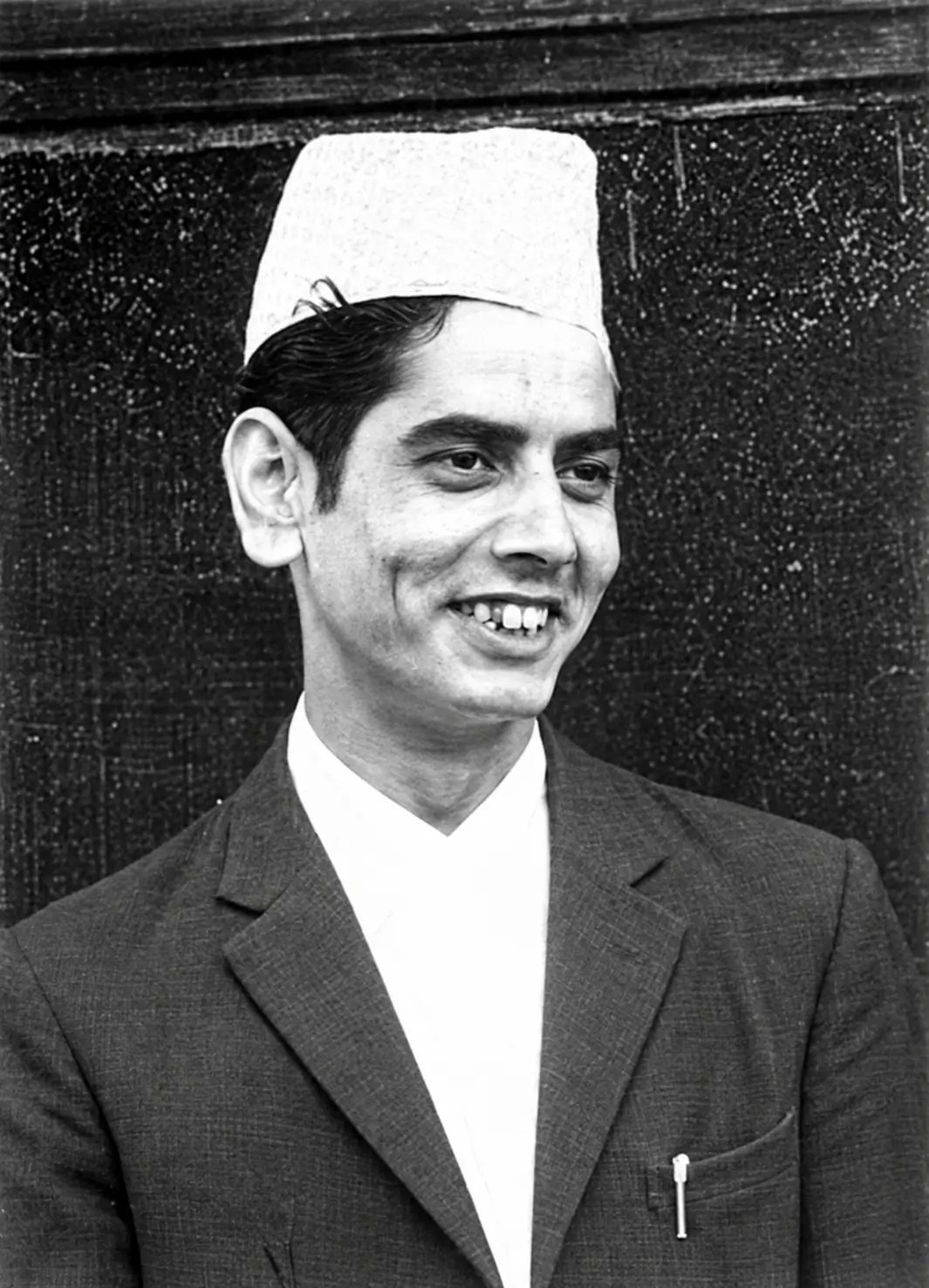
Bhairav Aryal (1993–2033 BS) was a Nepali satirical essayist, poet, literary critic, journalist, and editor. He made significant contributions to the development of modern Nepali humorous and satirical essays. By combining humor and satire, he addressed social contradictions, administrative delays, economic inequality, human weaknesses, and social pretensions in contemporary Nepali society.
Aryal began his literary career with poetry but later established his reputation primarily through satirical essays. His major works include Kaukuti, Jaya Bhundi, Galbandi, and Itishree, which hold an important place in Nepali satirical literature. He also contributed to poetry, literary criticism, and editorial work.
Alongside his literary writing, Aryal was active in teaching and journalism. He entered professional journalism through the daily newspaper Halkhabar and later held editorial responsibilities at Gorkhapatra and the literary monthly Madhuparka. He secured first place at the National Poetry Festival in 2022 BS. His literary contributions continue to be studied and critically examined.
Brief Introduction to Bhairav Aryal
| Details | Information |
|---|---|
| Full Name | Bhairav Prasad Aryal |
| Naming Ceremony Name | Tirtha Nath Aryal |
| Literary Name | Bhairav Aryal |
| Date of Birth | Ashoj 5, 1993 BS |
| Birthplace | Kupondole, Lalitpur, Nepal |
| Date of Death | Ashoj 19, 2033 BS |
| Age at Death | 40 years |
| Nationality | Nepali |
| Father | Homanath Aryal |
| Mother | Khem Kumari Aryal |
| Spouse | Shobha Aryal |
| Education | Master's Degree (MA) in Nepali |
| Main Professions | Teaching, journalism, writing, and editing |
| Literary Genres | Satirical essays, poetry, narrative poetry, and literary criticism |
| Major Essay Collections | Kaukuti, Jaya Bhundi, Galbandi, Itishree |
| Major Award | First Prize, National Poetry Festival (2022 BS) |
Birth, Family and Childhood
Bhairav Aryal was born on Ashoj 5, 1993 BS, in Kupondole, Lalitpur. His father, Homanath Aryal, worked in government service, while his mother's name was Khem Kumari Aryal.
He was named Tirtha Nath Aryal during his traditional naming ceremony. He became known as Bhairav Prasad Aryal during his education and professional life, while Bhairav Aryal became his established literary name.
Aryal grew up in a large family. Biographical studies indicate that the family's difficult financial circumstances created challenges for his education and household responsibilities. Despite these difficulties, he continued his studies.
From childhood, Aryal had opportunities to study Sanskrit and traditional religious texts. He became familiar with works such as Chandi, Rudri, and Amarakosha during his early years.
The linguistic knowledge he gained through Sanskrit studies appears to have provided a foundation for the vocabulary, rhythm, and alliterative expressions he later used in his poetry and essays.
Education and Intellectual Development
Bhairav Aryal continued his formal education alongside traditional Sanskrit studies. After receiving his early education, he studied at a school in the Ranipokhari area of Kathmandu.
According to biographical accounts, he passed the Madhyama-level examination as a private candidate from Banaras in 2010 BS. He subsequently completed his entrance-level education and received teacher training.
Although family responsibilities and employment interrupted his studies, he did not abandon formal education. He passed his master's degree examination in Nepali in 2026 BS.
He also studied Hindi language and literature. Biographical sources mention that he obtained a diploma in journalism from Berlin, Germany, while working in the journalism profession.
His studies of Sanskrit, Nepali, and Hindi literature, combined with his experience in journalism, appear to have contributed to the diversity of subjects, linguistic experimentation, and critical perspective found in his writing.
Beginning His Professional Career as a Teacher
Bhairav Aryal began his professional career in teaching. From 2011 to 2013 BS, he taught at Bhawani Primary School in Kandhanidanda, Pokhara, Kaski.
He subsequently worked as a teacher at Indrayani Primary School in Pasikhel, Kathmandu, from 2013 to 2015 BS.
During his teaching career, Aryal also had to fulfill his family's financial responsibilities. He experienced difficulties related to a voice-related health condition during this period.
Because teaching required extensive speaking, his health difficulties affected his work. He subsequently moved into journalism. This transition from teaching to journalism also became an important turning point in his literary career.
Journalism provided him with regular exposure to news, contemporary issues, and social activities. This experience helped him continue developing his prose writing.
Journalism Career and Contributions to Gorkhapatra
Bhairav Aryal played an important role in Nepali journalism and literary editing. He held various editorial responsibilities at Halkhabar daily, Sagarmatha News Agency, and Gorkhapatra.
Journalism at Halkhabar Daily
Aryal joined the daily newspaper Halkhabar as a proofreader in 2015 BS. From 2016 to 2018 BS, he served as a sub-editor.
During this period, he was also involved in the editorial work of Sagarmatha News Agency.
Working in news editing and contemporary affairs gave him opportunities to understand different aspects of society more closely.
Issues such as social behavior, administrative weaknesses, political activities, and economic inequality increasingly appeared in his satirical writings.
His journalism experience appears to have helped expand the subject matter and forms of expression in his humorous and satirical essays.
Editorial Responsibilities at Gorkhapatra
Bhairav Aryal joined Gorkhapatra as an assistant editor in 2018 BS.
He handled various responsibilities related to editing news reports and articles. Literary studies indicate that he was responsible for editing articles and literary contributions from 2030 to 2033 BS.
While working at Gorkhapatra, he was involved in selecting literary material, refining language, and editing published content.
Memoirs by contemporary literary journalists mention his contribution to organizing and improving the readability of Gorkhapatra's Saturday literary content.
His editorial responsibilities extended beyond improving the language of news reports and literary articles. He also helped other writers prepare their work for publication.
Contributions to Madhuparka Literary Monthly
Madhuparka, a literary monthly magazine published by Gorkhapatra Corporation, began publication on Jestha 30, 2025 BS.
Gopal Prasad Bhattarai was the editor of its first issue. Narayan Bahadur Singh, Dataram Sharma, and Bhairav Aryal were involved as editorial assistants.
Aryal was therefore a member of Madhuparka's initial editorial team.
During his involvement with the magazine, he contributed to selecting literary material, editing language, and preparing content for publication.
Articles on literary journalism published in Gorkhapatra have particularly recognized the contributions of Narayan Bahadur Singh and Bhairav Aryal to the development of Madhuparka.
Collaboration in Literary Journalism
Apart from Gorkhapatra and Madhuparka, Bhairav Aryal also collaborated with other literary magazines and publications.
He was associated with Rachana, a literary magazine edited by writer Rochak Ghimire. His poems, essays, articles, and critical writings appeared in various literary publications.
Through journalism and literary editing, Aryal brought his own works to readers while also supporting the editing and publication of writings by other authors.
Beginning of His Literary Career
Bhairav Aryal began his literary career as a poet. His first published literary work is identified as a poem titled Naya Jeevan (New Life).
According to literary critic Prof. Dr. Khagendra Prasad Luitel, the poem appeared in Pratibha magazine in Falgun 2009 BS under the name Bhairav Prasad Sharma Aryal.
Aryal initially wrote poetry and narrative verse. His literary activities gradually shifted toward humorous and satirical essays.
However, even after establishing himself as an essayist, he did not completely abandon poetry or literary criticism.
Early Poetry and Poetic Works
Poetry and narrative verse occupied an important place in Bhairav Aryal's early literary career.
His works Upawan and Rashtriya Ahwan were published in 2018 BS. Another poetic work, Birahi Ram, was published in 2020 BS.
These publications demonstrate that Aryal's literary identity was not confined to humorous and satirical essays.
The influence of his poetic training, particularly in word choice, meter, and rhythmic expression, can also be observed in his later satirical prose.
First Place at the National Poetry Festival
Bhairav Aryal secured first place at the National Poetry Festival in 2022 BS.
According to the official award records of Nepal Academy, Bhairav Aryal ranked first that year, Banira Giri ranked second, and Govinda Bhatta, Ratnadev Sharma, and Shyam Das Vaishnav shared third place.
This achievement also brought national recognition to Aryal's abilities as a poet.
Bhairav Aryal's Contributions to Satirical Essays
Bhairav Aryal established his principal literary identity through humorous and satirical essays. Rather than treating humor merely as entertainment, he used it as a literary means of criticizing social contradictions and human weaknesses.
His essays address social behavior, economic inequality, personal arrogance, political tendencies, administrative delays, and cultural pretensions.
Kaukuti, published in 2019 BS, was his first major collection of humorous and satirical essays. It was followed by Jaya Bhundi (2022 BS), Galbandi (2026 BS), and Itishree (2028 BS).
These four collections provide an important basis for understanding the development of his satirical writing.
Literary critic Prof. Dr. Khagendra Prasad Luitel has divided Aryal's career as an essayist into two phases.
According to his analysis, humor is more prominent in the first phase, while the second phase shows greater depth of satire, social criticism, and linguistic refinement.
Based on this interpretation, Kaukuti and Jaya Bhundi represent Aryal's earlier phase, while Galbandi and Itishree represent his later literary development.
Major Literary Works of Bhairav Aryal
Bhairav Aryal published works in essays, poetry, narrative poetry, and literary criticism. He also edited writings by other authors and co-authored some educational materials.
His major works include the following:
| Title | Genre | Publication Year (BS) |
|---|---|---|
| Upawan | Poetry collection | 2018 |
| Rashtriya Ahwan | Poetry | 2018 |
| Kaukuti | Humorous and satirical essays | 2019 |
| Birahi Ram | Narrative poetry | 2020 |
| Jaya Bhundi | Humorous and satirical essays | 2022 |
| Sajha Katha | Edited collection | 2025 |
| Galbandi | Humorous and satirical essays | 2026 |
| Praveshika Nibandha Sangraha | Educational text on essays | 2027 |
| Itishree | Humorous and satirical essays | 2028 |
| Nepali Kavyama Prakriti | Literary criticism | 2030 |
| Dash Avatar | Humorous and satirical literary criticism | 2033 |
| Tedho Aina | Posthumously published collection | 2063 |
Aryal also edited Sajha Nibandha and co-edited Chhyakan.
The title Nepali Kavyama Prakriti and its publication year, 2030 BS, are confirmed by the book records of Madan Puraskar Pustakalaya. The library also lists the first edition of Dash Avatar, published in 2033 BS.
Kaukuti (2019 BS)
Kaukuti was one of Bhairav Aryal's early collections of humorous and satirical essays. It presented his satirical writings in book form.
The collection includes essays such as Jaya Bholi, Hansoko Jatthar, Tea Party, International Frog Conference, and Charichuchche Cha.
These essays use humor to portray social weaknesses, pretentious behavior, administrative delays, and contradictions in human nature.
Jaya Bholi satirizes the tendency to postpone until tomorrow work that should be completed today.
International Frog Conference presents a satirical examination of contradictions in international political behavior and conference culture.
The essays in Kaukuti demonstrate Aryal's skillful use of language, alliteration, idioms, and humor.
Jaya Bhundi (2022 BS)
Jaya Bhundi is one of Bhairav Aryal's major collections of humorous and satirical essays.
The title essay, Jaya Bhundi, uses the stomach as a symbol to explore human livelihood, hunger, economic needs, and social behavior.
Aryal examines various human activities in relation to economic necessity and personal self-interest.
Alongside humorous expression, the essay contains criticism of social inequality and human behavior.
Jaya Bhundi is an important work for understanding Aryal's ability to give broader social meaning to subjects drawn from ordinary life.
Galbandi (2026 BS)
Galbandi is a collection of Bhairav Aryal's humorous and satirical essays published in 2026 BS.
The essays satirize social contradictions, personal interests, administrative weaknesses, and different aspects of human character.
The title essay, Galbandi, criticizes the tendency of individuals to present themselves as better than others.
Another essay from this phase, Alu (Potato), uses the potato as a symbol to portray different social characteristics and patterns of human behavior.
In Galbandi, satire becomes sharper and social criticism more serious, while humor remains an important part of Aryal's expression.
Itishree (2028 BS)
Itishree is a collection of Bhairav Aryal's humorous and satirical essays published in 2028 BS.
Its essays address social contradictions, human weaknesses, economic problems, literary behavior, and the complexities of modern life.
Compared with his earlier collections, the writings from this phase demonstrate greater seriousness in satire and a stronger critical perspective.
While retaining his humorous style, Aryal examined complex aspects of social life through his essays.
From a literary-critical perspective, Itishree is an important work for understanding the later phase of his satirical writing.
Nepali Kavyama Prakriti (2030 BS)
Nepali Kavyama Prakriti (Nature in Nepali Poetry) is a work of literary criticism by Bhairav Aryal. It was published by the then Royal Nepal Academy in 2030 BS.
The book examines the presence and use of nature in Nepali poetry.
By analyzing the portrayal of nature and its literary significance, the work also highlights Aryal's identity as a literary critic.
The catalogue of Madan Puraskar Pustakalaya identifies Bhairav Aryal as the author, the Royal Nepal Academy as the publisher, and literary criticism as the genre.
Dash Avatar (2033 BS)
Dash Avatar is a work of humorous and satirical literary criticism by Bhairav Aryal.
It adopts a satirical approach to reviewing literary personalities and their writings.
Literary critic Bishnu Prabhat has discussed the book as a work associated with humorous and satirical criticism.
The publication demonstrates that Aryal's literary contributions extended beyond satirical essays into literary criticism.
According to Madan Puraskar Pustakalaya's records, the first edition was published by Kauwa Prakashan in 2033 BS.
Tedho Aina (2063 BS)
Tedho Aina is a collection of Bhairav Aryal's writings published after his death.
The collection, published in 2063 BS, was edited by Bishnu Prabhat.
It brings together writings Aryal produced at different times, including works that had not appeared in his earlier collections.
The publication helped make his previously scattered literary writings accessible to readers and researchers.
Major Essays by Bhairav Aryal and Their Themes
Bhairav Aryal's essays explore subjects related to individuals, society, administration, politics, and international affairs.
Some of his representative essays and their principal themes are listed below.
| Essay | Main Themes |
|---|---|
| Jaya Bhundi | Hunger, livelihood, economic self-interest, and social inequality |
| Jaya Bholi | Procrastination and administrative delays |
| Mapain | Self-praise, arrogance, and self-centered thinking |
| Mahapurushko Sangat | Social prestige and weaknesses in individual character |
| International Frog Conference | Satire on international politics and conference culture |
| Chandralok Kasko? | Competition among powerful nations and international dominance |
| Alu | Symbolic portrayal of social problems and human behavior |
| Neta Number Ek Saya Ek | Political opportunism and weaknesses in leadership |
| Kehi Rashtriya Rog: Ek Anusandhan | Corruption, social problems, and human weaknesses |
| Churot: Kehi Jhilimili Sansmaran | Personal habits and human behavior |
| Bhansa Bho Hajur | Social and economic inequality |
| Pashu, Pashupati ra Manchhe | Problems related to human behavior and scientific advancement |
Although these essays cover different subjects, they share a common characteristic: the use of humor and satire to examine social and human weaknesses.
Bhairav Aryal's Writing Style and Literary Characteristics
Bhairav Aryal's writing combines humor, satire, alliteration, idioms, symbolism, metaphor, and social criticism.
He developed a style that gave literary significance to ordinary subjects and encouraged readers to consider serious social questions through humor.
Combination of Humor and Satire
Humor and satire are closely connected in Aryal's essays.
Rather than directly lecturing readers about social weaknesses, he uses humorous situations, characters, and incidents.
His writings combine entertaining passages with criticism of social behavior.
Alliteration and Rhythmic Language
Aryal's prose makes extensive use of alliteration and rhythmic sentence structures.
He creates humor through the sounds of words, sentence rhythm, and relationships between meanings.
The influence of his poetic background and study of Sanskrit literature is evident in his essays.
Idioms and Colloquial Expressions
Aryal incorporated idioms, familiar expressions, and conversational language commonly used in Nepali society.
Alongside native Nepali vocabulary, his writing also includes words derived from Sanskrit, Hindi, Newar, and English where appropriate.
This linguistic diversity connects his works with the speech and social practices of his time.
Use of Symbols and Metaphors
Symbols and metaphors play an important role in Aryal's essays.
He uses ordinary subjects such as the stomach, the potato, and tomorrow to communicate broader social meanings.
In Jaya Bhundi, the stomach represents concerns related to livelihood and economic self-interest. In Jaya Bholi, the idea of tomorrow becomes a symbol of avoiding responsibility.
Using familiar objects and situations as symbols for social criticism is a distinctive feature of his writing.
First-Person Narration
Some of Aryal's essays use first-person narration.
His writing sometimes places the narrator at the center of the discussion to portray personal experiences, social behavior, and human weaknesses.
This approach presents the writer not merely as an outside critic of society but also as a member of the same society.
Social and Political Awareness
Social and political awareness occupies an important place in Aryal's essays.
He satirizes personal arrogance, flattery, administrative delays, corruption, economic inequality, and political opportunism.
Some of his writings also explore international politics, competition among powerful nations, and contradictions associated with scientific development.
His satire is not limited to criticizing individuals. It also examines negative tendencies and patterns of behavior observed in society.
Literary Awards and Recognition
Bhairav Aryal received national recognition for his poetry.
In 2022 BS, he secured first place at the National Poetry Festival organized by the then Royal Nepal Academy.
This achievement is recorded in the official award archives of Nepal Academy.
Following his death, literary organizations, writers, and critics have continued to recognize and evaluate his contributions.
Personal Life and Death
Bhairav Aryal was married to Shobha Aryal. His family life was closely connected with his responsibilities in teaching, journalism, literary writing, and household finances.
He experienced health-related difficulties at different stages of his life. Biographical studies particularly mention that problems affecting his voice had an impact on his teaching career.
Despite these challenges, he continued his literary and editorial work.
Bhairav Aryal died on Ashoj 19, 2033 BS, in the Gokarna area of Kathmandu, at the age of 40.
The poetry, essays, literary criticism, and edited materials published during his lifetime established his contributions to Nepali literature.
Bhairav Aryal's Place in Nepali Literature
Bhairav Aryal is an important figure in modern Nepali humorous and satirical essay writing. He contributed to the development of essays as a means of social criticism, linguistic experimentation, and literary expression.
His literary contributions can be examined from three main perspectives.
First, he expanded the range of subjects addressed in satirical essays. His writings cover topics from individual weaknesses to national and international political behavior.
Second, he developed a distinctive prose style through alliteration, rhythm, symbolism, idioms, and colloquial expressions. His essays remain relevant for studying literary language and presentation.
Third, through journalism and literary editing, he contributed to bringing works from different literary genres into publication.
Themes such as administrative delays, personal self-interest, pretentious behavior, and economic inequality, which appear in his essays, can also be examined in relation to contemporary society.
Critical studies of Aryal's writings and literary personality have recognized his importance in the development of Nepali satirical literature.
Bhairav Puraskar Guthi and Literary Commemoration
Bhairav Puraskar Guthi was established in memory of Bhairav Aryal to recognize literary and artistic contributions.
Founded in 2046 BS, the organization has continued to conduct activities and award programs associated with Nepali humorous and satirical literature.
Its major awards include:
-
Bhairav Award
-
Bhairav Vangmaya Award
-
Bhairav Pratibha Award
According to Public Service Broadcasting Radio Nepal, the organization also presented awards in these three categories in 2083 BS.
The activities of Bhairav Puraskar Guthi have helped preserve Aryal's literary memory while recognizing writers and artists who contribute to Nepali humorous and satirical literature and the arts.
Conclusion
Bhairav Aryal was an important Nepali satirical essayist, poet, literary critic, and journalist. His literary career began with poetry and later expanded into essays, narrative poetry, criticism, and editing.
Through works such as Kaukuti, Jaya Bhundi, Galbandi, and Itishree, he explored social contradictions, administrative weaknesses, economic inequality, and inconsistencies in human behavior using humor and satire.
Works such as Nepali Kavyama Prakriti and Dash Avatar also demonstrate his abilities as a literary critic.
His professional contributions as a teacher, journalist, and editor were closely connected with Nepali literary journalism. His editorial involvement with Gorkhapatra and Madhuparka was particularly noteworthy.
His essays remain important resources for studying the language, style, subject matter, and social awareness of Nepali humorous and satirical literature.
References
-
Nepal Academy. Records of Academy Awards and National Poetry Festival Awards.
-
Madan Puraskar Pustakalaya. Book Record: Nepali Kavyama Prakriti (2030 BS).
-
Madan Puraskar Pustakalaya. Book Record: Dash Avatar (2033 BS).
-
Prof. Dr. Khagendra Prasad Luitel (2018). Misconceptions and Facts About Bhairav Aryal. Samakalin Sahitya.
-
Bishnu Prabhat. Bhairav Aryal's Humor and Satire. Fitkauli.
-
Bhairav Aryal: A Distinguished Humorous and Satirical Essayist. Fitkauli.
-
Madhuparka: A Major Record of Literary Journalism. Gorkhapatra.
-
Madhuparka and Me. Gorkhapatra.
-
Review: Nepali Humorous and Satirical Essays — From History to the Present. Sahitya Sangrahalaya.
-
Public Service Broadcasting Radio Nepal (Ashoj 18, 2083 BS). Presentation of Awards Established in Memory of Bhairav Aryal.






Comments 0
No comments yet. Be the first to start the conversation.