



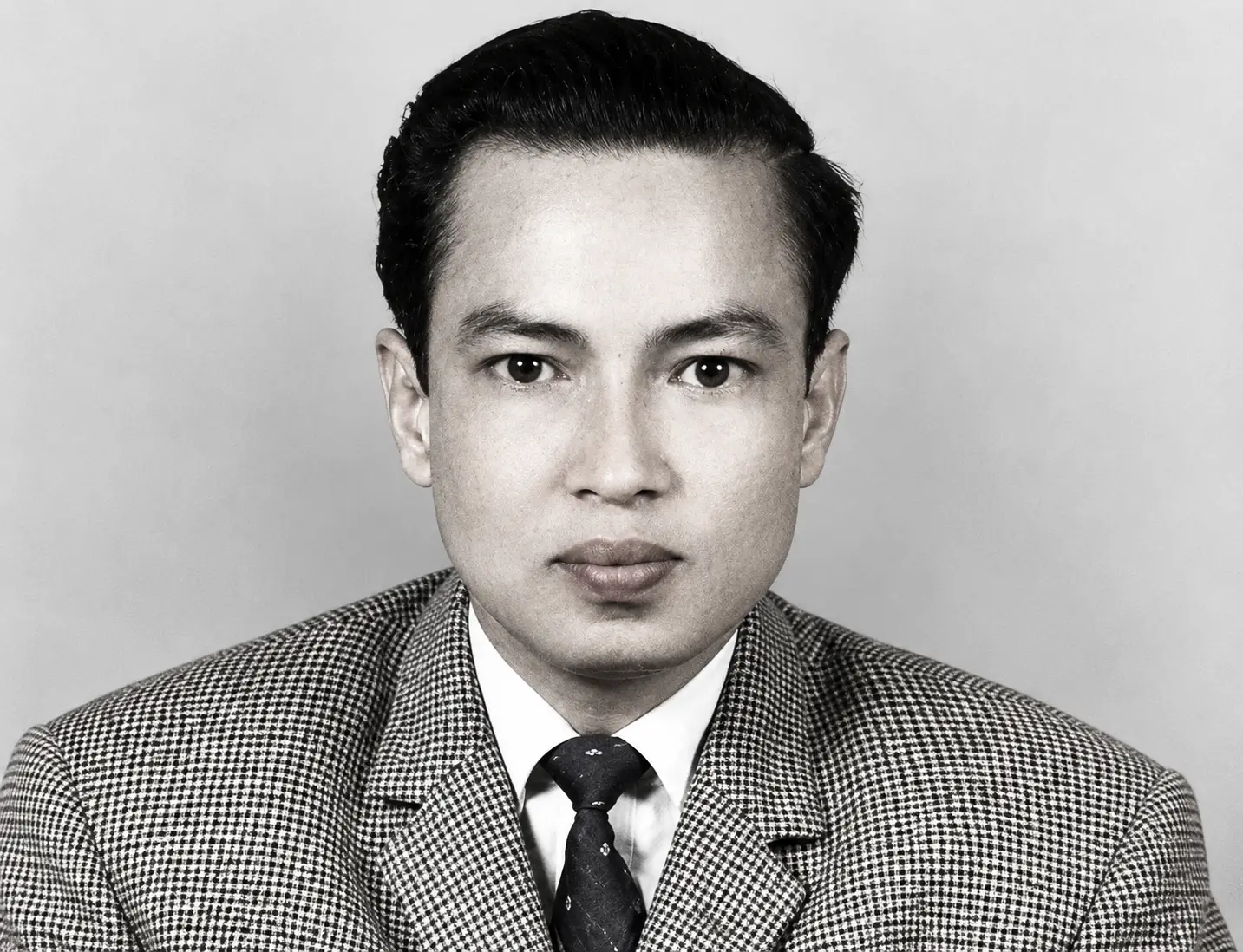
Shankar Lamichhane (1984–2032 BS) was a modern Nepali essayist and short-story writer. He made significant contributions to the development of personal expression, intellectual reflection, symbolism, and experimental language in Nepali essay writing. His literary works explored human life, existence, society, science, philosophy, and modern thought.
His essay collection Abstract Chintan: Pyaj received the Madan Puraskar for 2024 BS. According to the official records of the Madan Puraskar Guthi, he received the award in the prose category at a ceremony held on 30 Bhadra 2025 BS.
Lamichhane's literary contributions extended beyond essays. He also wrote short stories, literary portraits, and prefaces to books. His name is associated with the development of stream-of-consciousness writing, intellectual essays, and experimental prose in Nepali literature.
Shankar Lamichhane: Quick Facts
|
Detail |
Information |
|---|---|
|
Full Name |
Shankar Lamichhane |
|
Birth |
Chaitra 1984 BS |
|
Birthplace |
Jaisideval, Kathmandu |
|
Death |
10 Magh 2032 BS |
|
Place of Death |
Kathmandu |
|
Nationality |
Nepali |
|
Father |
Hari Prasad Lamichhane |
|
Mother |
Rajkumari Lamichhane |
|
Education |
Studied in Banaras and Kathmandu; attended Tri-Chandra College |
|
Literary Identity |
Essayist, short-story writer, and literary portraitist |
|
Major Works |
Abstract Chintan: Pyaj, Gaunthaliko Gund, Godhuli Sansar, Bimba Pratibimba |
|
Major Award |
Madan Puraskar, 2024 BS |
|
Writing Characteristics |
Personal expression, intellectual reflection, symbolism, stream of consciousness, and experimentation |
Birth, Family and Childhood
Shankar Lamichhane was born in Chaitra 1984 BS in Jaisideval, Kathmandu. His father was Hari Prasad Lamichhane, and his mother was Rajkumari Lamichhane.
He spent part of his childhood in Banaras, India. Family circumstances took him to Banaras at an early age, where he received some of his early education.
In Himalayan Voices: An Introduction to Modern Nepali Literature, edited by Michael Hutt, Lamichhane is described as having lived with his uncle in Banaras during his childhood. According to that account, he remained there until approximately the age of 11.
His childhood experiences in Banaras and Kathmandu exposed him to different social and cultural settings. These experiences provide useful background for understanding his literary development.
Education and Intellectual Development
Shankar Lamichhane received part of his early education in Banaras. After returning to Nepal, he continued his studies in Kathmandu.
He also studied at Tri-Chandra College in Kathmandu. Alongside his formal education, he developed interests in literature, science, and philosophy.
His essays contain references to Eastern and Western philosophy, science, psychology, and world literature. These references suggest that his intellectual interests extended beyond literature.
One distinctive feature of his writing was his ability to connect ideas from different fields with personal experiences. He often began with ordinary objects or everyday events before moving toward broader philosophical questions. This approach gave his prose a reflective and intellectually exploratory character.
Professional Career and Employment
Alongside his literary activities, Shankar Lamichhane worked in various organizations to earn a living. His professional career included employment in government and cultural institutions, involvement in the handicraft business, and managerial responsibilities.
According to Michael Hutt's Himalayan Voices, Lamichhane began working at approximately 22 years of age. He held positions in various government and cultural organizations in Kathmandu. Later in life, he also became involved in managing a handicraft business.
Biographical accounts additionally mention his connections with domestic handicraft businesses, the hotel and tourism sector, and the curio trade.
His professional activities brought him into contact with people from different social and cultural backgrounds. The urban experiences, social relationships, and cultural observations reflected in his writing can also be examined in relation to this professional background.
Beginning of His Literary Career
Shankar Lamichhane began writing literature during his teenage years. His early works appeared in literary magazines and periodicals of the time.
According to biographical accounts, one of his early articles was published in the magazine Sahityasrot. He subsequently continued writing short stories and essays.
During Lamichhane's active literary years, Nepali literature was undergoing experimentation with new themes, styles, and structures. Earlier writers, including Laxmi Prasad Devkota, had contributed to the development of personal essays.
Lamichhane carried this tradition forward through his distinctive intellectual perspective and experimental style.
His writings brought together personal experiences, social observations, science, philosophy, and questions about human existence. This diversity of subjects and approaches makes his work important to the study of modern Nepali prose.
Shankar Lamichhane's Contributions to Nepali Essay Literature
Shankar Lamichhane's primary literary contributions can be seen in the subjects, language, style, and structure of Nepali essays. He used the essay not only to express personal experiences but also as a medium for intellectual discussion and creative experimentation.
Use of Stream-of-Consciousness Writing
Stream-of-consciousness writing presents thoughts, memories, imagination, and emotions according to the way they arise and move through the human mind. In this style, the connections between internal thoughts and experiences are more important than the chronological sequence of external events.
In some of Lamichhane's essays, the discussion moves naturally from one idea to another.
He adopted a style that brought together personal memories, scientific concepts, philosophical questions, and social commentary within the same literary work.
His writing is associated with the use and development of the stream-of-consciousness technique in Nepali essays. However, not all his works follow this single approach. Depending on the subject, he also employed descriptive, symbolic, conversational, and reflective styles.
Personal Expression and Intellectual Reflection
Lamichhane's essays combine personal perspectives with intellectual analysis.
Drawing on ordinary experiences, he raised questions about the meaning of life, human existence, time, society, and consciousness.
Abstract Chintan: Pyaj is an example of this approach. The essay uses an onion as a symbol through which different layers of human life and consciousness are explored.
His personal writing does not remain confined to individual feelings and experiences. It also incorporates social observation, reasoning, curiosity, and philosophical reflection.
Experimental Language and Writing Style
Another characteristic of Shankar Lamichhane's prose is his experimentation with language.
Alongside formal literary language, he incorporated conversational expressions, words from foreign languages, and scientific concepts into his writing.
Some of his essays are written in a manner that resembles a direct conversation with readers. Questions, comments, memories, and the movement of ideas help develop the discussion.
Rather than consistently following conventional essay structures, he experimented with different forms of presentation and developed his ideas according to the subject.
Integration of Science and Philosophy
Science and philosophy occupy an important place in Lamichhane's literary works.
Essays such as Antarikshako Goreto, Apollo-8 ra Sahitya, and Samaya, included in Godhuli Sansar, demonstrate his scientific and philosophical curiosity.
He did not use scientific subjects merely to communicate information. He also connected them with human life and personal experiences.
This choice of subjects reveals the relationship between literature, science, and philosophy in his essays.
Major Literary Works of Shankar Lamichhane
Shankar Lamichhane published books in the genres of essays, short stories, and literary portraits. His major works include Abstract Chintan: Pyaj, Gaunthaliko Gund, Godhuli Sansar, and Bimba Pratibimba.
|
Literary Work |
Publication Year (BS) |
Genre |
|---|---|---|
|
Abstract Chintan: Pyaj |
2024 |
Essay collection |
|
Gaunthaliko Gund |
2025 |
Short-story collection |
|
Godhuli Sansar |
2027 |
Essay collection |
|
Bimba Pratibimba |
2028 |
Personal essays and literary portraits |
The spelling and presentation of some titles vary across republished editions. For example, a later edition of Bimba Pratibimba uses the title Vimba–Prativimba.
Abstract Chintan: Pyaj (2024 BS)
Abstract Chintan: Pyaj is the essay collection for which Shankar Lamichhane received the Madan Puraskar. It combines personal experiences, philosophical reflection, social commentary, and experimentation with language.
Some essays included in the collection are:
-
Deutako Kam
-
Goretoko Khojima
-
Tarapunja: Andhako Braille
-
Ek Patra: Sampadaklai
-
Abstract Chintan: Pyaj
-
Pendulum–Oscillation–Pendulum
-
Sahitya: Aalubakhada Ki Aun?
-
Samjhanako Layama Bilin Hundai...
-
Hami Paitala Haun: Fagat Paitala
-
Aupanyasik Patra: Jivanko Prishthabhumima
The title essay uses the layers of an onion symbolically. These layers can be interpreted in relation to different aspects of human existence, experience, and consciousness.
Lamichhane begins with an ordinary object and moves toward abstract reflection. Rather than reducing the essay's ideas to a single conclusion, it is useful to examine their symbolic and philosophical meanings.
Personal expression and intellectual inquiry appear together in this collection. These characteristics make Abstract Chintan: Pyaj an important work in the study of modern Nepali essays.
Receiving the Madan Puraskar for 2024 BS for this book was one of the major achievements of Lamichhane's literary career.
Gaunthaliko Gund (2025 BS)
Gaunthaliko Gund is a short-story collection by Shankar Lamichhane. It brings together stories dealing with human psychology, social experiences, and symbolic expression.
The collection includes the following stories:
-
Gaunthaliko Gund
-
Maya No. 653
-
U Kasko Ho?
-
Aatmako Mimansa
-
Kathar
-
Ishwar ra Jivan
-
Pratiksha
-
Krantiko Pahilo Charan
-
Pani ra Bachhita
-
Ma Bholi Janmanechu
-
Mrityuko Git Walzko Dhunma
-
Ardhamudit Nayan ra Dubna Lageko Gham
These stories often give greater importance to the psychological experiences of characters and the movement of their thoughts than to external events.
In Himalayan Voices, Michael Hutt describes Lamichhane's stories as symbolic and observes that the conventional structure of a plot is less apparent in some of them.
Ardhamudit Nayan ra Dubna Lageko Gham is a notable story in this collection. It presents different experiences of viewing Nepal from domestic and foreign perspectives, along with aspects of cultural understanding.
An English translation of this story is also included in Himalayan Voices, edited by Michael Hutt.
Godhuli Sansar (2027 BS)
Godhuli Sansar is another essay collection by Shankar Lamichhane. It addresses subjects such as life, time, experience, science, art, and social relationships.
Some essays included in the collection are:
-
Anubhav ra Jivan
-
Antarikshako Goreto
-
Antim Pat Pani Jharchha
-
Apollo-8 ra Sahitya
-
Ardhamudit Nayanko Katha
-
Avant-Gardeko Saundaryashastra
-
Galleryma Ek Din
-
Godhuli Sansar
-
Maun Abhivyakti
-
Samaya
These works demonstrate the diversity of subjects in Lamichhane's writing.
Essays such as Apollo-8 ra Sahitya examine the relationship between science and literature. Others, including Samaya, connect abstract subjects with personal reflection.
The collection also demonstrates his use of individual experiences, intellectual commentary, and philosophical inquiry.
Bimba Pratibimba (2028 BS)
Bimba Pratibimba is a collection of personal essays and literary portraits written by Shankar Lamichhane.
The book presents introductions, experiences, memories, and assessments concerning various writers, artists, and other personalities.
The collection includes writings about the following individuals:
-
Ambar Gurung
-
Gopal Prasad Rimal
-
Tulsinath Dhungel
-
Parijat
-
Bal Chandra Sharma
-
Bhimdarshan Roka
-
Bhupi Sherchan
-
Laxmi Prasad Devkota
-
Lekhnath Paudyal
-
Hridaya Chandra Singh Pradhan
The collection also includes a piece in which Lamichhane examines his own personality.
His literary portraits go beyond basic introductions. They also include his personal relationships with the individuals concerned, memories, and observations.
For example, in his writing about Devkota, Lamichhane recounts his meetings and experiences with the poet in a memoir-like style. His writing about Parijat discusses her literary personality and her association with the novel Shirishko Phool.
The book helps readers understand both Lamichhane's personal prose style and the Nepali literary community of his time.
Shankar Lamichhane's Contributions to Preface Writing
Shankar Lamichhane also contributed to Nepali literature by writing prefaces for books by other authors.
His prefaces went beyond introducing a book. They often contained literary evaluations, personal reflections, and creative expression.
Preface to Parijat's Shirishko Phool
Shankar Lamichhane wrote the preface to Parijat's novel Shirishko Phool.
Published in 2022 BS, the novel received the Madan Puraskar for the same year.
In the preface, Lamichhane presented his thoughts on the novel's subject matter, Parijat's writing, and the literary work itself.
The distinctive feature of this preface is its personal and creative expression, which differs from a conventional formal introduction. While discussing the novel, Lamichhane also incorporated his literary perspective and personal reflections.
This preface is studied as an example of creative preface writing in Nepali literature.
Preface to Pratyek Thaun: Pratyek Manchhe
Shankar Lamichhane also wrote the preface to Peter J. Karthak's novel Pratyek Thaun: Pratyek Manchhe.
Karthak discussed the preparation of this preface in an interview. He explained that he had shown Lamichhane the manuscript and received the preface after revising the work.
This involvement demonstrates that Lamichhane's literary contributions were not limited to his original writings.
Shankar Lamichhane's Contributions to Nepali Haiku Literature
Shankar Lamichhane's name is associated with the introduction and early use of the Japanese haiku form in Nepali literature.
Haiku is a short poetic form that developed from the Japanese literary tradition. Traditional Japanese haiku typically consists of three lines following a pattern of 5–7–5 sound units. Different interpretations of syllable or character counting have also been used when adapting haiku into Nepali.
Articles on the history of Nepali haiku mention Lamichhane's contributions to introducing and writing haiku through the literary magazine Ruprekha.
His name is also associated with a haiku included in the preface to Parijat's Shirishko Phool. However, literary discussions note that the haiku was published without naming its author and that differing opinions exist regarding its authorship.
Lamichhane is also reported to have introduced Japanese haiku poets in the Ashoj 2027 BS issue of Ruprekha.
His contributions therefore form part of the history of the introduction, translation, and early practice of haiku in Nepali literature.
Controversy Over Literary Originality
Questions concerning the originality of Shankar Lamichhane's writing emerged during the later years of his literary career.
An article published in Kantipur, titled Nibandhaka Hologram: Shankar Lamichhane, discusses a controversy associated with Avant-Gardeko Saundaryashastra.
According to that article, questions arose concerning the relationship between the essay and material by another writer. Lamichhane subsequently responded publicly to the issue.
This episode forms part of the historical study of his literary career. However, it would be inappropriate to draw a single conclusion about the originality or literary contribution of all his works based on a controversy involving one piece of writing.
His works should be evaluated through examination of the relevant texts, their publication history, and available literary criticism.
Madan Puraskar and Literary Recognition
Shankar Lamichhane received the Madan Puraskar for 2024 BS for his essay collection Abstract Chintan: Pyaj.
The official records of the Madan Puraskar Guthi provide the following information:
|
Detail |
Information |
|---|---|
|
Award |
Madan Puraskar |
|
Award Year |
2024 BS |
|
Award-Winning Work |
Abstract Chintan: Pyaj |
|
Category |
Prose |
|
Award Ceremony |
30 Bhadra 2025 BS |
|
Awarding Institution |
Madan Puraskar Guthi |
This award was a major achievement in Lamichhane's literary career. It provided formal recognition of his contributions to Nepali essay literature.
Personal Life and Literary Relationships
Various biographical articles and memoirs have been published about Shankar Lamichhane's personal life.
His literary connections included writers such as Laxmi Prasad Devkota, Parijat, and Bhupi Sherchan.
He also presented his experiences and reflections concerning these personalities in his literary works.
In particular, the literary portraits collected in Bimba Pratibimba help readers understand his relationships with contemporary writers and the literary atmosphere of that period.
His literary relationship with Parijat is also evident in the preface to Shirishko Phool and in his portrait of the writer.
His literary activities thus extended beyond writing his own books to include engagement with and evaluation of other authors' works.
Final Years and Death
Shankar Lamichhane died on 10 Magh 2032 BS in Kathmandu.
His later years were affected by health problems. Published biographies and memoirs mention that he was admitted to hospital for treatment after becoming ill.
Literary articles published in Kantipur and other biographical accounts also discuss his final years and death.
Following his death, his essays, stories, and other literary writings have continued to be collected and republished.
Shankar Lamichhane's Place in Nepali Literature
Shankar Lamichhane was an experimental writer of modern Nepali prose. His literary significance can be understood through his contributions to essays, short stories, literary portraits, and preface writing.
Development of Modern Nepali Essays
Lamichhane incorporated science, philosophy, social observation, and intellectual reflection into personal essays.
His writings demonstrated new possibilities in the selection of subjects and methods of expression in Nepali essay literature.
Experimentation in Short Stories
Some of his stories place greater importance on human psychology, symbolism, and the movement of thoughts than on conventional sequences of events.
This approach is a notable characteristic of his short-story writing.
Literary Portrait Writing
In Bimba Pratibimba, Lamichhane presented writers and other personalities through his personal experiences and perspectives.
These writings demonstrate his contributions to personal prose and literary portrait writing in Nepali literature.
Creative Preface Writing
His prefaces to works such as Shirishko Phool and Pratyek Thaun: Pratyek Manchhe demonstrate his approach to literary evaluation and creative expression.
Contributions to Haiku Literature
Lamichhane also contributed to introducing the Japanese haiku form and its early practice in Nepali literature.
Overall, his position in Nepali literary history is associated with the thematic diversity, intellectual perspective, and experimental style of his writings.
Important Aspects to Consider When Studying Shankar Lamichhane's Works
When studying Shankar Lamichhane's essays and short stories, it is useful to examine their language, symbolism, and structure alongside their subject matter.
Students and literary researchers can pay particular attention to the following aspects:
-
Identify the main subject and central idea of each work.
-
Examine the meanings of symbols, imagery, and comparisons used by the writer.
-
Study the relationship between personal experiences and intellectual analysis.
-
Distinguish the characteristics of stream-of-consciousness writing from other experimental styles.
-
Understand the roles of science, philosophy, and social references in his works.
-
Identify structural differences between his essays and short stories.
Rather than placing all his writings within a single literary style or philosophical tradition, it is more appropriate to examine each work according to its subject, background, and method of presentation.
Conclusion
Shankar Lamichhane made significant contributions to the development of modern Nepali essay literature. His creative prose brought together personal experiences, intellectual reflection, science, philosophy, and social observation.
His major works include Abstract Chintan: Pyaj, Gaunthaliko Gund, Godhuli Sansar, and Bimba Pratibimba. Receiving the Madan Puraskar for 2024 BS was an important achievement in his literary career.
The thematic diversity, symbolism, and experimental expression found in his essays and stories help readers understand the development of modern Nepali prose. His contributions to literary portraits, preface writing, and haiku further demonstrate the different dimensions of his literary career.
References and Sources
-
Madan Puraskar Guthi. Shankar Lamichhane: Official Award and Biographical Records.
-
Hutt, Michael James (1991). Himalayan Voices: An Introduction to Modern Nepali Literature. University of California Press.
-
Madan Puraskar Guthi. Madan Puraskar 2022 BS: Parijat.
-
Sahityaras. Abstract Chintan: Pyaj — Book and Table of Contents.
-
Sahityaras. Gaunthaliko Gund — Book and Table of Contents.
-
Sahityaras. Godhuli Sansar — Book and Table of Contents.
-
Sahityaras. Vimba–Prativimba — Book and Table of Contents.
-
Curriculum Development Centre Library. Library Catalogue: Bimba Pratibimba.
-
Kantipur (2017). Nibandhaka Hologram: Shankar Lamichhane.
-
Nagarik (2026). Shankar: Dhwani–Pratidhwanima Jivit Bimba.
-
SBS Nepali. Interview with Peter J. Karthak.
-
Poudel, Kiran. Nepali Haikuka Avayavaharu. Samakalin Sahitya.
-
Janamat Literary Monthly (2023). Nepali Haiku Vikasko Aatmakendrit Bakpatra.







Comments 0
No comments yet. Be the first to start the conversation.