



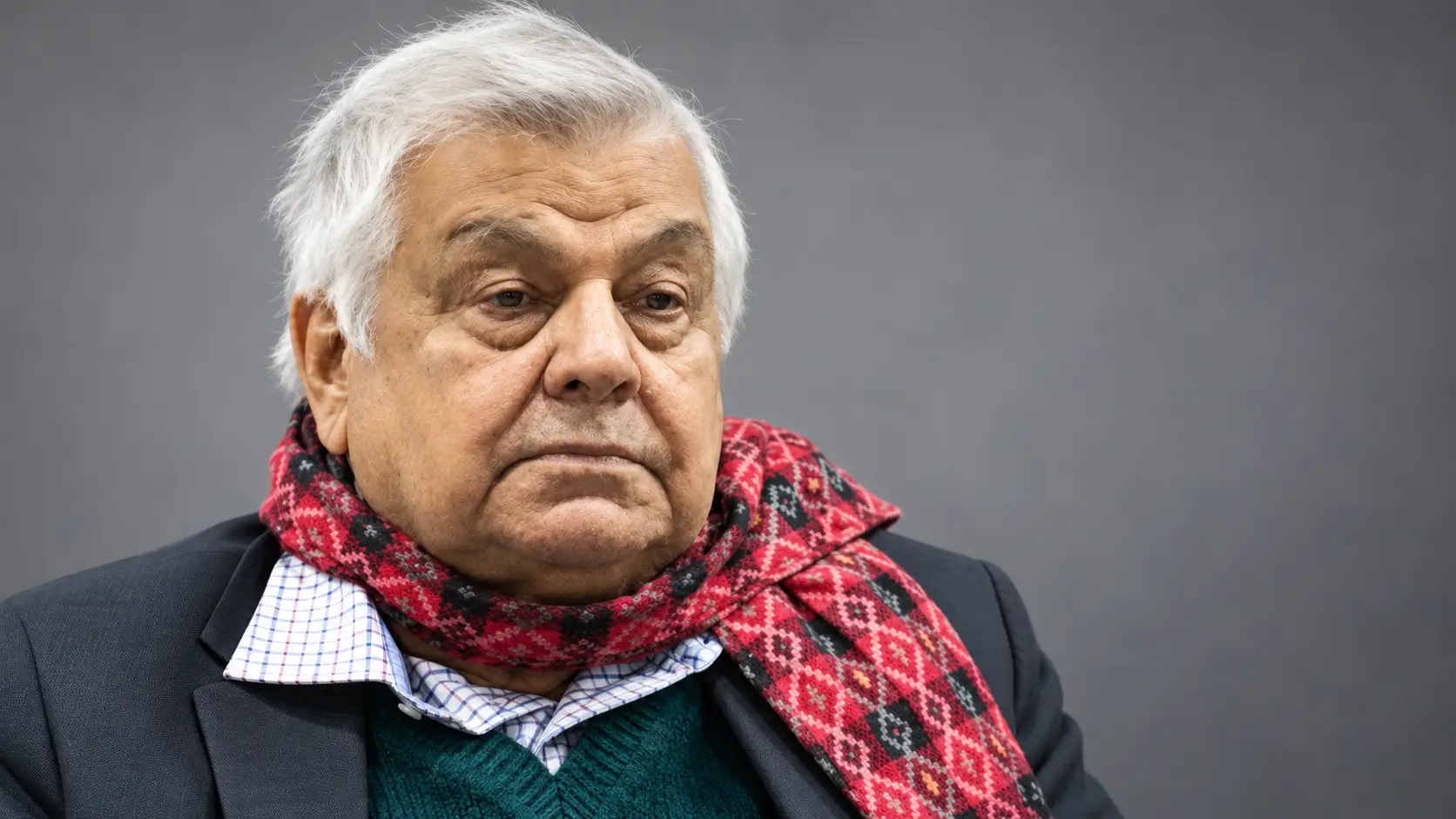
Dr. Dhruva Chandra Gautam is a Nepali novelist, short-story writer, playwright, poet, and experimental fiction writer. His literary works are characterized by existentialist and absurdist thought, social realism, political satire, regionalism, and fantasy. He is recognized in Nepali fiction for adopting narrative techniques that differ from conventional storytelling.
His first novel, Antyapachhi, was published in 2024 BS. He subsequently wrote novels including Baluwa Mathi, Dapi, Kattel Sirko Chotpatak, Alikhit, Nimitta Nayak, Upasamhara Arthat Chautho Antya, Tathakathit, Sato, and Jadauri. In addition to novels, he has published short stories, plays, poetry, memoirs, and works in other literary genres.
Gautam received the Madan Puraskar for 2040 BS for his novel Alikhit. He was also honored with the Sajha Puraskar for Tathakathit. Alongside his literary career, he taught at the university level and served as Member-Secretary of the former Royal Nepal Academy.
Brief Biography
|
Particulars |
Details |
|---|---|
|
Full Name |
Dr. Dhruva Chandra Gautam |
|
Date of Birth |
Poush 2; published sources differ on the birth year |
|
Birthplace |
Birgunj, Parsa, according to the Madan Puraskar Guthi |
|
Family Background |
Associated with Birgunj, Nepal |
|
Nationality |
Nepali |
|
Father |
Govinda Chandra Gautam |
|
Mother |
Deepawati Devi Gautam |
|
Education |
Master's degree in Nepali and PhD in Linguistics |
|
Main Professions |
Literary writing and teaching |
|
Academic Position |
Member-Secretary of the former Royal Nepal Academy |
|
First Novel |
Antyapachhi (2024 BS) |
|
Major Literary Genres |
Novels, short stories, plays, poetry, and memoirs |
|
Madan Puraskar |
2040 BS, for Alikhit |
|
Sajha Puraskar |
For the novel Tathakathit |
Birth, Family Background and Childhood
Dhruva Chandra Gautam was born on Poush 2. However, published sources provide conflicting information about his birth year and birthplace.
According to the official biography maintained by the Madan Puraskar Guthi, he was born on Poush 2, 2001 BS, in Birgunj. A report published in Gorkhapatra, however, gives his birth date as Poush 2, 2000 BS. The United States Library of Congress records his birth date as December 16, 1943, and identifies Birgunj as his birthplace. Some educational biographical sources identify Raxaul, India, as his birthplace.
Because these sources are inconsistent, the differences concerning his birth year and birthplace should be acknowledged. His early life and family background were closely connected with Birgunj.
Gautam's father was Govinda Chandra Gautam, and his mother was Deepawati Devi Gautam. His elder brother, Dhanush Chandra Gautam, was also a Nepali writer. Dhanush Chandra wrote under the literary name "Dha. Cha. Gotame."
According to the Madan Puraskar Guthi, Dhanush Chandra Gautam received the Madan Puraskar for 2035 BS for his novel Ghamka Pailaharu. Five years later, Dhruva Chandra Gautam also received the same literary award.
Gautam grew up in a family environment connected with education, literature, and journalism. In a conversation with Himalkhabar, he recalled that his elder brothers were involved in journalism and that various newspapers and magazines were available at home.
The local life, linguistic diversity, and social conditions associated with Birgunj also appear as the background of some of his literary works.
Education and Higher Studies
Dhruva Chandra Gautam earned a master's degree in Nepali and a PhD in Linguistics.
His higher education and teaching career were associated with Tribhuvan University. He also pursued advanced studies in linguistics in Pune, India.
His study of Nepali language and literature, together with his knowledge of linguistics, formed important aspects of his academic career.
His writing shows a particular interest in linguistic experimentation, narrative techniques, the psychological conditions of characters, and plot structure. These aspects have also become subjects of literary study.
Beginning of His Literary Career
Dhruva Chandra Gautam developed an interest in literature during childhood. In an interview published in Kantipur, he recalled writing a poem titled "Saraswati Vandana" when he was approximately 10 years old.
He initially wrote poetry and short stories before becoming active in novel writing. The literary magazine Ruprekha was an important publication associated with the early stages of his creative career.
His First Novel: Antyapachhi
Antyapachhi, published in the literary magazine Ruprekha in 2024 BS, was Gautam's first novel. The entire novel appeared in a single issue of the magazine.
Rather than following a conventional sequence of events, Antyapachhi emphasizes human existence, experience, uncertainty, and symbolic narration.
The novel is studied in relation to the existentialist and absurdist traditions of Nepali fiction.
His second novel, Baluwa Mathi, was published in 2028 BS. It continued his exploration of existential questions and experimental narrative techniques.
The experimental approach developed in these early novels also appeared in different forms throughout his later literary career.
Major Novels and Their Themes
Dhruva Chandra Gautam's novels explore different forms of social reality, human experience, political contradictions, regional settings, and imaginative storytelling.
The following sections examine the themes and narrative techniques of some of his representative novels.
1. Dapi (2033 BS)
Dapi is a novel associated with social realism and regional life.
It portrays rural life in the Tarai, social inequality, local communities, and power relations.
Because of its focus on local life and social conditions, the novel can be studied as an example of Gautam's regional fiction.
Compared with his earlier existentialist novels, Dapi places greater emphasis on depicting the social setting.
2. Kattel Sirko Chotpatak (2037 BS)
Kattel Sirko Chotpatak is a novel concerned with urban life, social contradictions, and moral conflict.
It explores the tensions between personal integrity, social pressure, economic circumstances, and changing social values.
The novel is discussed in Nepali literary studies for its treatment of social realism and satire.
It is also notable for its film adaptation. Director Neer Shah made the Nepali film Basudev based on this novel.
3. Alikhit (2040 BS)
Alikhit is the novel for which Dhruva Chandra Gautam received the Madan Puraskar.
The novel portrays rural life in the Birahinpur Barewa area of the central Tarai, addressing social inequality, exploitation, deprivation, and different aspects of human behavior.
It combines realistic elements with mythical references, symbolism, satire, and fantasy.
Although the narrative addresses problems within local communities, the author does not limit it to conventional realistic description. Through imagination and mythical structures, the novel raises questions about social behavior and systemic contradictions.
The use of dialogue and expressions associated with the Bhojpuri-speaking community also reflects its regional characteristics.
Literary studies by Dr. Yadunandan Upadhyay have examined the themes, techniques, language, mythical elements, and social realism of Alikhit.
According to the records of the Madan Puraskar Guthi, Gautam received the Madan Puraskar for 2040 BS for this novel. The award ceremony was held on Asoj 13, 2041 BS.
4. Nimitta Nayak
Nimitta Nayak is another novel associated with Gautam's experimental approach to fiction.
The work can be studied in relation to individual roles, the concept of heroism, and human behavior.
Understanding its literary significance requires attention not only to its plot but also to character development and narrative techniques.
5. Upasamhara Arthat Chautho Antya (2048 BS)
Upasamhara Arthat Chautho Antya is studied for its experimentation with narrative structure.
The novel presents the ending of a story and its possible meanings from different perspectives.
Its narrative approach avoids a single, fixed conclusion and establishes a relationship between the meaning of events, the experiences of characters, and readers' interpretations.
The novel has been examined in literary studies in relation to postmodern fiction, narrative uncertainty, and the use of alternative endings.
6. Agnidatta + Agnidatta (2053 BS)
Agnidatta + Agnidatta is an experimental novel by Gautam.
Literary studies of the work have addressed rewriting, narrative structure, and techniques that differ from established forms of literary presentation.
The novel shows that Gautam's literary interests extend beyond subject matter to the process and structure of literary composition.
7. Phoolko Atanka (2055 BS)
Phoolko Atanka is associated with Gautam's experimentation with the sutra novel, a form of fiction built around brief and suggestive narrative units.
In this form, a story is constructed through concise statements, suggestions, and structural experimentation rather than necessarily relying on an extended narrative.
Gautam experimented with the sutra novel alongside the concept of sutra katha, or brief, condensed storytelling. Literary criticism identifies Phoolko Atanka as a representative example of this approach.
8. Tathakathit
Tathakathit is the novel for which Gautam received the Sajha Puraskar.
The work addresses contradictions in social and political behavior and various inconsistencies in human conduct.
Its satirical perspective and narrative techniques are associated with Gautam's experimental fiction.
The Madan Puraskar Pustakalaya and published literary bibliographies identify its publication year as 2059 BS.
However, published reports provide conflicting information about the year of the Sajha Puraskar. Different reports in Kantipur mention both 2057 BS and 2059 BS. Therefore, the award year is not presented here as a confirmed fact.
9. Sato (2079 BS)
Sato is a novel based on fantasy and dark satire.
It was published by Ratna Pustak Bhandar in Asar 2079 BS. A contemporary news report identified it as Gautam's 28th novel.
The novel uses an imaginative premise involving a newborn child who possesses the sensibilities associated with a 16-year-old.
Gautam stated that he used fantasy and dark satire in the work.
Through events that depart from ordinary reality, the novel raises questions about human life and social behavior.
10. Jadauri (2080 BS)
Jadauri is a novel by Gautam published in Bhadra 2080 BS.
Published by Shikha Books, it was identified in a contemporary news report as his 29th novel.
The novel uses monologue and memory-based narration.
According to Gautam, the narrative also incorporates events associated with the later period of the COVID pandemic.
The work demonstrates his continuing interest in experimental narrative structures and literary techniques.
List of Major Published Novels
The following are some of Dhruva Chandra Gautam's representative novels and their publication years.
|
Novel |
Publication Year (BS) |
|---|---|
|
Antyapachhi |
2024 |
|
Baluwa Mathi |
2028 |
|
Dapi |
2033 |
|
Kattel Sirko Chotpatak |
2037 |
|
Alikhit |
2040 |
|
Swargiya Hiradeviko Khoj |
2045 |
|
Upasamhara Arthat Chautho Antya |
2048 |
|
Duvidha |
2052 |
|
Agnidatta + Agnidatta |
2053 |
|
Phoolko Atanka |
2055 |
|
Badhi |
2056 |
|
Tathakathit |
2059 |
|
Jeliyeko |
2062 |
|
Apriya |
2067 |
|
Sataun Ritu |
2068 |
|
Sato |
2079 |
|
Jadauri |
2080 |
This is a representative selection rather than a complete bibliography of Gautam's works. The publication years are based on available literary studies, bibliographies, and publication-related news reports.
Contributions to Short Stories, Drama and Poetry
Dhruva Chandra Gautam's literary career is not limited to novels. He has also written short stories, plays, poetry, and works in other genres.
Short-Story Writing
Gautam's short stories explore human behavior, social contradictions, psychological conditions, and the inconsistencies of everyday life.
His published short-story collections and related works include Andhyaro Dwipma, Gautamka Pratinidhi Katha, and Dhruva Chandra Gautamka Ekaunna Katha.
As in his novels, his short-story writing demonstrates an interest in narrative structures and techniques that differ from conventional storytelling.
Playwriting
Gautam has also contributed to Nepali drama.
His notable dramatic works include Tyo Euta Kura and Bhasmasurko Nalihad.
Bhasmasurko Nalihad connects mythological references with contemporary social and political meanings.
Academic studies have also examined the absurdist elements reflected in the characters of this play.
Poetry
Gautam began his literary career by writing poetry.
His poetry collection Hyangarma Jhundiyeko Akash was published in December 2021.
According to an interview published in Kantipur, the poems in this collection had been written many years earlier. The manuscript, which had been submitted for publication, was rediscovered after a long period. Sangri-La Books subsequently published the collection.
Its publication introduced Gautam's early poetry to later generations of readers.
Collaborative Novel Writing
In addition to his individual literary work, Dhruva Chandra Gautam has participated in collaborative novel writing.
This practice, in which several writers contribute to a single narrative, is associated with the experimental tradition of Nepali fiction.
Akash Bibhajit Chha
Akash Bibhajit Chha is a novel jointly written by ten authors.
Gautam was one of its contributors. The inclusion of creative contributions from different writers in a single work is its distinctive feature.
Avatar Vighatan
Avatar Vighatan is another collaborative novel.
Published accounts indicate that 13 writers, including Gautam, participated in its creation.
Dehamukta and Jyaga
Gautam co-wrote the novel Dehamukta with Dhruva Sapkota and Benju Sharma.
He also collaborated with Dhruva Sapkota on Jyaga, a novel concerned with the lives and circumstances of Bhutanese refugees.
Through collaborative writing, Gautam has explored a creative process involving multiple authors rather than relying solely on an individual literary perspective.
Memoirs and Other Writing
Apart from novels, short stories, poetry, and drama, Dhruva Chandra Gautam has also contributed to memoir writing and interview-based literature.
Ganti (2081 BS)
Ganti is a memoir by Gautam. It was published by Ratna Pustak Bhandar in Asar 2081 BS.
The book includes memories of his childhood, family experiences, and particularly events associated with his mother.
It presents personal memories in a literary style.
Yi Phoolharu Ma Kahan Rakhun (2082 BS)
Yi Phoolharu Ma Kahan Rakhun is a work associated with Gautam's earlier writings, interviews, and experiences.
Released in 2082 BS, the book includes conversations and memoir-related materials involving political leaders, writers, artists, and other personalities from different periods.
Edited by Dr. Khum Narayan Paudel and Ishan Gautam, the book has been described by the author as belonging to the literary form he calls nakhyan.
According to Gautam, it combines characteristics of nonfiction and fiction.
The work illustrates how his writing extends beyond novels and short stories to interviews, historical material, and memoirs.
Major Characteristics of His Writing Style
Dhruva Chandra Gautam's literature demonstrates experimentation with plot, characters, language, and narrative structure. His works can be examined through several major literary approaches.
Existentialism and Absurdism
Existentialist literature gives importance to questions concerning individual freedom, the meaning of life, uncertainty, and the human condition.
Absurdist literature explores life's contradictions, experiences of meaninglessness, and the inconsistent situations individuals encounter.
Gautam's early novels, including Antyapachhi and Baluwa Mathi, are studied in relation to these literary approaches.
Regionalism and Social Realism
Regional literature focuses on subjects associated with a particular geographical area, local society, language, and cultural setting.
Gautam's novels, including Dapi and Alikhit, contain elements associated with the social and linguistic conditions of the Tarai.
The depiction of local society and the use of Bhojpuri expressions in Alikhit, in particular, have been subjects of literary study.
Fantasy and Mythological Elements
Fantasy allows writers to construct literary narratives by imagining events or situations beyond ordinary reality.
Some of Gautam's novels combine social realism with imaginative and mythological references.
This approach is evident in works such as Alikhit and Sato.
Satirical Perspective
Gautam's literature contains satire directed at human behavior, social values, and political contradictions.
Satire in his works is expressed not only through the plot but also through characters' behavior, dialogue, and symbolic events.
Sutra Novels and Experience-Based Fiction
The concepts of the sutra novel and anubhavanyas, or experience-based fiction, are also associated with Gautam's experimental writing.
A sutra novel attempts to construct a narrative through brief and suggestive statements.
Experience-based fiction combines personal experiences and memories with elements of novelistic presentation.
Literary criticism identifies Phoolko Atanka as a work associated with the sutra novel and Balyakal as an example of experimentation with experience-based fiction.
These approaches show Gautam's continuing interest in literary forms and narrative structures alongside subject matter.
Teaching Career and Academic Responsibilities
Dhruva Chandra Gautam is known not only as a literary writer but also for his teaching career.
He taught Nepali language and literature under Tribhuvan University. Throughout his professional life, he pursued literary writing alongside teaching.
Member-Secretary of the Royal Nepal Academy
Gautam served as Member-Secretary of the former Royal Nepal Academy.
According to the official records of the Nepal Academy, the Academic Council formed in 2051 BS included Madan Mani Dixit as Vice-Chancellor and Dhruva Chandra Gautam as Member-Secretary.
His involvement in the administration of an academic institution was another important aspect of his professional career.
Film Adaptation of His Literary Work
The Nepali film Basudev was based on Dhruva Chandra Gautam's novel Kattel Sirko Chotpatak.
Directed by Neer Shah, filming began in 2039 BS, and the film was released to the public in 2041 BS.
Harihar Sharma played the leading character.
Basudev is an example of the adaptation of Gautam's literary work into cinema.
It also illustrates the connection between his novel writing and Nepali filmmaking.
Awards and Honors
Dhruva Chandra Gautam has received several awards and honors for his literary contributions.
Madan Puraskar (2040 BS)
Gautam received the Madan Puraskar for 2040 BS for his novel Alikhit.
This information is confirmed by the official records of the Madan Puraskar Guthi.
Sajha Puraskar
He received the Sajha Puraskar for his novel Tathakathit.
Although published sources agree on the award-winning work, they provide conflicting information about the award year. Therefore, the year is not stated as a confirmed fact.
Vasundhara Shree Award (2077 BS)
The Vasundhara-Man Pragya Pratishthan selected Gautam for the Vasundhara Shree Award for 2077 BS.
Published reports stated that the foundation decided to confer the award in recognition of his contributions to Nepali short stories, novels, and drama.
Title of Aavishkari Aakhyankar
The Basanta Chaudhary Foundation honored Gautam with the title Aavishkari Aakhyankar (Innovative Fiction Writer) on the occasion of his 80th birthday.
According to Gorkhapatra, the recognition acknowledged his experimentation with literary forms and creative contributions.
National Writers Award (2082 BS)
The Nepal Writers Association presented Gautam with the second National Writers Award on Baisakh 16, 2082 BS.
The award was presented at a ceremony held at the Nepal Academy.
Dhruva Chandra Gautam's Contributions to Nepali Literature
Dhruva Chandra Gautam's literary contributions can be examined through the experimental tradition of Nepali fiction, his presentation of social reality, linguistic diversity, and writing across different genres.
His early novels raise questions about human existence and absurdity. His later works give greater attention to social realism, political satire, imaginative events, and new possibilities in narrative structure.
Regional social settings are important in Dapi and Alikhit, while experimentation with narrative structure is particularly notable in works such as Upasamhara Arthat Chautho Antya and Phoolko Atanka.
Similarly, his participation in collaborative novel writing, sutra novels, experience-based fiction, and memoir writing reflects his interest in working beyond conventional literary boundaries.
In addition to being a novelist, he is a short-story writer, playwright, poet, and memoirist. His university teaching and responsibilities at the Royal Nepal Academy also connected his literary activities with academic institutions.
In the study of Nepali literature, Gautam's works serve as useful references for understanding existentialist and absurdist fiction, regionalism, fantasy, political satire, and postmodern narrative techniques.
Conclusion
Dr. Dhruva Chandra Gautam is an experimental fiction writer in Nepali literature. His literary career encompasses different expressions of existentialist thought, regional social realism, satire, and fantasy.
Beginning with Antyapachhi, his novel-writing career progressed through different stages in terms of subject matter and narrative techniques, as reflected in works such as Alikhit, Upasamhara Arthat Chautho Antya, Tathakathit, Sato, and Jadauri.
The Madan Puraskar and other literary honors, his teaching career, academic responsibilities, and writing across different literary genres are important aspects of his life.
Understanding Gautam's literary contributions requires examining not only the plots of his works but also their language, characterization, symbolism, satire, and narrative structures.
References
-
Madan Puraskar Guthi — Official Biography of Dhruva Chandra Gautam and Madan Puraskar Records
-
Madan Puraskar Guthi — Biography and Award Records of Dha. Cha. Gotame
-
Nepal Academy — Official Records of Former Academic Councils
-
Library of Congress — Literary and Biographical Records of Dhruva Chandra Gautam
-
Gorkhapatra — Dr. Gautam Honored with the Title Aavishkari Aakhyankar
-
Onlinekhabar — Dhruva Chandra Gautam: Writing and Breathing Are Alike
-
Samakalin Sahitya — Dr. Yadunandan Upadhyay's Study of the Thematic Features of Alikhit
-
Samakalin Sahitya — A Study of the Literary Techniques in Alikhit
-
Sahitya Post — Dhruva Chandra Gautam: A Novelist Across Three Eras
-
Kantipur — Dhruva Chandra Gautam's 28th Novel Sato Released
-
Kantipur — Dhruva Chandra Gautam's 29th Novel Jadauri
-
Kantipur — Dhruva Chandra Gautam's Memoir Ganti Released
-
Ukaalo — Report on Yi Phoolharu Ma Kahan Rakhun
-
Kantipur — Poetry Interview: Ma Dherai Anda Phorera Niskeko Challa
-
Kantipur — Basudev After 32 Years
-
Kantipur — Vasundhara Shree Award for Dhruva Chandra Gautam
-
Ratopati — National Writers Award Presented to Dhruva Chandra Gautam







Comments 0
No comments yet. Be the first to start the conversation.