



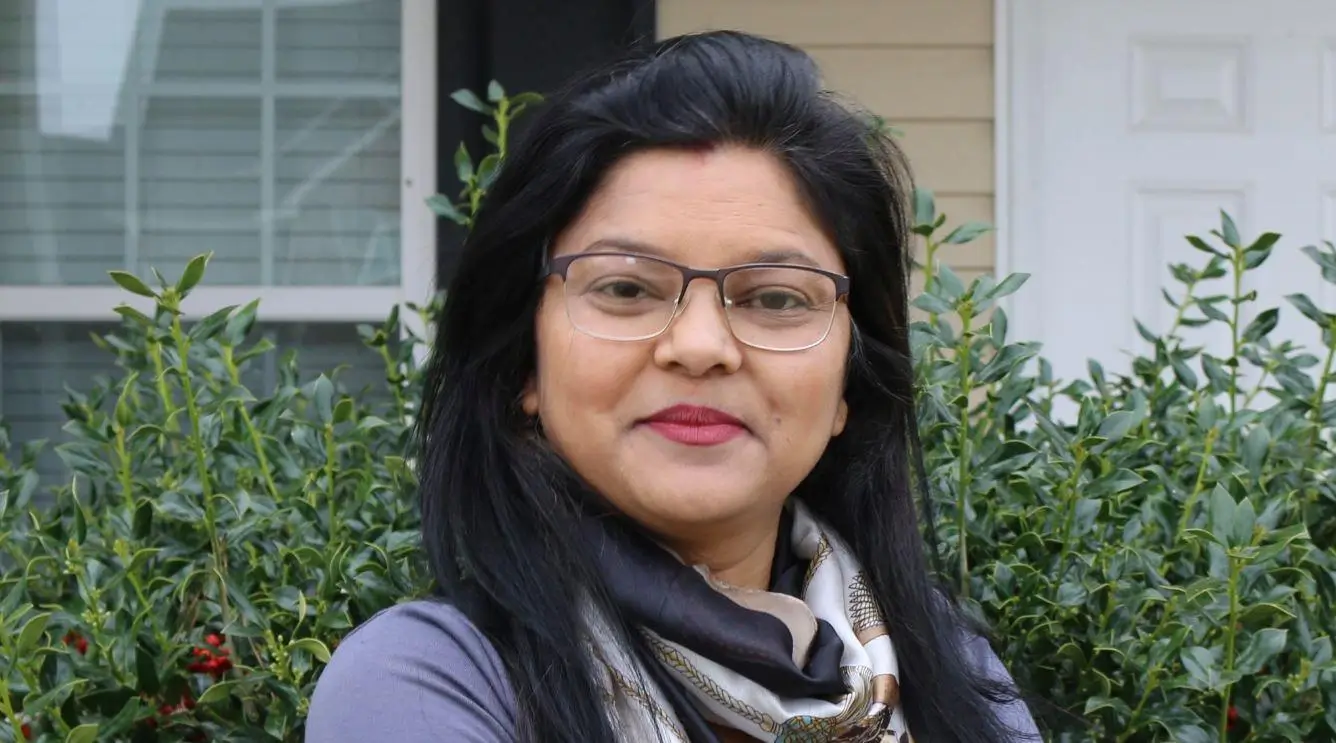
Neelam Karki Niharika is a contemporary Nepali novelist, short-story writer, and poet. Her writing is known for its treatment of social realities, women's experiences, history, mythological characters, and cultural subjects. Through novels, short stories, and poetry, she has portrayed different periods and settings of Nepali society.
She received the Madan Puraskar for 2074 BS for her historical novel Yogmaya, based on the life and social reform movement of Yogmaya Neupane. Earlier, she received the Padmashree Sahitya Puraskar for 2072 BS for Cheerharan, a novel that presents the lives of female characters from the Mahabharata from a different perspective.
Her major novels include Maun Jeevan, Niyatiko Khel, Arki Aaimai, Cheerharan, Yogmaya, Draupadi Avashesh, and Rajmata. Her short-story collections include Hawan, Kagajma Dastakhat, Beli, and 43 Katha.
A decision was also announced to confer the Kavidanda National Fiction Award 2082 BS on her for Rajmata, a historical novel published in 2082 BS. The award was announced in Ashoj 2083 BS.
Neelam Karki Niharika: Quick Facts
|
Particulars |
Details |
|---|---|
|
Name |
Neelam Karki |
|
Literary name |
Neelam Karki Niharika |
|
Year of birth |
2031 BS |
|
Place of birth |
Gothadi, Palpa, Nepal |
|
Nationality |
Nepali |
|
Education |
MA in Nepali Literature, MEd in Health Education, and nursing studies |
|
Literary genres |
Novels, short stories, and poetry |
|
First novel |
Maun Jeevan (2051 BS) |
|
Major novels |
Cheerharan, Yogmaya, Draupadi Avashesh, Rajmata |
|
Major short-story collections |
Hawan, Kagajma Dastakhat, Beli, 43 Katha |
|
Major poetry works |
Brain Fever, Neelam Karki Niharika Ka Kavita |
|
Major awards |
Padmashree Sahitya Puraskar 2072 BS, Madan Puraskar 2074 BS |
|
Most recently announced award |
Kavidanda National Fiction Award 2082 BS (Rajmata) |
Birth and Early Life
Neelam Karki Niharika was born in 2031 BS in Gothadi, Palpa district, Nepal. Her early life was connected with the social and cultural setting of western Nepal.
She developed an interest in reading literature and creative writing during her school years. She has explained that having a poem published in her school magazine further encouraged her interest in writing.
In a 2018 interview with The Kathmandu Post, she recalled that her reading habits and the publication of her literary work during her school years motivated her to pursue writing.
Initially active in poetry, she later adopted short stories and novels as additional forms of creative expression. Her literary identity gradually became established under the name Neelam Karki Niharika, incorporating the pen name "Niharika."
Education and Professional Background
Neelam Karki Niharika pursued higher education in Nepali literature and health education.
According to biographical information provided by literary critic Leela Luitel, she completed a Master of Arts (MA) in Nepali Language and Literature and a Master of Education (MEd) in Health Education. She also studied nursing.
Her professional involvement was not limited to literary writing. She worked as a healthcare professional and gained experience in teaching and broadcasting.
Available accounts indicate that she taught at various colleges and was involved in presenting radio and television programs.
Her background in literature, healthcare, and broadcasting represents important aspects of her professional life. Her creative writing, however, shows a particular interest in social relationships, human experiences, women's lives, and historical subjects.
Beginning of Her Literary Career
Neelam Karki Niharika's career as a published author began with her novel Maun Jeevan, published in 2051 BS.
It was followed by Niyatiko Khel. During the early stages of her career, she continued writing poetry and short stories alongside novels.
Her literary career can be examined through her early social fiction, her contributions to short stories and poetry, and her later historical and culturally focused novels.
Early Novels
Maun Jeevan and Niyatiko Khel were among her earliest published novels. Her novel-writing career subsequently expanded to cover social, mythological, historical, and cultural subjects.
Timi, Ma Ra Uni is also mentioned among her early novels.
Short Stories and Poetry
Alongside novels, she remained active in writing short stories and poetry.
Her published short-story collections include Hawan, Kagajma Dastakhat, and Beli. Her poetry works include Brain Fever and Neelam Karki Niharika Ka Kavita.
Historical and Cultural Novels
Cheerharan, Yogmaya, Draupadi Avashesh, and Rajmata are important works from the later stages of her novel-writing career.
These novels explore the reinterpretation of mythology, historical figures, social reform, women's experiences, and cultural traditions.
Life Abroad and Literary Engagement
Neelam Karki Niharika has spent a considerable period living in the United States while remaining engaged in Nepali literary writing.
Her experiences of life abroad are particularly reflected in Arki Aaimai. The novel portrays the lives of Nepali families residing in the United States, cultural differences, and women's experiences.
Despite writing while living abroad, she continued to address subjects associated with Nepal's history, geography, and culture.
In Yogmaya, she explores a historical social reform movement in eastern Nepal. Draupadi Avashesh focuses on the Himalayan culture of Humla, while Rajmata examines the roles of women associated with Nepal's historical systems of governance.
Her writing therefore addresses both the lives of Nepalis abroad and various social and historical settings within Nepal.
Major Novels by Neelam Karki Niharika
Neelam Karki Niharika's novels address social realities, women's experiences, history, and culture. Her major novels are discussed below.
Maun Jeevan
Published in 2051 BS, Maun Jeevan was Neelam Karki Niharika's first novel.
It marked the beginning of her career as a published novelist. She subsequently published novels exploring different social settings and subjects.
Niyatiko Khel
Niyatiko Khel is another novel from the early stage of her literary career. It is associated with the initial development of her writing.
The novel is among the works that demonstrate her continued involvement in fiction writing after Maun Jeevan.
Arki Aaimai
Published in 2070 BS, Arki Aaimai is a social novel based on Nepali immigrant life, women's experiences, and family relationships.
The story revolves around a female character named Tara Malla, also known as Taru. Having moved from Nepal to the United States, she encounters family difficulties, inequalities within relationships, and questions concerning her personal identity in a new social setting.
Literary critic Leela Luitel has examined the portrayal of Nepali and American cultural settings, the psychology of the female protagonist, and family relationships in the novel.
Migration in the novel is not merely a matter of moving from one geographical location to another. The story also addresses personal freedom, self-respect, and the reassessment of relationships in a new social setting.
Cheerharan
Published in 2072 BS, Cheerharan is a novel based on Hindu mythology that presents the experiences of female characters from the Mahabharata from a different perspective.
It portrays the social and family circumstances of characters such as Satyavati, Ambika, Ambalika, Gandhari, Kunti, and Draupadi from a woman's perspective.
Rather than treating the events of the Mahabharata solely as a narrative of political power, dynastic succession, and war, the novel raises questions about women's desires, rights, and social circumstances.
The novel particularly emphasizes:
-
The position of women in mythology
-
Family and political power relationships
-
Women's desires and personal freedom
-
Social norms and gender inequality
-
Reinterpretation of mythological events in relation to contemporary society
Cheerharan received the Padmashree Sahitya Puraskar for 2072 BS. It was also shortlisted for the Madan Puraskar that year.
Yogmaya
Published in 2074 BS, Yogmaya is a historical novel by Neelam Karki Niharika. She received the Madan Puraskar for 2074 BS for this work.
The novel's central character is Yogmaya Neupane, a historical figure who advocated social and religious reform during Nepal's Rana period.
Yogmaya spoke out against caste discrimination, injustice toward women, social inequality, and problems associated with the political system of her time.
Niharika presents her life and movement through a fictional narrative. The novel explores historical circumstances, the condition of Nepali society during that period, and the voices calling for social reform.
The major themes of Yogmaya include:
-
Nepali society during the Rana period
-
Women's rights and social justice
-
Caste and social discrimination
-
Religious awareness and reform movements
-
The relationship between political authority and social change
The novel is a literary work based on the life of a historical figure. Therefore, not all its dialogue, scenes, and character details can be treated as independent historical evidence.
In an interview with The Kathmandu Post, the author expressed the view that writing historical fiction carries responsibilities different from those involved in writing entirely fictional stories.
Draupadi Avashesh
Published in 2078 BS, Draupadi Avashesh is a novel set in the social and cultural setting of Humla's high Himalayan region.
Its central subject is the tradition of polyandry, a form of marriage in which one woman has more than one husband.
Through fiction, the novel portrays family relationships, local cultural beliefs, geographical circumstances, and women's experiences within Himalayan communities.
During the book's launch, the author discussed her attempt to portray the tradition of polyandry through literature.
The novel was launched in the Namkha Rural Municipality area of Humla in the presence of local representatives and residents.
Draupadi Avashesh can be understood as a literary portrayal of social life in Humla. However, it would be inappropriate to conclude that the circumstances depicted in the novel represent the experiences of every individual or family in the community.
Rajmata
Published in 2082 BS, Rajmata is a historical novel by Neelam Karki Niharika. Published by FinePrint, the book was launched in Kathmandu in Chaitra 2082 BS.
The novel explores subjects related to Nepal's historical systems of governance, royal life, and the roles of women in state formation.
Its central purpose is to bring into fiction the contributions of women associated with the kingdoms and royal dynasties that existed in Nepal during different historical periods.
At the book launch, the author stated that she had begun writing the novel in 2019. She also mentioned that her writing was affected by the COVID-19 pandemic.
On Ashoj 7, 2083 BS, Kavidanda Sahitya Samaj publicly announced its decision to confer the Kavidanda National Fiction Award 2082 BS on Rajmata.
Short Stories and Poetry
Neelam Karki Niharika's literary contributions extend beyond novels. She has also continued writing short stories and poetry.
Hawan
Published in 2062 BS, Hawan is one of her early short-story collections.
The collection reflects her engagement in short-story writing alongside her work as a novelist.
Kagajma Dastakhat
Published in 2064 BS, Kagajma Dastakhat is another short-story collection by Niharika.
It forms part of the development of her short-story writing. Personal relationships and social circumstances are among the subjects explored in her stories.
Beli
Published in 2068 BS, Beli is a collection of short stories associated with child psychology.
Its principal focus is the literary portrayal of children's experiences, emotions, and psychological conditions.
43 Katha
Published in 2076 BS, 43 Katha is a compilation of Niharika's short stories published at different times.
The collection brings together stories previously published in various books, newspapers, and magazines.
It provides an opportunity to examine different stages and subjects of her short-story writing within a single volume.
Poetry
Neelam Karki Niharika began her literary career with poetry.
Her major poetry works include Brain Fever and Neelam Karki Niharika Ka Kavita.
Brain Fever is known as a long poem, while Neelam Karki Niharika Ka Kavita is a poetry collection.
Although she has focused more on novels in recent years, poetry remains an important part of her creative career.
Major Published Works of Neelam Karki Niharika
Her major novels, short-story collections, and poetry works are listed below.
|
Work |
Genre |
Publication Year (BS) |
|---|---|---|
|
Maun Jeevan |
Novel |
2051 |
|
Niyatiko Khel |
Novel |
2053 |
|
Timi, Ma Ra Uni |
Novel |
2058 |
|
Hawan |
Short-story collection |
2062 |
|
Neelam Karki Niharika Ka Kavita |
Poetry collection |
2063 |
|
Kagajma Dastakhat |
Short-story collection |
2064 |
|
Beli |
Short-story collection |
2068 |
|
Arki Aaimai |
Novel |
2070 |
|
Cheerharan |
Novel |
2072 |
|
Yogmaya |
Novel |
2074 |
|
43 Katha |
Short-story collection |
2076 |
|
Draupadi Avashesh |
Novel |
2078 |
|
Rajmata |
Novel |
2082 |
This is a list of her major works, not a complete bibliography of all her publications. The publication years are based on first editions and available literary records. Some works have different publication years recorded in different sources, and dates that could not be sufficiently verified have not been included.
Major Characteristics of Neelam Karki Niharika's Writing
Neelam Karki Niharika's works place considerable importance on women's experiences, social relationships, historical subjects, and local cultural settings.
Women's Experiences and Social Inequality
Many of her works explore questions of women's self-respect, personal freedom, social roles, and family relationships.
Arki Aaimai portrays women's experiences associated with life abroad. Cheerharan reinterprets mythological characters, while Yogmaya focuses on the social reform movement led by a historical female figure.
Although these works differ in their historical periods and settings, the experiences of female characters form an important foundation of their narratives.
Relationship Between History and Fiction
Yogmaya and Rajmata present historical subjects through the narrative structure of novels.
Historical fiction reconstructs documented events, individuals, and social circumstances through literary expression. Both historical facts and an author's creative imagination play a role in this process.
Niharika's historical novels can be studied from this perspective.
Reinterpretation of Mythology
Cheerharan attempts to examine familiar characters and events from the Mahabharata through a woman's perspective.
Rather than concentrating primarily on political and dynastic events, the novel brings the experiences and decisions of female characters into focus.
Presenting established stories from a different perspective is a notable characteristic of her fiction.
Local Culture and Social Settings
Draupadi Avashesh uses Himalayan life, marriage traditions, and local cultural circumstances in Humla as the foundation of its narrative.
Place, lifestyle, and social relationships are important elements in this type of writing.
Although the novel portrays local life, it is necessary to distinguish literary fiction from direct sociological research when examining its representation of society.
Research and Literary Creation
The study of historical and cultural subjects appears to have become increasingly important in Neelam Karki Niharika's later novels.
Examples include Yogmaya, which is based on a historical figure, and Draupadi Avashesh, which draws on a local cultural tradition.
Writing fiction about such subjects requires an understanding of historical circumstances, the social conditions of particular places, and cultural practices.
Published interviews and materials discussing her books have addressed her interest in historical subjects and research-based writing.
However, research-based literary writing and a fully documented historical or sociological account are not the same thing.
Her works can serve as literary introductions that encourage readers to develop an interest in history and culture. For factual research, however, readers should also consult relevant historical records, academic studies, and other reliable sources.
Literary Awards and Honours
Neelam Karki Niharika has received literary awards and recognition for several of her works. Her major awards are discussed below.
Madan Puraskar 2074 BS
Neelam Karki Niharika received the Madan Puraskar for 2074 BS for her novel Yogmaya.
According to the official records of Madan Puraskar Guthi, the award was presented to her at a ceremony held on Ashoj 25, 2075 BS.
She became the fourth woman writer to receive the Madan Puraskar. Before her, Parijat, Jhamak Ghimire, and Radha Paudel had received the award.
Padmashree Sahitya Puraskar 2072 BS
She received the Padmashree Sahitya Puraskar for 2072 BS for her novel Cheerharan.
The award is presented by the Khemlal-Harikala Lamichhane Social Welfare Foundation.
Cheerharan, which reinterprets female characters from the Mahabharata, is one of her award-winning works of mythology-based fiction.
Kavidanda National Fiction Award 2082 BS
The decision to confer the Kavidanda National Fiction Award 2082 BS on her novel Rajmata was publicly announced in Ashoj 2083 BS.
Kavidanda Sahitya Samaj, Chitwan, selected the work from among published works of fiction considered for the award.
Rajmata, Torkin by Kshitij Samarpan, and Mahayug by Seema Abhas were among the finalists.
In announcing its decision to honour Rajmata, the society referred to the novel's subject concerning the roles of women and queens in Nepal's state formation.
The award presentation ceremony was scheduled for Kartik 14, 2083 BS.
Neelam Karki Niharika's Contributions to Nepali Literature
Neelam Karki Niharika's literary contributions span novels, short stories, and poetry. Although she has written in several genres, her literary identity in recent years has been particularly associated with novels addressing historical and social subjects.
Her works can be examined within three major literary areas.
The first is the representation of women's experiences. Works such as Arki Aaimai, Cheerharan, and Yogmaya emphasize the social circumstances and personal decisions of female characters from different periods.
The second is the literary reinterpretation of history and mythology. Cheerharan approaches the Mahabharata from a different perspective, while Yogmaya and Rajmata present historical subjects through fiction.
The third is the portrayal of local culture and social life. Draupadi Avashesh is a notable work in this respect.
These characteristics connect her writing with different historical, cultural, and gender-related aspects of Nepali society.
Approaches to Critical Literary Study
When examining Neelam Karki Niharika's works, readers can consider not only their subject matter but also narrative structure, language and style, character development, and the use of sources.
The following questions may be useful for critical literary study:
-
How does the relationship between fact and imagination develop when historical events are transformed into fiction?
-
Does the reinterpretation of female mythological characters offer new perspectives on the original narratives?
-
How are female characters given the freedom to make their own decisions?
-
How accurately and appropriately are local cultures and linguistic settings represented?
-
How does the author maintain a balance between social themes and literary technique?
These questions support an assessment of literary works based on their structure and presentation, rather than judging them solely by their subject matter or the awards they have received.
Conclusion
Neelam Karki Niharika is a Nepali writer whose literary career spans novels, short stories, and poetry. Beginning with Maun Jeevan, her career has expanded to include novels addressing different subjects, such as Cheerharan, Yogmaya, Draupadi Avashesh, and Rajmata.
She has drawn on women's experiences, social inequality, historical figures, mythology, and cultural traditions as subjects for her literary works.
The Padmashree Sahitya Puraskar for Cheerharan, the Madan Puraskar for Yogmaya, and the announced Kavidanda National Fiction Award for Rajmata are among the major achievements of her literary career.
Her works provide material for studying and discussing the literary representation of Nepali society, history, culture, and female characters.
References
1. Madan Puraskar Guthi. "Nilam Karki Niharika." Official recipient record for the Madan Puraskar 2074 BS.
2. Sangri-La Books Pvt. Ltd. Publisher's information on Cheerharan.
3. Thuprai. Book information on Cheerharan, the Padmashree Sahitya Puraskar 2072 BS, and its inclusion on the Madan Puraskar shortlist.
4. Leela Luitel. "Sanskritik Prastutika Drishtibata Arki Aaimai Upanyasko Vishleshan" (An Analysis of the Novel Arki Aaimai from the Perspective of Cultural Representation). Samakalin Sahitya, 2015.
5. The Kathmandu Post. "Fiction Carries Heavy Responsibility." Interview with Neelam Karki Niharika, September 2018.
6. Thuprai. Publisher's information on the short-story collection Beli.
7. Thuprai. Publisher's information on the short-story collection 43 Katha.
8. Onlinekhabar. "Nilam Karki Niharika's Novel Draupadi Avashesh Launched in Humla," 2078 BS.
9. Nepal News. "Niharika's New Work Rajmata," Chaitra 16, 2082 BS.
10. Kantipur Daily. Ramesh Kumar Paudel. "Rajmata Novel Selected for the Kavidanda Fiction Award," Ashoj 7, 2083 BS.






Comments 0
No comments yet. Be the first to start the conversation.