



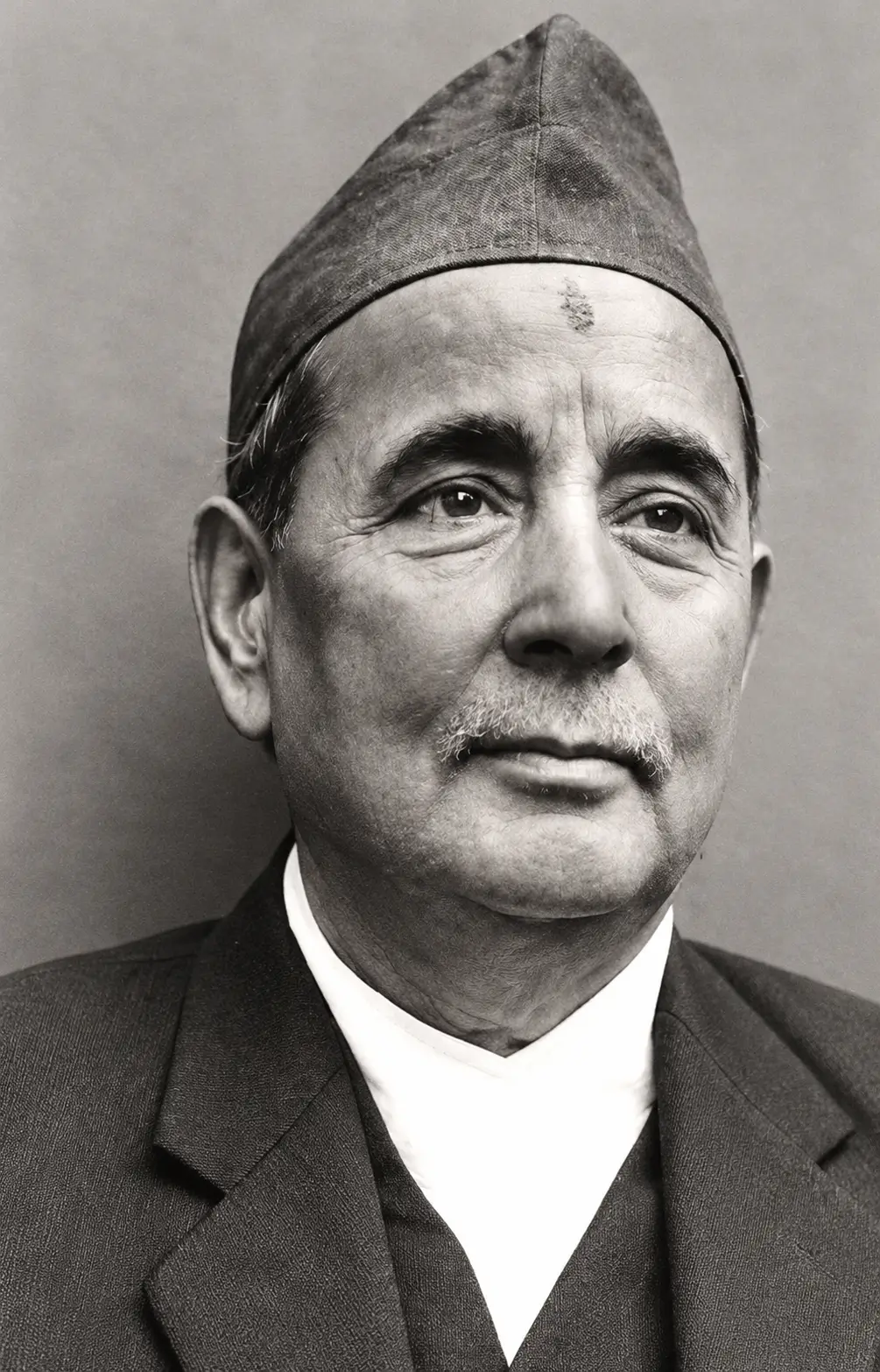
Guru Prasad Mainali (1957–2028 BS / 1900–1971 AD) was one of the pioneering short-story writers of modern Nepali literature. He made an important contribution to the development of Nepali short fiction by writing about everyday social realities, rural communities, family relationships, economic inequality, and human emotions.
His short story Naso, published in the literary magazine Sharada in 1992 BS (1935 AD), is regarded as one of the important early works of modern Nepali short fiction. Through simple language and natural dialogue, Mainali portrayed the joys and sorrows of ordinary people, social problems, moral conflicts, and human relationships.
His major literary work, Naso, is a collection of 11 short stories. These stories depict the social, cultural, and family life of Nepali society during his time. His writing is generally associated with idealistic social realism, a literary approach that combines realistic social conditions with moral values and human ideals.
Besides being a writer, Mainali was a government employee. His work in the civil and judicial services allowed him to observe people from different backgrounds, social behaviour, and family disputes. These experiences appear to have contributed to the realistic portrayal of society in his stories.
Guru Prasad Mainali: Quick Facts
|
Particulars |
Details |
|---|---|
|
Full Name |
Guru Prasad Mainali |
|
Date of Birth |
Bhadra 23, 1957 BS (1900 AD) |
|
Birthplace |
Dhankuta or Kanpur, Kavrepalanchok; published sources differ |
|
Ancestral Home |
Kanpur, Kavrepalanchok |
|
Year of Death |
2028 BS (1971 AD) |
|
Father |
Kashinath Mainali |
|
Mother |
Kashirupa Devi Mainali |
|
Education |
Formal education and self-study; passed the Madhyama-level examination |
|
Profession |
Civil servant, judicial officer, and short-story writer |
|
Literary Genre |
Short fiction |
|
Literary Approach |
Idealistic social realism |
|
First Published Story |
Naso (1992 BS) |
|
Major Work |
Naso (collection of 11 short stories) |
Birth and Family Background
Nepali biographical sources generally record that Guru Prasad Mainali was born on Bhadra 23, 1957 BS. His father was Kashinath Mainali, and his mother was Kashirupa Devi Mainali.
However, published sources do not agree on his birthplace.
The articles Purbiya Adarsha Chetanaka Sambahak Guru Prasad Mainali, published in Gorkhapatra, and Kathajastai Guru Prasadko Wakra Jeevan, published in Kantipur, identify Dhankuta as his birthplace and Kanpur in Kavrepalanchok as his ancestral home.
In contrast, literary scholar Michael Hutt, in Himalayan Voices: An Introduction to Modern Nepali Literature, states that Mainali was born in Kanpur, Kavrepalanchok. Another Gorkhapatra article, Mainali ra Katha Diwas, also identifies Kanpur as his birthplace.
Although the sources differ regarding his birthplace, his family's ancestral connection with Kanpur in Kavrepalanchok is evident.
Mainali's father worked in government service. Because his father was frequently transferred, Mainali had opportunities to become familiar with people and lifestyles in different places during his childhood.
According to a biographical article published in Kantipur, his family later moved to the Kabilas area of Nuwakot. The family also lived in Kathmandu.
Mainali experienced personal losses during his childhood. Biographical accounts suggest that the deaths of his mother and other family members affected his personal life.
Education and Intellectual Development
Guru Prasad Mainali continued learning through self-study alongside his formal education. At a time when access to schooling was limited, his early education followed traditional learning practices.
He studied Sanskrit grammar, religious texts, and literature. Biographical accounts mention that his early studies included texts such as Amarakosha, Laghukaumudi, Rudri, and Durga Saptashati.
His formal education was affected by frequent changes in the family's place of residence because of his father's government employment. Nevertheless, he continued his studies.
According to available biographical sources, Mainali passed the Madhyama-level examination in 1975 BS. An account published in Gorkhapatra states that he passed the Civil Service Madhyama examination in the first division.
Mainali was also interested in Nepali and Hindi literature. Literary studies indicate that he was influenced by the socially realistic works of the Indian writer Premchand.
His independent studies and experiences in government service appear to have broadened his understanding of language, society, and human behaviour.
Civil Service Career and Work as a Judge
Guru Prasad Mainali spent a considerable part of his life in government service. He held various administrative and judicial responsibilities.
Published sources differ regarding the year he entered government service and his initial position.
An account in Gorkhapatra states that he entered judicial service around 1981 BS. However, a biographical article in Kantipur reports that he joined government service following the Mahajanch examination of 1983 BS.
Mainali held judicial positions, including that of Diththa, and eventually reached the level of judge.
According to Kantipur, he worked at the Baglung court and served in different districts before retiring from government service around 2017 BS.
During his government career, Mainali had opportunities to observe family disputes, property-related problems, social inequalities, and the behaviour of people from different social backgrounds.
His judicial experience appears to have influenced his literary perspective. Several of his stories address conflicts involving property, family rights, injustice, and social conduct.
For example, Kartavya portrays a dispute between brothers over family property, while Papko Parinam presents the injustice suffered by disadvantaged people because of the actions of a powerful individual.
In his author's statement titled Mera Dui Shabda (A Few Words from Me), included in his story collection, Mainali explained that most of his stories were based on social incidents he had witnessed or heard about firsthand.
This statement establishes a connection between his literary writing and his experiences of society.
Literary Career and the Development of Modern Nepali Short Fiction
An important starting point in Guru Prasad Mainali's literary career was the publication of his short story Naso in the literary magazine Sharada in 1992 BS.
Narrative works had been published in Nepali before this period. However, the practice of presenting events from ordinary people's lives through modern short-story techniques was gradually developing.
The literary magazine Sharada, which began publication in 1991 BS, played a role in the development of different genres of Nepali literature.
Mainali's Naso, published in the same magazine, helped advance the socially realistic approach to modern Nepali short fiction.
In Himalayan Voices, Michael Hutt gives particular importance to Naso, published in 1935, in the history of modern Nepali short fiction.
Mainali's early stories appeared in Sharada between 1935 and 1938. Some of his stories were subsequently collected and published in book form.
A defining characteristic of Mainali's writing was his focus on ordinary people in Nepali society.
His characters were often farmers, homemakers, government employees, influential village figures, and people experiencing family difficulties.
Rather than simply describing social problems, Mainali connected those problems with changes in his characters' behaviour, emotions, and relationships.
Naso: Guru Prasad Mainali's Collection of 11 Short Stories
Naso is Guru Prasad Mainali's major short-story collection. It contains 11 stories written at different times.
The collection explores rural life, family relationships, social reputation, poverty, injustice, love, regret, and political awareness in Nepali society.
According to the author's statement in the book, most of the stories were written before the political change of 2007 BS, while a few were composed afterward.
Mainali stated that he wrote Naso in 1984 BS and Papko Parinam in 2002 BS.
Literary scholar Taranath Sharma contributed to the editing of the collection. His introduction included in the book is dated 1963.
However, available bibliographic records and literary references provide different publication years for the first edition. Therefore, identifying a single publication year without verifying the specific edition would be inappropriate.
The following sections examine the 11 stories in Naso and their principal themes.
1. Naso
Naso explores the desire for children, polygamy, women's emotions, and family relationships.
Its principal characters are Deviraman, Subhadra, and Lakshmi.
When Deviraman and Subhadra do not have children, Deviraman marries a second wife. His second wife, Lakshmi, gives birth to a son named Sushil.
Subhadra raises Sushil with the same affection she would give her own child.
However, as the family's circumstances change, Subhadra begins to feel neglected and eventually leaves home.
Later, when Lakshmi becomes seriously ill, Subhadra returns to the household.
Lakshmi entrusts Sushil to Subhadra's care as a naso, something placed in another person's trust.
The story examines social attitudes toward having children, women's positions within families, and emotional questions surrounding motherhood.
2. Chhimeki
Chhimeki portrays disputes, cooperation, and the importance of human relationships in rural society.
Its main characters are Gumane and Dhanjite.
A disagreement arises between them over farming activities and water from an irrigation canal. What begins as a minor misunderstanding damages their relationship as neighbours.
However, when difficult circumstances arise later, the importance of mutual assistance and human compassion becomes clear.
The story shows that relationships between neighbours in rural communities involve more than living close to one another. They also depend on cooperation and mutual support.
3. Prayashchitta
Prayashchitta addresses the social restrictions, personal emotions, and moral conflicts faced by widowed women in traditional society.
Its main characters are Gauri and Govinda.
Gauri is a child widow, while Govinda is an educated young man who expresses views concerning women's education and social reform.
An emotional relationship develops between them. However, a serious conflict emerges between their personal feelings and the expectations imposed by society.
Social stigma, family pressure, and questions of personal responsibility create difficulties that lead Gauri's life toward a tragic outcome.
The story questions the unequal moral standards applied to women and men and highlights social inequality during that period.
4. Papko Parinam
Papko Parinam focuses on the misuse of power, injustice against poor people, and the moral consequences of wrongdoing in rural society.
Its central character is Kantu Padhye.
He uses his authority over village forests and land-related matters to create difficulties for disadvantaged people.
Poor families from the Gharti community struggle with access to grass, firewood, and places to live. The influence of powerful individuals exposes them to further injustice.
As the story progresses, misfortune also affects Kantu's own family. The narrative connects these events with the moral consequences of his unjust behaviour.
The story depicts social power, economic inequality, and the exploitation of disadvantaged groups.
5. Bida
Bida explores love, social reputation, family pressure, and separation.
Its principal characters are Narendra and Prabha.
Prabha's father, Agam Singh Khatri, places considerable importance on the high social standing of his family. His attitude complicates decisions concerning Prabha's marriage.
A romantic relationship develops between Narendra and Prabha, but social expectations and family circumstances create difficulties for them.
When Narendra marries someone else, Prabha experiences a serious emotional crisis.
The story takes their relationship toward a sorrowful conclusion.
Through these events, the narrative presents questions concerning women's freedom to marry, traditional attitudes toward family reputation, and inequality within romantic relationships.
6. Paralko Aago
Paralko Aago portrays rural married life, domestic disagreements, and impulsive behaviour.
Its central characters are Chame and Gaunthali.
The couple frequently argue over ordinary household matters.
One day, an argument escalates, and Chame behaves violently toward Gaunthali. Following the incident, Gaunthali leaves for her parental home.
After his wife leaves, Chame experiences loneliness and difficulties managing household responsibilities. He begins to regret his behaviour.
Eventually, the couple reconcile.
The title, which refers to a fire in straw, symbolises anger that spreads quickly but also dies down rapidly.
However, the couple's reconciliation should not be interpreted as suggesting that domestic violence is normal or acceptable.
Instead, the story can be studied as a literary portrayal of family relationships and gender expectations in rural society during that period.
7. Abhagi
Abhagi addresses the loss of maternal care, childhood insecurity, and family neglect.
Its main characters are Pandit Madhav Prasad, his wife Ganga, and their son Krishna.
After Ganga's death, Krishna loses his mother's affection and care.
When Madhav Prasad remarries, Krishna's family circumstances change.
He experiences hardship because of his stepmother's behaviour and his father's insufficient attention.
These circumstances raise questions about Madhav Prasad's responsibilities as a parent.
The story highlights the importance of child protection, maternal affection, and parental responsibility.
8. Sahid
Sahid is a story concerned with political awareness, patriotism, and personal sacrifice.
Its principal character is Bir Bahadur, a Nepali man working in India.
His family's financial difficulties and his experiences of living and working away from home are important parts of the narrative.
He later becomes involved in the anti-Rana movement associated with the political change of 2007 BS.
Through Bir Bahadur's experiences, the story presents political struggle alongside personal and family responsibilities.
The narrative portrays the participation of ordinary people in political change and the effects of that involvement on their lives.
9. Kartavya
Kartavya explores family property, disputes between brothers, and moral responsibility.
Its principal characters are Muralidhar and Shridhar, the two sons of Mukhiya Gangadhar.
After Gangadhar's death, a dispute develops between the brothers over a plot of jiuni land that their father had reserved during his lifetime.
The disagreement reaches the court and damages their family relationship.
Later, during the marriage of Shridhar's son, Shashidhar, Muralidhar places family responsibility above personal resentment.
Their relationship subsequently begins to improve.
The story examines the conflict between property rights, social obligations, and moral duties within a family.
10. Pratyagaman
Pratyagaman focuses on family affection, separation, regret, and reunion.
Its main characters are Ramu, Nirmal Chandra, and Shobha.
During Ramu's childhood, Shobha, his sister-in-law, provides him with motherly affection.
However, changing family circumstances eventually separate Ramu from his elder brother and sister-in-law.
Later, when Ramu becomes ill, Shobha takes care of him.
Through her care, he once again recognises the importance of his earlier family relationships.
Eventually, he wishes to reconnect with his brother and sister-in-law.
The story presents themes of family affection, compassion, care, and the restoration of relationships.
11. Chitako Jwala
Chitako Jwala is a story about love, memory, social restrictions, and separation.
The narrative begins with the close childhood relationship between Shashi and the narrator.
Their childhood friendship gradually develops into an emotional attachment.
However, social circumstances and changes in their lives complicate their relationship.
The story explores memories of the past, personal feelings, and the psychological effects of separation.
Through its emotional narrative style, it portrays the conflict between social expectations and individual desires.
Major Characteristics of Guru Prasad Mainali's Short Stories
Social realism, human emotions, moral ideals, and simple language are prominent characteristics of Guru Prasad Mainali's fiction.
An assessment of his stories requires attention to their social settings, character development, dialogue, and plots, as well as the moral perspectives they present.
1. Idealistic Social Realism
The principal literary approach associated with Mainali is idealistic social realism.
This approach presents actual social problems while also giving importance to the possibility of behavioural change, regret, forgiveness, cooperation, and improvement in human relationships.
Stories such as Chhimeki, Kartavya, and Naso examine moral responsibilities and human relationships alongside social conflicts.
However, Mainali's stories do not resolve every problem in the same way.
Works such as Bida and Prayashchitta also portray the profound suffering caused by restrictive social expectations.
2. Portrayal of Rural Life
Many of Mainali's stories are set in Nepali villages.
Farming, irrigation water, family property, marriage, social reputation, village disputes, and financial difficulties appear repeatedly in his fiction.
For example, Chhimeki portrays a disagreement between farmers, while Papko Parinam presents economic and social inequality in rural communities.
These subjects provide literary material for understanding the conditions of rural Nepali society during Mainali's time.
3. Representation of Human Emotions
Human emotions such as sorrow, love, affection, regret, compassion, and cooperation occupy an important place in Mainali's writing.
Examples include the difficulties faced by the child Krishna in Abhagi, Subhadra's maternal feelings in Naso, and Shobha's family affection in Pratyagaman.
In these stories, emotions develop through the characters' behaviour and circumstances.
4. Women's Lives and Family Relationships
Mainali's stories portray the positions of women within the family and society during his time.
Naso examines problems related to polygamy and motherhood.
Prayashchitta addresses social restrictions imposed on widowed women.
Bida presents conflicts arising from marriage and traditional ideas about social reputation.
Similarly, Paralko Aago portrays tensions and unequal power relations within rural married life.
These stories bring women's experiences into Nepali literature.
They also provide opportunities to critically examine the gender expectations and social attitudes of the period.
5. Natural Characterisation
Mainali's characters often resemble people encountered in ordinary social life.
Their personalities become clearer through their conversations, individual behaviour, and responses to changing circumstances.
Examples include Chame and Gaunthali in Paralko Aago, Gumane and Dhanjite in Chhimeki, and Muralidhar and Shridhar in Kartavya.
Connecting individual behaviour with the surrounding social setting is an important characteristic of Mainali's storytelling.
6. Simple Language and Dialogue
Mainali's stories are generally written in simple, natural Nepali.
He uses conversational expressions, proverbs, and regional language appropriate to the social backgrounds of his characters.
Dialogue helps reveal characters' personalities while also moving the plot forward.
The influence of rural speech is particularly noticeable in Paralko Aago and Chhimeki.
His language helps connect the stories with their social settings and makes the characters more believable.
Social Problems and Moral Perspectives in Mainali's Stories
Guru Prasad Mainali presented various problems of Nepali society through his fiction.
His stories particularly address the following subjects:
-
Disputes over family property and their effects on relationships
-
Polygamy and women's positions within families
-
Child protection and parental responsibilities
-
Economic inequality and the misuse of power
-
Traditional expectations concerning marriage and social reputation
-
Cooperation and mutual dependence in village communities
-
Conflicts between individual desires and social rules
-
Political change and its effects on ordinary people's lives
In several stories, Mainali emphasises the consequences of unjust behaviour and the regret experienced by characters.
However, it would be inappropriate to regard his stories merely as works that teach moral lessons.
They also examine complex aspects of social structures, class inequality, gender relations, and human relationships.
His fiction can therefore be studied from both socially realistic and critical perspectives.
Influence of Guru Prasad Mainali's Stories on Nepali Education and Cinema
Guru Prasad Mainali's stories have been used in the study and teaching of Nepali literature.
Stories such as Naso, Chhimeki, Kartavya, and Paralko Aago are frequently discussed in school-level study materials and literary criticism.
Students can use his stories to study plot construction, characterisation, setting, dialogue, social realism, and idealistic literary approaches.
However, whether a particular story is currently included in a specific school grade or university curriculum should be confirmed against the relevant curriculum edition.
Film Adaptation of Paralko Aago
A Nepali-language film based on Mainali's story Paralko Aago was made in 1978.
The film was directed by Pratap Subba.
It presents the married life of Chame and Gaunthali and the conflicts that develop within their relationship through a visual medium.
Tanka Sharma and Basundhara Bhusal played the leading roles.
A review published in The Kathmandu Post in 2023 examined the film's artistic qualities while also critically discussing the gender relations and social attitudes presented in the story.
This film adaptation demonstrates that the influence of Mainali's fiction extended beyond literature into Nepali cinema.
Personal Life and Death
Guru Prasad Mainali's personal life involved family responsibilities, government service, and literary study.
Available biographical sources mention various changes in his marital and family life.
Some accounts also report that he experienced health difficulties during his later years.
Mainali died in 2028 BS (1971 AD). Biographical sources indicate that he died in Kathmandu.
However, published accounts differ regarding the exact Nepali date of his death.
Many biographical references record Jestha 25, 2028 BS, while the Gorkhapatra article Mainali ra Katha Diwas gives Jestha 5.
Therefore, the exact date should be checked against reliable historical records before being presented as definitive.
Guru Prasad Mainali's Place and Contributions in Nepali Literature
Guru Prasad Mainali's most important literary contribution was bringing the lives of ordinary people and the realities of society into Nepali short fiction.
Rather than concentrating on extraordinary events, he placed everyday village problems, family relationships, social behaviour, and human emotions at the centre of his stories.
His writing portrayed traditional social expectations and the difficulties people experienced because of them.
Mainali's contribution to Nepali literature can be assessed through five major characteristics.
First, he presented subjects drawn from rural Nepali society using modern short-story techniques.
Second, he employed natural dialogue suited to his characters' personalities and social backgrounds.
Third, he made conflicts between individuals, families, and society central to his narratives.
Fourth, several of his stories combined social realism with moral ideals and the possibility of improving human relationships.
Fifth, he examined the conditions of women, child protection, economic inequality, and the misuse of social power through literature.
The literary and social importance of his works becomes clearer when they are read in relation to the historical conditions of Nepali society during his lifetime.
Not all the social attitudes represented in Mainali's stories are acceptable by present-day standards.
Nevertheless, his works offer important material for understanding the beliefs, behaviour, and social structures of the period in which they were written.
For these reasons, Guru Prasad Mainali holds an important place among the writers who contributed to the development of modern Nepali short fiction.
Conclusion
Guru Prasad Mainali was one of the pioneering figures of modern Nepali short-story literature.
Through socially realistic writing, he placed rural life, family relationships, and human emotions at the centre of his stories.
The 11 stories in his collection Naso portray different aspects of Nepali society during his time.
Simple language, natural dialogue, realistic social settings, and moral conflicts are among the defining characteristics of his fiction.
Studying his works helps readers understand not only the development of modern Nepali short fiction but also the values, social expectations, problems, and human relationships of Nepal's past.
References
1. Mainali, Guru Prasad. Naso. Various editions published by Sajha Prakashan. The author's statement, introduction, table of contents, and original stories. Digital edition available on Sahitya Ras.
2. Hutt, Michael James. Himalayan Voices: An Introduction to Modern Nepali Literature. University of California Press, 1991. Publisher's Digital Archive.
3. Gorkhapatra Online. Purbiya Adarsha Chetanaka Sambahak Guru Prasad Mainali (Guru Prasad Mainali: A Representative of Eastern Idealistic Thought).
4. Sharma, Rishiram. Kathajastai Guru Prasadko Wakra Jeevan (Guru Prasad's Winding Life, Like a Story). Kantipur, Bhadra 23, 2080 BS.
5. Gorkhapatra Online. Mainali ra Katha Diwas (Mainali and Story Day).
6. Nepali Archives. Works of Guru Prasad Mainali. Story listings and digital texts.
7. Acharya, Urja. Snapshot of the Times. The Kathmandu Post, March 24, 2023. A review of the film Paralko Aago.







Comments 0
No comments yet. Be the first to start the conversation.