



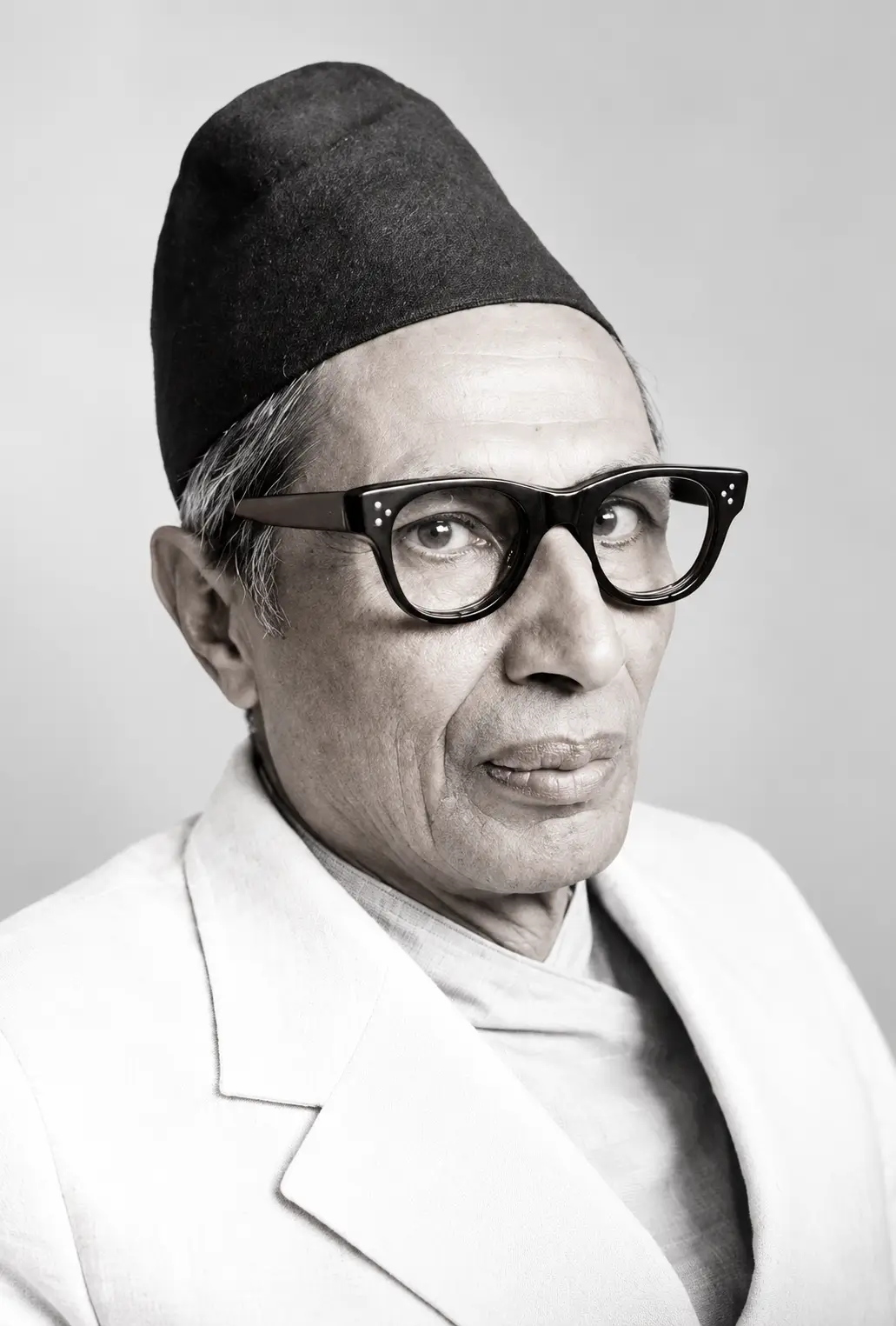
Siddhicharan Shrestha (1969–2049 BS) was a Nepalese poet, narrative poet, and journalist who wrote in both Nepali and Nepal Bhasa. He made significant contributions to the development of Romantic poetry in Nepali literature, the expression of social awareness, and the growth of political consciousness through literature. His writings frequently explored nature, attachment to his birthplace, human emotions, social justice, and the desire for freedom.
Known as Yuga Kavi (Poet of the Era) in Nepali literature and Kaviratna in Nepal Bhasa literature, Shrestha did not limit literature to the expression of personal feelings. His poetry also reflected the conditions of contemporary Nepalese society, dissatisfaction with Rana rule, and aspirations for change.
In 1997 BS, the Rana government sentenced him to 18 years of imprisonment, along with the confiscation of his property, for literary writings that expressed political consciousness. After spending approximately five years in prison, he was released in 2002 BS. He continued writing literature during his imprisonment. Following the political change of 2007 BS, he became involved in editing Aawaj, Nepal's first daily newspaper.
His poems, including Mero Pyaro Okhaldhunga, Nirjhar, Basanta, and Barsha, and his narrative poems, such as Urvashi, Vishwavyatha, Jyanmara Shail, Mangalman, and Aansu, reflect different aspects of his literary personality.
Because of his creative contributions to both Nepali and Nepal Bhasa literature, Siddhicharan Shrestha remains one of the major literary figures studied in the history of modern Nepali literature.
Siddhicharan Shrestha: Brief Profile
|
Particulars |
Details |
|---|---|
|
Full Name |
Siddhicharan Shrestha |
|
Literary Titles |
Yuga Kavi, Kaviratna |
|
Date of Birth |
9 Jestha 1969 BS |
|
Birthplace |
Okhaldhunga Bazaar, Nepal |
|
Date of Death |
22 Jestha 2049 BS |
|
Place of Death |
Kathmandu, Nepal |
|
Father |
Vishnucharan Shrestha |
|
Mother |
Neerkumari Shrestha |
|
Formal Education |
Durbar High School, Kathmandu |
|
Languages of Writing |
Nepali and Nepal Bhasa |
|
Major Literary Genres |
Poetry, narrative poetry, verse drama, and memoirs |
|
Notable Poems |
Mero Pyaro Okhaldhunga, Nirjhar, Basanta |
|
Major Poetry Collections |
Mero Pratibimba, Kopila, Kuhiro ra Gham |
|
Major Narrative Poems |
Urvashi, Vishwavyatha, Jyanmara Shail, Mangalman, Aansu |
|
Journalism |
Aawaj, Sharada, Gorkhapatra, Kavita |
|
Academic Association |
Royal Nepal Academy |
|
Major Awards |
Tribhuvan Pragya Puraskar, Prithvi Pragya Puraskar |
Birth, Family Background and Childhood
Siddhicharan Shrestha was born on 9 Jestha 1969 BS in Okhaldhunga Bazaar, Nepal. His father, Vishnucharan Shrestha, was employed in government service. Siddhicharan was born while his father was stationed in Okhaldhunga for official duties. His mother was Neerkumari Shrestha.
His family's ancestral home was in Ombahal, Kathmandu. His father had a strong interest in literature and had written the novel Sumati. Growing up in a household associated with language, reading, and literature appears to have influenced Siddhicharan's developing literary interests.
Shrestha spent part of his childhood in Okhaldhunga. His experiences of the hills, forests, streams, and natural beauty of eastern Nepal remained deeply embedded in his memories.
Although his family later returned to Kathmandu, his emotional attachment to his birthplace remained strong. He expressed these childhood memories and feelings in his poem Mero Pyaro Okhaldhunga (My Beloved Okhaldhunga).
The poem presents Okhaldhunga not merely as his birthplace but as a place closely connected with his emotional experiences and appreciation of nature.
Education and Interest in Literature
Siddhicharan Shrestha received his formal education at Durbar High School in Kathmandu. His schooling continued up to Grade 8. Although he did not complete his formal education, he continued studying independently and practicing literary writing.
Interested in poetry and language from childhood, Shrestha was influenced by the Nepal Bhasa poet Siddhidas Mahaju. According to the Newa Cultural Encyclopedia, his contact with Siddhidas provided inspiration for his early poetry.
The literary atmosphere at home, Kathmandu's intellectual community at the time, and independent study contributed to the development of his writing abilities.
Continuous reading and creative practice, rather than formal educational qualifications, became important foundations of his literary development.
Beginning of His Literary Career
Siddhicharan Shrestha began writing poetry during his teenage years. His early compositions focused primarily on descriptions of nature, personal experiences, and emotional expression.
When examining the early stages of his literary career, it is important to distinguish between the dates when his poems were written and when they appeared in newspapers or literary magazines.
His First Published Poem
Literary sources provide differing accounts of Siddhicharan Shrestha's first published poem.
Nepali literary critic Professor Khagendra Prasad Luitel, based on his examination of historical newspaper archives, identifies Bhukampa-Piditoddharak Rin-Sanstha (Earthquake Victims' Relief Loan Institution), published under the name Siddhi in Gorkhapatra on 4 Baishakh 1991 BS, as his first published poem.
According to Luitel, the commonly repeated claim that Shrestha's poem Bhuinchalo (Earthquake) appeared in Gorkhapatra in 1990 BS is not supported by the archival records.
Luitel also notes that Shrestha's poem Juneli Ratma Nirjhar was published in the first issue of Sharada in Baishakh 1991 BS.
Association with Sharada Magazine
Shrestha's literary career gained momentum after the launch of the literary magazine Sharada in 1991 BS under the editorship of Riddhi Bahadur Malla.
Sharada played an important role in the development of modern poetry, short stories, and other forms of creative writing in Nepali literature. It helped introduce readers to the works of Siddhicharan Shrestha and other writers, including Laxmi Prasad Devkota and Balkrishna Sama.
Among Shrestha's notable early poems published in Sharada were Nirjhar, Basanta, Pratahkalin Kiran, Junakiri, and Mero Pyaro Okhaldhunga.
These poems expressed a close relationship with nature, appreciation of beauty, memories, and human emotions through relatively simple language.
Significance of the Poem Mero Pyaro Okhaldhunga
Mero Pyaro Okhaldhunga is one of the best-known poems associated with Siddhicharan Shrestha's literary identity.
Published in Sharada in 1992 BS, the poem combines love for one's birthplace and childhood memories with descriptions of the natural surroundings.
Through recollections of Okhaldhunga's natural beauty, the poem conveys the deep emotional impact that a birthplace can have on someone who has moved away from it.
Its major characteristics include attachment to one's birthplace, childhood memories, descriptions of natural beauty, and simple yet expressive language.
Nature in this poem is not presented merely as an external scene. Mountains, forests, rivers, and rural surroundings are connected with the poet's personal experiences and emotions.
These characteristics provide a basis for studying the poem as a representative work of the Romantic tradition in Nepali poetry.
Literary scholar Michael James Hutt also discusses this poem in connection with Shrestha's early literary identity in his book Himalayan Voices: An Introduction to Modern Nepali Literature.
Literary Resistance Against Rana Rule and Imprisonment
The political developments of 1997 BS marked an important turning point in Siddhicharan Shrestha's literary life.
During the Rana period, political freedom and freedom of expression were restricted. Some of Shrestha's poems expressed aspirations for change and civil rights.
Initially recognized for his nature-oriented poetry, he gradually began expressing social dissatisfaction, opposition to injustice, and political consciousness through his writings.
The Poem Barsha and Political Consciousness
Barsha (Rain), written by Siddhicharan Shrestha in Nepal Bhasa, is among his significant poems associated with political awareness.
Around 1995 BS, three of his Nepal Bhasa poems—Rastriya Gan, Barsha, and Gangu Khusi—were included in the collection Nepali Bihar, edited by Fatte Bahadur Singh.
Barsha presented the relationship between social change and peace from a revolutionary perspective. Literary histories indicate that the Rana administration regarded the political meaning of this poem as opposition to the ruling establishment.
Arrest and Imprisonment in 1997 BS
In 1997 BS, when political activities against Rana rule were increasing, Siddhicharan Shrestha was arrested.
He was accused of encouraging political rebellion through his literary works and was sentenced to 18 years of imprisonment, along with the confiscation of his property.
He spent approximately five years in prison before being released in 2002 BS.
During his imprisonment, he came into contact with writers and political prisoners, including Chittadhar Hridaya, Fatte Bahadur Singh, and Dharmaratna Yami.
This setting appears to have influenced his literary thinking and creative work.
He continued writing in both Nepali and Nepal Bhasa while imprisoned. His writings from this period expressed human suffering, aspirations for freedom, and social awareness.
Family Bereavement and Literary Creation
Personal loss also had a profound influence on Siddhicharan Shrestha's life.
His elegiac poem Vishwavyatha is associated with the death of his son, Vishwacharan Shrestha.
According to published accounts, the poem was written around 1996 BS, and some of its sections appeared in Sharada that same year.
Therefore, describing Vishwavyatha as a work written after his son's death during his imprisonment would be chronologically inaccurate.
His father, Vishnucharan Shrestha, however, died while Siddhicharan was in prison. Published biographies and materials concerning his prison memoirs also indicate that the authorities did not allow him to participate freely in his father's funeral rites.
These experiences of personal grief and political repression gave greater prominence to themes of suffering, resistance, and human compassion in his literary works.
Major Themes and Characteristics of Siddhicharan Shrestha's Poetry
Understanding Siddhicharan Shrestha's literary contributions requires examining his appreciation of nature, Romanticism, social consciousness, and humanistic outlook together.
His poetry covers subjects ranging from individual emotions to broader social transformation. These characteristics demonstrate how his ideas and forms of expression developed throughout his literary career.
Nature and Romanticism
A strong appreciation of natural beauty, human emotions, imagination, and personal experiences is evident in Shrestha's early poetry.
Romanticism is a literary tendency that gives particular importance to individual experience, imagination, freedom of expression, and the relationship between human beings and nature.
In poems such as Mero Pyaro Okhaldhunga, Nirjhar, and Basanta, Shrestha used nature as a medium for expressing emotional experiences.
Alongside Laxmi Prasad Devkota, he is regarded as an important contributor to the development of the Romantic tradition in Nepali poetry.
Social Awareness and Revolutionary Consciousness
Siddhicharan Shrestha's poetry also expressed aspirations for social change and political freedom.
He used literature to speak against authoritarianism, injustice, and oppression. Works such as Barsha demonstrate his views on the political circumstances of his time.
In his writings, revolution was not limited to a change in political power. It was also connected with social justice, equality, and human rights.
Humanism and Social Realism
The lives of ordinary people, social inequality, labor, and justice became important subjects in Shrestha's later writings.
In the narrative poem Mangalman, he made a character from an ordinary social background the central figure of the work.
The pursuit of rights, resistance against injustice, and expectations of social change are among its principal themes.
Similarly, his narrative poem Junakiri explores issues associated with caste discrimination and human relationships.
Major Literary Works of Siddhicharan Shrestha
Siddhicharan Shrestha wrote poetry, narrative poems, verse dramas, and other forms of prose.
Some of his works were published during his lifetime, while others appeared in book form after his death.
Major Poetry Collections
|
Poetry Collection |
Publication Year (BS) |
|---|---|
|
Mero Pratibimba |
2021 |
|
Kopila |
2021 |
|
Kuhiro ra Gham |
2045 |
|
Siddhicharanka Pratinidhi Kavita |
2045 |
|
Tirmir Tara |
2046 |
These collections bring together poems written during different periods of his life. They explore themes of nature, personal emotions, social awareness, and human experiences.
Major Narrative Poems
Urvashi
Urvashi is a narrative poem by Siddhicharan Shrestha, published in 2017 BS.
Based on a mythological subject associated with the Mahabharata, the work was composed during his imprisonment.
Through the use of mythological narratives, it explores human emotions, duty, and self-restraint.
Vishwavyatha
Vishwavyatha is an elegiac poem associated with Siddhicharan Shrestha's personal experience of family bereavement.
The work expresses the grief he experienced following the death of his son, Vishwacharan.
One of its important characteristics is the connection between personal sorrow and broader human emotions.
An early section of the poem had already been published in 1996 BS.
Jyanmara Shail
Jyanmara Shail is among Siddhicharan Shrestha's published narrative poems. It forms an important part of his poetic writings in the Nepali language.
Mangalman
Mangalman is a narrative poem based on social and political themes.
The work presents Mangalman, a character from an ordinary social background, as its central figure.
Social injustice, the pursuit of rights, everyday life, and political transformation are among its major subjects.
By placing the experiences of an ordinary person at the center of a literary work, Mangalman represents an important aspect of Shrestha's socially conscious writing.
Aansu
Aansu is a narrative poem by Siddhicharan Shrestha that was published posthumously in 2050 BS.
The work explores human emotions, opposition to injustice, and social justice.
Junakiri
Junakiri is a narrative poem that explores social equality and human relationships.
Set against the background of caste discrimination, it expresses ideas about human relationships and equality.
The work was published in book form after Shrestha's death.
Bhimsen Thapa
Bhimsen Thapa is a narrative poem based on a historical subject.
It presents Bhimsen Thapa, a figure from Nepalese history, as its literary subject.
This work was also published after Siddhicharan Shrestha's death.
Verse Drama and Memoirs
In addition to poetry and narrative poems, Siddhicharan Shrestha contributed to verse drama and prose writing.
His work Balivadha is a verse drama based on a mythological story. It is more appropriately classified as a verse drama than as a narrative poem.
Similarly, Yuddha ra Shanti is among his narrative poems published posthumously.
A collection of his prison experiences, titled Siddhicharanka Jail Sansmaran (Siddhicharan's Prison Memoirs), was published by Nepal Academy in 2052 BS.
The book was republished by Book Hill in 2082 BS.
These memoirs provide important material for understanding his literary personality, political experiences, and personal life during imprisonment.
Siddhicharan Shrestha's Contributions to Nepal Bhasa Literature
Siddhicharan Shrestha was an important poet not only in Nepali literature but also in Nepal Bhasa literature.
His name is associated with the development of Romantic expression in modern Nepal Bhasa poetry.
His writing in Nepal Bhasa did not begin only after his imprisonment. His Nepal Bhasa poems had already appeared in Nepali Bihar around 1995 BS.
However, his contact with other Nepal Bhasa writers during imprisonment appears to have further expanded his literary creativity in his mother tongue.
Major Works in Nepal Bhasa
His notable works in Nepal Bhasa include:
-
Siswan (सीस्वां) — Poetry collection
-
Phuswan (फुस्वां) — Poetry collection
-
Siddhicharanya Gwayswan (सिद्धिचरणया ग्वय्स्वां) — Poetry collection
-
Lubhumi (लुभुमि) — Narrative poem
-
Trishna (तृष्णा) — Narrative poem
-
Siddhicharanya Nibandha (सिद्धिचरणया निबन्ध) — Essay collection
Among these works, the poems in Siswan are associated with his period of imprisonment.
Through his poems, essays, and other writings in Nepal Bhasa, Shrestha contributed to the development of modern literary expression in his mother tongue.
Kaviratna Title
Siddhicharan Shrestha was honored with the title Kaviratna in recognition of his contributions to Nepal Bhasa literature.
According to the Newa Cultural Encyclopedia, the literary organization Chwasapasa conferred this title on him in Nepal Sambat 1076.
His recognition as Yuga Kavi in Nepali literature and Kaviratna in Nepal Bhasa literature reflects the significance of his bilingual literary contributions.
Contributions to Journalism and Editing
Alongside his literary career, Siddhicharan Shrestha also contributed to journalism.
Through his editorial involvement with daily newspapers and literary magazines, he became associated with the development of print journalism in Nepal.
Aawaj: Nepal's First Daily Newspaper
Democracy was established in Nepal on 7 Falgun 2007 BS. The following day, 8 Falgun, the daily newspaper Aawaj began publication.
Aawaj is regarded as the first daily newspaper published in Nepal.
Siddhicharan Shrestha served as its editor.
Although Gorkhapatra had been published before Aawaj, it was not being issued daily at that time.
The launch of a daily newspaper following the political transformation of 2007 BS was an important event in Nepalese journalism.
Shrestha's involvement with Aawaj demonstrates that his professional activities extended beyond literary writing into news journalism.
Literary Journalism
Siddhicharan Shrestha maintained a long association with the literary magazine Sharada.
He was also involved in editing Gorkhapatra and the literary magazine Kavita.
His editorial work helped not only in publishing his own writings but also in bringing the works of other poets to readers.
His association with Kavita was particularly connected with the publication of Nepali poetry and literary activities.
Academic and Institutional Contributions
Siddhicharan Shrestha was also active in literary institutions and public life.
After the establishment of Nepal Academy in 2014 BS, he became one of the literary figures associated with the institution.
The institution later became known as the Royal Nepal Academy.
His association with the academy expanded his participation in literary creation, publication, and institutional activities.
According to Nepal Academy's records, he was appointed a lifetime member in 2047 BS.
Alongside his involvement in literary institutions, he also undertook public and state responsibilities.
When examining his literary identity and public roles, it is appropriate to assess the political system of the time, literary institutions, and his individual creative ideas within their respective historical settings.
Awards, Honors and Literary Titles
Siddhicharan Shrestha received several awards, literary titles, and honors in recognition of his contributions to Nepali and Nepal Bhasa literature.
According to the official award records of Nepal Academy, two of his major awards were:
|
Award |
Year (BS) |
|---|---|
|
Tribhuvan Pragya Puraskar |
2027 |
|
Prithvi Pragya Puraskar |
2045 |
Literary biographies also report that he received honors including the Vednidhi Award and Ratnashree Medal.
In addition, he received state decorations of the time, including the Gorkha Dakshina Bahu and Trishakti Patta.
Beyond these formal awards, the title Yuga Kavi became widely associated with him in recognition of his literary contributions.
The title remains an established part of his literary identity.
Later Life and Death
Siddhicharan Shrestha continued his literary work into the later years of his life.
His later writings addressed social justice, human emotions, and the lives of ordinary people.
Works such as Mangalman demonstrate that social consciousness remained an important feature of his writing even during the final phase of his literary career.
He died in Kathmandu on 22 Jestha 2049 BS at the age of 80.
After his death, previously unpublished and collected writings continued to appear in book form.
These publications provided additional material for studying and reassessing his literary contributions.
Siddhicharan Shrestha's Place in Nepali Literature
Siddhicharan Shrestha's contributions to modern Nepali literature are particularly evident in three areas: the development of Romantic poetry, the expression of political and social consciousness, and creative writing in Nepal Bhasa.
His early poems connected nature with personal emotions and memories.
In his later works, themes of social injustice, political freedom, and human equality became more pronounced.
His literary career thus demonstrates that appreciation of nature and social awareness were not opposing tendencies. Instead, they developed as interconnected aspects of his poetry.
Alongside contemporaries such as Laxmi Prasad Devkota, Balkrishna Sama, and Gopal Prasad Rimal, Shrestha's contributions are studied in relation to the development of modern Nepali poetry.
To understand his literary achievements, it is useful to examine both a nature-oriented poem such as Mero Pyaro Okhaldhunga and a socially focused narrative poem such as Mangalman.
These works reveal different dimensions of his writing and the development of his literary concerns.
Preservation of Siddhicharan Shrestha's Legacy
Various places, institutions, and literary activities in Nepal have been named after Siddhicharan Shrestha or established in his memory.
Siddhicharan Municipality
The municipality containing the district headquarters of Okhaldhunga is named Siddhicharan Municipality.
According to the municipality's official information, it was named in honor of Yuga Kavi Siddhicharan Shrestha.
Siddhicharan Highway
Siddhicharan Highway, part of the transportation network of eastern Nepal, is also associated with his name.
Yuga Kavi Siddhicharan Foundation
The Yuga Kavi Siddhicharan Foundation conducts activities related to remembering, studying, and promoting his literary contributions.
The foundation has a practice of presenting the Yuga Kavi Siddhicharan Award and the Young Journalism Award to individuals who have contributed to literature and journalism.
It also participates in literary and cultural activities associated with his works.
Conclusion
Siddhicharan Shrestha was a poet, narrative poet, and journalist who made significant creative contributions to Nepali and Nepal Bhasa literature.
His literary experiences began with childhood memories of Okhaldhunga's natural surroundings and gradually expanded to include social awareness and political freedom.
The love for his birthplace expressed in Mero Pyaro Okhaldhunga, the political consciousness of Barsha, the human emotions explored in Vishwavyatha, and the social outlook of Mangalman represent different aspects of his literary personality.
His imprisonment during Rana rule, involvement in journalism after the establishment of democracy, and literary creativity in both languages were important features of his life.
His recognition as Yuga Kavi in the history of Nepali literature reflects his ability to express the social experiences, aspirations for change, and human emotions of different periods through poetry.
References
1. Nepal Academy. Official Records of Pragya Awards. Information on the Tribhuvan Pragya Puraskar and Prithvi Pragya Puraskar.
2. Newa Cultural Encyclopedia. Siddhicharan Shrestha. Information on his biography, Nepal Bhasa literature, literary works, and honors.
3. Michael James Hutt. Himalayan Voices: An Introduction to Modern Nepali Literature. University of California Press, 1991. A study discussing Shrestha's literary contributions and poetic characteristics.
4. Professor Khagendra Prasad Luitel. Galti Nasachyaunu Arko Galti (Failure to Correct a Mistake Is Another Mistake). Kantipur, 2075 BS. An archival study of Shrestha's early published poems.
5. Kantipur. Siddhicharan's Prison Memoirs Made Public. 2082 BS. Information on his prison memoirs and book publication.
6. Public Service Broadcasting Institution. The Door to Freedom of Expression Opened Alongside Democracy. Information on the publication of Aawaj and the history of Nepalese journalism.
7. Dr. Shekhar Kumar Shrestha. An Analysis of Siddhicharan Shrestha's Verse Drama Balivadha. Samakalin Sahitya. A study of the literary genre and the work.
8. Nepal Academy. Official Records of Lifetime Members. Institutional records concerning lifetime membership.







Comments 0
No comments yet. Be the first to start the conversation.