



Introduction
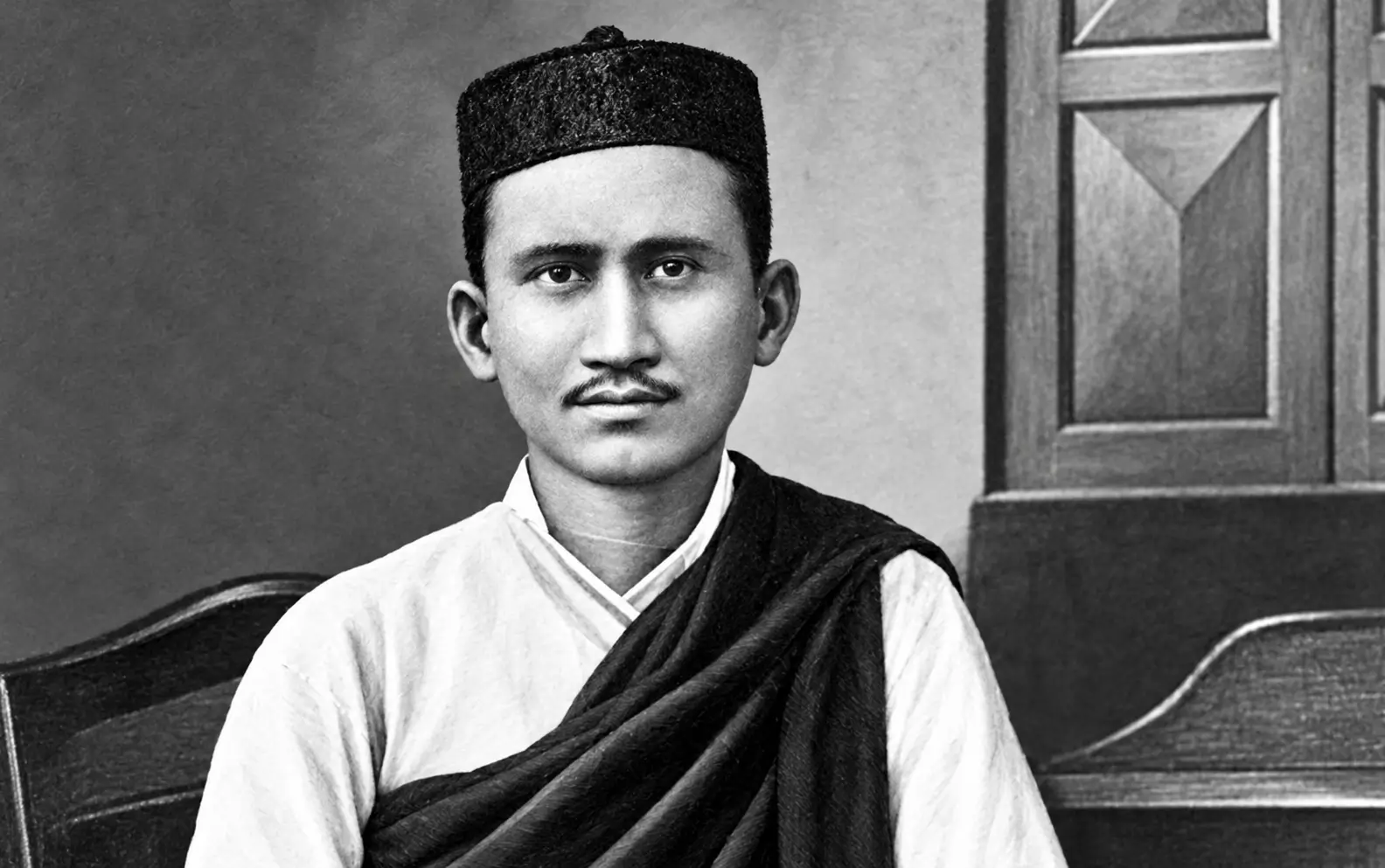
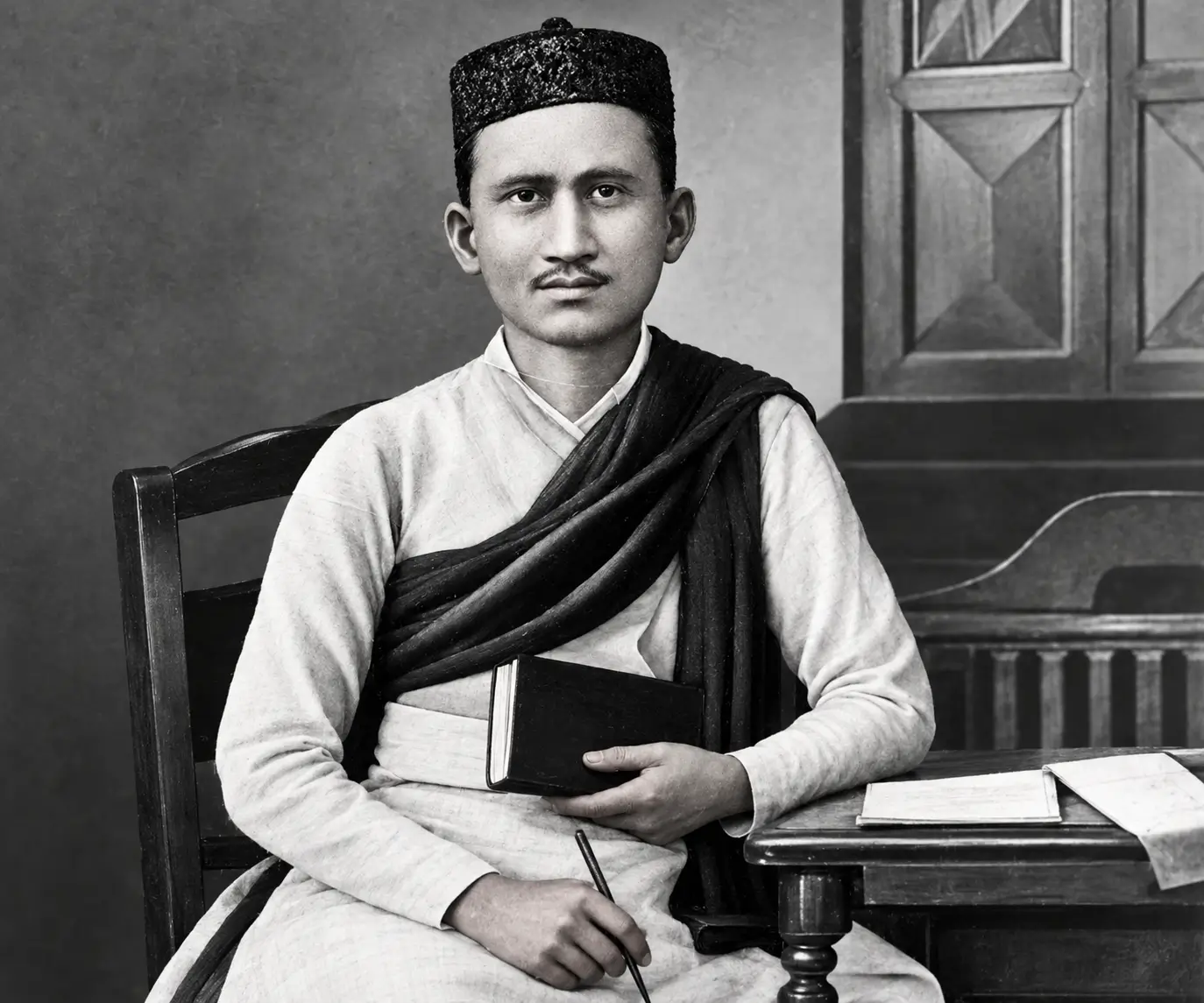
Motiram Bhatta (1923–1953 BS; 1866–1896 AD) was a pioneer of the Middle Period of Nepali literature, as well as a poet, ghazal writer, playwright, biographer, literary critic, and literary organizer. He is widely known in Nepali literature as Yuva Kavi, meaning "Young Poet." During his life of approximately 30 years, he made significant contributions to the development of the Nepali language, literature, book publishing, and literary journalism.
Motiram's literary contributions were not limited to his own writings. He played an active role in discovering, collecting, and publishing the scattered works of Bhanubhakta Acharya. By writing Bhanubhakta's biography, he helped advance the early traditions of biography and literary criticism in Nepali literature. He also contributed to the development of Nepali ghazal writing by introducing the ghazal form, influenced by Urdu and Persian literature, into Nepali literary practice.
He encouraged literary groups, Samasyapurti poetry writing, book publishing, and distribution activities in both Banaras and Kathmandu. His efforts helped expand the practice of collective literary creation and publication alongside individual writing.
Motiram Bhatta is particularly important in studies of the Middle Period of Nepali poetry, when romantic and aesthetic themes gained prominence alongside earlier devotional and heroic traditions.
Key Facts About Motiram Bhatta
|
Particulars |
Details |
|---|---|
|
Full Name |
Motiram Bhatta |
|
Literary Title |
Yuva Kavi (Young Poet) |
|
Date of Birth |
Bhadra Krishna Aunsi (Kushe Aunsi), 1923 BS |
|
Birth Year (AD) |
1866 |
|
Birthplace |
Bhosiko Tole, Kathmandu |
|
Date of Death |
Bhadra Krishna Aunsi, 1953 BS |
|
Death Year (AD) |
1896 |
|
Place of Death |
Pashupati Aryaghat, Kathmandu |
|
Father |
Pandit Dayaram Bhatta |
|
Mother |
Ripumardini Devi Bhatta |
|
Education |
Studied in Banaras and Kathmandu |
|
Major Languages Studied |
Nepali, Sanskrit, Persian, Urdu, Hindi, and English |
|
Literary Genres |
Poetry, narrative poetry, ghazals, drama, biography, and literary criticism |
|
Major Works |
Pikadut, Manodveg Pravah, Gajendra Moksha, Prahlad Bhakti Katha, Usha Charitra, Panchaka Prapancha, and Kavi Bhanubhaktacharyako Jivancharitra |
|
Literary Activities |
Moti Mandali, Samasyapurti poetry, book publishing, and literary journalism |
Birth, Family, and Early Life
Motiram Bhatta was born on Bhadra Krishna Aunsi, also known as Kushe Aunsi, in 1923 BS in Bhosiko Tole, Kathmandu. His father was Pandit Dayaram Bhatta, and his mother was Ripumardini Devi Bhatta.
According to biographical accounts of his family, he was the second son of Dayaram and Ripumardini. His elder brother died during childhood, so Motiram grew up as the family's eldest surviving son.
Motiram's family background was associated with Sanskrit education and religious traditions. His father, Dayaram Bhatta, was interested in residing in Kashi and pursuing religious studies.
Motiram spent part of his childhood in Kathmandu before traveling to Banaras, India, for education. His time in Banaras had an important influence on his educational, linguistic, and literary development.
Newly discovered records concerning his birthplace, family relationships, and personal life have also been discussed in a research-based article titled "New Perspectives on Motiram," published in Gorkhapatra.
Education, Studies, and Linguistic Knowledge
Motiram Bhatta received most of his education in Banaras and Kathmandu. He studied Sanskrit, Persian, Urdu, and other languages. Alongside his literary studies, he was also interested in music.
Early Education in Banaras
Various biographies mention that Motiram traveled to Banaras when he was approximately six years old.
During the late nineteenth century, Banaras was a major center for Sanskrit education, religious texts, Hindi literature, and book publishing. Writers, students, and publishers working in different languages were active there.
Motiram initially studied Sanskrit. Later, he became interested in Persian and Urdu.
His study of Persian and Urdu literature introduced him to the traditions of ghazals, sher-o-shayari, and rhythmic poetry. This exposure became an important foundation for his involvement in developing Nepali ghazal writing.
Biographical accounts also mention his interest in music and playing the sitar during his stay in Banaras.
Return to Kathmandu and Second Stay in Banaras
Motiram returned to Kathmandu from Banaras around 1937 BS. Biographical literature indicates that he married during this period.
While living in Kathmandu, he became more familiar with Nepali folk songs, devotional songs, and verse compositions.
After some time, he returned to Banaras and continued his education and literary activities. During this period, his connections with literary figures, poetry gatherings, and publishing activities expanded.
Studies at Durbar High School and in Calcutta
Motiram Bhatta also studied at Durbar High School in Kathmandu.
His biographies describe his interest in English education and his formal studies in Calcutta.
Historical letters discovered later have provided further information on this subject. According to research published in Gorkhapatra, a letter written by Motiram to Hemraj from Calcutta in Shrawan 1951 BS states that he studied at Ripon College and passed the F.A. examination in the third division.
This letter provides new evidence for understanding his formal higher education.
Motiram's educational background cannot be understood solely through his formal studies. His original compositions, translations, editorial work, biography writing, and publishing activities demonstrate extensive literary learning and practice.
Historical Background of Nepali Literature During His Time
Motiram Bhatta was active in literature during the period of Rana rule in Nepal. At that time, opportunities for publishing and distributing Nepali-language books were limited.
Many literary works existed in the form of handwritten manuscripts. Although printing facilities were available, systems for publishing literary books and distributing them widely to readers were not yet well developed.
Under these circumstances, Indian cities such as Banaras became important centers for publishing Nepali-language books.
Literary Activities in Banaras
During the nineteenth century, Banaras was an active center for Hindi literature, journalism, drama, and printing.
During the period associated with Bharatendu Harishchandra (1850–1885), literary groups, newspapers, periodicals, and book publishing activities expanded to support the development of Hindi language and literature.
Biographical accounts indicate that Motiram Bhatta was influenced by the literary atmosphere associated with Bharatendu.
Literary gatherings, Samasyapurti poetry writing, and language-oriented literary activities are believed to have inspired Motiram to organize collective literary initiatives in Nepali.
The Middle Period of Nepali Literature
In a commonly used classification of Nepali poetry, the period from 1941 to 1974 BS is studied as the romantic phase of the Middle Period. However, literary historians differ somewhat in their interpretations of the endpoint and subdivisions of the broader Middle Period.
During this phase, poetry increasingly explored love, beauty, separation, and romantic emotions alongside the heroic and devotional traditions of the earlier period.
Motiram Bhatta was a major representative of this transition. Alongside developing ghazals, songs, and romantic poetry, he encouraged the formation of literary groups.
For this reason, the early phase of Middle Period Nepali poetry is also discussed as the Motiram Era.
Discovery and Publication of Bhanubhakta Acharya's Works
Among Motiram Bhatta's literary contributions, his efforts to discover, collect, edit, and publish the works of Bhanubhakta Acharya are particularly significant.
Bhanubhakta Acharya (1871–1925 BS) composed the Ramayana and various other poetic works in Nepali. Even after his death, not all his writings had been systematically published.
Motiram played an active role in collecting these works and publishing them in book form.
His First Encounter With Bhanubhakta's Poetry
According to commonly cited biographical accounts, Motiram heard verses from Bhanubhakta's Ramayana at a wedding ceremony after returning to Kathmandu around 1937 BS.
It is said that the Nepali verses recited at a wedding associated with his neighbor Khadga Datta Pande impressed him.
After learning that Bhanubhakta Acharya had composed those verses, Motiram began searching for his other writings.
This incident is described in Motiram's biographies. However, the complete conversations and circumstances surrounding the event should not be presented as independently verified historical facts.
Publication of Bhanubhakta's Ramayana
Motiram made important contributions to collecting manuscripts and publishing Bhanubhakta's Ramayana.
According to commonly accepted literary history, the Bala Kanda of the Ramayana was published through his initiative in 1941 BS. Other sections were subsequently collected and edited, and the complete Ramayana is reported to have been published around 1944 BS.
While searching for Bhanubhakta's writings, Motiram collected manuscripts and information from various individuals.
He also contributed to the collection and publication of Bhanubhakta's works beyond the Ramayana.
These efforts helped make Bhanubhakta's writings available to a wider readership in book form rather than leaving them confined to manuscripts.
Kavi Bhanubhaktacharyako Jivancharitra
In 1948 BS, Motiram Bhatta published Kavi Bhanubhaktacharyako Jivancharitra (Biography of Poet Bhanubhakta Acharya).
This is an important early work of biography and literary-critical prose in Nepali literature.
The book discusses Bhanubhakta's life, family background, literary development, and poetry.
In the introductory statement of the work, Motiram mentions that he obtained much of the information about Bhanubhakta's life from his nephew, Ram Datta.
He also makes it clear that he wrote the biography using examples from Bhanubhakta's poetry.
The significance of this book lies not only in its presentation of events from Bhanubhakta's life but also in its evaluation of his poetic qualities.
Motiram expressed his views on Bhanubhakta's linguistic expression, poetic ability, and literary contributions.
For these reasons, Kavi Bhanubhaktacharyako Jivancharitra is regarded as a foundational work in the development of literary biography and criticism in Nepali literature.
The Tradition of Calling Bhanubhakta "Adikavi"
Motiram Bhatta was among the earliest prominent literary figures to address Bhanubhakta Acharya as Adikavi, meaning "First Poet."
In his biography, Motiram acknowledged that poets had written in Nepali before Bhanubhakta.
However, he accorded Bhanubhakta the status of Adikavi because he considered him a poet who understood the essence of poetry and composed verse in Nepali.
This makes it clear that the title Adikavi should not be understood only in the literal sense of the first person ever to write poetry in Nepali.
Motiram used the title to establish Bhanubhakta's literary importance, and the designation later became widely accepted in Nepali literary tradition.
Historical Disagreements About Bhanubhakta's Biography
Although Motiram's biography is historically significant, not every detail it contains can be treated as definitive evidence.
For example, Motiram recorded Bhanubhakta's birth year as 1869 BS. However, based on family records and subsequent research, 1871 BS has become the commonly accepted birth year.
Later research also offers different interpretations of certain events from Bhanubhakta's early life and literary history.
Therefore, while Motiram's book remains an important early source for studying Nepali literature, its historical details should be compared with other available evidence.
Motiram Bhatta's Contribution to the Development of Nepali Ghazals
Motiram Bhatta was one of the principal literary figures involved in the early development of ghazal writing in Nepali literature.
Influenced by Urdu and Persian literature, he helped establish the tradition of writing ghazals in Nepali.
A ghazal is a poetic form composed within a particular rhythmic and structural pattern. Traditional ghazals emphasize elements such as sher (couplet), qafiya (rhyme), radif (refrain), and behr (meter).
Motiram attempted to combine Nepali vocabulary and expressions with the structural features of the ghazal.
Ghazal Writing in Nepali
Motiram began writing ghazals in Nepali during the late nineteenth century.
His ghazals explore love, beauty, separation, devotion, and various aspects of human emotion.
Although his ghazal writing reflects the influence of Urdu and Persian traditions, he employed Nepali words and rhythms.
In addition to writing ghazals himself, he encouraged contemporary poets to experiment with the genre.
These efforts helped transform Nepali ghazal writing from an individual literary practice into a form of collective literary activity.
Motiram's Well-Known Ghazals
Among Motiram Bhatta's ghazals, Dui Aankhibhaun Ta Tayar Chhan, Tarbar Po Kina Chahiyo is a well-known composition.
The ghazal employs romantic imagery, similes, and alliteration.
His other ghazals also address devotional themes and personal experiences.
This demonstrates that Motiram's ghazal writing was not limited to romantic subjects.
Sangeet Chandrodaya and the Ghazal Tradition
Sangeet Chandrodaya is a collection of ghazals and lyrical compositions associated with Motiram Bhatta and members of Moti Mandali.
It would not be accurate to regard the collection as an entirely original work written by Motiram alone.
According to Dil Bahadur Shrestha's 2009 research, A Study of Sangeet Chandrodaya, conducted at Tribhuvan University, the collection contains works by Motiram and members of Moti Mandali.
The research states that Sangeet Chandrodaya was mentioned in the bibliography of Shloka Sangraha, published in 1956 BS. This suggests that a version of the collection had been published before 1956 BS.
However, the research also notes that the earliest original edition was unavailable, while editions dated 1969 BS had been located.
Therefore, studies of the publication history of Sangeet Chandrodaya must distinguish between early references to the work and the editions currently available.
Moti Mandali and the Collective Literary Movement
Motiram Bhatta played an important role in expanding the practice of collective literary creation and discussion in Nepali literature.
He brought together friends interested in literature in Banaras and Kathmandu and organized activities involving poetry, ghazals, and Samasyapurti compositions.
The literary group active under his leadership became known as Moti Mandali or Kavi Mandali.
Formation of Moti Mandali
Motiram is believed to have drawn inspiration from the literary atmosphere of Banaras when organizing literary groups.
Members of these groups wrote poetry, recited their compositions, and participated in literary discussions.
Among the writers associated with Motiram's literary activities were Padma Vilas Pant, Gopinath Lohani, Nardev Pande, and Rajiv Lochan Joshi.
Although sources differ on some details concerning the formation, membership, and activities of the groups in Banaras and Kathmandu, Motiram's contribution to encouraging collective literary practice is well established.
Samasyapurti Poetry Writing
Samasyapurti is a literary exercise in which poets complete a poem based on a given verse or poetic challenge.
In this practice, a poet was usually provided with the final line of a verse. The poet then had to compose the remaining lines while maintaining consistency in meaning, emotion, and meter.
The exercise tested a poet's knowledge of meter, linguistic ability, and skill in composing poetry spontaneously.
Motiram and his literary associates developed Samasyapurti as a collective creative practice.
This activity helped expand the practice of meter, alliteration, and verse composition in Nepali poetry.
Literary Influence of Moti Mandali
Moti Mandali promoted the tradition of creating literature through group activities alongside individual writing.
It created opportunities for poets to exchange compositions, participate in discussions, and refine their work.
Such literary activities contributed to the expansion of romantic poetry and ghazal writing during the Middle Period of Nepali literature.
The collective literary practice developed under Motiram's leadership holds an important place in the early history of Nepali literary organizations.
Contributions to Printing, Book Publishing, and Journalism
Motiram Bhatta recognized the importance of printing, editing, and book distribution alongside original literary writing.
At that time, opportunities for publishing literary books in Nepal were limited. Printing facilities in Banaras played an important role in supporting the publication of Nepali-language books.
Association With Bharat Jeevan Press
While living in Banaras, Motiram Bhatta established connections with Ramakrishna Varma.
Motiram was actively involved in publishing Nepali-language books through Bharat Jeevan Press, which was associated with Ramakrishna Varma.
He used printing facilities in Banaras to edit and publish the works of Bhanubhakta Acharya.
He also contributed to the publication of Nepali literary books beyond Bhanubhakta's writings.
Because various individuals were involved in the ownership, establishment, and operation of Bharat Jeevan Press, it would not be historically accurate to attribute its entire establishment solely to Motiram.
His established literary significance lies in his active contribution to Nepali book publishing and editing.
Gorkha Bharat Jeevan Magazine
Motiram Bhatta's name is associated with Gorkha Bharat Jeevan, an early Nepali-language periodical.
The magazine is believed to have been published from Banaras. Some accounts of literary and journalistic history identify it as the first Nepali-language magazine.
However, historical sources differ regarding its publication year.
Alaka Atreya Chudal's research on the history of Nepali printing in Banaras lists Gorkha Bharat Jeevan as a monthly magazine dating to 1886 AD. The research identifies Motiram Bhatta as its editor.
Other historical accounts mention Ramakrishna Varma's editorial involvement.
Researchers have noted that although advertisements relating to the magazine are available, an original published issue has not been found.
Consequently, the available evidence is insufficient to draw definitive conclusions about its regular publication, complete editorial responsibilities, contents, and duration of publication.
Despite these historical limitations, Gorkha Bharat Jeevan occupies an important place in discussions of early attempts to publish periodicals in Nepali.
Book Distribution and Library-Related Initiatives
Alongside publishing books, Motiram Bhatta was actively involved in making Nepali books available to readers.
His name is associated with Moti Krishna Company, which operated in the Thahiti area of Kathmandu.
The company was involved in book sales and distribution.
At a time when access to books was limited, such publishing and distribution initiatives helped expand the availability of Nepali literary materials.
These activities demonstrate that Motiram valued not only literary creation but also the systems needed to bring books to readers.
Major Literary Works of Motiram Bhatta
Motiram Bhatta worked in poetry, narrative poetry, ghazals, drama, biography, literary criticism, and translation.
His writings explore romance, love, separation, devotion, moral values, and mythological stories.
Biographers and literary historians have identified various works associated with him. However, because the original texts or early editions of some works are unavailable, their exact dates of composition and publication cannot always be established.
|
Literary Work |
Genre or Nature |
Main Subject |
|---|---|---|
|
Manodveg Pravah |
Poetry collection |
Emotional and romantic poetry |
|
Pikadut |
Narrative poem |
Separation and the sending of messages |
|
Gajendra Moksha |
Devotional poetry |
Mythological narrative and devotion |
|
Prahlad Bhakti Katha |
Devotional poetry |
Story of the devotee Prahlad |
|
Usha Charitra |
Mythological poetry |
Story of Usha and Aniruddha |
|
Panchaka Prapancha |
Poetry on social issues |
Financial and family problems caused by gambling |
|
Shakuntala |
Dramatic adaptation |
Story based on the Sanskrit dramatic tradition |
|
Priyadarshika |
Dramatic adaptation |
Narrative based on a Sanskrit play |
|
Chanakya Niti |
Translation of moral teachings |
Ideas concerning ethics and conduct |
|
Kavi Bhanubhaktacharyako Jivancharitra |
Biography and literary criticism |
Bhanubhakta's life and literary evaluation |
Pikadut
Pikadut is a narrative poem by Motiram Bhatta based on romantic themes.
The poem presents the story of a wife separated from her husband, who has traveled away from home. She chooses a bird to carry a message to him.
The woman describes her emotional experiences during different seasons and asks the bird to convey her message of love to her husband.
At the end of the poem, the messenger bird delivers the news to her husband, who returns home.
The work explores love, anticipation, separation, and natural scenes associated with different seasons.
Drawing on the messenger-poetry tradition of Sanskrit literature, the poem establishes a connection between human emotions and the natural surroundings.
Manodveg Pravah
Manodveg Pravah is identified as a poetry collection by Motiram Bhatta.
It contains emotionally expressive poems with romantic themes.
The collection is mentioned in studies of Motiram's literary development and early poetic interests.
Gajendra Moksha
Gajendra Moksha is a devotional poem based on Hindu mythology.
Its narrative is associated with the story of Gajendra in the Shrimad Bhagavata Mahapurana.
The story describes how Gajendra, facing danger, seeks refuge in Lord Vishnu and receives deliverance.
This work demonstrates the presence of devotional themes in Motiram's writing.
Prahlad Bhakti Katha
Prahlad Bhakti Katha is a mythological poem associated with the devotee Prahlad.
Through the story of Hiranyakashipu and Prahlad, it presents themes of devotion, faith, and moral conviction.
The work illustrates that Motiram wrote about religious subjects alongside romantic literature.
Usha Charitra
Usha Charitra is a poem based on a mythological love story.
It presents the story of Usha, the daughter of Banasura, and Aniruddha, the grandson of Lord Krishna.
The work expresses love, family relationships, and mythological events through poetry.
Panchaka Prapancha
Panchaka Prapancha is a poem dealing with themes related to social conduct.
It portrays financial losses and family problems caused by gambling addiction.
The work demonstrates Motiram's interest in commenting on social behavior and its consequences.
Shakuntala and Other Dramatic Works
Motiram Bhatta also worked in drama.
His name is associated with dramatic adaptations of Shakuntala, based on Kalidasa's Sanskrit play Abhijnanashakuntalam, and Priyadarshika, based on the Sanskrit dramatic work associated with Harshavardhana.
An incomplete dramatic work titled Padmavati is also associated with him.
These works reflect the literary practice of presenting narratives from the Sanskrit dramatic tradition in Nepali.
Literary Style and Characteristics of Motiram Bhatta
Motiram Bhatta's literary style reflects the influence of Sanskrit poetic traditions, Urdu and Persian ghazals, and local forms of expression in the Nepali language.
He experimented with different poetic techniques according to the subjects and styles of the genres in which he wrote.
Romantic Themes
Love, beauty, attraction, union, and separation occupy an important place in Motiram's poetry.
He expressed romantic themes through rhythmic language enriched with poetic devices.
This style of writing was among the major characteristics of Nepali poetry during the Middle Period.
Devotional and Mythological Themes
Alongside romantic compositions, Motiram wrote poetry on religious and mythological subjects.
Gajendra Moksha and Prahlad Bhakti Katha are examples of such works.
These compositions demonstrate that his literary interests extended across different emotional themes and narratives.
Meter, Rhythm, and Musicality
Rhythm and the musical qualities of language are important features of Motiram's songs and ghazals.
He incorporated meters influenced by Sanskrit poetry and structural features of Urdu and Persian ghazals into Nepali writing.
His interest in music is also believed to have influenced the lyrical qualities of his compositions.
Biography and Literary-Critical Prose
Motiram's prose combines descriptions of literary figures, events from their lives, and evaluations of their writings.
In his biography of Bhanubhakta, he presented available biographical information alongside examples from the poet's works.
This approach helped advance the tradition of studying writers' lives and literary contributions in Nepali literature.
Evaluation of Motiram Bhatta's Contribution to Nepali Literature
Motiram Bhatta's contributions can be evaluated through his original writings, preservation of earlier literature, literary criticism, publishing activities, and collective literary initiatives.
He experimented with new literary forms while also helping make important earlier works available to readers.
Literary Research and Preservation
The discovery, collection, and publication of Bhanubhakta Acharya's writings are among Motiram's most important contributions.
These efforts supported the preservation and wider circulation of earlier literary works.
His biography of Bhanubhakta also strengthened the early tradition of studying the lives and achievements of Nepali writers.
Early Development of Nepali Ghazals
Motiram contributed to establishing the tradition of ghazal writing in Nepali.
Influenced by Urdu and Persian literature, he composed ghazals in Nepali and encouraged other poets to participate in the genre.
These activities expanded stylistic and structural experimentation in Nepali poetry.
Literary Organizations and Collective Creation
The activities of Moti Mandali encouraged collective writing, poetry recitation, and Samasyapurti exercises in Nepali literature.
They created opportunities to connect individual literary practice with group discussions and collaborative creation.
Book Publishing and Distribution
Motiram played an active role in collecting, editing, and publishing literary books.
He used printing facilities available in Banaras to help make Nepali-language books accessible to readers.
These activities contributed to the circulation of Nepali literary materials.
Limitations of His Literary Contributions
Romantic themes occupy a significant place in Motiram's literature. However, his writings do not express the political, economic, and social realities of his time to the same extent across all his works.
Nevertheless, it would be inappropriate to limit his overall contribution to romantic poetry alone.
His devotional compositions, biographies, literary criticism, drama, literary organizations, and publishing activities demonstrate the breadth of his literary interests and achievements.
Personal Life, Illness, and Death
Motiram Bhatta spent much of his life studying, writing literature, and participating in publishing activities in Banaras and Kathmandu.
He traveled to Banaras, Kathmandu, and Calcutta at different stages of his life.
Much of the available information about his personal life comes from writings by later biographers and researchers.
Final Years
Motiram experienced poor health during the final stage of his life.
According to biographical accounts, he remained active in education and literary activities while living in Banaras and Calcutta. He returned to Kathmandu after his health deteriorated toward the end of his life.
Because no records are available to establish a definitive modern medical diagnosis, it would be inappropriate to identify any particular disease as the confirmed cause of his death.
Death
Motiram Bhatta is believed to have died on Bhadra Krishna Aunsi, also known as Kushe Aunsi, in 1953 BS at Pashupati Aryaghat in Kathmandu.
Literary biographies mention that both his birth and death occurred on the same lunar date of Kushe Aunsi.
He lived for approximately 30 years. Despite his short life, he contributed to writing, editing, and publishing across several genres of Nepali literature.
Remembrance and Recognition of Motiram Bhatta
Various literary programs are organized in Nepal every year to commemorate Motiram Bhatta's contributions.
Moti Jayanti is observed on Kushe Aunsi, the lunar date of his birth.
On this occasion, literary organizations and writers conduct discussions and commemorative events focusing on his writings, literary contributions, and historical role.
Yuva Varsha Moti Award
The Yuva Varsha Moti Award was established in memory of Motiram Bhatta.
The award is intended to encourage young writers who contribute to Nepali language and literature.
Established in 2042 BS, the award is designated for literary creators who have not exceeded 40 years of age.
The award connects the memory of Motiram Bhatta with literary creativity among younger generations.
Importance in Literary Studies
Motiram Bhatta is an important subject of study in the history of Nepali literature, Middle Period poetry, ghazals, biography, and literary criticism.
His works provide insights into the literary styles of his time, romantic themes, the early development of Nepali ghazals, and the state of book publishing.
Works such as his biography of Bhanubhakta also help explain the early practice of writing Nepali literary history.
Conclusion
Motiram Bhatta was a major pioneer of the Middle Period of Nepali literature. He made important contributions to Nepali poetry, ghazals, biography, literary criticism, literary organizations, and book publishing.
His notable literary achievements include discovering and publishing Bhanubhakta Acharya's writings, publishing Bhanubhakta's biography in 1948 BS, developing Nepali ghazal writing, and organizing the activities of Moti Mandali.
Understanding his literary contributions requires examining not only his individual writings but also the condition of the Nepali language, printing facilities, and collective literary activities during his time.
Through his literary and publishing work over a life of approximately 30 years, Motiram Bhatta secured an important place in the historical development of Nepali literature.
References
The biographical details, literary works, and contributions of Motiram Bhatta presented in this article are based on available original texts, research articles, and studies of literary history.
Primary Literary Sources
1. Bhatta, Motiram (1948 BS). Kavi Bhanubhakta Ko Jivancharitra (Biography of Poet Bhanubhakta). Digital text available through Nepali Archives.
2. Bhatta, Motiram. Pikadut. Digital text available through Nepali Archives.
Research and Literary History Sources
3. Chudal, Alaka Atreya (2021). Nepali Intellectuals in Exile: The History of Nepali Printing in 19th- and 20th-Century Benares. Journal of South Asian Intellectual History, 3(1), 34–59. DOI: 10.1163/25425552-12340020.
4. Shrestha, Dil Bahadur (2009). Sangeet Chandrodaya Ko Adhyayan (A Study of Sangeet Chandrodaya). Department of Nepali, Tribhuvan University.
5. Motiram Bare Naya Sandarbha (New Perspectives on Motiram). Gorkhapatra. A research-based article discussing Motiram's letters, education, family relationships, and literary activities.
6. Basnet, Shriram Singh (2078 BS). Anusandhanko Pratikshyama Motiram Bhatta (Motiram Bhatta: Awaiting Further Research). Gorkhapatra.
7. Luitel, Khagendra Prasad. Nepali Kavitaka Pramukh Pravritti (Major Trends in Nepali Poetry). Samakalin Sahitya. A study of the periodization of Nepali poetry and the romantic tendencies of the Middle Period.
8. Prasain, Narendra Raj. Euta Yugka Bauddhik Nayak: Motiram Bhatta (An Intellectual Figure of an Era: Motiram Bhatta). Hamro Patro. Material covering Motiram's biography, literary compositions, and editorial activities.
9. Kunwar, Niranjan. A History of Magazines in Nepal. An article on the history of journalism published in The Record.






Comments 0
No comments yet. Be the first to start the conversation.