



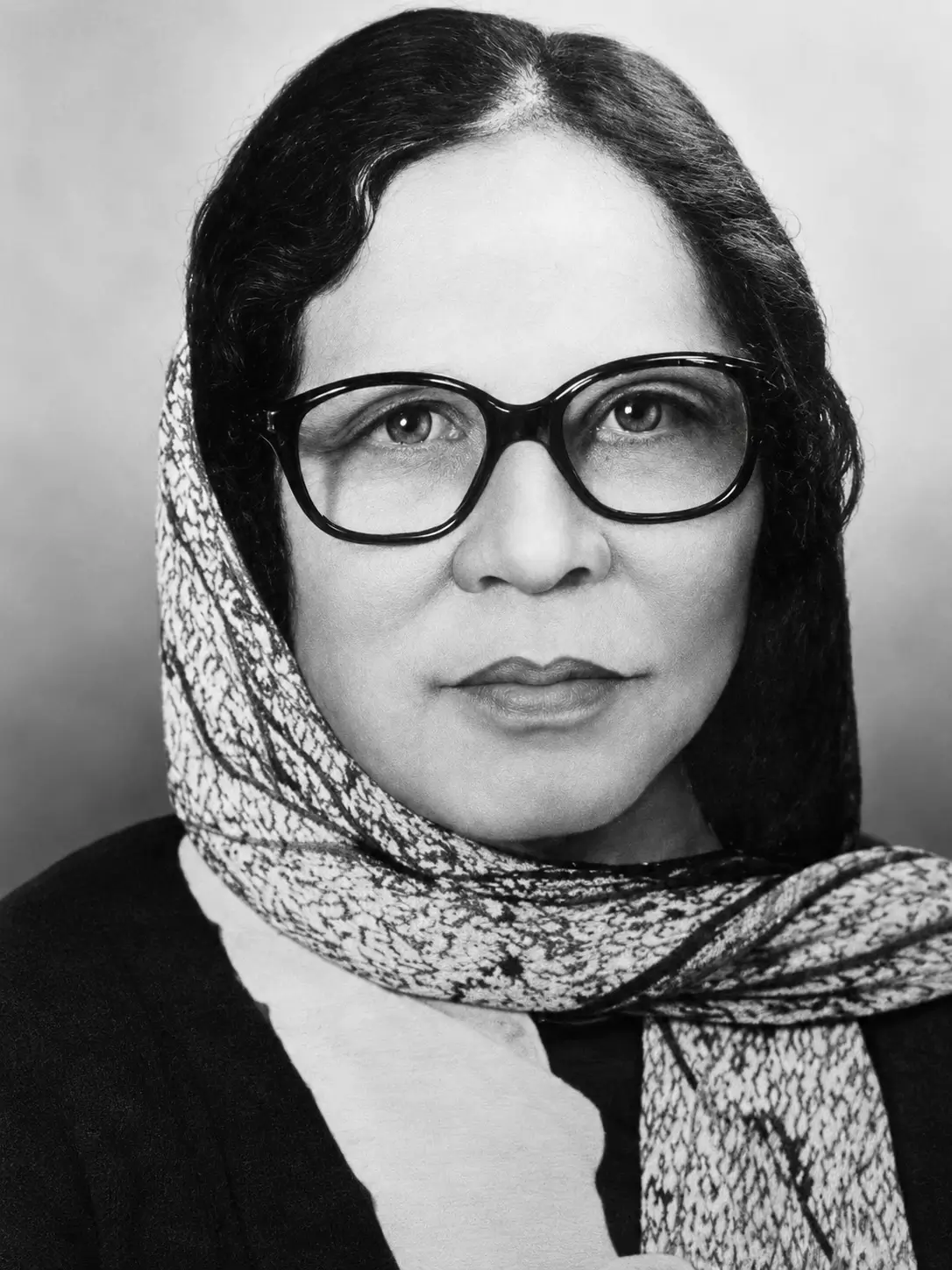
Parijat was a Nepali novelist, poet, short-story writer, essayist and social activist. Her real name was Bishnu Kumari Waiba. Her literary career, which extended from existentialist and absurdist thought to progressive writing, holds particular significance in modern Nepali literature.
Born in the Lingia Tea Garden in Darjeeling, India, Parijat later made Kathmandu the main center of her literary and social activities. She received the Madan Puraskar for her novel Shirish Ko Phool, published in 2022 BS. She was the first woman writer to receive the award.
Through novels, short stories, poetry, essays and memoirs, she explored human existence, love, freedom, women's lives, social inequality and class relations. Her writing developed from early modernist tendencies toward progressive thought in her later works.
Despite living with long-term health problems, Parijat remained involved in literary activities, the Ralpha movement, progressive cultural campaigns, women's rights and human rights initiatives.
Brief Introduction to Parijat
|
Particular |
Information |
|---|---|
|
Literary name |
Parijat |
|
Real name |
Bishnu Kumari Waiba |
|
Childhood name |
Chhekudolma |
|
Date of birth |
Falgun 30, 1990 BS (according to the revised records of the Parijat Memorial Centre) |
|
Birthplace |
Lingia Tea Garden, Darjeeling, India |
|
Date of death |
Baisakh 5, 2050 BS (April 17, 1993 AD) |
|
Place of death |
Bir Hospital, Kathmandu |
|
Father |
Dr. K. S. Waiba (Kalu Singh Waiba) |
|
Mother |
Amrit Moktan |
|
Education |
Bachelor of Arts (BA), Padma Kanya College, Kathmandu |
|
Occupations |
Writer, former teacher and social activist |
|
Major literary genres |
Novels, short stories, poetry, essays and memoirs |
|
First published book |
Akanksha (poetry collection, 2014 BS) |
|
Major novel |
Shirish Ko Phool |
|
Major awards |
Madan Puraskar, Ganki Award and Manuscript Award |
|
Major literary and social involvement |
Ralpha movement, progressive writers' and artists' campaigns, women's rights and human rights activities |
Records Concerning Parijat's Date of Birth
Published sources provide different information about Parijat's date of birth.
The Madan Puraskar Guthi's records state that she was born in 1994 BS. The Parijat Memorial Centre had also previously identified Baisakh 1994 BS as her birth period.
However, the Parijat Memorial Centre revised her date of birth based on school records. At its meeting on Asoj 2, 2078 BS, the Centre decided to establish her date of birth as Falgun 30, 1990 BS.
According to the Centre, researchers obtained a certified copy of the school record showing the date of birth entered by her father when she was admitted to school. Her younger sister, Sukanya Waiba, had also requested that the date of birth be corrected according to the school record.
Accordingly, this biography follows the revised records of the Parijat Memorial Centre.
Birth, Family Background and Childhood
Parijat was born in the Lingia Tea Garden in Darjeeling, India. She belonged to the Waiba family of the Tamang community.
Her father, Dr. K. S. Waiba, worked in the medical profession. Her mother's name was Amrit Moktan.
Following family tradition, she was named Bishnu Kumari Waiba. She was also given the name Chhekudolma according to the Buddhist Lama tradition. She later chose Parijat as her literary name.
She spent her childhood in the Nepali-speaking cultural surroundings of Darjeeling. From an early age, she was interested in reading, literature and nature.
Health difficulties also began during her childhood. A bone and joint disorder that appeared during adolescence later had a serious effect on her daily life.
She also faced difficult family circumstances. According to information published by the Parijat Memorial Centre, the death of her elder brother, Shiva, was a painful event for the family. Her family subsequently moved to Nepal.
Memories of her childhood in Darjeeling, family relationships and natural surroundings also appear in her autobiographical writings.
Education and Intellectual Development
Parijat received her early education in Darjeeling. After arriving in Nepal, she passed the entrance examination from Padma Kanya Vidyashram in Dillibazar, Kathmandu.
She subsequently studied at Padma Kanya College. According to information published by the Parijat Memorial Centre, she completed the Intermediate of Arts (IA) in 2013 BS and the Bachelor of Arts (BA) in 2015 BS.
After graduation, she began postgraduate studies in English literature. However, health problems prevented her from taking the final examination, and she could not complete her postgraduate degree.
Although her formal university education ended, Parijat continued studying independently. She read various works related to Nepali and world literature, philosophy and political thought.
Her writing reflects the influence of Western modernist literature, existentialist thought and, in her later career, Marxist ideas.
Literary discussions, reading and social experiences played an important role in her intellectual development. This continuing engagement with ideas enabled her to write about different literary and ideological tendencies.
Early Professional Life
After completing her formal education, Parijat worked as a teacher for some time.
According to the Parijat Memorial Centre, she taught at Madan Memorial School in Patan, Lalitpur, from 2016 to 2018 BS.
During this period, her health gradually deteriorated. As her bone and joint disorder made regular teaching difficult, she left the profession.
Literary study and writing subsequently became her primary activities.
Despite the difficulties caused by her chronic illness, she continued her literary work, studies and participation in intellectual activities. Support from family members, particularly her younger sister Sukanya Waiba, remained important in her personal life.
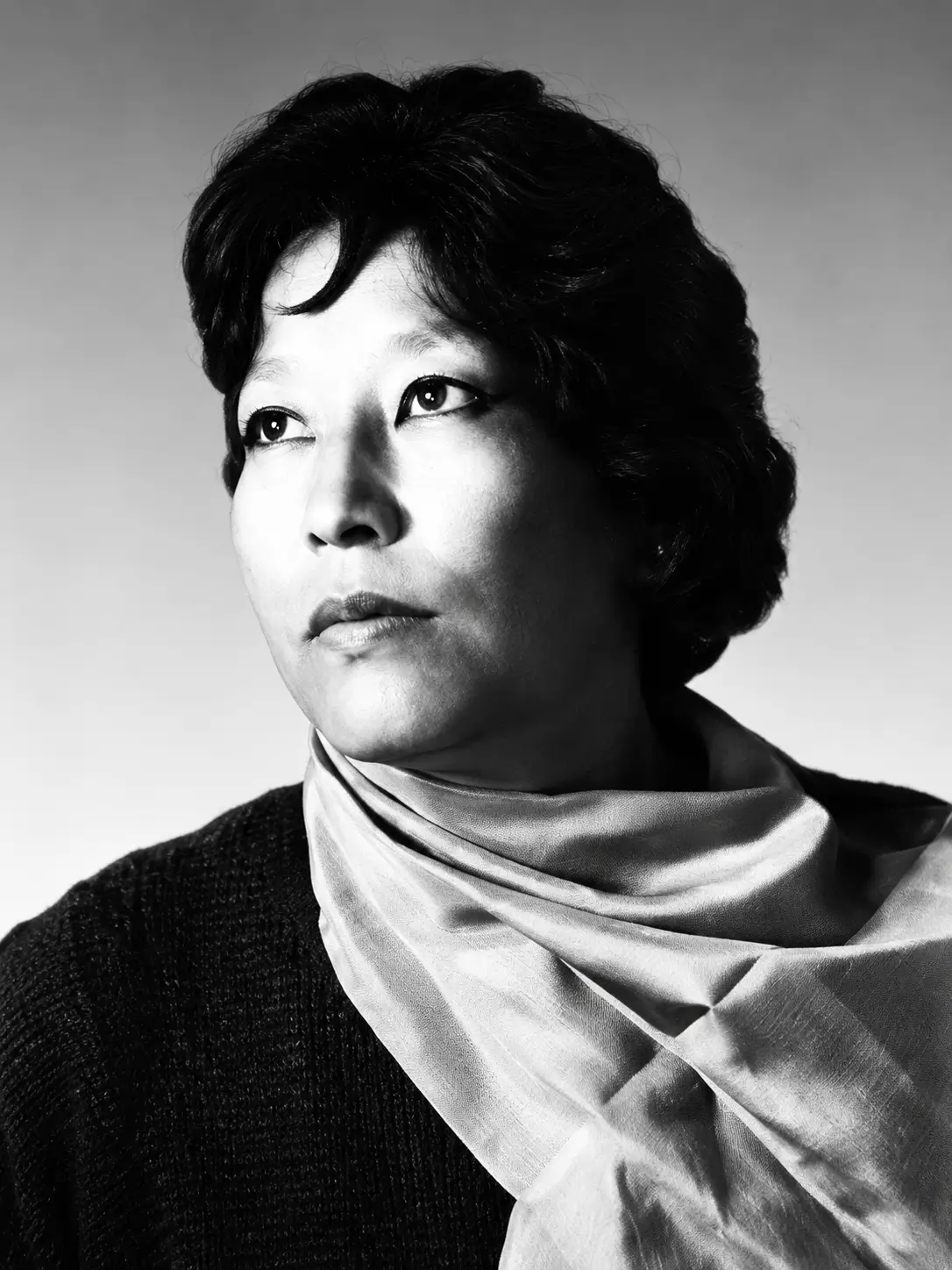
Beginning of Her Literary Career
Parijat began her formal literary career as a poet.
In 2013 BS, two of her poems were published in Dharti magazine. The following year, in 2014 BS, her first book, the poetry collection Akanksha, was published.
Her early poems expressed themes of love, personal experience, loneliness, emotional conflict and questions about life.
After poetry, she turned her attention to short stories and novels.
Before the publication of Shirish Ko Phool, she had prepared manuscripts of several novels. Accounts published by the Parijat Memorial Centre state that she destroyed some of these early manuscripts because she was dissatisfied with her own writing.
Published in 2022 BS, Shirish Ko Phool was her first published novel. It established her distinctive place in Nepali fiction.
Literary Career and Ideological Development
Parijat's literary career shows changes in subject matter, thought and writing style.
Her early works focused on questions of individual existence, psychological conflict and human relationships. Following her association with the Ralpha movement, a rebellious consciousness became more evident in her writing. In her later works, social realities, class inequality and women's liberation received greater attention.
Her intellectual development can be studied primarily through three literary tendencies.
Existentialist and Absurdist Tendencies
The influence of existentialist and absurdist thought can be observed in Parijat's early short stories and novels.
Existentialism emphasizes questions of individual freedom, existence, the meaning of life and personal responsibility. Absurdist literature explores the mismatch between individuals and their surroundings, along with the complexities of human experience.
These literary characteristics appear in works such as Shirish Ko Phool, Mahattahin and Adim Desh.
In these works, the characters' internal thoughts, psychological conditions and complicated relationships receive greater attention than their external actions.
The Ralpha Movement and Rebellious Consciousness
Ralpha was a literary and musical group active around 2023 BS. Through literature and music, the group expressed disagreement with the prevailing social and political conditions.
Alongside Parijat, writers and musicians such as Ramesh, Rayan and Manjul were associated with the group.
Ralpha's activities expressed critical perspectives on the political system of the time, social inequality and conventional cultural beliefs.
Parijat participated in the group's intellectual and creative activities. Her residence also became a meeting place for writers and artists to exchange ideas and hold discussions.
Following her involvement with Ralpha, social questions and a rebellious outlook became increasingly evident in her writing.
Progressive and Marxist Thought
Marxist and progressive ideas became prominent influences in Parijat's later literary career.
During this period, she addressed social inequality, class relations, women's oppression, political awareness and the lives of working people in her literary works.
Novels such as Toribari, Bata ra Sapanaharu, Parkhalbhitra ra Bahira, Anindo Pahadsangai and Boni represent her later writing.
A progressive literary perspective examines literature in relation to social life, economic relationships and awareness of social change. This perspective is clearly reflected in Parijat's later works.
However, understanding her literary career solely by dividing it into completely separate and opposing phases would be inadequate. There are also thematic and stylistic continuities between her early and later writings.
Major Literary Works of Parijat
Parijat wrote novels, short stories, poetry, essays, memoirs, plays and children's literature. In addition to works published during her lifetime, some previously unpublished writings appeared in book form after her death.
Her ten novels, four major short-story collections and three poetry collections are particularly noteworthy.
Novels
Parijat's ten published novels are:
-
Shirish Ko Phool (शिरीषको फूल)
-
Mahattahin (महत्ताहीन)
-
Bainsako Manchhe (बैँसको मान्छे)
-
Toribari, Bata ra Sapanaharu (तोरीबारी, बाटा र सपनाहरू)
-
Parkhalbhitra ra Bahira (पर्खालभित्र र बाहिर)
-
Antarmukhi (अन्तर्मुखी)
-
Usle Rojeko Bato (उसले रोजेको बाटो)
-
Anindo Pahadsangai (अनिँदो पहाडसँगै)
-
Paribhashit Aankhaharu (परिभाषित आँखाहरू)
-
Boni (बोनी)
These novels cover subjects ranging from human existence and psychological conflict to social inequality, class relations and political awareness.
Shirish Ko Phool
Shirish Ko Phool was Parijat's first published novel. It appeared in 2022 BS.
Its principal characters are Suyogbir and Sakambari. Suyogbir is a former soldier who participated in the Second World War. Through his past, psychological condition and relationship with Sakambari, the novel explores love, human existence, individual freedom and emotional conflict.
Sakambari's independent personality and her outlook, which differs from traditional social expectations, are also important aspects of the novel.
The work reflects psychological analysis, symbolic language and existentialist thought.
According to the bibliographic records of the Madan Puraskar Pustakalaya, the first edition of Shirish Ko Phool was published by Parijat herself in 2022 BS. Later editions have been published by different publishers.
Mahattahin
Mahattahin was published in 2025 BS.
The novel centers on questions of human existence, individual consciousness, psychological conflict and the meaning of life.
Rather than emphasizing external events, the novel gives greater importance to the characters' internal experiences and psychological conditions.
Bainsako Manchhe
Bainsako Manchhe was published in 2029 BS.
The novel explores youth, love, human relationships, individual freedom and social dissatisfaction.
It is useful for understanding the ideological transition between Parijat's early modernist writing and her later social consciousness.
Toribari, Bata ra Sapanaharu
This novel addresses rural life, economic inequality, social relationships and class conditions.
It represents Parijat's development toward a progressive literary perspective.
Parkhalbhitra ra Bahira
Parkhalbhitra ra Bahira is a novel based on political and social themes.
It examines the political conditions of the time, ideological conflicts and questions of social change.
The work more clearly demonstrates the author's concern with social structures and political conditions rather than focusing primarily on individual internal experiences.
Antarmukhi
Antarmukhi was published in 2035 BS.
It explores subjects related to individuals' inner lives, social relationships and psychological conditions.
The novel helps readers understand the relationship between Parijat's psychological writing and her social perspective.
Usle Rojeko Bato
Usle Rojeko Bato is a novel associated with Parijat's ideological and social concerns.
According to the bibliography of the Parijat Memorial Centre, the work was published in the literary magazine Bedana in 2035 BS.
It raises questions about life choices, personal decisions and social circumstances.
Anindo Pahadsangai
Anindo Pahadsangai was published in 2039 BS.
The novel presents social inequality, class relations, political consciousness and aspirations for change through its narrative.
It is an important work for studying Parijat's progressive literary perspective.
Paribhashit Aankhaharu
Paribhashit Aankhaharu was published in 2046 BS.
It explores human relationships, social surroundings and individual perspectives.
The novel belongs to the later period of Parijat's literary career.
Boni
Boni was published in 2048 BS.
Through a young female character, the novel raises questions about social relationships, class conditions and women's lives.
It was among the later novels published during Parijat's lifetime.
Short-Story Collections
Parijat's four major short-story collections are:
|
Short-Story Collection |
Publication Year (BS) |
|---|---|
|
Adim Desh (आदिम देश) |
2025 |
|
Sadak ra Pratibha (सडक र प्रतिभा) |
2032 |
|
Salgi Ko Balatkrit Aansu (साल्गीको बलात्कृत आँसु) |
2043 |
|
Badhshala Janda Aunda (बधशाला जाँदा आउँदा) |
2049 |
Adim Desh reflects psychological themes, personal experiences and questions concerning human existence.
Sadak ra Pratibha shows a more evident concern with social life and class conditions.
Salgi Ko Balatkrit Aansu primarily addresses women's lives, social oppression and gender inequality.
The stories in Badhshala Janda Aunda explore social realities, human relationships and political consciousness.
Parijat's Maile Najanmayeko Chhoro is also a well-known work of modern Nepali short fiction. The story raises questions about motherhood, women's psychology and social expectations.
Poetry Collections
Parijat's three major poetry collections are:
|
Poetry Collection |
Publication Year (BS) |
|---|---|
|
Akanksha (आकाङ्क्षा) |
2014 |
|
Parijatka Kavita (पारिजातका कविता) |
2044 |
|
Bainsalu Bartaman (बैँसालु वर्तमान) |
2050 |
Akanksha was Parijat's first published book. It contains poems expressing personal experiences, love and romantic literary tendencies.
Parijatka Kavita is a collection edited by Ishwar Baral. It brings together poems written by Parijat during different periods.
Bainsalu Bartaman was published posthumously in 2050 BS. It contains poems associated with social realities, women's consciousness and progressive thought.
Changes in subject matter and ideological expression can be observed between Parijat's early and later poetry.
Memoirs and Essays
Parijat also expressed her personal experiences, studies, literary journey and social ideas through memoirs and essays.
Her major autobiographical and memoir-based works include:
|
Work |
Publication Year (BS) |
|---|---|
|
Dhupi, Salla ra Laliguransko Phedma (धूपी, सल्ला र लालीगुराँसको फेदमा) |
2043 |
|
Euta Chitramaya Suruwat (एउटा चित्रमय सुरुवात) |
2045 |
|
Adhyayan ra Sangharsha (अध्ययन र सङ्घर्ष) |
2051 |
|
Bhavukatako Suryasta Anasthako Andhakar (भावुकताको सूर्यास्त अनास्थाको अन्धकार) |
2081 |
Dhupi, Salla ra Laliguransko Phedma presents memories of Parijat's childhood, natural surroundings and personal life.
Euta Chitramaya Suruwat contains various experiences and autobiographical accounts from her life.
Adhyayan ra Sangharsha is an autobiographical work published after her death. It contains material related to her studies, personal experiences and intellectual development.
Bhavukatako Suryasta Anasthako Andhakar is another memoir-based work published posthumously. Released in 2081 BS, the book brought further accounts of her personal and literary life to readers.
Among her essays and ideological writings, Aadhi Aakash is particularly noteworthy. Published in 2048 BS, the collection contains her ideas concerning women's liberation.
Her other individual essays and ideological writings have also appeared in various compilations.
Works in Other Genres
Parijat's writing was not limited to novels, short stories, poetry and memoirs.
Her other published works include the children's lyrical poem Juthi Damini and the play collection Parijatka Natak.
Juthi Damini was published in 2055 BS, while Parijatka Natak appeared in 2065 BS.
These publications demonstrate the diversity of genres in which Parijat wrote.
Literary Significance of Shirish Ko Phool
Shirish Ko Phool is a widely studied work of modern Nepali fiction.
The novel explores the psychological conditions of its characters, individual freedom, human relationships and questions of existence through its narrative.
One of its major characteristics is its emphasis on the characters' inner lives rather than following a conventional plot driven primarily by external events.
Through Suyogbir's psychological conflict between his past and present and Sakambari's independent personality, the novel presents the complexities of human relationships.
Sakambari's characterization has also been studied from the perspectives of women's freedom, individual decision-making and resistance to social conventions.
The novel reflects symbolic language, psychological analysis and existentialist thought.
Critical interpretations of Shirish Ko Phool are not limited to a single perspective. The work has been analyzed through its modernist literary techniques, existentialist philosophy, gender perspectives and treatment of human relationships.
Parijat's Literary Thought and Writing Style
Parijat's literary thought reflects a relationship between personal experiences, social realities and intellectual study.
Although her subject matter and perspectives changed between her early and later writing, her concern with complex questions of human life remained consistent.
Human Existence and Psychological Conflict
Parijat's early writings primarily explore human existence, love, freedom, loneliness and psychological conflict.
She presents these questions through the internal thoughts and behavior of her characters.
Shirish Ko Phool and Mahattahin are useful works for understanding this tendency.
Social Realities and Class Relations
Parijat's later literature portrays rural life, economic inequality and political consciousness.
Her progressive works feature characters from different social classes and examine the circumstances they experience.
In this phase of her writing, greater importance is given to the relationship between social structures and individual lives.
Women's Freedom and Gender Consciousness
Women's lives and freedom are important themes in Parijat's literature.
Her female characters' personal desires, social circumstances, decisions and disagreements form part of her narratives.
Sakambari in Shirish Ko Phool can be studied in relation to individual freedom and conflict with traditional social expectations.
In her later stories and ideological writings, Parijat connected women's issues with social, economic and class relations.
Language and Literary Techniques
Parijat's language and literary techniques vary according to the subject matter of her works.
Her early writings emphasize symbolic language, psychological presentation and philosophical thought.
In her later works, social surroundings, class relations and realistic representation receive greater attention.
Her literature gives considerable importance to the relationship between the characters' internal experiences and their social surroundings.
Parijat's Social and Political Contributions
Alongside her literary work, Parijat was involved in social, cultural and political activities.
She had connections with various literary and cultural groups that were active during Nepal's Panchayat system.
Progressive Literary and Cultural Activities
Following the Ralpha movement, Parijat remained active in progressive literary and cultural activities.
Materials published by the Parijat Memorial Centre mention her role in the establishment of the Progressive Writers and Artists Association in 2036 BS as a common platform for left-wing writers and artists.
She was also associated with activities of the Bedana Cultural Group and Indreni Cultural Society.
She participated in campaigns that sought to express social consciousness through literature and music.
Women's Rights and Human Rights
Parijat was also active in women's rights and human rights activities.
According to the Parijat Memorial Centre, she served as the founding president of the All Nepal Women's Forum, founding president of the Prisoners' Assistance Mission and vice-president of the Human Rights Organization of Nepal.
She worked on issues concerning women's liberation, social equality and human rights through both literary and institutional activities.
Her social involvement demonstrates the relationship between her literary thought and public activities.
The People's Movement of 2046 BS
Parijat also participated actively in the People's Movement of 2046 BS.
On Chaitra 3, 2046 BS, she was among the leading participants in a protest organized by writers, poets and artists in Kathmandu. The participants covered their mouths with black cloth to demonstrate their support for freedom of expression.
Following the restoration of democracy, she was also involved in a campaign to democratize the then Royal Nepal Academy.
According to the Parijat Memorial Centre, she served as the coordinator of the academic struggle committee associated with this campaign.
Awards and Honors Received by Parijat
Parijat received various awards and honors in recognition of her literary contributions.
Madan Puraskar
Parijat received the Madan Puraskar in 2022 BS for her novel Shirish Ko Phool.
According to the records of the Madan Puraskar Guthi, she was the first woman writer to receive the award.
This award was a major achievement in her literary career.
Other Awards and Honors
Records maintained by the Parijat Memorial Centre mention that she received the Ganki Award and the Manuscript Award.
Her name is also associated with the Manuscript Award for the poetry collection Bainsalu Bartaman.
Various institutions also honored her for her literary and social contributions.
According to the Parijat Memorial Centre, she was formally honored by Janamat literary magazine and the Nepal Tamang Ghedung Association.
English Translation of Shirish Ko Phool
Parijat's novel Shirish Ko Phool was translated into English under the title Blue Mimosa.
The English edition was published in 1972 AD.
According to the bibliographic records of Google Books, Tanka Vilas Varya and Sondra Zeidenstein were involved in the translation.
The English translation provided readers outside the Nepali-speaking community with an opportunity to become familiar with Parijat's literature.
Parijat's Personal Life and Health
Parijat remained unmarried throughout her life.
A chronic bone and joint disorder that began during adolescence gradually limited her physical activities.
Although her health caused difficulties in regular work, mobility and various aspects of daily life, she continued studying literature and writing.
Her younger sister, Sukanya Waiba, assisted her with medical treatment, personal care and daily activities.
Parijat's residence in Mhepi, Kathmandu, was known as a meeting place for writers, artists and social activists.
She also listened to the writings of younger authors, participated in literary discussions and supported literary activities.
Her literary contributions cannot be explained solely in terms of her health difficulties. Her studies, creative abilities, social experiences and intellectual development were important aspects of her identity as a writer.
Critical Perspectives on Parijat's Literature
Nepali literary criticism presents different perspectives on Parijat's contributions.
Her early modernist works and later progressive writings have been studied and compared in terms of subject matter, literary techniques and ideological perspectives.
Assessment of Her Early Writing
Works such as Shirish Ko Phool and Adim Desh have been studied for their psychological presentation, symbolic language and modernist literary techniques.
These works represent an approach to Nepali fiction that gives importance to the characters' internal lives and philosophical questions.
Assessment of Her Progressive Writing
Parijat's later novels and short stories are studied in relation to social realities, class relations and political consciousness.
Progressive literary criticism emphasizes the way her later works address economic and political questions more explicitly.
There are also critical perspectives that compare her early and later works in terms of literary techniques and artistic expression.
Assessment of Her Ideological Development
Although Parijat's literary thought changed between her early and later career, it would be inadequate to confine her writing to two completely separate tendencies.
A continuing concern with human life is evident throughout her works. The changes are primarily visible in the ideological perspectives and literary subjects through which she expressed that concern.
Literary critic Dr. Gyanu Pandey has emphasized the importance of studying Parijat's overall literary development in relation to her works and ideological journey.
Therefore, an assessment of Parijat's literature benefits from considering her entire creative career, social experiences and changing intellectual perspectives together.
Death of Parijat
Parijat died on Baisakh 5, 2050 BS (April 17, 1993 AD) at Bir Hospital in Kathmandu.
She had been living with bone and joint disorders and other health problems for a long time.
According to the records of the Parijat Memorial Centre, she died while undergoing medical treatment.
Her literary works, ideological perspectives and social contributions have continued to be subjects of study and discussion since her death.
Parijat Memorial Centre and Literary Legacy
Following Parijat's death, the Parijat Memorial Centre was established to preserve and study her literary and social contributions.
According to information published by the Centre, it was established on Baisakh 26, 2050 BS, through the initiative of Indreni Cultural Society.
The Centre aims to support the preservation, publication, translation and study of Parijat's published and unpublished writings.
It has organized literary programs, discussions, awards and cultural activities in her memory.
The Centre's major recognition programs include the Parijat Creative Honor, Parijat Struggling Women's Honor, Parijat Art Honor and Parijat Children's Literature Honor.
The preservation of Parijat's writings and research materials about her provides resources for studying the history of Nepali literature, women's writing and progressive literary movements.
Parijat's Contributions to Nepali Literature
Parijat's contributions to Nepali literature can be assessed through various aspects of her novels, short stories, poetry, memoirs and social thought.
Her literary significance is particularly evident in three areas.
First, through her early writings, she addressed questions of human psychology, existence and individual freedom in modern Nepali fiction.
Second, her later works gave greater prominence to class inequality, social realities and women's lives.
Third, by participating in social and cultural activities alongside literary creation, she demonstrated the importance of the writer's public role.
Shirish Ko Phool represents her modernist writing, while works such as Anindo Pahadsangai help readers understand her later progressive perspective.
Parijat's contributions are therefore best assessed through her complete creative and social journey rather than being confined to a single literary ideology or genre.
Conclusion
Parijat was a writer who contributed to modern Nepali literature through novels, short stories, poetry and ideological writings.
Her early works primarily explored human existence, psychological conflict and individual freedom. In her later career, social realities, class inequality, political consciousness and women's liberation received greater attention.
After receiving the Madan Puraskar for Shirish Ko Phool, Parijat continued her literary activities alongside participation in women's rights, human rights and democratic movements.
Her literary career provides an important basis for understanding the relationship between modernist and progressive writing in Nepali literature. Her works remain relevant to the study of Nepali literary history, women's writing and social thought.
References
1. Parijat Memorial Centre. Parijat Booklet – 2082 BS. Biographical information about Parijat, her major works, awards and social contributions.
2. Parijat Memorial Centre. The 28th General Assembly of the Parijat Memorial Centre, 2078 BS. Official information concerning the revision of Parijat's date of birth based on school records.
3. Madan Puraskar Guthi. Parijat: Madan Puraskar 2022 BS. Records concerning Parijat and her award-winning novel.
4. Madan Puraskar Pustakalaya. Shirish Ko Phool, first edition, 2022 BS. Bibliographic record.
5. Parijat Memorial Centre. Parijat Booklet – 2072 BS. Information concerning education, early literary career, social activities and published works.
6. Pandey, Dr. Gyanu. Parijat, Shirish Ko Phool and Existentialism. Onlinekhabar, 2019.
7. Google Books. Blue Mimosa, by Parijat. Translators: Tanka Vilas Varya and Sondra Zeidenstein, 1972.
8. Onlinekhabar. Parijat's Long-Awaited Final Autobiography, 2024.







Comments 0
No comments yet. Be the first to start the conversation.