



The Bachelor of Dental Surgery (BDS) program at Gandaki Medical College GMC Pokhara is offered by Gandaki Medical College Teaching Hospital and Research Centre in Pokhara, Kaski, under the affiliation of Tribhuvan University. It is a five years and six months undergraduate dental degree that includes one year of rotatory internship. The course is structured to take students from integrated basic medical sciences and preclinical dental training to clinical dental science, community-oriented learning, and supervised internship practice.
Within the wider academic setting of the college, BDS is delivered in an institution that combines health science education with hospital-based training, laboratories, student facilities, and community-linked learning. The broader academic environment at GMC also includes programs such as MBBS, BSc in Medical Laboratory Technology, BSc in Medical Imaging Technology, Bachelor of Public Health, Bachelor of Pharmacy, Bachelor of Nursing, and BSc in Nursing. This wider health science environment gives BDS students an academic setting linked with clinical services, student support facilities, and a professional learning culture.
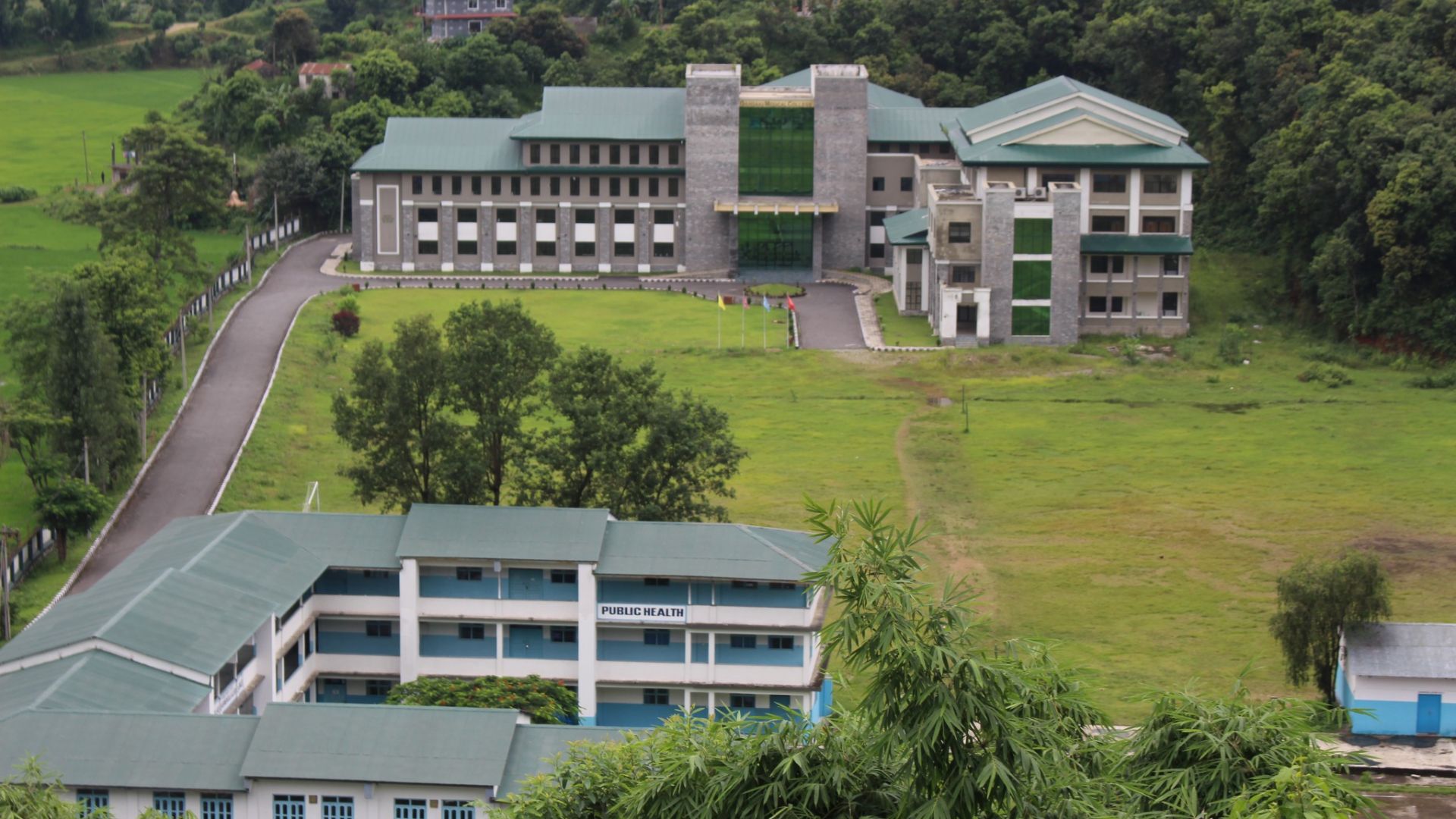
Affiliated with Tribhuvan University
Offered at Gandaki Medical College Teaching Hospital and Research Centre, Pokhara
Duration of 5 years 6 months
Includes one year of rotatory internship
Entrance examination: MECEE-BL
Licensing examination: Nepal Medical Council Licensing Examination (NMCLE)
Seat allocation at GMC: 30
Structured around integrated basic medical sciences, clinical medical sciences, and clinical dental sciences
Community-oriented learning with hospital and community exposure
Scholarship provision available within the national medical education framework
The BDS curriculum is designed to build dental knowledge and skills in stages. It begins with the scientific foundation required for dental study, then moves into preclinical and clinical dental training, followed by internship-based practice. The structure combines classroom learning, laboratory work, clinical exposure, and community-related training.
Major curriculum components:
Integrated Basic Medical Science
Clinical Medical Science
Clinical Dental Science
Year 1:
Anatomy
Biochemistry
Microbiology
Pathology
Pharmacology
Physiology
Dental Material Science
Year 2:
Anatomy
Biochemistry
Microbiology
Pathology
Pharmacology
Physiology
Oral Anatomy
Preclinical Conservative
Preclinical Prosthodontics
Year 3:
Oral Pathology
General Medicine
General Surgery
Anaesthesiology
Forensic Medicine
Year 4:
Oral Medicine and Radiology
Orthodontics
Pedodontics
Community Dentistry
Year 5 (Six Months):
Prosthodontics
Conservative and Endodontics
Oral Surgery
Periodontics
Final phase:
Rotatory Internship
The first two years focus on integrated sciences and preclinical skill-building. From the third year onward, students move into clinical dental study and practical exposure to dental health problems, treatment approaches, and community-based oral health work.
Prepare knowledgeable, competent, skillful, and socially committed dental graduates
Build an in-depth understanding of the structure and functions of the human body in health and disease
Develop a holistic approach to the practice of dentistry
Strengthen professional responsibility, compassion, and social accountability
Prepare students to respond to common dental health problems in hospital and community settings
Support continuing learning through higher education, continuing dental education, and research
Build awareness of dental ethics, patient care, and team-based practice
Prepare graduates to provide oral health education and participate in public health activities
The BDS program is meant for students who want to enter the dental profession through a structured university-affiliated degree. Its scope includes the study of oral health problems, patient communication, preventive care, diagnosis, treatment, and community-oriented dental services. The course is not limited to technical training alone. It also develops understanding of ethics, responsibility, teamwork, and public health relevance in dentistry.
At Gandaki Medical College, this scope is supported by a broader institutional environment that includes academic departments, laboratory facilities, library and internet access, hostels, and a teaching and service setting in Pokhara. After completing the degree, the internship, and the licensing requirement, graduates can move toward dental care services, community oral health work, and advanced study in dentistry and related fields.
Graduates of the BDS program are expected to be able to:
Recognize, investigate, treat, and prevent dental health problems
Organize preventive, curative, and promotive dental health care programs
Communicate effectively with patients and their families
Perform procedures within the limits of their competence
Provide immediate care in life-threatening situations
Identify common dental conditions and manage them initially
Refer patients appropriately when required
Educate people on oral health and related health matters
Participate in immunization, dental health programs, and health camps
Identify medico-legal dental cases and respond as required
Work respectfully within a dental health care team
Provide care with attention to children, women, and older adults
The BDS course includes academic and practical components that support steady skill development throughout the program.
Dental Material Science
Oral Anatomy
Preclinical Conservative
Preclinical Prosthodontics
Oral Pathology
Oral Medicine and Radiology
Orthodontics
Pedodontics
Community Dentistry
Prosthodontics
Conservative and Endodontics
Oral Surgery
Periodontics
Rotatory Internship
These areas help students move from foundational study to preclinical preparation, clinical treatment exposure, and supervised practice.
The BDS program follows a staged teaching pattern that links foundational sciences with preclinical learning, clinical dental education, and internship-based training. Students begin with integrated academic study and laboratory-based preparation, then move toward clinical learning and patient-centered practice.
Integrated teaching in the basic medical sciences
Preclinical laboratory techniques during the early phase of the program
Clinical dental exposure in the later years
Community-oriented learning in oral health settings
Practical training related to diagnosis, treatment, and patient care
Hospital and community-based learning experiences
Participation in dental health programs and health camps
Rotatory internship for supervised professional practice
At GMC, this methodology is supported by the college’s wider academic and service environment, including laboratory infrastructure, student learning facilities, and hospital-linked academic exposure.
After completing the BDS degree, internship, and the Nepal Medical Council Licensing Examination, graduates may move toward roles and pathways such as:
Dental surgeon in hospital and clinical settings
Community oral health services
Preventive, promotive, and curative dental care programs
Oral health education and awareness work
Participation in public health and health camp activities
Dental health care teamwork in institutional settings
Higher education in dentistry
Research and continuing dental education
Scholarship provisions for BDS follow the national medical education legal and regulatory framework
At Gandaki Medical College, scholarships are available for 10 percent of the annual student intake
Scholarship students are nominated by the Nepal Government on the basis of merit in the entrance examination
Admission and scholarship procedures are aligned with the framework used by the Medical Education Commission
Applicants for the BDS program must meet one of the following academic pathways:
Passed 10+2 Science or equivalent with Physics, Chemistry, and Biology with at least 50 percent aggregate marks or CGPA 2.4
Secured the percentage equivalent to the above eligibility in A-Level or another equivalent grading system
Passed Health Science Proficiency Certificate Level or Diploma in a related field containing Physics, Chemistry, and Biology, with equivalence to Grade 12 Science from the National Examination Board
Applicants from the diploma pathway must also meet the following conditions:
Secured at least 50 percent aggregate marks in both the diploma and the equivalence examination
Registered in the relevant Nepal health professional council or related council according to the educational background
Admission to BDS at GMC follows the integrated admission system used for medical education in Nepal.
Meet the required academic eligibility
Appear in MECEE-BL
Obtain at least the minimum 50 percentile in the integrated admission process
Follow the merit-based seat allocation process
Submit the required original documents and photocopies at the time of admission
Complete admission at the concerned institution after selection
Report to the college within 15 days of the commencement of classes
For the entrance examination, one mark is awarded for each correct answer and 0.25 mark is deducted for each wrong answer.
Applicants selected for admission are required to submit the following documents at the time of admission:
Certificate, transcript, and character certificate of 10+2 or equivalent
Certificate, transcript, and character certificate of SLC/SEE or equivalent
Copy of citizenship or passport
Admit card of the entrance examination
Documents submitted for reservation, where applicable
Equivalence certificate for applicants with foreign qualifications
Recent passport-size photographs
Original documents and photocopies as required during admission processing
The BDS program follows structured progression and completion rules. Students must pass the first-year examination within a maximum of six attempts, including the regular attempt, and the second-year examination within a maximum of four attempts, including the regular attempt. Students are permitted to join second-phase classes only after passing all subjects of the first phase.
If a student does not pass the first-phase examinations within the permitted time limits, the admission is cancelled. Absence from an examination conducted during the specified period is counted as an attempt, although approved written justification may allow a limited exception in certain cases. All subjects of the program must be passed within ten years from the start of the academic session.
After successful completion of the academic study and rotatory internship, graduates proceed toward the Nepal Medical Council Licensing Examination as the licensing requirement linked to the degree.
.png)
The program is offered under the affiliation of Tribhuvan University
The course combines integrated sciences, preclinical training, clinical dental study, and internship
GMC provides a wider health science learning environment linked with hospital-based education
The college offers library access, internet facilities, hostels, cafeteria services, and student support spaces
The institution is located in Pokhara, a major academic and service center in Gandaki Province
Scholarship provision is available within the annual intake framework
The college also hosts other health science programs, creating a broader academic setting for interdisciplinary learning
Seat availability for BDS at GMC is 30
The BDS program at Gandaki Medical College offers a structured pathway into dental education through university affiliation, integrated teaching, clinical preparation, and internship-based practice. Its curriculum is arranged to build scientific understanding first and then develop practical dental competence through preclinical learning, clinical exposure, community engagement, and supervised training.
For students seeking a BDS course in Pokhara within a broader medical and health science institution, the program at Gandaki Medical College Teaching Hospital and Research Centre provides a clear academic route from foundational study to internship and licensing preparation.
The BDS program runs for 5 years 6 months, including one year of rotatory internship.
The program is affiliated with Tribhuvan University.
Admission to BDS requires MECEE-BL under the integrated medical education admission framework.
The BDS seat allocation at Gandaki Medical College is 30.
Applicants must have passed 10+2 Science or equivalent with Physics, Chemistry, and Biology with at least 50 percent aggregate marks or CGPA 2.4, or meet the equivalent alternative pathway requirements.
Yes. The program includes a mandatory one-year rotatory internship.
Yes. Scholarships are available within the annual intake structure, and scholarship students are nominated by the Nepal Government on the basis of entrance examination merit.
The licensing examination linked to the degree is the Nepal Medical Council Licensing Examination.






