The BSc Nursing program at Gandaki Medical College GMC Pokhara is offered by Gandaki Medical College Teaching Hospital and Research Centre in Pokhara, Kaski, under the affiliation of Tribhuvan University. It is a four-year bachelor’s degree designed to prepare nursing graduates for professional roles in hospital and community settings. The course combines nursing theory, practical training, community health exposure, management studies, education components, and research-based learning so that students can develop the knowledge, skills, and professional attitude required in nursing practice.
Within the wider academic setting of the college, BSc Nursing is delivered in an institution that also offers MBBS, BDS, BSc in Medical Laboratory Technology, BSc in MIT, Bachelor of Public Health, Bachelor of Pharmacy, and Bachelor of Nursing. This broader health science environment supports a professional learning culture linked with academic departments, student facilities, and clinical service settings.
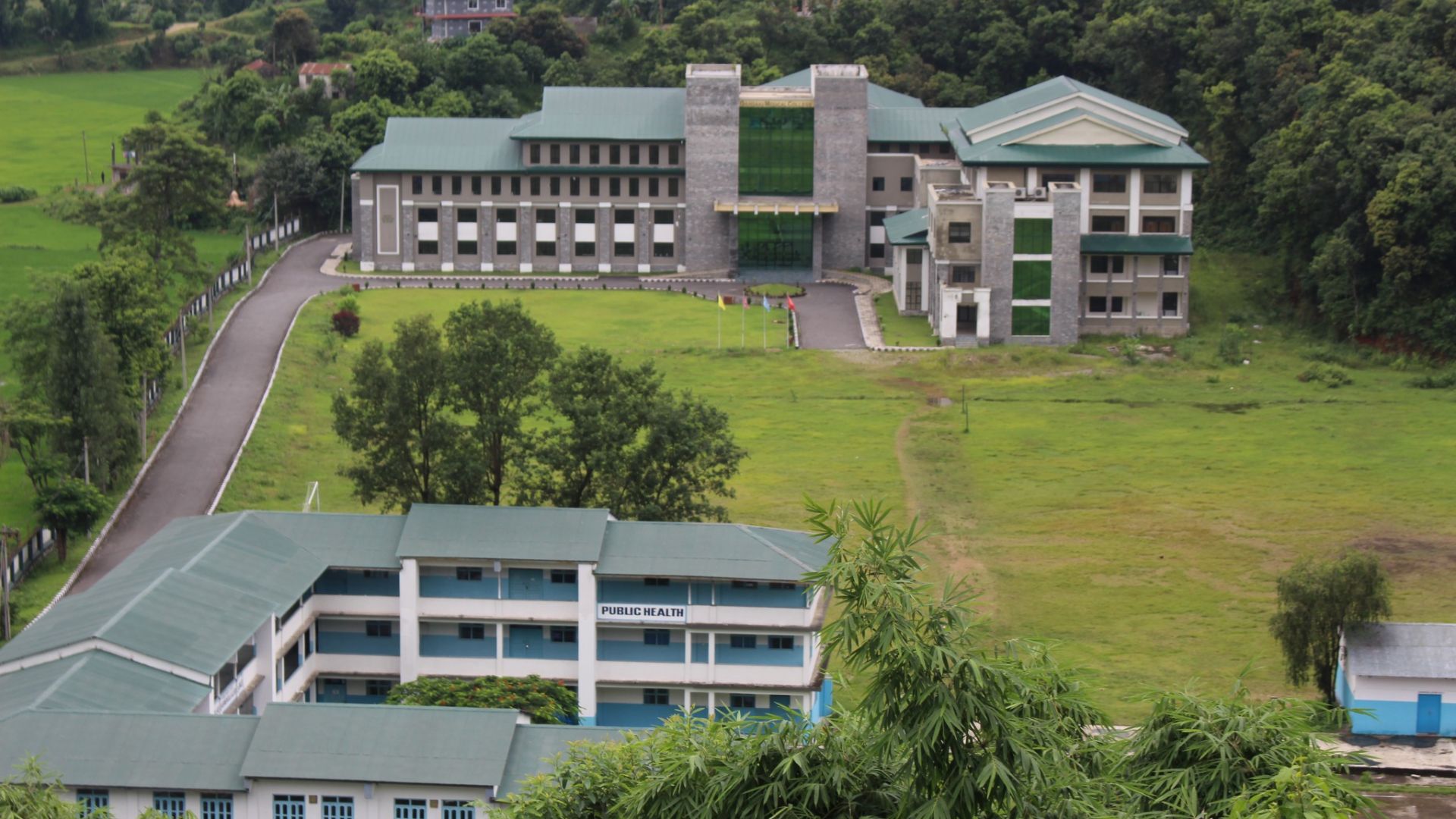
Affiliated with Tribhuvan University
Offered at Gandaki Medical College Teaching Hospital and Research Centre, Pokhara
Academic level: Bachelor’s degree
Duration: 4 years
Entrance examination: MECEE-BL
Licensure pathway: National Licensure Examination for Nurses (NLEN)
Curriculum includes theory, practicals, and practicums
Designed for hospital and community nursing roles
Seat allocation at GMC: 50
Scholarship provisions apply under the national medical education framework
The BSc Nursing curriculum follows a four-year structure that gradually builds nursing knowledge, practical competence, and professional responsibility. The course begins with integrated health sciences and fundamentals of nursing, then moves into adult care, psychiatric nursing, midwifery, child health, family and reproductive health, management, education, and research.
First Year
Integrated Health Sciences I Theory
Integrated Health Sciences II Theory
Integrated Health Sciences Practical
Fundamentals of Nursing Theory
Fundamentals of Nursing Practical
Community Health Nursing Theory
Community Health Nursing Practical
Nutrition and Diet Therapy Theory
Second Year
Adult Nursing I Theory
Adult Nursing II Theory
Geriatric Nursing Theory
Adult and Geriatric Nursing Practical
Psychiatric Nursing Theory
Psychiatric Nursing Practical
Nursing Concepts Theory
Social and Behavioural Science Theory
Third Year
Midwifery I Theory
Midwifery I Practical
Midwifery II Theory
Midwifery II Practical
Child Health Nursing Theory
Child Health Nursing Practical
Family and Reproductive Health Nursing Theory
Family and Reproductive Health Nursing Practical
Fourth Year
Management and Health Economics
Management Practicum
Educational Science
Education Practicum
Research and Biostatistics
Research Practicum
Prepare academically sound graduate nurses
Develop competent nursing professionals for hospital and community settings
Build knowledge, practical skills, and professional attitudes in nursing
Prepare graduates to function as care providers
Prepare graduates to take teaching roles in nursing areas
Develop capacity for middle-level management in nursing services
Encourage participation in research-related nursing work
The BSc Nursing program is intended for students who want to enter the nursing profession through a structured university-affiliated degree. Its scope includes nursing care, community health practice, health education, management responsibilities, and research-related learning. The course is designed to prepare graduates for professional nursing roles that require both technical competence and sound judgment.
At Gandaki Medical College, the scope of the program is strengthened by the wider medical and health science environment of the institution. Students study within a college that combines academic teaching, service-oriented health education, and access to facilities such as library support, internet access, hostels, cafeteria services, and sports spaces. After completing the degree and the licensure requirement, graduates can move into nursing roles in both institutional and community-based settings.
By the end of the program, graduates are expected to be able to:
Perform the role of nursing care provider in hospital settings
Perform the role of nursing care provider in community settings
Apply nursing knowledge and practical skills in patient care
Contribute to teaching and health education activities in nursing areas
Function in middle-level management roles in nursing services
Participate in research-related work in nursing
Demonstrate professional attitudes required in nursing practice
The program includes several theory, practical, and practicum components that support progressive skill development.
Fundamentals of Nursing
Community Health Nursing
Adult Nursing
Geriatric Nursing
Psychiatric Nursing
Midwifery
Child Health Nursing
Family and Reproductive Health Nursing
Management Practicum
Education Practicum
Research Practicum
Nutrition and Diet Therapy
The BSc Nursing program uses a blended academic structure that combines theory classes with practical and practicum-based learning. Students move from foundational health sciences and nursing concepts to applied nursing practice in community and professional care settings.
Classroom-based theory instruction
Integrated health sciences teaching
Fundamentals of nursing practical training
Community health nursing practical sessions
Adult and geriatric nursing practical work
Psychiatric nursing practical learning
Midwifery practical training
Child health nursing practical training
Family and reproductive health nursing practical sessions
Management practicum
Education practicum
Research practicum
Graduates of the BSc Nursing program may move toward roles such as:
Nursing care provider in hospital settings
Nursing care provider in community settings
Teaching-related roles in nursing areas
Middle-level management roles in nursing services
Research-related work in nursing
Professional licensure pathway through the National Licensure Examination for Nurses
Scholarship provisions for BSc Nursing are governed by the national medical education framework
Government scholarship seats at the undergraduate level are distributed through open competition and reservation categories
Within the government scholarship seats, 55 percent are distributed through open competition and 45 percent through reservation
Reservation categories include female, Khas Arya, Aadibasi Janajati, Madhesi, Dalit, Tharu, backward communities, Muslim, disabled, and families of martyrs, disappeared persons, injured warriors, and conflict victims
GMC also provides scholarship opportunities within its institutional intake structure
The program is offered under the affiliation of Tribhuvan University
The course follows a four-year structure with theory, practicals, and practicums
It prepares graduates for hospital and community-based nursing roles
The college has a wider health science academic environment with multiple related programs
Students study in a setting supported by library and internet facilities
Separate hostel facilities are available for boys and girls
The campus also includes cafeteria and sports facilities
The college is located in Pokhara, an important academic and service center
Seat availability for BSc Nursing at GMC is 50
Admission to BSc Nursing at GMC follows the applicable entrance and integrated admission framework used for health science programs through the Medical Education Commission.
Pass 10+2 Science or equivalent with Physics, Chemistry, and Biology with at least 50 percent aggregate marks or CGPA 2.4
Or secure the equivalent percentage in A-Level or another equivalent grading system
Or pass a Health Science Proficiency Certificate Level or Diploma in a related field containing Physics, Chemistry, and Biology with equivalence to Grade 12 Science from the National Examination Board
Applicants from the diploma pathway must secure at least 50 percent aggregate marks in both the diploma and the equivalence examination
Applicants from the diploma pathway must also be registered in the relevant Nepal health professional council or related council according to the educational background
Appear in MECEE-BL
Obtain at least the minimum 50 percentile in the integrated admission process
Complete admission on the basis of merit and seat allocation
Submit the required original documents and photocopies at the time of admission
Applicants selected for admission are required to submit the following documents:
Certificate, transcript, and character certificate of 10+2 or equivalent
Certificate, transcript, and character certificate of SLC/SEE or equivalent
Copy of citizenship or passport
Admit card of the entrance examination
Reservation-related documents where applicable
Certificate of equivalence for applicants with foreign qualifications
Recent passport-size photographs
Original documents and photocopies as required during admission processing
The entrance examination format for admission to the program is MECEE-BL. One mark is awarded for each correct answer, and 0.25 mark is deducted for each wrong answer. Admission is completed through the integrated merit-based process after meeting the required percentile.
For academic continuation, students must pass all subjects within the course duration plus four additional years from the start of the academic session. Students who do not complete the program within that time limit cannot continue under the same admission. After successful completion of the degree, graduates move toward the National Licensure Examination for Nurses under the Nepal Nursing Council licensure process.
The BSc Nursing program at Gandaki Medical College offers a structured nursing education pathway within a university-affiliated medical college in Pokhara. Its curriculum is organized to develop nursing knowledge step by step, from integrated health sciences and fundamentals of nursing to adult care, psychiatric nursing, midwifery, child health, family and reproductive health, management, education, and research.
For students seeking a nursing degree within the Gandaki Medical College Teaching Hospital and Research Centre environment, the program presents a clear academic route toward professional nursing roles in hospital and community settings, followed by the licensure pathway required for practice.
The BSc Nursing program runs for four years.
The program is affiliated with Tribhuvan University.
Admission to BSc Nursing requires MECEE-BL.
The seat allocation for BSc Nursing at Gandaki Medical College is 50.
Applicants must have passed 10+2 Science or equivalent with Physics, Chemistry, and Biology with at least 50 percent aggregate marks or CGPA 2.4, or meet the equivalent alternative eligibility pathway.
Yes. Graduates move toward the National Licensure Examination for Nurses as part of the professional licensure pathway.
Yes. Scholarship provisions apply under the national medical education framework, with open and reservation-based distribution.
The curriculum includes integrated health sciences, fundamentals of nursing, community health nursing, adult nursing, geriatric nursing, psychiatric nursing, midwifery, child health nursing, family and reproductive health nursing, management, educational science, and research.