The MD in Psychiatry program at Gandaki Medical College Teaching Hospital and Research Centre in Pokhara is offered under the affiliation of Tribhuvan University. It is a three-year postgraduate medical degree designed for doctors who want advanced academic and clinical training in psychiatry through a full-time residential format. The program is intended to develop the knowledge, skills, and professional attitude required to manage mental health problems independently within the broader framework of postgraduate medical education.
At Gandaki Medical College, the program is delivered within a wider academic and hospital-linked environment that includes medical and health science education, laboratories, library and internet facilities, hostel arrangements, cafeteria services, and student support spaces. This setting supports resident training through structured academic engagement, clinical responsibility, multidisciplinary exposure, and research-oriented study in a medical college environment.
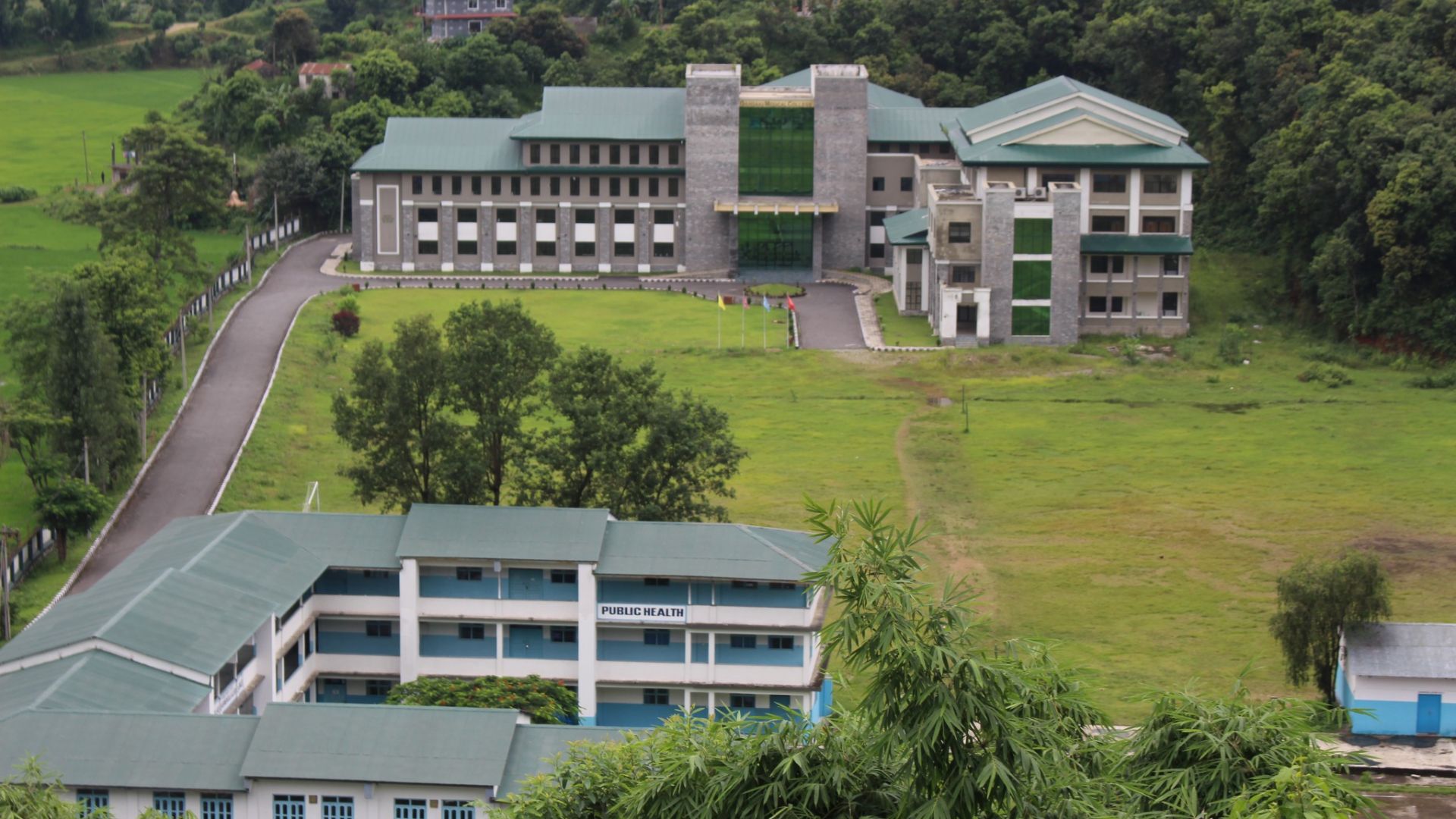
Offered at Gandaki Medical College Teaching Hospital and Research Centre, Pokhara
Affiliated with Tribhuvan University
Academic level: Postgraduate degree
Duration: 3 years
Entrance examination: MECEE-PG
Full-time residential training
Focused on independent management of mental health problems
Includes theory, thesis, and practical or clinical evaluation
Admission follows the postgraduate framework used through the Medical Education Commission
Intended for eligible MBBS graduates or equivalent candidates recognized by the Government of Nepal
The MD in Psychiatry program follows a three-year residency structure designed to prepare residents for comprehensive and effective management of mental health problems. The academic design combines foundational sciences, behavioral sciences, psychopathology, clinical psychiatry, subspecialty study, research work, and final clinical assessment.
The structure progresses from basic neuroscience and behavioral science to advanced psychiatric areas and supervised clinical training.
First Year
Basic Neuroscience and Neuropathology
Epidemiology and Biostatistics
Behavioural Sciences
Psychopathology and Phenomenology
Basic Science
Clinical and Practical components
Second Year
Thesis work under faculty guidance
Dissertation writing and submission within the required academic timeline
Third Year Theory Areas
General Psychiatry
Child and Adolescent Psychiatry
Neuropsychiatry
Consultation-Liaison Psychiatry
Neurology
Addiction Psychiatry
Forensic Psychiatry
Community and Social Psychiatry
Geriatric Psychiatry
Psychopharmacology
Other Treatment Methods
Final Clinical Component
Practical and clinical assessment at the end of the residency program
Prepare residents to manage mental health problems independently
Build strong knowledge, skills, and professional attitude in psychiatry
Develop competence in diagnosis through history, examination, and available diagnostic procedures
Strengthen the ability to plan and support mental health services
Prepare residents to organize mental health services for defined groups or areas
Build capacity to conduct or arrange in-service training for hospital staff and community health personnel
Support work within multidisciplinary professional teams
Maintain personal and professional standards expected in medical practice
The scope of MD in Psychiatry extends across clinical psychiatry, mental health service organization, multidisciplinary care, training responsibilities, and research. It is suited to medical graduates who want structured postgraduate specialization in psychiatry through a university-affiliated residency program.
At Gandaki Medical College, the program is supported by a broader institutional environment linked with medical education and hospital-based learning. This setting helps residents build academic depth, clinical confidence, and professional responsibility while studying in a multidisciplinary health science institution in Pokhara.
Graduates of the MD in Psychiatry program are expected to be able to:
Manage mental health problems independently
Diagnose mental health problems through history, examination, and available diagnostic procedures
Demonstrate the knowledge, skills, and attitude needed for mental health service development
Conduct or arrange in-service training for hospital staff and community health personnel
Organize mental health services for a defined geographical area or group of persons
Work effectively in multidisciplinary teams and act in leadership roles when required
Maintain high personal and professional standards in psychiatric practice
Basic Neuroscience and Neuropathology
Behavioural Sciences
Psychopathology and Phenomenology
Epidemiology and Biostatistics
General Psychiatry
Child and Adolescent Psychiatry
Neuropsychiatry
Consultation-Liaison Psychiatry
Addiction Psychiatry
Forensic Psychiatry
Community and Social Psychiatry
Geriatric Psychiatry
Psychopharmacology
Thesis writing and research work
Clinical and practical psychiatric assessment
The program follows a full-time residential training model designed around academic discipline, clinical development, and supervised postgraduate learning. Residents study within a structured system in which theory, research, and clinical work are all part of the training process.
Full-time residential residency training
Preceptor or guide assigned to each postgraduate student
Structured theory-based study across the three years
Clinical and practical psychiatric training
Research guidance through supervised thesis work
Final clinical assessment after completion of residency training
Learning within a medical college environment supported by academic and institutional facilities
Graduates of MD in Psychiatry may move toward roles such as:
Psychiatrist in hospital settings
Mental health service specialist
Community mental health professional
Academic faculty in psychiatry
Clinical trainer for hospital staff and health workers
Research-oriented professional in mental health and psychiatry
Mental health service organizer for defined communities or institutions
Multidisciplinary mental health team leader
Admission and selection follow the national postgraduate medical education framework
Candidates must qualify through MECEE-PG and the merit process
Nepalese and foreign candidates appear in the common entrance examination where applicable
Merit-based selection is used for admission to postgraduate programs under the national system
The program is offered under the affiliation of Tribhuvan University
It provides structured postgraduate residency training in psychiatry
The course combines theory, thesis, and clinical assessment
Residents study in a medical college environment linked with hospital services in Pokhara
The program supports independent clinical management of mental health problems
Training includes community, clinical, and service-oriented areas of psychiatry
The college provides library and internet facilities, hostel support, cafeteria services, and a wider health science environment
Admission follows the postgraduate framework used through the Medical Education Commission
Admission to MD in Psychiatry at Gandaki Medical College follows the integrated postgraduate admission framework used in Nepal. Selection is based on the common entrance examination and merit process for eligible Nepalese and foreign candidates.
Complete MBBS or an equivalent qualification recognized by the Government of Nepal
Hold registration with the Nepal Medical Council for Nepalese candidates
Hold registration with the respective medical council of the applicant’s own country for foreign candidates
Complete one year of experience as required under the stated postgraduate eligibility framework
Appear in MECEE-PG
Secure at least 50 percent marks in the entrance examination to be eligible for the merit list
Complete admission through the merit-based counseling and selection process
Applicants selected for admission are required to submit documents consistent with the postgraduate eligibility and admission framework, including:
MBBS or equivalent academic qualification records
Nepal Medical Council registration documents for Nepalese candidates
Medical council registration documents from the applicant’s own country for foreign candidates
Experience-related records where required under eligibility conditions
MECEE-PG-related admission records
Identity documents required during admission
Other records required in the merit-based counseling and admission process
The entrance examination for admission is MECEE-PG. It follows a single best response multiple-choice format with four options for each question. The paper includes 200 questions carrying 200 marks and is conducted over three hours, including a one-time voluntary toilet break after one hour. The cognitive ratio is structured as recall, understanding, and application in the proportion of 30:50:20. Candidates must secure at least 50 percent marks to be eligible for the merit list.
The examination weightage includes clinical sciences, basic medical sciences, community medicine with research methodology, forensic medicine, and mandatory continuing professional development areas such as medical ethics, rational use of drugs, infection prevention, BLS/ACLS, and communication skills. Psychiatry is included among the clinical subject areas of the entrance structure.
Program evaluation is based on theory, thesis, and practical or clinical examinations. During the second year, the resident undertakes research work under faculty guidance and prepares a thesis. The dissertation should preferably be completed and submitted six months before the anticipated final examination. A candidate cannot sit for the final examination unless the thesis has been accepted. At the end of the three-year residency program, practical and clinical assessment is conducted.
The MD in Psychiatry program at Gandaki Medical College offers a structured postgraduate pathway for medical graduates seeking specialist training in mental health care. Its three-year design combines foundational science, behavioral study, clinical psychiatry, thesis work, and final practical assessment within a full-time residential model.
For candidates seeking postgraduate psychiatry education in Pokhara within the Gandaki Medical College Teaching Hospital and Research Centre environment, the program provides a clear route through entrance-based selection, merit-based admission, and advanced academic and clinical development in psychiatry.
The MD in Psychiatry program runs for three years.
The program is affiliated with Tribhuvan University.
Admission to MD in Psychiatry requires MECEE-PG.
Applicants must have completed MBBS or an equivalent qualification recognized by the Government of Nepal, meet the relevant medical council registration requirement, and complete the required experience condition.
Yes. The program follows a full-time residential residency structure.
Yes. Thesis acceptance is required before appearing in the final examination.
The final-year theory areas include general psychiatry, child and adolescent psychiatry, neuropsychiatry, consultation-liaison psychiatry, neurology, addiction psychiatry, forensic psychiatry, community and social psychiatry, geriatric psychiatry, psychopharmacology, and other treatment methods.
Graduates may work in psychiatry practice, mental health services, academic settings, training roles, multidisciplinary teams, and research-oriented areas in mental health.