The MD Clinical Pharmacology program at Gandaki Medical College Teaching Hospital and Research Centre in Pokhara is offered under the affiliation of Tribhuvan University. It is a three-year postgraduate course designed for medical graduates who want advanced academic training in pharmacology through a full-time residential study format. The program sits within the postgraduate academic structure of the college and follows the entrance, merit, and resident training framework used for university-affiliated postgraduate medical education in Nepal.
At Gandaki Medical College, the program is delivered within a broader health science environment that also includes MBBS, BDS, BSc in Medical Laboratory Technology, BSc in Medical Imaging Technology, Bachelor of Public Health, Bachelor of Pharmacy, Bachelor of Nursing, and BSc Nursing. This wider academic setting connects postgraduate study with a medical college environment supported by academic departments, laboratories, hospital-linked learning, library and internet access, hostel facilities, cafeteria services, and student support spaces.
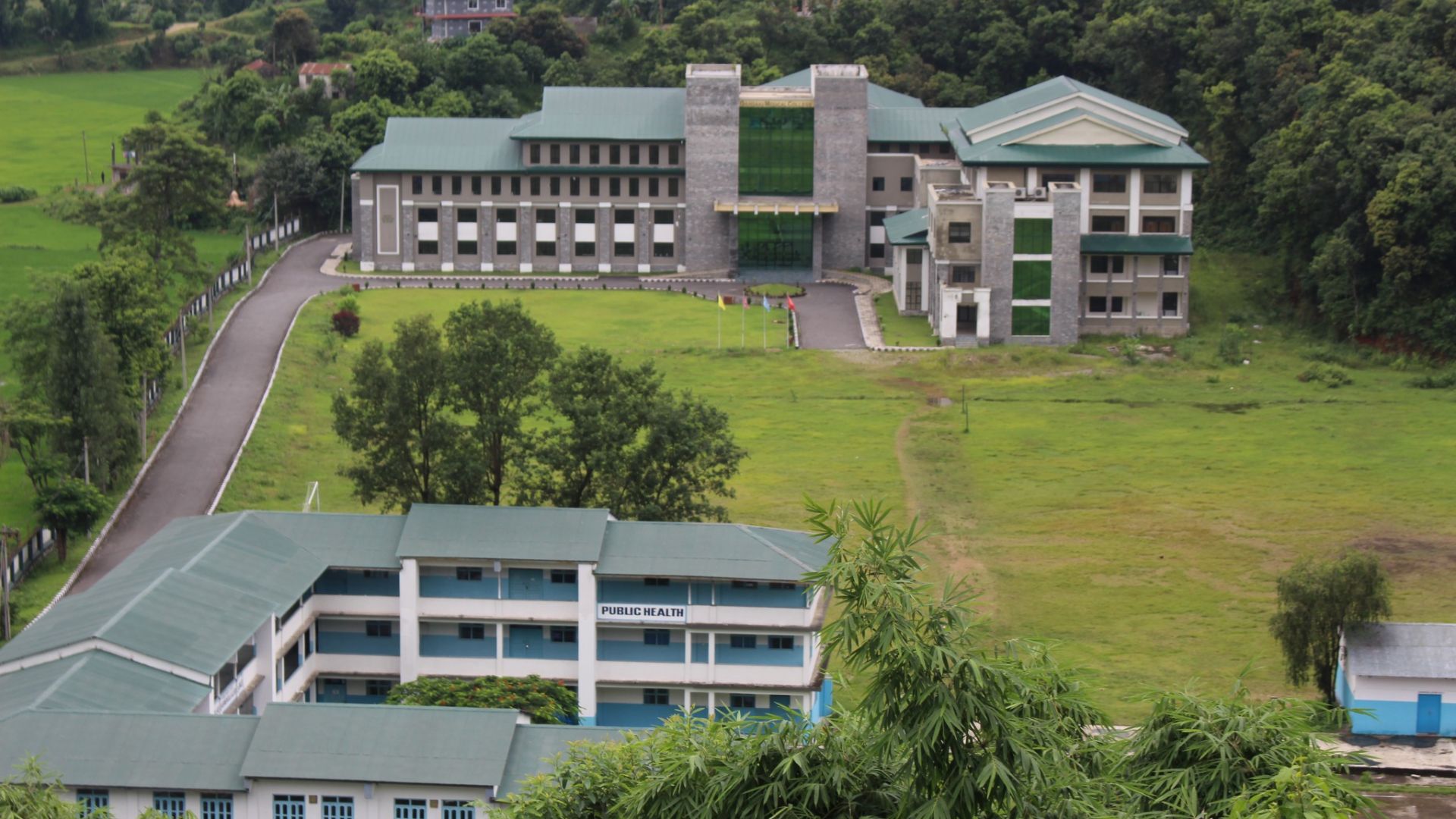
Offered at Gandaki Medical College Teaching Hospital and Research Centre, Pokhara
Affiliated with Tribhuvan University
Academic level: Postgraduate degree
Duration: 3 years
Entrance examination: MECEE-PG
Full-time residential training
Conducted under postgraduate academic and administrative rules
Non-practicing resident training format
Intended for MBBS graduates or equivalent candidates recognized by the Government of Nepal
Admission follows the integrated merit-based postgraduate framework through the Medical Education Commission
The MD Clinical Pharmacology program follows a three-year postgraduate structure under the university-affiliated resident training framework. The available course context presents the program as a full-time residential academic course, with students expected to remain engaged in institutional study and training throughout the program period.
Key academic features include:
Three-year postgraduate duration
Full-time residential training
Non-practicing academic structure
Training under postgraduate academic and administrative rules
Study within a medical college setting linked to laboratory-supported and hospital-based academic environments
Provide advanced postgraduate training in clinical pharmacology
Support academic progression for medical graduates entering postgraduate study
Develop disciplined resident-level academic engagement
Strengthen professional preparation within a structured medical education environment
Support research-oriented postgraduate learning
Prepare graduates for advanced academic and professional roles related to pharmacology
The scope of MD Clinical Pharmacology lies within postgraduate medical education and advanced academic specialization after MBBS. The program is suited to candidates who want structured resident training within a university-affiliated medical college and who intend to deepen their academic foundation in pharmacology through full-time study.
At Gandaki Medical College, this scope is supported by a broader institutional environment that combines postgraduate medical education with academic departments, laboratory support, hospital-linked learning, and a multidisciplinary health science setting in Pokhara. The program forms part of the wider postgraduate profile of the college, where advanced study takes place alongside other medical and health science programs.
Graduates of the MD Clinical Pharmacology program are expected to be able to:
Complete advanced postgraduate study in clinical pharmacology
Work within the discipline required for full-time residential training
Apply advanced academic learning within postgraduate medical education
Function according to institutional and professional standards expected of residents
Continue toward academic, professional, and research-oriented roles linked to pharmacology
The available program context supports development in the following areas:
Advanced postgraduate study in pharmacology
Full-time residential academic training
Research-oriented postgraduate preparation
Professional discipline under postgraduate rules and regulations
Academic engagement within a laboratory-supported medical college environment
Resident-level study within a structured postgraduate framework
The program follows a resident training model designed for continuous academic engagement within a medical college setting. It is structured as a full-time course and places emphasis on institutional discipline, regular academic participation, and compliance with postgraduate rules and regulations.
Full-time residential training
Structured postgraduate academic engagement
Non-practicing resident format
Study within a medical college environment with academic departments and laboratory support
Training governed by postgraduate academic and administrative rules
After completing MD Clinical Pharmacology, graduates may move toward pathways such as:
Advanced academic roles in pharmacology
Postgraduate-level professional roles in medical education settings
Research-oriented work in medical sciences
Institutional roles linked to university-affiliated medical education
Further specialist academic progression in related medical science areas
Admission and selection follow the national postgraduate medical education framework
Candidates must qualify through MECEE-PG and the merit process
Nepalese and foreign candidates appear in the common entrance examination
Merit lists for Nepalese and foreign candidates are published separately
Admission is completed on merit basis through open house counseling where applicable
The program is offered under the affiliation of Tribhuvan University
It is available within the postgraduate academic structure of Gandaki Medical College
The course follows a three-year full-time residential format
Students study in a broader health science environment in Pokhara
The college supports learning through academic departments, laboratories, hospital-linked exposure, library and internet access, hostel facilities, and student services
Admission follows the integrated postgraduate framework used through the Medical Education Commission
The college’s wider academic setting includes medicine, dentistry, nursing, pharmacy, public health, and allied health programs
Admission to MD Clinical Pharmacology at Gandaki Medical College follows the integrated postgraduate admission framework used in Nepal. Selection is based on the common entrance examination and merit process applied to Nepalese and foreign candidates under the national system.
Complete MBBS or an equivalent qualification recognized by the Government of Nepal
Hold registration with the Nepal Medical Council for Nepalese candidates
Hold registration with the respective medical council of the applicant’s own country for foreign candidates
Fulfill the applicable postgraduate eligibility conditions
Appear in MECEE-PG
Secure at least 50 percent marks in the entrance examination to be eligible for the merit list
Complete admission through the merit-based counseling and selection process
Applicants selected for admission are required to submit documents consistent with the postgraduate eligibility and admission framework, including:
MBBS or equivalent academic qualification records
Nepal Medical Council registration documents for Nepalese candidates
Respective medical council registration documents for foreign candidates
MECEE-PG-related admission records
Citizenship or passport-related identity documents as required during admission
Other records required in the merit-based admission and counseling process
Admission to the program is based on MECEE-PG. The examination uses a single best response multiple-choice format with four options for each question. The paper includes 200 questions carrying a total of 200 marks and is conducted over three hours. Candidates must score at least 50 percent marks to qualify for inclusion in the merit list.
The entrance paper covers clinical sciences, basic medical sciences, community medicine with research methodology, forensic medicine, and mandatory continuing professional development areas such as medical ethics, rational use of drugs, infection prevention, BLS/ACLS, and communication skills. Admission is then completed on merit through the applicable postgraduate selection process.
MD Clinical Pharmacology at Gandaki Medical College offers a structured postgraduate pathway for medical graduates seeking advanced study through a three-year residential academic program. The course is aligned with the university-affiliated postgraduate framework and is delivered within a broader medical college environment that supports advanced learning through institutional discipline, academic departments, laboratories, and hospital-linked educational settings.
For candidates looking for postgraduate medical education in Pokhara within the Gandaki Medical College Teaching Hospital and Research Centre setting, the program provides a clear route through entrance-based selection, merit-based admission, and full-time resident training.
The MD Clinical Pharmacology program runs for three years.
The program is affiliated with Tribhuvan University.
Admission to MD Clinical Pharmacology requires MECEE-PG.
Applicants must have completed MBBS or an equivalent qualification recognized by the Government of Nepal and must meet the relevant medical council registration requirement.
Yes. The program is conducted as full-time residential training.
No. The postgraduate resident training format is non-practicing.
Candidates must secure at least 50 percent marks in the entrance examination to be eligible for the merit list.
Admission is completed on merit basis through the applicable counseling and selection process.