The MS in Orthopaedic and Trauma Surgery program at Gandaki Medical College Teaching Hospital and Research Centre in Pokhara is offered under the affiliation of Tribhuvan University. It is a postgraduate residency-based surgical program designed for medical graduates who want advanced training in orthopaedic and trauma care within a structured university framework. The course is intended to develop specialists who can recognize, assess, and manage a wide range of orthopaedic and trauma problems with sound clinical judgment, operative skill, and professional responsibility.
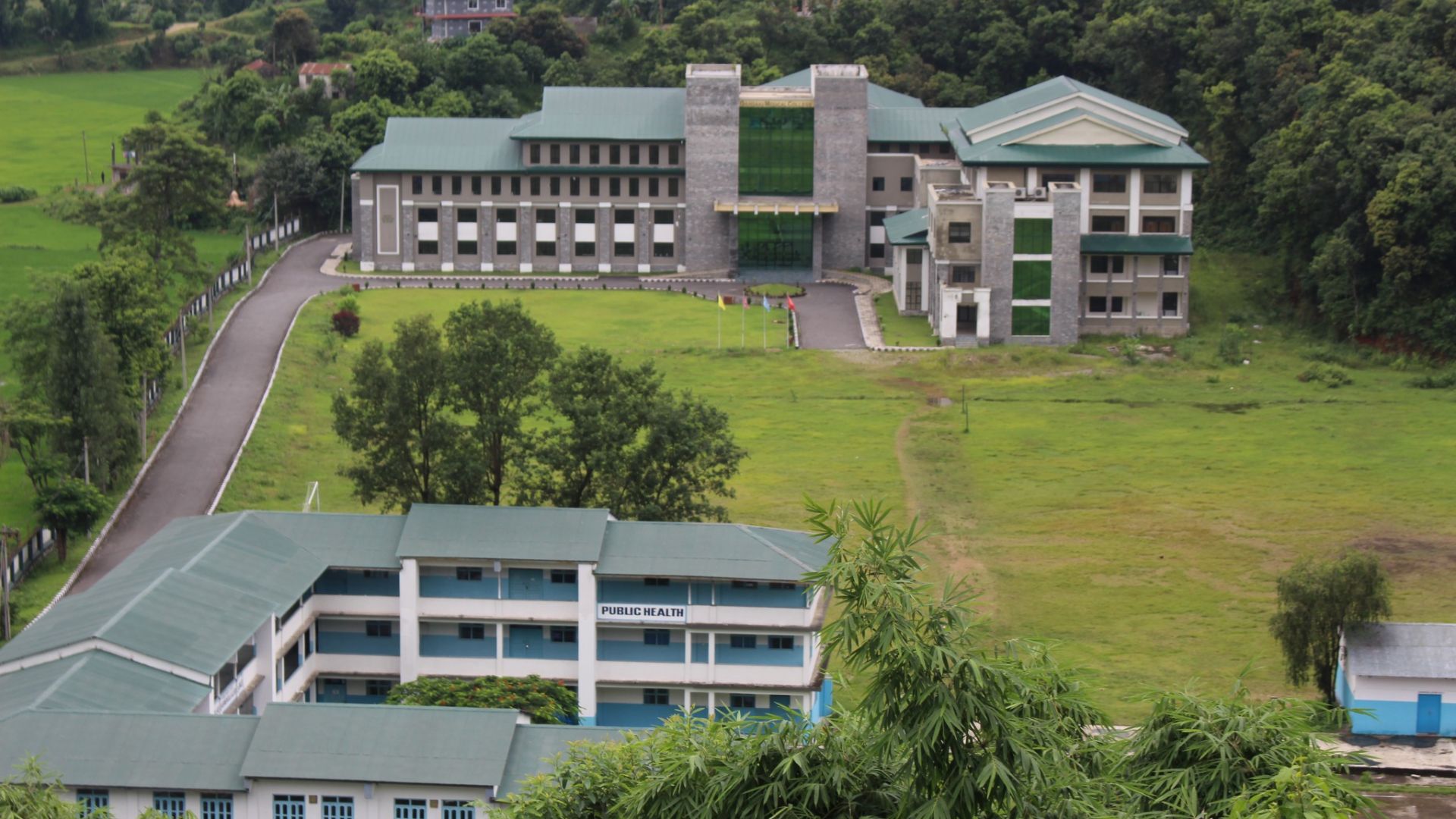
At Gandaki Medical College, the program is delivered within a wider academic and hospital-linked environment that includes medical education, clinical departments, laboratories, library and internet facilities, hostel arrangements, and student support services. This setting supports resident training through supervised clinical exposure, operative involvement, academic discussion, and research-oriented study. Within the broader institutional context, the college also runs undergraduate and postgraduate programs in medicine and health sciences, creating a multidisciplinary learning environment for advanced surgical education.
Offered at Gandaki Medical College Teaching Hospital and Research Centre, Pokhara
Affiliated with Tribhuvan University
Academic level: Postgraduate degree
Entrance examination: MECEE-PG
Residency-based full-time training
Focused on orthopaedic and trauma surgery
Includes clinical training, operative exposure, academic activities, and research
Requires thesis approval before the final examination
Admission follows the postgraduate framework used through the Medical Education Commission
Intended for eligible MBBS graduates or equivalent candidates recognized by the Government of Nepal
The MS in Orthopaedic and Trauma Surgery program follows a residency-based academic structure that combines basic sciences, orthopaedic principles, trauma management, operative training, academic review, and thesis work. The training is designed to help residents move from foundational surgical knowledge to supervised and progressively independent involvement in orthopaedic and trauma care.
Broad understanding of orthopaedic and trauma surgery principles
Relevant study of basic sciences and para-clinical subjects
Diagnosis and management of common orthopaedic and trauma conditions
Pre-operative work-up and post-operative management
Emergency response and resuscitation in orthopaedic and trauma cases
First-line surgical intervention in orthopaedic and trauma surgery
Progressive exposure to different surgical procedures under supervision
Thesis writing and research activity as part of the program
Part I assessment in basic sciences
Part III final assessment in principles, management, clinical cases, practical work, and viva
Develop specialists in orthopaedic and trauma surgery
Build strong understanding of the fundamental principles of orthopaedic and trauma care
Strengthen knowledge of relevant basic sciences and para-clinical subjects
Prepare residents to diagnose common orthopaedic and trauma problems
Develop competence in pre-operative and post-operative management
Prepare residents to perform resuscitation and emergency procedures safely
Build the ability to provide first-line surgical intervention in orthopaedic and trauma cases
Support progressive development toward independent performance of surgical procedures
Prepare graduates to teach undergraduate and mid-level health workers
Encourage research activity and academic contribution in orthopaedic and trauma surgery
The scope of this program extends across orthopaedic diagnosis, trauma care, operative surgery, emergency management, perioperative care, clinical teaching, and research. It is suited to doctors who want a structured surgical residency in a specialist field that combines direct patient management with academic and operative development.
At Gandaki Medical College, the program is supported by a teaching environment linked to hospital services and postgraduate academic training. This makes the course relevant for candidates who want to grow into consultant-level orthopaedic and trauma practice while also building academic discipline, teamwork, and research capacity in a medical college setting.
Residents completing the program are expected to be able to:
Demonstrate broad understanding of orthopaedic and trauma surgery principles
Apply relevant basic science knowledge in surgical practice
Diagnose common orthopaedic and trauma conditions
Carry out pre-operative assessment and post-operative management
Perform resuscitation and related emergency procedures
Provide first-line surgical intervention in orthopaedic and trauma cases
Perform different orthopaedic and trauma procedures with increasing competence
Contribute to undergraduate and mid-level health worker training
Carry out research activity in orthopaedic and trauma surgery
Orthopaedic and trauma surgery principles
Surgical pathology and surgical management
Basic sciences related to orthopaedic training
Pre-operative assessment
Post-operative care
Emergency resuscitation procedures
Minor to major surgical assistance under supervision
Independent performance development in orthopaedic procedures
Clinical case handling in outpatient and inpatient settings
Thesis writing and research work
Clinical discussion, journal review, and academic presentation
The program follows a full-time residential training model in which residents are expected to remain actively involved in patient care, operative work, academic sessions, and departmental responsibilities. The training pattern encourages self-directed learning while maintaining close academic and clinical supervision.
Full-time residential training
Self-directed learning with guidance from teachers and preceptors
Regular responsibility in OPD and inpatient care
Primary responsibility for investigations and perioperative care
Regular assistance in major operations
Progressive movement from minor to major operations under supervision
Participation in departmental and unit academic activities
Case presentation from 8 to 9 AM daily
Weekly assigned topic presentation
Weekly journal club
Weekly group discussion
Weekly clinico-pathological conference
Weekly radiological demonstration
Bedside clinical teaching twice a week
Guidance in basic science, clinical epidemiology, and medical ethics
Graduates of the program may move toward roles such as:
Orthopaedic and trauma surgery specialist
Consultant-level surgical practitioner
Hospital-based orthopaedic surgeon
Trauma care specialist
Academic faculty in medical education
Trainer for undergraduate and mid-level health workers
Research-oriented professional in orthopaedic and trauma surgery
Specialist contributor in emergency and surgical care services
Admission and selection follow the national postgraduate medical education framework
Candidates must qualify through MECEE-PG and the merit process
Nepalese and foreign candidates appear in the common entrance examination where applicable
Merit-based selection is used for admission to postgraduate programs under the national system
The program is offered under the affiliation of Tribhuvan University
It provides structured residency-based specialist training in orthopaedic and trauma surgery
The training includes clinical care, operative exposure, academic discussion, and research work
Residents study in a medical college environment linked with hospital services in Pokhara
The course supports progressive surgical development under supervision
Thesis work is built into the academic structure
The college provides library and internet facilities, hostel support, cafeteria services, and a broader health science environment
Admission follows the postgraduate framework used through the Medical Education Commission
Admission to MS in Orthopaedic and Trauma Surgery at Gandaki Medical College follows the integrated postgraduate admission framework used in Nepal. Selection is based on the common entrance examination and merit process for eligible Nepalese and foreign candidates.
Complete MBBS or an equivalent qualification recognized by the Government of Nepal
Hold registration with the Nepal Medical Council for Nepalese candidates
Hold registration with the respective medical council of the applicant’s own country for foreign candidates
Complete one year of experience as required under the stated eligibility framework
Appear in MECEE-PG
Secure at least 50 percent marks in the entrance examination to be eligible for the merit list
Complete admission through the merit-based counseling and selection process
Applicants selected for admission are required to submit documents consistent with the postgraduate eligibility and admission framework, including:
MBBS or equivalent academic qualification records
Nepal Medical Council registration documents for Nepalese candidates
Medical council registration documents from the applicant’s own country for foreign candidates
Experience-related records where required under eligibility conditions
MECEE-PG-related admission records
Identity documents required during admission
Other records required in the merit-based counseling and admission process
The entrance examination for admission is MECEE-PG. It follows a single best response multiple-choice format with four options for each question. The paper includes 200 questions carrying 200 marks and is conducted over three hours. Candidates must secure at least 50 percent marks to be eligible for the merit list. The examination weightage includes clinical sciences, basic medical sciences, community medicine with research methodology, forensic medicine, and mandatory continuing professional development areas such as medical ethics, rational use of drugs, infection prevention, BLS/ACLS, and communication skills.
Program assessment includes internal assessment and final examination. Internal assessment is based on the log-book of day-to-day activities, participation, performance, and OSCE. After each rotation, the designated teacher evaluates the resident’s knowledge and performance, and unsatisfactory performance may lead to repetition of the posting. Internal assessment carries 20 percent of the theory mark.
The final examination includes multiple parts. Part I covers basic sciences with theory, oral, and practical components, and a maximum of three attempts is allowed. Thesis work is a required academic component and must be accepted before the candidate can sit for the final examination. The final professional assessment includes theory papers in principles of orthopaedic and trauma surgery and surgical pathology with management, along with clinical long cases, short cases, practical assessment, OSCE, and viva.
The MS in Orthopaedic and Trauma Surgery program at Gandaki Medical College offers a structured postgraduate pathway for medical graduates seeking specialist training in orthopaedic and trauma care. Its academic design brings together surgical principles, emergency response, perioperative management, supervised operative exposure, academic discussion, and research work within a residency-based learning model.
For candidates who want postgraduate surgical education in Pokhara within the Gandaki Medical College Teaching Hospital and Research Centre environment, the program provides a clear route through entrance-based selection, merit-based admission, resident training, and specialist academic development in orthopaedic and trauma surgery.
Admission to MS in Orthopaedic and Trauma Surgery requires MECEE-PG.
Applicants must have completed MBBS or an equivalent qualification recognized by the Government of Nepal and must meet the required medical council registration condition. One year of experience is also required under the stated eligibility framework.
Yes. The program follows a full-time residential residency model.
The assessment system includes internal assessment, log-book review, OSCE, teacher evaluation after rotations, thesis work, and final theory, clinical, practical, and viva examinations.
Yes. The candidate cannot sit for the final examination without acceptance of the thesis.
Residents take part in case presentations, assigned topic presentations, journal clubs, group discussions, clinico-pathological conferences, radiological demonstrations, and bedside clinical teaching.
No. Private practice is not permitted during the training period.
Graduates may move toward specialist orthopaedic and trauma surgery roles, consultant practice, academic positions, training roles, and research-oriented work.