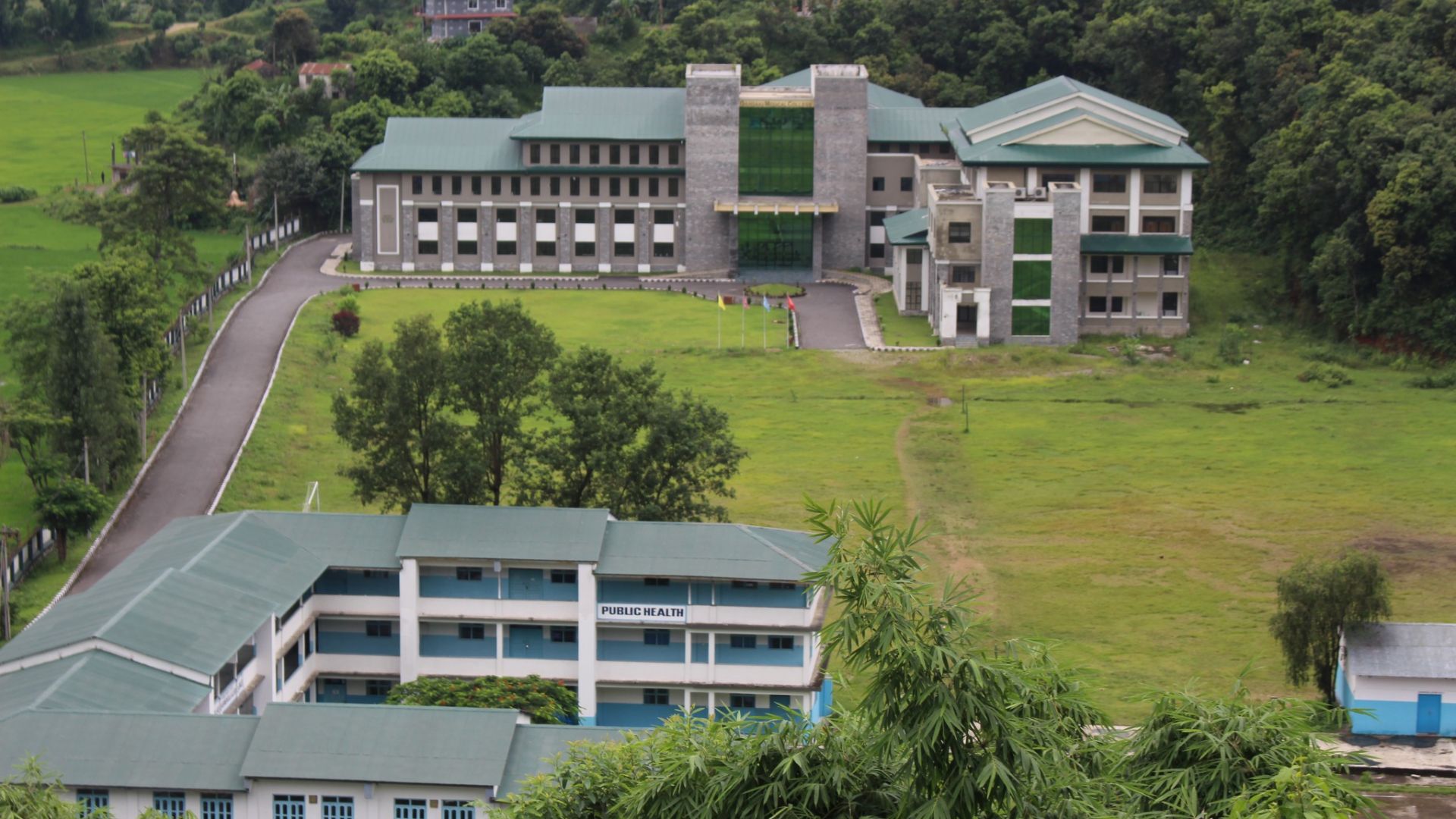
The MBBS program at Gandaki Medical College GMC Pokhara is offered by Gandaki Medical College Teaching Hospital and Research Centre in Pokhara, Kaski, under the affiliation of Tribhuvan University. It is a five years and six months undergraduate medical degree that combines classroom study, laboratory work, community exposure, clinical teaching, and one year of rotatory internship.
At GMC, MBBS is the focal academic program and is closely linked with the teaching hospital, where students are exposed to diagnostic services, specialist departments, outpatient care, emergency services, operation theatres, and supervised clinical learning. The course is structured to develop socially responsible and competent medical graduates who can work across preventive, promotive, curative, and rehabilitative health care settings.
Affiliated with Tribhuvan University
Conducted at Gandaki Medical College Teaching Hospital and Research Centre, Pokhara
Duration of 5 years 6 months, including one year of rotatory internship
Entrance examination: MECEE-BL
Licensing examination: Nepal Medical Council Licensing Examination (NMCLE)
Seat allocation for MBBS: 120
Language of instruction: English
Community-oriented and partly community-based study format
Clinical teaching supported by the college’s teaching hospital
Scholarship provision available within the institutional and national admission framework
The MBBS curriculum at GMC follows the Tribhuvan University structure and moves from basic medical sciences to clinical disciplines, community exposure, and internship training. The course is arranged to connect subject learning with patient care, community health, communication, and professional responsibility.
Year 1: Integrated Basic Medical Sciences, including Anatomy, Biochemistry, Microbiology, Pathology, Pharmacology, Physiology, Community Medicine, and History Taking and Communication Skills
Year 2: Integrated Basic Medical Sciences with continued study of Anatomy, Biochemistry, Microbiology, Pathology, Pharmacology, Physiology, and Clinical Examinations
Year 3: Community Medicine, Forensic Medicine, Internal Medicine, Surgery, and Paediatrics
Year 4: Psychiatry, Dermatology, Ophthalmology, Ear, Nose and Throat, Orthopaedics, Gynaecology and Obstetrics, Family Planning, Dentistry, Community and Clinical Experience, and Field Management
Year 5 (6 months): Internal Medicine, Surgery, Gynaecology and Obstetrics, Paediatrics, Anaesthesiology, Radiology, Emergency Medicine and Family Practice, Information Technology, Ethics, and Research
Final phase: Rotatory Internship
The early years focus on basic sciences with clinical and community correlation. The later years place more emphasis on ward-based learning, clinical decision-making, community diagnosis, and supervised practical training.
Prepare socially responsible and competent medical doctors
Build a strong foundation in basic medical sciences and clinical sciences
Develop safe and structured clinical examination skills
Train students to respond to common and life-threatening health problems
Connect medical education with community health needs and public health practice
Strengthen communication, ethics, information handling, and research orientation
The MBBS program is designed for students who plan to enter the medical profession through a full undergraduate medical degree linked to hospital and community learning. Its scope extends beyond classroom instruction and includes direct engagement with clinical departments, community medicine, preventive services, and family health work.
At GMC, the course is supported by a teaching hospital setting where students learn within a medical service environment. The program also prepares graduates for national and international health care systems by combining scientific knowledge, patient interaction, practical training, and internship-based experience. After completion of the degree, internship, and licensing requirements, graduates can move into clinical service, public health work, academic progression, and postgraduate medical study.
Graduates of the MBBS program are expected to be able to:
Take medical history in a structured way
Perform clinical examinations
Diagnose and treat various diseases
Manage life-threatening medical emergencies
Communicate with patients and their families
Plan and manage preventive, promotive, and rehabilitative health services
Conduct research in the health sector
The course includes subject areas and training components that support practical skill development, including:
History Taking and Communication Skills
Clinical Examinations
Community Medicine
Community and Clinical Experience
Field Management
Emergency Medicine and Family Practice
Information Technology
Ethics and Research
Rotatory Internship
These components help students build practical competence alongside academic study.
The MBBS program at GMC is delivered through a mix of classroom teaching, integrated basic science instruction, clinical exposure, community-based activities, and supervised hospital learning.
Integrated teaching in the basic medical sciences
Early clinical and community correlation
Problem-based learning
Self-directed learning
Practical classes and laboratory work
Bedside clinical teaching and ward exposure
Field visits and health camp participation
Rotatory internship in major clinical areas
This teaching pattern connects foundational science with patient care, communication, and community health practice.
After completing the MBBS degree, internship, and the Nepal Medical Council Licensing Examination, graduates may move toward roles and pathways such as:
Medical doctor in hospital and clinical settings
Community health and primary care practice
Emergency and acute care services
Preventive, promotive, and rehabilitative health programs
Public health and community-based service work
Health sector research
Postgraduate medical education in different specialties
The college provides scholarships to 10 percent of the total annual student intake
Scholarship students are nominated by the Nepal Government on the basis of merit in the entrance examination
Scholarship procedures for MBBS fall under the national medical education legal and regulatory framework
MBBS is the focal academic program of the institution
The program is linked with a teaching hospital that supports clinical teaching
The curriculum combines basic sciences, community medicine, clinical study, and internship
Students learn through laboratory work, hospital exposure, and community-based activities
Diagnostic, imaging, emergency, and specialty services are part of the learning environment
The college provides library and internet access, hostels, cafeteria, and sports facilities
Scholarships are available within the annual intake structure
The program is offered under the affiliation of Tribhuvan University
Admission to MBBS at GMC follows the applicable entrance and seat allocation framework used for medical education in Nepal through the Medical Education Commission.
Complete the required science background or equivalent recognized qualification
Appear in MECEE-BL
Obtain at least the minimum qualifying percentile in the integrated admission process
Follow the merit-based admission and seat allocation procedure
Submit the required original documents and photocopies at the time of admission
Report to the college within 15 days of the commencement of classes
The entrance format uses one mark for each correct answer and deducts 0.25 mark for each wrong answer.
Applicants selected for admission are required to submit academic and identity documents, including:
SLC/SEE certificate, transcript, and character certificate
10+2 or equivalent certificate, transcript, and character certificate
Citizenship or passport copy
Entrance examination admit card
Admission confirmation letter
Reservation-related documents where applicable
Equivalence certificate for foreign qualifications where applicable
Recent passport-size photographs
Original documents and photocopies as required during admission processing
The program follows progression rules for phase completion and academic continuation. Students admitted to MBBS must pass the first-year examination within a maximum of six attempts, including the regular attempt, and the second-year examination within a maximum of four attempts, including the regular attempt. Students can move into second-phase classes only after passing all subjects in the first phase.
Absence from an examination within the specified period is counted as an attempt, although approved exceptions may apply in limited cases. All subjects must be passed within ten years from the start of the academic session. After completion of the academic study and rotatory internship, graduates proceed toward the Nepal Medical Council Licensing Examination.
The MBBS program at Gandaki Medical College brings together university-affiliated medical education, hospital-based clinical teaching, community exposure, and structured internship training. Its curriculum is arranged to build medical knowledge step by step, beginning with integrated basic sciences and moving toward clinical care, emergency response, public health, and research-related learning.
For students seeking an MBBS course in Pokhara within the Gandaki Medical College GMC Pokhara academic setting, the program offers a clear pathway from foundational study to internship and licensing preparation, supported by the college’s teaching hospital, laboratories, and student facilities.
The MBBS program runs for 5 years 6 months, which includes one year of rotatory internship.
Admission to MBBS requires MECEE-BL under the applicable medical admission framework.
The MBBS seat allocation at the college is 120.
Yes. The program includes one year of rotatory internship as part of the full course duration.
The course begins with integrated basic medical sciences and later moves into community medicine, forensic medicine, clinical subjects, emergency medicine, ethics, research, and internship training.
Yes. Scholarships are available for 10 percent of the annual student intake, with nomination based on merit in the entrance examination.
The licensing examination linked to the degree is the Nepal Medical Council Licensing Examination (NMCLE).