The Bachelor of Pharmacy program at Gandaki Medical College GMC Pokhara is offered by Gandaki Medical College Teaching Hospital and Research Centre in Pokhara under the affiliation of Tribhuvan University. It is a four-year bachelor’s program designed to prepare pharmacy graduates for professional roles in community pharmacy, hospital pharmacy, pharmaceutical services, research, quality assurance, and related scientific areas of pharmacy. The course develops broad understanding of pharmaceutical sciences together with practical and professional competence in dispensing, patient counseling, drug storage, formulation, production, and pharmacy management.
At Gandaki Medical College, the program is delivered within a broader health science environment that includes hospital-linked learning, library and internet facilities, hostel support, cafeteria services, and student services. The college also offers programs such as MBBS, BDS, BSc in Nursing, Bachelor of Nursing, BSc in Medical Laboratory Technology, BSc in Medical Imaging Technology, and Bachelor of Public Health. This wider academic setting supports pharmacy education in a multidisciplinary medical college environment.
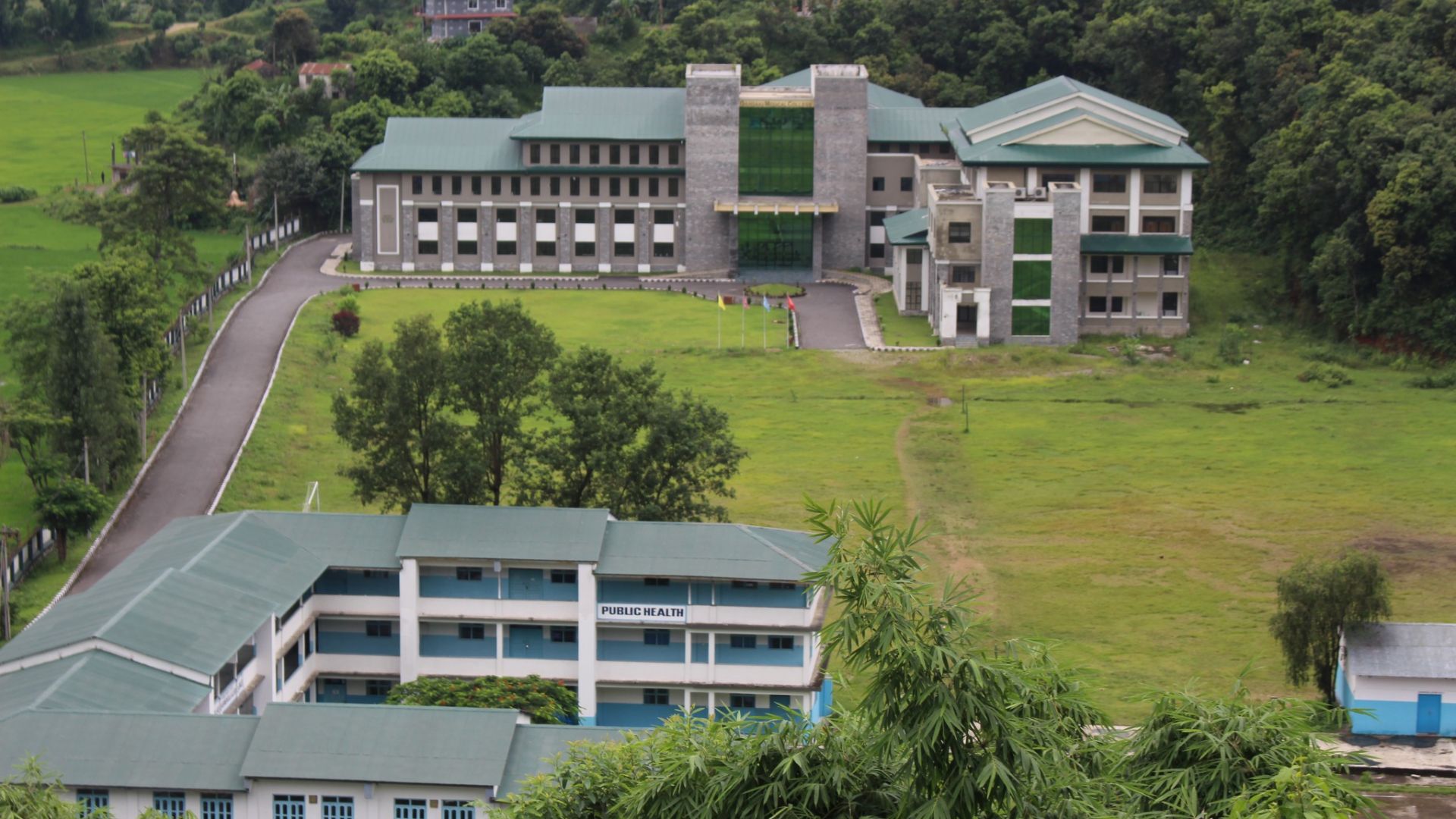
Affiliated with Tribhuvan University
Offered at Gandaki Medical College Teaching Hospital and Research Centre, Pokhara
Academic level: Bachelor’s degree
Duration: 4 years
Entrance examination: MECEE-BL 2026
License examination: Pharmacist License Exam of the Nepal Pharmacy Council
Seat allocation at GMC: 20
Focused on pharmaceutical sciences and professional pharmacy practice
Supports roles in community pharmacy, hospital pharmacy, technology, research, and pharmaceutical management
Admission follows the framework of the Medical Education Commission
The Bachelor of Pharmacy curriculum is arranged across four academic years and focuses mainly on professional pharmacy courses together with supporting subjects that strengthen pharmaceutical knowledge and practice. The course develops students from foundational science and chemistry into advanced study in pharmaceutics, pharmacology, medicinal chemistry, analysis, hospital pharmacy, industrial pharmacy, and pharmacotherapeutics.
First Year
Anatomy, Physiology and Pathology
Biochemistry
Pharmaceutical Inorganic Chemistry
Pharmaceutical Organic Chemistry
Pharmacognosy I
Pharmaceutical Microbiology
Mathematics
Second Year
Pharmaceutics I (Physical Pharmacy)
Pharmacology I
Biopharmaceutics and Pharmacokinetics
Pharmacognosy II
Medicinal Chemistry I
Pharmaceutical Management
Third Year
Pharmacology II
Pharmaceutical Engineering
Pharmaceutics II (Dosage Forms and Formulation)
Pharmaceutical Analysis and Quality Assurance I
Medicinal Chemistry II
Biostatistics and Research Methodology
Fourth Year
Social Pharmacy and Pharmaceutical Jurisprudence
Clinical and Hospital Pharmacy
Pharmaceutical Analysis and Quality Assurance II
Pharmaceutics III (Industrial Pharmacy)
Pharmacotherapeutics
Prepare qualified pharmacists for community and hospital pharmacy practice
Develop specialists in technology and research
Prepare managers of pharmaceutical services
Build competence in different scientific aspects of pharmacy
Develop broad understanding of the scientific principles and techniques of pharmaceutical sciences
Prepare graduates for postgraduate study and research
Support the role of pharmacists as vital members of the health care team
The Bachelor of Pharmacy program is intended for students who want to enter the pharmacy profession through a structured university-affiliated degree. Its scope extends across community pharmacy, clinical pharmacy, hospital pharmacy, regulatory control, drug management, pharmaceutical industry, quality assurance, academic activities, training activities, and research. The program combines scientific learning with professional preparation so that graduates can work in both service and technical roles within the health sector.
At Gandaki Medical College, this scope is strengthened by the wider academic and medical environment of the institution. Students study in a health science setting that supports interdisciplinary learning and provides access to student facilities within Pokhara. After completing the degree and the required licensure pathway, graduates may move into professional pharmacy practice, industry-related roles, research, academic work, and further study in pharmacy and related fields.
Graduates of the Bachelor of Pharmacy program are expected to be able to:
Competently handle dispensing, patient counseling, procurement, drug storage, formulation, and small-scale or large-scale production
Work as a team member of health workers in clinical settings
Evaluate drug interaction and avoid drug incompatibility
Provide drug and poison information to doctors, health personnel, and users
Manage hospital pharmacy services
Provide over-the-counter drugs rationally to the community and create awareness
Plan, manage, and evaluate retail and wholesale pharmacies and drug industries
Continue further study and research in pharmaceutical fields
Work as an academician in educational institutions
Carry out drug quality assessment using different methods
Monitor and evaluate quality assurance systems while serving in drug industry roles
Inspect drug manufacturing plants, storage conditions, drug handling, drug distribution, use, and record keeping
Work in industry as a production manager, marketing manager, or quality control manager
The program includes academic and professional areas that support step-by-step skill development throughout the four-year course.
Pharmaceutical Inorganic Chemistry
Pharmaceutical Organic Chemistry
Pharmacognosy
Pharmaceutical Microbiology
Pharmaceutics
Pharmacology
Biopharmaceutics and Pharmacokinetics
Medicinal Chemistry
Pharmaceutical Management
Pharmaceutical Engineering
Pharmaceutical Analysis and Quality Assurance
Clinical and Hospital Pharmacy
Social Pharmacy and Pharmaceutical Jurisprudence
Industrial Pharmacy
Pharmacotherapeutics
Biostatistics and Research Methodology
The Bachelor of Pharmacy program follows a structured academic pattern that combines foundational sciences, professional pharmacy subjects, applied learning, and research-oriented study. Students move from core scientific understanding to practice-related pharmacy education and specialized pharmaceutical subjects over four academic years.
Classroom-based study in basic and professional pharmacy subjects
Progressive subject structure across four academic years
Applied learning in dispensing, patient counseling, and pharmaceutical services
Study in formulation, dosage forms, quality assurance, and industrial pharmacy
Clinical and hospital pharmacy learning
Research-oriented components through biostatistics and research methodology
Professional preparation for service, management, academic, and industry roles
Graduates of the Bachelor of Pharmacy program may move toward roles such as:
Community pharmacist
Hospital pharmacist
Clinical pharmacy team member
Specialist in technology and research
Manager of pharmaceutical services
Regulatory control and drug management professional
Pharmaceutical industry professional
Quality assurance professional
Academic and training professional
Research-related professional
Production manager
Marketing manager
Quality control manager
Scholarship provisions for Bachelor of Pharmacy follow the national medical education legal and regulatory framework
Scholarship processes are guided by the National Medical Education Act, 2018 and the National Medical Education Regulations, 2020
Scholarship-related admission procedures are aligned with the framework used by the Medical Education Commission
Gandaki Medical College states that scholarships are available for 10 percent of the annual student intake
The program is offered under the affiliation of Tribhuvan University
It is a four-year pharmacy degree with a structured progression from basic science to professional pharmacy practice
The course prepares graduates for community, hospital, regulatory, industry, and research roles
Students study in a broader health science environment at Gandaki Medical College Teaching Hospital and Research Centre
The college provides library and internet facilities, hostel support, cafeteria services, and student spaces
The institution is located in Pokhara, an important academic and service center
Scholarship provisions apply within the institutional and national framework
Seat availability for Bachelor of Pharmacy at GMC is 20
Admission to Bachelor of Pharmacy at Gandaki Medical College follows the integrated admission process used for health science programs in Nepal through the Medical Education Commission. Applicants must meet the academic eligibility requirement and complete the entrance-based admission process.
Study Physics, Chemistry, and Biology from a recognized educational institution
Pass Proficiency Certificate Level or Grade 12 Science Group with at least 50 percent or 2.4 CGPA
Or complete A-Level or another similar program with Physics, Chemistry, and Biology and equivalent academic standing
Or complete Proficiency Certificate Level or Diploma in Health Science in a related field with the required marks for the related academic program
Or complete a relevant diploma pathway with required marks, Grade 12 Science equivalence, and registration in the concerned council where applicable
Appear in MECEE-BL 2026
Obtain at least the minimum 50 percentile in the integrated admission process
Follow the merit-based admission procedure
Submit the required original documents and one photocopy set at the time of admission
Applicants selected for admission are required to submit the following documents:
Certificate of qualification, transcript, and character certificate of 10+2 and SLC/SEE or equivalent
Copy of citizenship or passport
Admit card of the entrance examination
Documents submitted for reservation
Certificate of equivalence for students with certificates from foreign institutions
Original documents and one photocopy set as required during admission processing
The entrance examination format for enrollment in the Bachelor of Pharmacy program is MECEE-BL 2026. One mark is awarded for each correct answer, and 0.25 mark is deducted for each wrong answer. To pass the integrated admission process, candidates must obtain at least the minimum 50 percentile. Admission is then completed through the merit-based selection and document submission process.
For academic continuation, students in the Bachelor of Pharmacy program must pass all subjects within the course duration plus four additional years from the start of the academic session. Admission is cancelled after the expiry of that period if the required completion standard is not met. After completing the academic program, graduates move toward the Pharmacist License Exam under the Nepal Pharmacy Council licensure pathway.
The Bachelor of Pharmacy program at Gandaki Medical College offers a structured academic route into pharmacy through a four-year bachelor’s degree under Tribhuvan University. The curriculum builds foundational knowledge in pharmaceutical sciences and then expands into pharmacology, pharmaceutics, medicinal chemistry, quality assurance, hospital pharmacy, industrial pharmacy, and pharmacotherapeutics.
Within the wider setting of Gandaki Medical College Teaching Hospital and Research Centre, the program benefits from a multidisciplinary health science environment in Pokhara. For students seeking a pharmacy degree within a medical college setting, Bachelor of Pharmacy at GMC offers a clear academic and professional pathway.
The Bachelor of Pharmacy program runs for four years.
The program is affiliated with Tribhuvan University.
Admission to Bachelor of Pharmacy requires MECEE-BL 2026.
The seat allocation for Bachelor of Pharmacy at Gandaki Medical College is 20.
Applicants must have studied Physics, Chemistry, and Biology and passed Grade 12 Science, Proficiency Certificate Level, A-Level, or another eligible equivalent pathway with at least 50 percent or 2.4 CGPA, or meet the related diploma-based eligibility conditions.
The program is linked to the Pharmacist License Exam of the Nepal Pharmacy Council.
Graduates may work in community pharmacy, hospital pharmacy, pharmaceutical services, regulatory areas, industry, quality assurance, academics, training, and research.
Yes. Scholarship provisions apply under the national medical education framework, and Gandaki Medical College states that scholarships are available for 10 percent of the annual student intake.