The Bachelor in Medical Laboratory Technology (BSc MLT) at Gandaki Medical College GMC Pokhara is offered by Gandaki Medical College Teaching Hospital and Research Centre in Pokhara under the affiliation of Tribhuvan University. It is a four-year bachelor’s program designed to prepare graduates for professional work in medical laboratory technology through academic study, practical laboratory training, and project-based learning. The course develops competence in routine and special laboratory investigations in areas such as hematology, clinical biochemistry, microbiology, pathology, histopathology, and cytology. It also supports the development of skills in laboratory management, interpretation of results, research participation, and quality control systems required in laboratory services.
At Gandaki Medical College, the program is offered within a broader health science environment that includes clinical and academic support facilities. The college context includes a teaching-oriented setting, library and internet access, hostel support, cafeteria facilities, and a multidisciplinary academic environment with other health science programs. This setting supports laboratory education within a medical college structure connected to hospital-based learning and student support services.
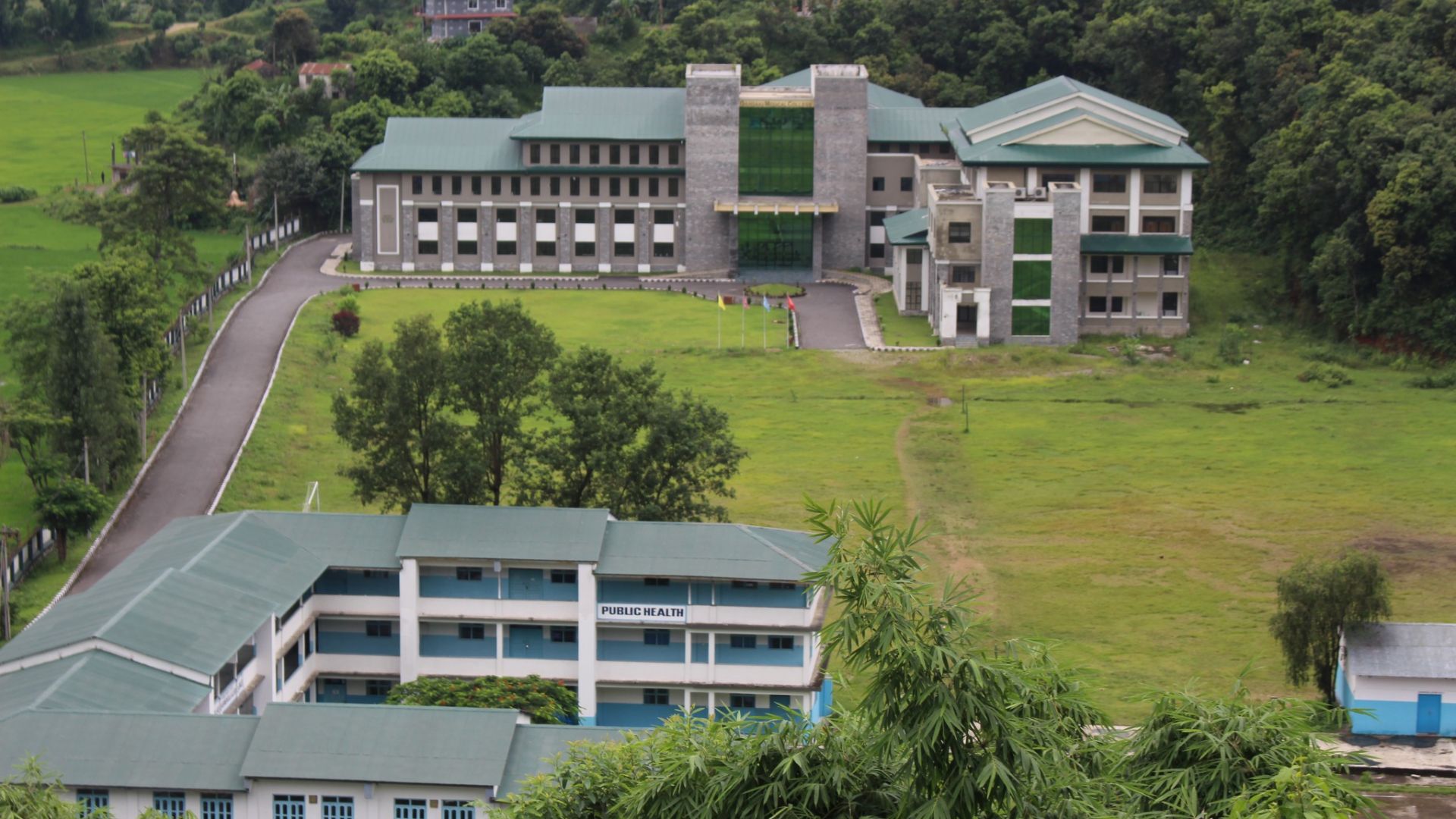
Affiliated with Tribhuvan University
Offered at Gandaki Medical College Teaching Hospital and Research Centre, Pokhara
Academic level: Bachelor’s degree
Duration: 4 years
Entrance examination: MECEE-BL
Seat allocation at GMC: 10
Focused on routine and special laboratory investigations
Includes theory classes, practical classes, and project assignment
Covers microbiology, clinical biochemistry, hematology, and histopathology and cytology
Scholarship provisions apply within the national medical education framework
The BSc MLT curriculum is structured across four academic years and is organized around the core laboratory science areas that form the foundation of medical laboratory practice. The course combines theory, practical classes, and project assignment so that students can build scientific understanding together with technical laboratory competence.
Major subject areas:
Medical Microbiology
Clinical Biochemistry
Hematology
Histopathology and Cytology
First Year
Medical Microbiology
Clinical Biochemistry
Hematology
Pathology
Clinical Anatomy
Clinical Physiology
Second Year
Medical Microbiology
Clinical Biochemistry
Hematology
Histocytopathology
Clinical Pharmacology
Forensic Medicine and Medical Jurisprudence
Third Year
Medical Microbiology
Clinical Biochemistry
Hematology
Histocytopathology
Biostatistics
Research Methodology
Fourth Year
Medical Microbiology
Clinical Biochemistry
Hematology
Histocytopathology
Health Policy and Health System
Project Work
Perform routine laboratory investigations independently
Perform special laboratory investigations on clinical and non-clinical samples
Interpret laboratory results and explain the principle behind investigations
Assist and take part in research work
Participate in teaching-learning activities
Set up district-level and zonal-level medical laboratories
Introduce quality control systems to support quality test results
Perform managerial work such as supervision, reporting, and inventory maintenance
The BSc MLT program is intended for students who want to enter the laboratory science field through a structured bachelor’s degree in medical laboratory technology. Its scope includes laboratory investigations, result interpretation, reagent preparation, quality control, teaching-learning participation, research support, and laboratory management. The course is suited to students who want a professional role in diagnostic and laboratory-based health services.
At Gandaki Medical College, the scope of the program is supported by a broader medical education environment in Pokhara. Students study within a health science institution that also supports hospital-linked learning, academic coordination, and student facilities. After completing the degree, graduates may move into laboratory service roles, research-related settings, blood banks, hospitals, and industry-based laboratory work.
Graduates of the BSc MLT program are expected to be able to:
Perform routine laboratory investigations independently
Perform special laboratory investigations on clinical and non-clinical samples
Interpret investigation results accurately
Prepare reagents required for routine and special investigations
Assist and participate in research work
Set up district-level and zonal-level medical laboratories
Introduce and maintain quality control systems in laboratories
Carry out managerial responsibilities in laboratory settings
The program includes academic and practical areas that support skill development in laboratory science.
Medical Microbiology
Clinical Biochemistry
Hematology
Pathology
Histopathology and Cytology
Clinical Anatomy
Clinical Physiology
Clinical Pharmacology
Forensic Medicine and Medical Jurisprudence
Biostatistics
Research Methodology
Health Policy and Health System
Project Work
Practical laboratory classes across the course duration
The BSc MLT program follows a blended academic structure that combines theory-based study with practical laboratory work and project assignment. Students study core laboratory science subjects across all four years while also developing applied skills through practical classes and academic project work.
Theory classes in major laboratory science subjects
Practical classes in laboratory investigation areas
Project assignment as part of the course structure
Progressive study across microbiology, biochemistry, hematology, and histopathology and cytology
Research-related learning through biostatistics and research methodology
Academic preparation linked to laboratory quality control and management functions
Graduates of the BSc MLT program may move toward roles such as:
Medical laboratory technologist
Laboratory professional in hospitals
Laboratory professional in research laboratories
Laboratory professional in blood banks
Laboratory professional in industry laboratories
Quality control-related laboratory roles
Research support roles
Teaching-learning support roles in laboratory education
Laboratory management and supervision roles
Scholarship provisions for BSc MLT follow the national medical education legal and regulatory framework
Scholarship-related processes are guided by the National Medical Education Act, 2018 and the National Medical Education Regulations, 2020
Admission and scholarship procedures are aligned with the framework used by the Medical Education Commission
Gandaki Medical College states that scholarships are available for 10 percent of the annual student intake
The program is offered under the affiliation of Tribhuvan University
It is a four-year bachelor’s program focused on laboratory science and diagnostic investigations
The curriculum includes theory, practical classes, and project assignment
The course covers core areas such as microbiology, clinical biochemistry, hematology, and histopathology and cytology
Students study within a broader health science environment at Gandaki Medical College Teaching Hospital and Research Centre
The college provides library and internet facilities, hostel support, cafeteria services, and student learning spaces
Scholarship provisions apply within the institutional and national framework
Seat availability for BSc MLT at GMC is 10
Admission to BSc MLT at Gandaki Medical College follows the integrated admission process used for health science programs in Nepal through the Medical Education Commission. Applicants must meet the academic eligibility standard and complete the entrance-based admission process.
Study Physics, Chemistry, and Biology from a recognized educational institution
Pass Proficiency Certificate Level or Grade 12 Science Group with at least 50 percent or 2.4 CGPA/GPA
Or complete A-Level or another similar program with Physics, Chemistry, and Biology and equivalent academic standing
Or pass Proficiency Certificate Level or Diploma in Medical Lab Technology with at least 50 percent aggregate marks and registration with the Nepal Health Professional Council
Or complete Proficiency Certificate or Diploma in a related Health Science field with the required marks, Physics, Chemistry, and Biology background, Grade 12 Science equivalence, and registration in the concerned council where applicable
Appear in MECEE-BL
Follow the merit-based admission procedure
Submit the required documents at the time of admission
Applicants selected for admission are required to submit the following documents:
Certificate, transcript, and character certificate of 10+2 or equivalent
Certificate, transcript, and character certificate of SLC/SEE or equivalent
Copy of citizenship or passport
Admit card of the entrance examination
Equivalence letter for applicants from A-Level or other equivalent grading systems where applicable
Registration-related documents for eligible diploma pathways where applicable
Original documents and photocopies as required during admission processing
The entrance examination format for admission to BSc MLT is MECEE-BL. Admission is completed through the entrance-based selection process used for health science programs under the integrated admission system.
For academic continuation, students in the BSc MLT program must pass all subjects within the course duration plus four additional years from the start of the academic session. Admission is cancelled after the expiry of that period if the required completion standard is not met. The course structure includes theory classes, practical classes, and project assignment across four years.
The BSc MLT program at Gandaki Medical College offers a structured academic pathway into medical laboratory technology through a four-year bachelor’s degree under Tribhuvan University. The course is organized to develop knowledge and practical skill in microbiology, clinical biochemistry, hematology, pathology, histopathology and cytology, research methodology, and laboratory management.
Within the wider setting of Gandaki Medical College Teaching Hospital and Research Centre, the program benefits from a broader health science environment in Pokhara. For students seeking a bachelor’s degree in medical laboratory technology within a multidisciplinary medical college, BSc MLT offers a clear academic and professional route.
The BSc MLT program runs for four years.
The program is affiliated with Tribhuvan University.
Admission to BSc MLT requires MECEE-BL.
The seat allocation for BSc MLT at Gandaki Medical College is 10.
The main subject areas are Medical Microbiology, Clinical Biochemistry, Hematology, and Histopathology and Cytology.
Yes. Eligible diploma pathway applicants may apply if they meet the required marks, subject background, equivalence, and council registration conditions where applicable.
Graduates may work in hospitals, research laboratories, blood banks, and industry laboratories in laboratory-related roles.
Yes. Scholarship provisions apply under the national medical education framework, and Gandaki Medical College states that scholarships are available for 10 percent of the annual student intake.