The Bachelor of Business Administration (BBA) at Himalayan WhiteHouse International College, Putalisadak, Kathmandu, is a four-year undergraduate management program affiliated with Purbanchal University (PU). The program runs across eight semesters and carries 120 credit hours.
Its curriculum moves from business mathematics, economics, accounting, communication, and management fundamentals into finance, marketing, human resources, operations, information systems, research, entrepreneurship, specialization courses, strategic management, and internship work.
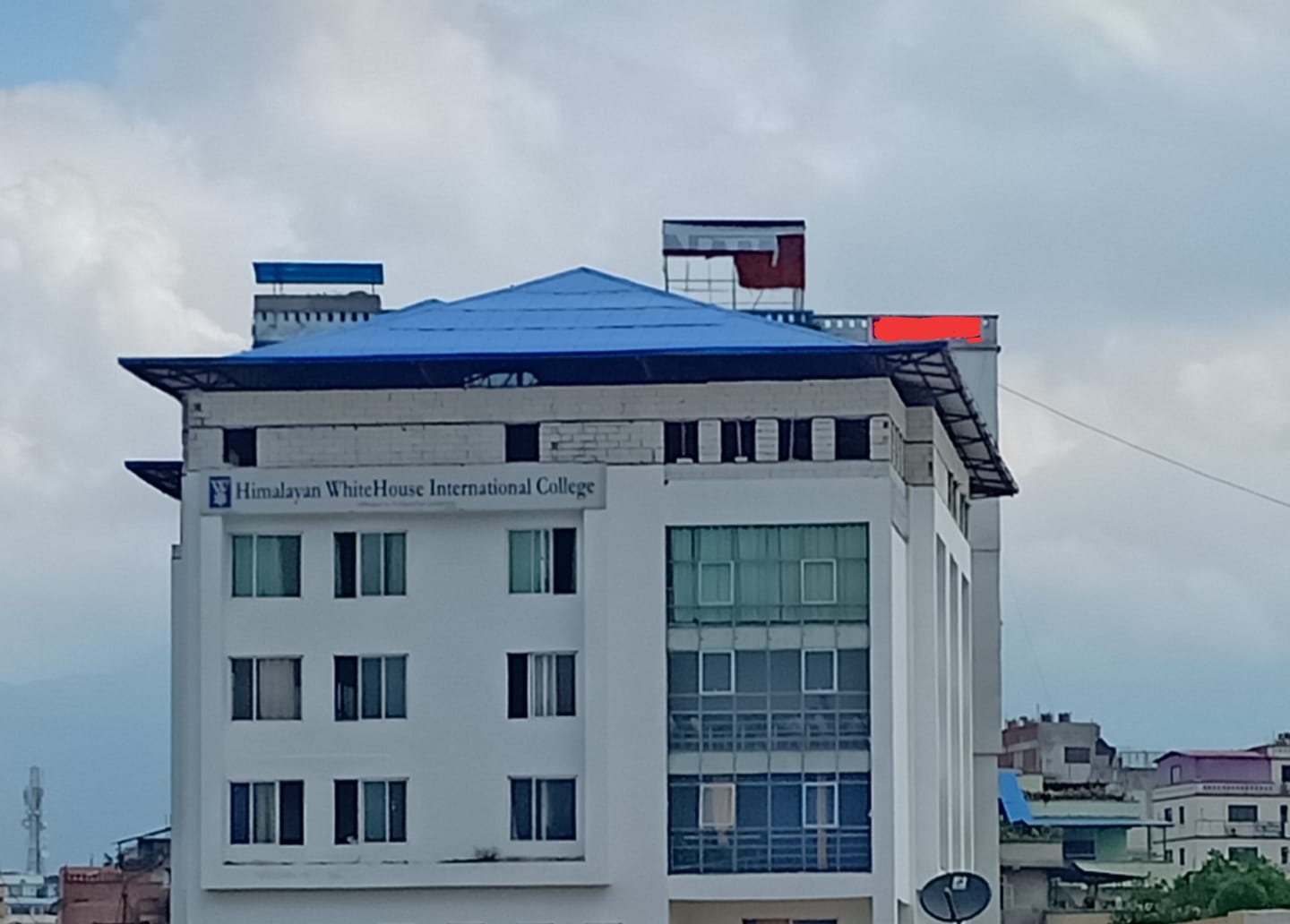
Course: Bachelor of Business Administration (BBA)
College: Himalayan WhiteHouse International College
Location: Putalisadak, Kathmandu
Affiliation: Purbanchal University (PU)
Duration: 4 years
Academic Structure: 8 semesters
Total Credit Hours: 120
Seat Capacity: 144
Entrance: WhiteHouse Management Admissions Test (WMAT)
Internship: 5 credit hours
The BBA curriculum is structured around foundation courses, core management subjects, specialization courses, capstone study, and internship. Purbanchal University assigns 18 credit hours to foundation courses, 76 to core courses, 15 to specialization, 6 to capstone courses, and 5 to internship.
Foundation study includes Business Mathematics, English, Business Economics, Business Communication, Macroeconomic Analysis and Policy, and Business Statistics. These subjects establish the quantitative, economic, and communication base used in later management courses.
Core courses cover Financial Accounting, Principles of Management, Principles of Marketing, Cost and Management Accounting, Business Finance, Database Management System, Marketing Management, Business Environment of Nepal, Business Law, Financial Management, Taxation and Auditing, Human Resource Management, Quantitative Techniques for Business, Research Methodology and Report Writing, Production and Operations Management, Banking and Insurance, Project Management, Organizational Behavior, Management Information System, Public Finance, Total Quality Management, Tourism Management, Entrepreneurship Development, Supply Chain Management, and E-commerce.
| Semester | Main Courses | Credits |
|---|---|---|
| Semester I | Business Mathematics, English, Business Economics, Financial Accounting-I, Principles of Management | 15 |
| Semester II | Business Communication, Macroeconomic Analysis and Policy, Business Statistics, Principles of Marketing, Financial Accounting-II | 15 |
| Semester III | Cost and Management Accounting, Business Finance, Database Management System, Marketing Management, Business Environment of Nepal | 15 |
| Semester IV | Business Law, Financial Management, Taxation and Auditing, Human Resource Management, Quantitative Techniques for Business | 15 |
| Semester V | Research Methodology and Report Writing, Production and Operations Management, Banking and Insurance, Project Management, Organizational Behavior | 15 |
| Semester VI | Management Information System, Public Finance, Total Quality Management, Tourism Management, Entrepreneurship Development | 15 |
| Semester VII | Supply Chain Management, E-commerce, Internship, two specialization courses | 15 |
| Semester VIII | International Business, Strategic Management, three specialization courses | 15 |
The complete program consists of 40 course components, including internship.
Students choose a specialization area and complete five specialization courses. The curriculum provides five areas:
Marketing
Finance
Human Resource Management
Accounting
International Business
Marketing includes subjects such as Consumer Behavior, Advertising and Sales Promotion, Sales and Distribution Management, Marketing of Services, Brand Management, and Retail Management.
Finance covers areas such as Capital Structures, Working Capital Management, Financial Institutions and Market, Financial Derivatives and Risk Management, Capital Investment and Financing Decisions, and Security Analysis and Portfolio Management.
Human Resource Management includes Designing and Managing HR System, Training and Development, Organization Development, Leadership and Team Building, Industrial Relations, and Conflict Management and Negotiation. Accounting and International Business have separate specialization course groups.
Eligibility: Applicants seeking admission to the BBA program at Himalayan WhiteHouse International College need a minimum CGPA of “C” with not less than D+ in individual subjects in +2 or equivalent examinations.
After meeting the academic requirement, applicants have to appear for the WhiteHouse Management Admissions Test (WMAT).
The BBA program has a stated intake capacity of 144 students.
Internship is a formal part of the BBA curriculum and carries 5 credit hours. Students complete the internship after the seventh semester for practical exposure and business orientation. The internship period is eight weeks, followed by preparation of a report and presentation.
The curriculum also includes Research Methodology and Report Writing, Project Management, Database Management System, Management Information System, and E-commerce. Database Management System includes SQL laboratory work and a case study involving the database system of an organization.
Within the wider college environment, students can also participate in career guidance, workshops, training activities, guest sessions, internship-related activities, and employer interaction through the WhiteHouse Placement Cell.
For theoretical BBA courses, the evaluation structure allocates 30 marks to Internal Assessment and 70 marks to the Semester End Examination. The semester-end written examination carries 70 marks and has a duration of three hours.
Internal assessment includes class tests or term-paper work, attendance, group discussion or class participation, and presentation. The curriculum requires at least 80% attendance in each course for eligibility to appear in the semester-end examination, subject to the provisions stated in the university evaluation framework.
The combination of foundation, core, specialization, and practical courses allows students to work on several areas during the BBA program, including:
Business communication and presentation
Quantitative and statistical analysis
Accounting and financial analysis
Marketing and consumer analysis
Human resource and organizational management
Business research and report writing
Database and management information systems
Project and operations management
Entrepreneurship and business planning
Strategic and international business analysis
These areas develop progressively across the eight semesters rather than through a single subject.
The BBA curriculum covers functions commonly found across business organizations, including marketing, finance, accounting, human resources, operations, information systems, project management, and entrepreneurship.
Graduates may explore opportunities in business organizations, banking and finance, retail, consumer businesses, information technology companies, advertising, and related organizational settings. Possible functional areas include marketing, human resource management, finance, administration, and business information systems. Entrepreneurship is also addressed directly through the Entrepreneurship Development course.
Career direction will depend on the specialization selected, individual skills, academic performance, practical experience, and the requirements of particular employers.
The BBA is a four-year program organized into eight semesters.
The program carries a total of 120 credit hours.
The BBA at Himalayan WhiteHouse International College is affiliated with Purbanchal University.
Applicants need a minimum CGPA of “C” with not less than D+ in individual subjects in +2 or equivalent examinations.
Yes. Eligible applicants have to appear for the WhiteHouse Management Admissions Test (WMAT).
The stated intake capacity is 144 students.
Yes. Internship is a 5-credit component completed after the seventh semester and includes eight weeks of organizational exposure, report preparation, and presentation.
The curriculum includes specialization areas in Marketing, Finance, Human Resource Management, Accounting, and International Business.
The curriculum includes accounting, economics, mathematics, statistics, communication, marketing, finance, human resources, business law, operations, information systems, research, project management, entrepreneurship, international business, strategic management, and specialization courses.