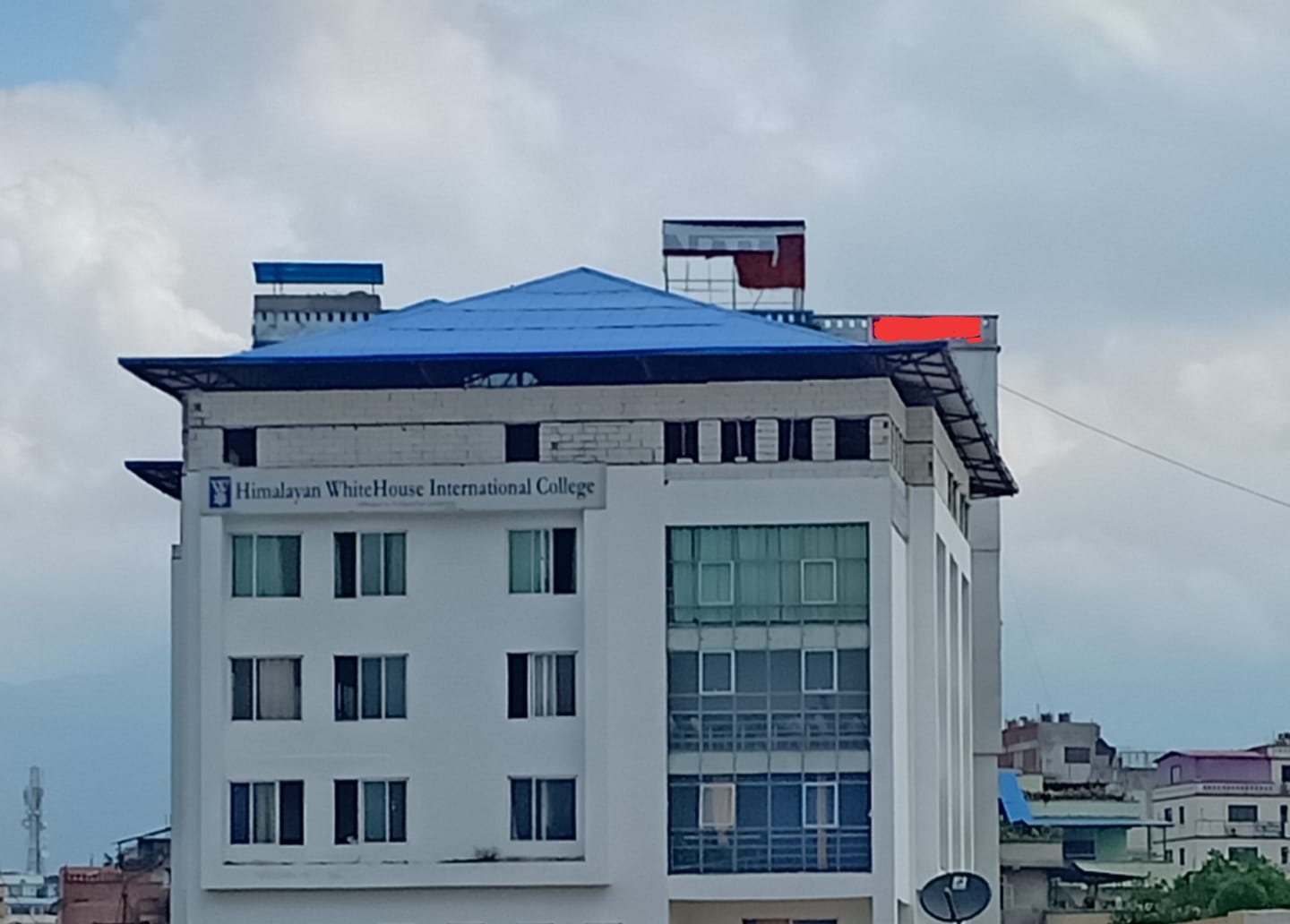
The Executive Master of Business Administration (EMBA) at Himalayan WhiteHouse International College, Putalisadak, Kathmandu, is a two-year graduate management program under Purbanchal University (PU). The program runs across four semesters and carries 69 credit hours. It is structured for working professionals and combines management foundations with analytical study, organizational behavior, finance, marketing, strategy, information systems, operations, specialization courses, and thesis work.
Professional experience is an important part of the program's learning context. Classroom study incorporates organizational cases and experience-sharing among participants, allowing management concepts to be examined alongside situations encountered in professional settings.
Course: Executive Master of Business Administration (EMBA)
College: Himalayan WhiteHouse International College
Location: Putalisadak, Kathmandu
Affiliation: Purbanchal University
Duration: 2 years
Academic Structure: 4 semesters
Total Credit Hours: 69
Seat Capacity: 30
Target Group: Working professionals
Admission Test: WhiteHouse Graduate Admission Test (WGAT)
Specialization Areas: Financial Management, Human Resource Management, Marketing Management, Operations Management
Final Academic Component: Thesis Work
Eligibility: Applicants must have completed a bachelor's degree in any discipline with a minimum of 40% marks or 2.00 CGPA from a university recognized by Purbanchal University.
Work experience requirements depend on undergraduate performance:
Applicants with 45% or above in the bachelor's degree require at least one year of work experience.
Applicants with 40% or above but below 45% require at least two years of work experience after completing the bachelor's degree.
This combination of academic qualification and professional experience distinguishes EMBA admission from a general graduate management route.
Eligible applicants enter the WhiteHouse Graduate Admission Test (WGAT) process.
The EMBA selection procedure includes:
Written Test
Interview
Successful applicants in the WGAT are eligible for admission to the program.
The curriculum progresses from core management and analytical subjects into strategic study and specialization.
| Semester | Main Subjects |
|---|---|
| Semester I | Business Management, Microeconomic Analyses, Business Statistics, Management Accounting, Human Resources Management, Managerial Communication |
| Semester II | Macroeconomic Analyses, Quantitative Techniques, Organizational Psychology, Marketing Management, Corporate Financial Management, Research Methodology |
| Semester III | Legal Framework of Business, Management Information Systems, Strategic Management, Productions and Operations Management, Specialization I, Specialization II |
| Semester IV | International Business, Total Quality Management, Specialization III, Specialization IV, Thesis Work |
Core subjects carry students through business management, economic analysis, statistics, accounting, communication, organizational behavior, marketing, finance, research, strategy, information systems, operations, international business, and quality management.
The final two semesters provide greater concentration through four specialization courses and thesis work.
Students choose one specialization area and take two specialization subjects in Semester III and two more in Semester IV.
Subjects include Management of Financial Institutions and Markets, International Financial Management, Intermediate Financing and Working Capital Management, Financial Information Systems, Investment Management and Analysis, Portfolio Management, Capital Structure Management, and Analysis of Derivative Instruments and Alternative Investments.
The HRM area includes Human Resources Planning and Development Strategies, Human Resource Information Systems, Organizational Change and Development Strategies, Leadership Development for Organizational Growth, Multi-Cultural and Global Management, Management of Human Resource Relations, Human Resources Training and Development, and Business Negotiation Skills.
Marketing subjects include Consumer Behavior, New Product Development Strategies, Strategic Brand Management, Marketing Research, Service Marketing Strategies, International Marketing Strategies, Promotions Management, and Electronic Marketing Strategies.
Operations study includes Occupation, Health and Safety Systems, Outsourcing Strategies, Operations Research, Productivity Management, Maintenance Strategies, Management of Supply Chain and Logistics System, Production Planning and Control, and Project Management.
The EMBA is designed around participants who already have workplace experience. One part of its academic approach is the exchange of practical experience among participants, particularly when examining management, leadership, and decision-making issues.
Case-based discussion also has a place in the program. This allows participants to connect management concepts with organizational situations rather than treating every subject as an isolated theoretical area.
The schedule is designed to allow participants to continue their professional work while studying, with flexibility arranged in agreement with faculty.
Within the wider college environment, MBA and EMBA students also have access to presentations, case studies, field visits, research activities, training, and non-credit activities associated with management education.
Research Methodology is studied in Semester II, providing an academic base for structured investigation and research work.
Thesis Work appears in Semester IV as the final research component of the EMBA curriculum.
The sequence places research before the thesis stage so that students encounter research methods before completing their final academic work.
Through its management, analytical, specialization, research, and professional components, the EMBA provides opportunities to strengthen abilities related to:
Managerial decision-making
Business and economic analysis
Management accounting and corporate finance
Human resource management
Managerial communication
Marketing management
Organizational behavior and psychology
Strategic management
Information systems
Operations management
Leadership and organizational change
Research and thesis preparation
Professional experience remains an important part of how these areas are applied during the program.
The EMBA curriculum relates to managerial functions found across different organizational settings. Relevant areas include business operations, financial management, marketing, human resources, organizational development, information systems, operations, strategy, and general administration.
The program may be particularly relevant to professionals who want to connect existing workplace experience with structured graduate study in management.
Career outcomes depend on previous professional experience, individual performance, specialization, organizational requirements, and available opportunities. The degree itself does not guarantee a particular managerial position or career progression.
The EMBA may suit graduates who already have professional experience and want to continue working while completing postgraduate management study.
Applicants should be prepared for quantitative subjects, accounting, economics, communication, research, strategic management, organizational analysis, specialization courses, and thesis work.
The program differs from an entry-level management degree because professional experience is built into its eligibility requirements and into the experience-sharing approach used in the learning environment.
The Executive Master of Business Administration is a two-year program organized across four semesters.
The EMBA at Himalayan WhiteHouse International College is under Purbanchal University.
The program carries 69 credit hours across four semesters.
Applicants need a bachelor's degree in any discipline with at least 40% marks or 2.00 CGPA. Work experience requirements vary according to bachelor's-level marks.
Applicants with 45% or above require at least one year of work experience. Those with 40% or above but below 45% require at least two years of work experience after completing the bachelor's degree.
Yes. Admission uses the WhiteHouse Graduate Admission Test (WGAT), with a written test and interview included in the selection process.
The four specialization areas are Financial Management, Human Resource Management, Marketing Management, and Operations Management.
Yes. Thesis Work is included in Semester IV. Research Methodology is studied earlier in Semester II.
The stated seat capacity is 30 students.