



The Bachelor in Information Technology (BIT) at Himalayan WhiteHouse International College, Putalisadak, Kathmandu, is a four-year undergraduate program under Purbanchal University (PU). It is organized across eight semesters and combines computing, programming, communication technology, mathematics, electronics, management, networking, database systems, web technologies, research, and project work.
A notable part of the curriculum is the sequence of project courses. Students encounter project work from the first semester and continue through later semesters before completing an application project in Semester VIII. Alongside programming and software development, the course covers computer networks, data communication, operating systems, data mining, software engineering, information systems, wireless communication, and elective study.
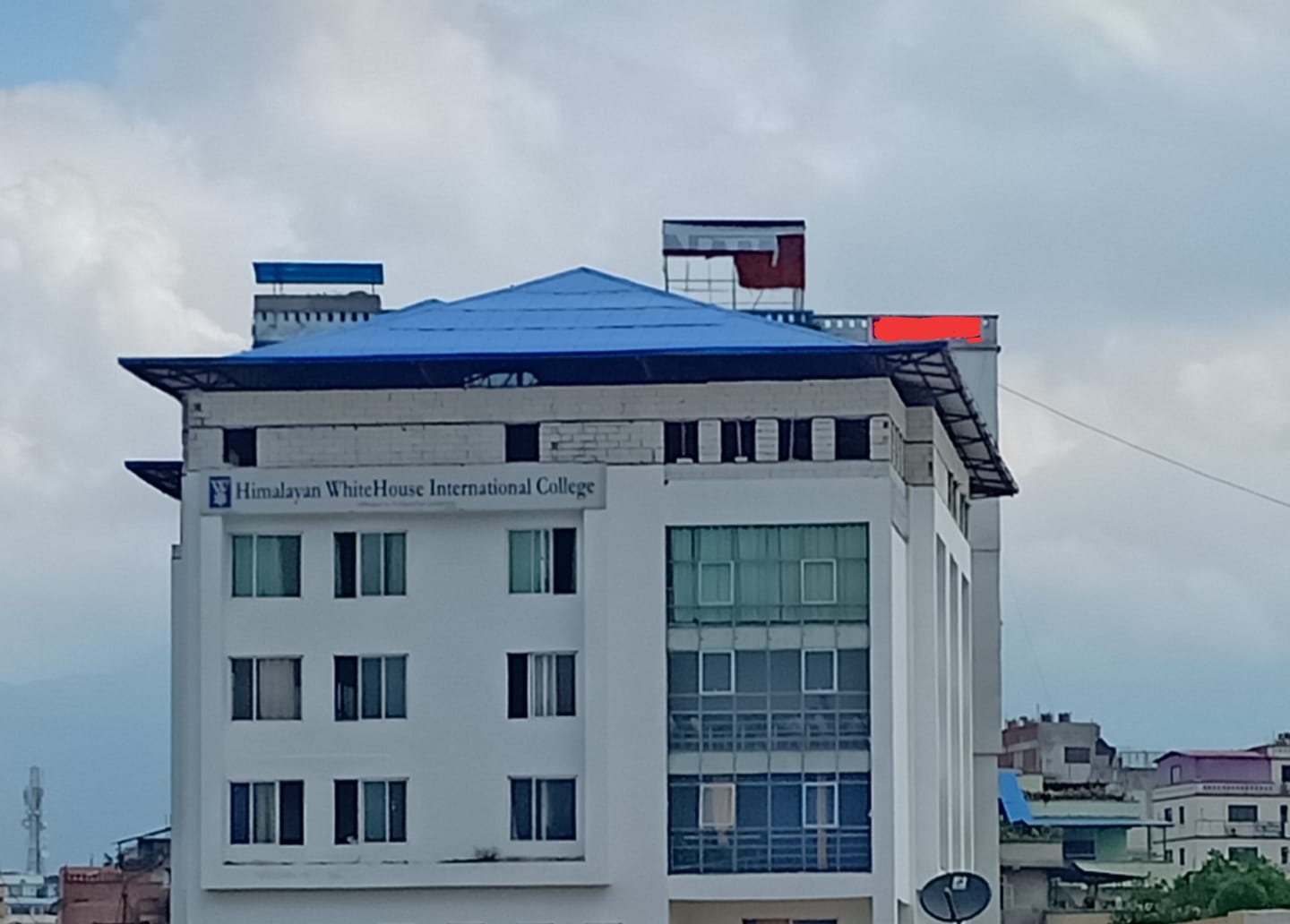
Course: Bachelor in Information Technology (BIT)
College: Himalayan WhiteHouse International College
Location: Putalisadak, Kathmandu
Affiliation: Purbanchal University
Duration: 4 years
Academic Structure: 8 semesters
Seat Capacity: 96
Academic Area: Information Technology
Learning Components: Lectures, tutorials, laboratory work, programming, research, and projects
Eligibility: From the new intake 2082-2083, applicants must have passed +2 or equivalent with at least a D grade in each subject, D+ under the old grading system, and an aggregate GPA of at least 2.0.
Applicants with Intermediate-level qualifications may qualify with at least 45% marks and 100 marks in Mathematics or Computer Science. A three-year Diploma in any stream is also included within the eligibility routes. For A Level applicants, the minimum requirement is an E grade in each subject or an aggregate of 45%.
The curriculum begins with computing fundamentals while retaining mathematics, communication, electrical systems, and management. Students then move into object-oriented programming, data structures, system analysis, databases, web technology, networking, operating systems, data mining, software engineering, and advanced information systems.
Project courses run through the academic sequence, giving students repeated opportunities to apply programming and system-development concepts.
| Semester | Main Subjects | Credits |
|---|---|---|
| Semester I | Mathematics-I, Fundamentals of Information Technology, Technical Communication, Basic Electrical System & Circuit, Principles of Management, Computer Programming-I, Project-I | 19 |
| Semester II | Mathematics-II, Electronics Devices & Circuits, Digital Logic, Object Oriented Programming in C++, Project-II, Financial Management & Accounting | 17 |
| Semester III | System Analysis & Design, Microprocessor & Assembly Language, Data Structure & Algorithm, User Interface Design, Project-III, Numerical Methods | 17 |
| Semester IV | Communication System, Computer Organization, Web Technology-I, Database Management System, Project-IV, Discrete Mathematics, Marketing Management | 19 |
| Semester V | Probability & Statistics, Society & Ethics in IT, Data Communication, Web Technology-II, Computer Graphics, Operating System, Project-V | 18 |
| Semester VI | Embedded System Programming, Computer Network, Data Mining & Data Warehousing, Advance Object-Oriented Programming, Project-VI, Research Methodology | 17 |
| Semester VII | Artificial Intelligence, Network Programming, Software Engineering, MIS, Elective-I, Project-VII | 18 |
| Semester VIII | E-commerce, Wireless Communication System, Software Project Management, Elective-II, App. Project | 16 |
The curriculum combines technical study with communication and management subjects. Principles of Management appears in the first semester, while Financial Management & Accounting and Marketing Management are included in later semesters. This gives students some exposure to organizational and business contexts alongside computing.
Programming begins in the first semester with Computer Programming-I. Project-I uses C programming and requires students to develop software, prepare written documentation, and give an oral presentation.
Semester II introduces Object Oriented Programming in C++, followed by Project-II. The project involves software development in an object-oriented programming environment and includes topic selection, requirements, algorithms, coding, implementation, and documentation.
Later study expands into Data Structure & Algorithm, Web Technology, Advance Object-Oriented Programming, Software Engineering, Network Programming, and Software Project Management. This progression moves students from basic coding toward larger application and system-development work.
Networking and communication form another substantial part of the BIT curriculum.
Students encounter Basic Electrical System & Circuit and electronics before moving into Communication System, Data Communication, Computer Network, Network Programming, Wireless Communication System, and related elective areas.
Computer Network includes network architecture, transmission, switching, TCP/IP, routing, transport protocols, application-layer services, and network security. Laboratory work includes setting up small networks and configuring network hardware and software.
The information-systems side of the degree includes System Analysis & Design, Database Management System, Management Information System, E-commerce, and Software Project Management.
BIT students study database systems alongside web development and data-oriented subjects.
Database Management System appears in Semester IV, while Web Technology-I and Web Technology-II span the fourth and fifth semesters. Data Mining & Data Warehousing is introduced in Semester VI and includes concepts such as data mining, data warehouse design, classification, prediction, association rules, clustering, and applications of data mining.
The curriculum also includes Research Methodology. Students study research design, sampling, data collection, statistical hypothesis testing, and research-report writing, linking technical study with structured academic investigation.
Project work is integrated throughout the BIT curriculum rather than being confined to the final semester.
Project-I begins with C programming. Project-II focuses on object-oriented software development, while Project-III applies visual programming tools. Later project courses involve web-based applications and professional application development.
Project-VII requires students to develop an application, submit written documentation, and give presentations. Its evaluation includes project work, documentation, presentation, and viva. Semester VIII concludes with an App. Project carrying four credits.
Elective study appears in the final year.
Semester VII elective options include:
GIS
Multimedia System
Cloud Computing
Distributed Processing
Theory of Computation
Internet and Intranet
Simulation and Modeling
Semester VIII elective options include:
Remote Sensing
Multimedia Communication
E-Governance
System Administration
Design and Analysis of Algorithm
Network Security and Cryptography
Image Processing and Pattern Recognition
These options allow later study to concentrate on selected areas within information technology.
Through programming, laboratory work, research, and repeated project courses, BIT students may develop abilities related to:
Programming and application development
Object-oriented software development
Data structures and problem solving
Database design and management
Web application development
Computer networking
Network programming
System analysis and design
Operating systems
Data mining and data warehousing
Software engineering
Research and technical reporting
Project documentation and presentation
Development in these areas depends on academic participation, laboratory practice, project performance, and individual technical work.
The academic areas covered by BIT connect with several information technology functions. Graduates may explore work related to software development, web development, IT support, database systems, network administration, system analysis, and other computing-based organizational roles.
The curriculum also provides exposure to software engineering, networking, information systems, data mining, wireless communication, project management, and selected electives. Career direction will depend on technical ability, project experience, further learning, and the requirements of individual organizations.
The Bachelor in Information Technology is a four-year undergraduate program organized across eight semesters.
The BIT program at Himalayan WhiteHouse International College is under Purbanchal University.
The stated intake capacity for BIT is 96 students.
Applicants may qualify through +2 or equivalent study with at least a D grade in each subject and an aggregate GPA of at least 2.0. Intermediate, three-year Diploma, and A Level routes are also covered by the current eligibility criteria.
Yes. Computer Programming-I and Project-I are included in Semester I. The first project uses C programming and includes software development, documentation, and presentation.
Yes. Relevant subjects include Data Communication, Computer Network, Network Programming, Wireless Communication System, and network-related elective options.
Yes. Project courses appear throughout the program, beginning with Project-I and continuing into later semesters. Semester VIII includes an App. Project.
Options include GIS, Cloud Computing, Multimedia System, Distributed Processing, Network Security and Cryptography, System Administration, E-Governance, Remote Sensing, and other listed electives.





-9075.jpg)




