The Master of Business Administration (MBA) at Himalayan WhiteHouse International College, Putalisadak, Kathmandu, is a two-year graduate management program under Purbanchal University (PU). The program is organized into four semesters and carries 69 credit hours.
The curriculum combines core management subjects with electives, seminars, specialization courses, research methodology, a thesis proposal, and a final thesis. Students begin with marketing, communication, accounting, business law, and decision sciences before moving into finance, human resources, economics, operations, entrepreneurship, information technology management, strategy, corporate governance, and specialized management study.
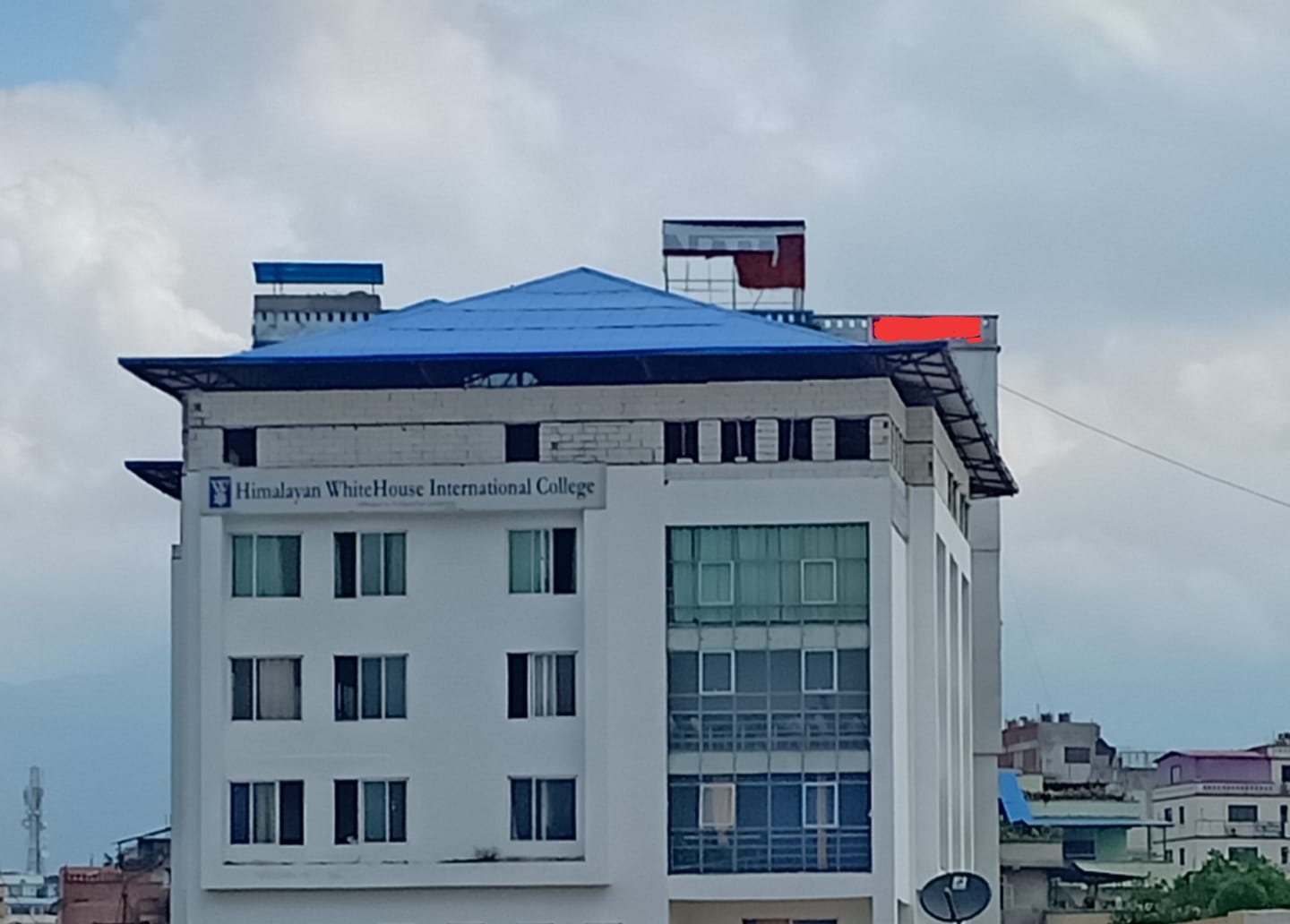
Course: Master of Business Administration (MBA)
College: Himalayan WhiteHouse International College
Location: Putalisadak, Kathmandu
Affiliation: Purbanchal University
Duration: 2 years
Academic Structure: 4 semesters
Total Credit Hours: 69
Seat Capacity: 33 Spring / 33 Fall
Admission Test: WhiteHouse Graduate Admission Test (WGAT)
Specialization Areas: Marketing, Finance, Human Resource Management, Operations and Supply Chain Management
Final Academic Component: Thesis
Eligibility: Applicants must have completed a bachelor's degree in any discipline from a university recognized by Purbanchal University. The minimum academic requirement is 45% marks or a 2.00 CGPA.
The program accepts applicants from different undergraduate academic backgrounds rather than restricting admission to students who previously studied management.
Applicants who meet the academic eligibility requirement enter the college's graduate admission process through the WhiteHouse Graduate Admission Test (WGAT).
The selection process includes:
Written Test
Presentation
Group Discussion
Interview
Successful performance in the admission process is required for enrollment.
The stated intake capacity is 33 students for the Spring session and 33 students for the Fall session.
The MBA curriculum totals 69 credit hours across four semesters. Each semester combines management theory with analytical, research, seminar, elective, or specialization work.
| Semester | Main Courses | Credits |
|---|---|---|
| Semester I | Marketing for Managers, Communication for Managers, Accounting for Managers-I, Legal Framework of Business, Decision Sciences, Elective-I | 16 |
| Semester II | Accounting for Managers-II, Human Resource Management & Organizational Behavior, Economics for Managers, Financial Management, Operations Management, Seminar I, Elective-II | 19 |
| Semester III | Entrepreneurship and Social Enterprises, Research Methodology and Thesis Proposal, Information Technology Management, Elective-III, Seminar II, Specialization I, Specialization II | 16 |
| Semester IV | International Business, Strategic Management, Corporate Governance and Corporate Social Responsibility, Seminar III, Specialization III, Specialization IV, Thesis | 18 |
The structure moves from broad managerial foundations toward specialization, research, strategic study, and thesis work.
Semester I establishes the program's core academic base through Marketing for Managers, Communication for Managers, Accounting for Managers-I, Legal Framework of Business, Decision Sciences, and an elective.
Marketing for Managers covers marketing management, market analysis, segmentation, targeting, positioning, competitive analysis, product and branding strategy, pricing, channels, and integrated marketing communication.
Communication for Managers focuses on professional communication in organizational settings, including the role and process of communication and the barriers that affect communication at work.
Semester II expands the management base through Accounting for Managers-II, Human Resource Management and Organizational Behavior, Economics for Managers, Financial Management, Operations Management, Seminar I, and Elective-II.
Accounting for Managers-II addresses management and cost accounting, budgeting, cost-volume-profit analysis, decision-making models, and performance evaluation.
The third semester marks a shift toward research and focused management study. Students take Entrepreneurship and Social Enterprises, Research Methodology and Thesis Proposal, Information Technology Management, an elective, Seminar II, and two specialization courses.
Research Methodology and Thesis Proposal prepares students for the research component that continues into the final semester.
Semester IV brings together International Business, Strategic Management, Corporate Governance and Corporate Social Responsibility, Seminar III, two further specialization courses, and a five-credit thesis.
The final stages therefore require students to connect management knowledge with specialization and independent academic research.
The MBA curriculum includes three elective stages.
Elective-I:
Principles and Contemporary Practices of Management
Introduction to Computing
Elective-II:
E-commerce and Digital Marketing
Introduction to Public Relations
Elective-III:
Organization Design and Change
Project Management
Students take one course from the relevant elective group.
Students select one of four specialization areas and complete four courses within that area.
Marketing options include:
Marketing Research
Product and Brand Management
Sales Management and Retailing
Service Marketing and CRM
Advertising Management
Finance options include:
Corporate Financial Reporting and Analysis
Capital Structure
Security Analysis and Investment Management
Management of Financial Institutions
Financial Derivatives and Engineering
HRM options include:
Team Building and Conflict Management
Industrial Relations and Labor Legislation
Training and Development
Talent Management
Performance Management: Systems and Strategies
Options include:
Inventory and Warehouse Management
Designing and Managing Supply Chain
Procurement and Materials Management
Network Design
Facility Location Management
Students complete four specialization subjects from the selected area.
The MBA environment at Himalayan WhiteHouse includes presentations, group discussions, case analysis, research-related work, industrial visits, and training activities alongside regular academic study.
The curriculum itself supports this approach through three seminars, electives, specialization subjects, Research Methodology and Thesis Proposal, and the final thesis.
The WhiteHouse Placement Cell also operates within the broader college environment, organizing career guidance, workshops, training, guest lectures, internship-related activities, employer interaction, and alumni activities.
The medium of instruction and evaluation for the MBA is English.
For theoretical courses, assessment is divided equally between internal evaluation and the semester-end examination:
Internal Assessment: 50 marks
Semester-End Examination: 50 marks
Semester-End Examination Duration: 3 hours
Students must secure at least 20 out of 50 in internal assessment to become eligible for the semester-end examination. The semester-end examination also carries a pass mark of 20 out of 50.
Internal assessment consists of class tests, attendance, presentation or assignment work, case studies and other class activities, and a term paper.
Attendance contributes directly to internal evaluation. The assessment framework marks attendance below 80% as NQ.
The academic structure gives students opportunities to develop abilities in:
Managerial decision-making
Business communication and presentation
Marketing analysis
Financial and accounting analysis
Human resource management
Operations and supply chain management
Strategic planning
Research design and academic writing
Entrepreneurship
Information technology management
Corporate governance analysis
Team and organizational management
Thesis research and presentation
The depth of these abilities depends on academic participation, specialization, research work, seminar engagement, and individual professional experience.
Scholarship categories associated with the MBA include:
Chairman Scholarship
Need-Based Scholarship
Merit-Based Scholarship
Youth Leadership Scholarship
Scholarship eligibility depends on the applicable criteria for the respective category.
The MBA curriculum covers management functions used across different organizational settings, including marketing, finance, human resources, operations, strategy, information technology management, entrepreneurship, and corporate governance.
Graduates may explore managerial and analytical roles in areas such as business operations, financial services, human resources, marketing, compliance, administration, and other organizational functions. The program's specialization areas can also influence the type of work graduates choose to pursue.
Career outcomes depend on previous experience, specialization, professional skills, individual performance, employer requirements, and available opportunities. An MBA does not by itself guarantee a particular position or level of responsibility.
The MBA may be relevant for graduates from different academic disciplines who want structured postgraduate study in business and management.
It requires engagement with quantitative analysis, accounting, communication, research, presentations, group work, management theory, specialization courses, and thesis preparation. Students should therefore be prepared for both classroom study and independent academic work.
The program may particularly suit applicants who want to develop a broader understanding of organizational management or deepen their knowledge in Marketing, Finance, Human Resource Management, or Operations and Supply Chain Management.
The MBA is a two-year program organized into four semesters.
The program is affiliated with Purbanchal University.
The MBA curriculum carries 69 credit hours.
Applicants must have completed a bachelor's degree in any discipline with at least 45% marks or a 2.00 CGPA from a university recognized by Purbanchal University.
Yes. Applicants go through the WhiteHouse Graduate Admission Test (WGAT), with the selection process including a written test, presentation, group discussion, and interview.
The stated intake capacity is 33 students for the Spring session and 33 students for the Fall session.
The specialization areas are Marketing, Finance, Human Resource Management, and Operations and Supply Chain Management.
Yes. Thesis is a five-credit component in Semester IV. Research Methodology and Thesis Proposal is studied earlier in Semester III.
Theoretical courses carry 50 marks for internal assessment and 50 marks for the semester-end examination. The semester-end written examination is three hours long.