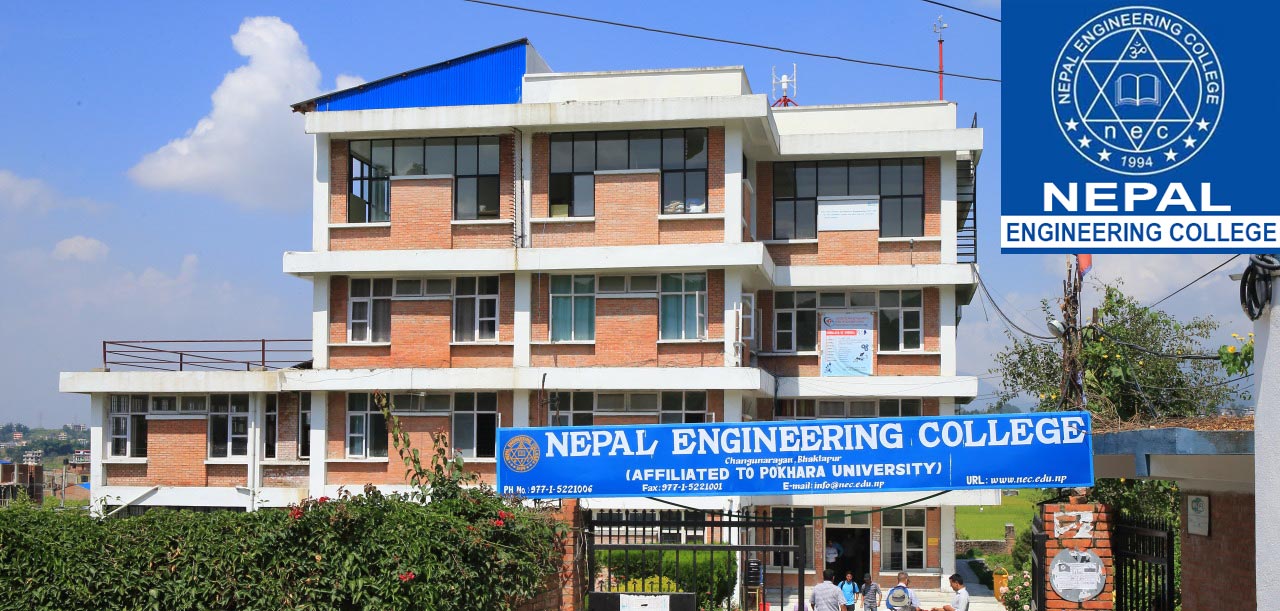
The Bachelor of Computer Engineering at Nepal Engineering College (nec) is an undergraduate engineering program affiliated with Pokhara University. The program is conducted at nec's main campus in Changunarayan Municipality-4, Bhaktapur, where the college conducts its regular bachelor's engineering programs.
Nepal Engineering College started its Bachelor program in Computer Engineering in the academic year 1999. The program sits within the Department of Computer Science and Engineering and has an intake of 96 seats. Its academic direction brings programming and electronics together, with particular attention to software and hardware interfacing.
Rather than treating computing only as software study, Computer Engineering at nec is built around the connection between computer science, electronics, and microelectronics. This combination is central to the way the program is described and distinguishes its academic emphasis within the college's wider engineering portfolio.
| Particular | Details |
|---|---|
| Course | Bachelor of Computer Engineering |
| Degree level | Bachelor's |
| Institution | Nepal Engineering College (nec) |
| Affiliation | Pokhara University |
| Department | Department of Computer Science and Engineering |
| Study location | Changunarayan Municipality-4, Bhaktapur |
| Program started | Academic year 1999 |
| Intake | 96 seats |
| Core academic emphasis | Programming, electronics, software-hardware interfacing |
The course is one of the regular bachelor's engineering programs at nec. Computer Engineering is listed separately from the college's other computing, electronics, electrical, and communication-related programs, so students should treat it as its own engineering pathway rather than as another name for Information Technology or communication engineering.
Computer Engineering developed from the increasing overlap between computer science and microelectronics. At nec, the course is framed around that intersection.
The program combines broad knowledge of programming and electronics with specialist skills related to software and hardware interfacing. Earlier program information also describes its academic base in terms of programming and microelectronics.
This gives the program two connected sides:
computing and programming; and
electronic and hardware-oriented engineering.
The relationship between these areas is important. A computer system is not defined only by the software running on it. Hardware components, electronic systems, processing devices, communication between components, and the interface between physical equipment and software also form part of the engineering context.
For students, this means Computer Engineering should be viewed as a combined computing and engineering discipline rather than as a software-only degree.
The Bachelor of Computer Engineering is associated with nec's Department of Computer Science and Engineering.
The department's description emphasizes the relationship between computer science and microelectronics and identifies software-hardware interfacing as a distinguishing part of the program.
The department also identifies laboratory resources connected with computing and networking. These include a Networks Lab and computing facilities used for practical technical work.
The laboratory information includes:
computers with Intel Core i5 8th-generation processors for computing work; and
a machine learning laboratory with dedicated Nvidia graphics.
These are departmental resources rather than a semester-by-semester curriculum list. They show the type of computing infrastructure associated with the department without changing the defined academic focus of the degree.
Computer Engineering may suit students who are interested in understanding both how computer software works and how it interacts with electronic hardware.
The course's stated combination of programming, electronics, microelectronics, and hardware-software interfacing makes it different from a course concerned only with using information systems or developing software applications.
Students considering this program may find it relevant if they are interested in:
programming;
computer systems;
electronics;
microelectronics;
software-hardware interaction;
technical computing;
networks; and
practical work involving computing equipment.
The course also requires an engineering-oriented academic background at entry level. Mathematics, Physics, and Chemistry form part of the stated academic requirements for Pokhara University engineering applicants.
For Science and Technology engineering programs under Pokhara University, applicants are required to have completed Grade 12 in the Science stream or an equivalent qualification from a recognized institution.
The stated academic requirements include:
completion of Grade 12 Science or equivalent;
study of Physics, Chemistry, and Mathematics;
at least one course carrying a minimum of 100 full marks or 5 credits in Physics, Chemistry, and Mathematics;
a minimum C grade or 45% in each of Physics, Chemistry, and Mathematics;
an overall GPA of 2.0 on a 4.0 scale or equivalent; and
Mathematics of at least 100 marks in Grade 11 or Grade 12.
These requirements apply to Pokhara University engineering programs and provide the academic entry framework for students seeking admission to Computer Engineering at nec.
The Pokhara University undergraduate admission framework includes application submission, an entrance examination, merit ranking, and enrollment.
Applications are submitted through the applicable Pokhara University or affiliated-college admission process. Applicants provide their personal information, academic history, and program preference during application.
The listed application documents include:
academic transcripts;
citizenship certificate; and
passport-sized photographs.
Applicants must sit for an entrance examination conducted through Pokhara University or its affiliated colleges. The entrance examination is described as objective in format and assesses knowledge relevant to the academic field.
Admission is merit-based, with rankings determined through entrance-examination performance. Successful applicants complete enrollment according to merit and available seats in the selected program.
For Bachelor of Computer Engineering at Nepal Engineering College, the stated intake is 96 seats.
The clearest way to understand this course is through the relationship among its principal academic areas rather than by treating computing and electronics as separate subjects.
Programming forms one of the broad knowledge areas identified for Computer Engineering at nec.
Programming gives students a way to define instructions, processes, and logical operations within computer systems. Within the context of Computer Engineering, it also connects with the physical system on which software runs.
The program's stated emphasis on programming therefore sits alongside electronics and interfacing rather than in isolation.
Electronics and microelectronics provide the hardware-oriented side of the program.
The development of Computer Engineering is described in relation to the convergence of microelectronics and computer science. This relationship forms the foundation for treating the course as an engineering discipline that includes both computation and electronic systems.
Students interested only in software should therefore look carefully at this engineering component. The academic identity of Computer Engineering at nec includes electronics as well as programming.
Software-hardware interfacing is specifically identified as one of the specialist skill areas within the program.
Interfacing concerns the connection between programmed instructions and the hardware that receives, processes, or responds to those instructions.
This area gives the course a practical engineering dimension because students are not limited to viewing hardware and software as independent systems. The connection between the two forms part of the program's stated academic design.
The combination of programming, microelectronics, and interfacing naturally places computer systems at the center of the degree's academic character.
Students encounter computing through an engineering lens in which electronic components and programmed systems must operate together.
This is one of the main distinctions between Computer Engineering and computing courses whose academic scope is concentrated primarily on software or information systems.
The Department of Computer Science and Engineering has laboratory resources associated with technical computing.
A Networks Lab is specifically identified within the department. The department also lists computers with Intel Core i5 8th-generation processors and a machine learning laboratory using dedicated Nvidia graphics.
At college level, nec also identifies Computer and Electronic laboratories among its instructional facilities. The main campus library contains more than 40,000 books, journals, and magazines.
These facilities are relevant to a course that crosses computing and electronic engineering. They provide an institutional setting for practical and technical learning alongside classroom study.
The finalized college context also places regular bachelor's programs at the Changunarayan campus, so Computer Engineering students study within the main undergraduate engineering environment of nec.
Networking is represented within the department through the Networks Lab.
A networking laboratory gives students access to a technical setting associated with computers and connected systems. The presence of this lab is particularly relevant within a department whose program combines computer science, electronics, and interfacing.
The computing equipment identified for departmental laboratories includes i5 8th-generation computers. A separate machine learning lab is listed with dedicated Nvidia graphics.
These facility details should be understood as part of the department's available computing infrastructure rather than as a statement that every student completes a specific course under the same laboratory name.
Computer Engineering is one of several technology-oriented engineering degrees offered by Nepal Engineering College.
The wider undergraduate portfolio includes programs in:
Civil Engineering;
Civil and Rural Engineering;
Computer Engineering;
Electrical and Electronics Engineering;
Electronics and Communication Engineering;
Engineering in Information Technology;
Architecture; and
Civil Engineering for Diploma Holders.
Computer Engineering remains a separate degree within this portfolio.
Students who are comparing computing-related programs should also distinguish Computer Engineering from the Bachelor of Engineering in Information Technology (BE.IT). The two programs carry different degree titles and should be considered individually rather than treated as equivalent courses.
For Computer Engineering specifically, the defining academic description at nec remains the combination of programming, electronics, microelectronics, and software-hardware interfacing.
The course's academic identity comes from the idea that computing equipment and software depend on one another.
Programming determines how a computer system is instructed to behave. Electronics and microelectronics provide the physical platform through which processing and control occur. Interfacing connects these two levels.
Computer Engineering therefore deals with a type of technical problem that may require understanding both programmed behavior and the physical system behind it.
This makes the degree relevant to students who prefer a broader engineering approach to computing rather than a course concentrated only on application software.
The course description at nec explicitly reflects this combined approach rather than presenting Computer Engineering as another general IT program.
Based on the stated academic areas and departmental resources, the program can support the development of skills related to:
computer programming;
understanding electronic and microelectronic systems;
software-hardware interfacing;
technical problem analysis;
working with computer systems;
practical computing;
network-related technical work; and
working across software and hardware environments.
These skills depend on academic work, practical participation, individual performance, and the learning activities completed during the program.
The most important point is the breadth of the technical base. A Computer Engineering student is expected to work across more than one side of computing, connecting programming knowledge with electronics and hardware-oriented engineering.
The Computer Engineering program at nec was developed around the combined study of computer science and microelectronics.
The institutional description identifies career areas across:
business;
industries;
production sectors;
service sectors; and
IT industries.
These are broad sectors rather than guaranteed job positions.
The program's combination of programming, electronics, and hardware-software interfacing can be relevant in working environments where computing systems and electronic technologies are used together.
Career direction after graduation depends on the student's technical ability, academic performance, practical experience, additional skills, employer requirements, and available opportunities.
Pokhara University lists a number of postgraduate programs within Science and Technology that are connected with advanced computing and engineering study.
These include:
Master of Science in Computer Engineering;
Master of Science in Computer Science; and
Master of Science in Information System Engineering.
Admission to postgraduate study depends on the eligibility requirements of the individual master's program and the applicant's academic background.
For students who want to continue in computing after their bachelor's degree, these program titles show some of the advanced academic directions available within the wider Pokhara University system.
Students choosing Computer Engineering should pay attention to the electronics component.
The program is not described only around coding. Its defining areas include programming and electronics together, along with microelectronics and software-hardware interfacing.
A student who enjoys programming but has no interest in electronic systems may therefore want to compare the academic focus carefully with other computing programs.
On the other hand, a student interested in understanding the connection between software and physical computer systems may find the structure of Computer Engineering more closely aligned with that interest.
This distinction is useful because degree titles in computing can appear similar while having different academic orientations.
Computer Engineering also differs from an electronics-focused engineering degree.
At nec, Electrical and Electronics Engineering and Electronics and Communication Engineering are separate programs. Computer Engineering is organized through the Department of Computer Science and Engineering and is described through the convergence of computer science and microelectronics.
Its defining focus therefore lies in connecting computing with electronics rather than studying electrical or communication systems as the primary engineering field.
The overlap between engineering disciplines does not make the degree titles interchangeable. Students should compare them according to the type of technical systems they want to study.
The Bachelor of Computer Engineering is conducted at nec's main campus in Changunarayan Municipality-4, Bhaktapur.
The campus is the academic base for the college's regular bachelor's engineering and architecture programs.
Relevant instructional resources include:
Computer laboratories;
Electronic laboratories;
Networks Lab;
machine learning laboratory with dedicated Nvidia graphics;
departmental computing equipment; and
the college library with more than 40,000 books, journals, and magazines.
The presence of both Computer and Electronic laboratories is consistent with the combined academic character of Computer Engineering.
Students considering Computer Engineering should look beyond the general idea of "working with computers."
The program has an engineering orientation. Its stated academic design combines programming with electronics and requires students to understand the connection between software and hardware.
Before choosing the course, students may consider whether they are comfortable with:
mathematics and science at the engineering-entry level;
programming;
electronics;
computer hardware concepts;
logical and technical problem solving;
practical computing;
working across both software and hardware; and
studying an engineering discipline rather than a software-only course.
The 96-seat intake is another practical part of the course profile, while admission follows the Pokhara University engineering eligibility and merit-based admission framework.
Nepal Engineering College started its Bachelor program in Computer Engineering in the academic year 1999.
The Bachelor of Computer Engineering has an intake of 96 seats.
The program is affiliated with Pokhara University.
The program is conducted at Nepal Engineering College's main campus in Changunarayan Municipality-4, Bhaktapur.
The program is associated with the Department of Computer Science and Engineering.
The program combines programming and electronics, with attention to microelectronics and software-hardware interfacing.
No. Programming is one part of the program's stated academic focus. Electronics, microelectronics, and software-hardware interfacing are also central to its Computer Engineering orientation.
The Department of Computer Science and Engineering identifies a Networks Lab, computers with Intel Core i5 8th-generation processors, and a machine learning lab with dedicated Nvidia graphics. The college also has Computer and Electronic laboratories.
Engineering applicants are required to complete Grade 12 Science or equivalent with the stated Physics, Chemistry, and Mathematics requirements. The criteria include at least C grade or 45% in each of those subjects and an overall GPA of 2.0 or equivalent.
Yes. The Pokhara University undergraduate admission framework includes an entrance examination, merit ranking, and admission according to merit and available seats.
The course information identifies business, industries, production sectors, service sectors, and IT industries as broad career areas. Individual outcomes depend on skills, experience, performance, and available opportunities.
Pokhara University lists postgraduate programs including Master of Science in Computer Engineering, Master of Science in Computer Science, and Master of Science in Information System Engineering. Admission depends on the requirements of the individual program.