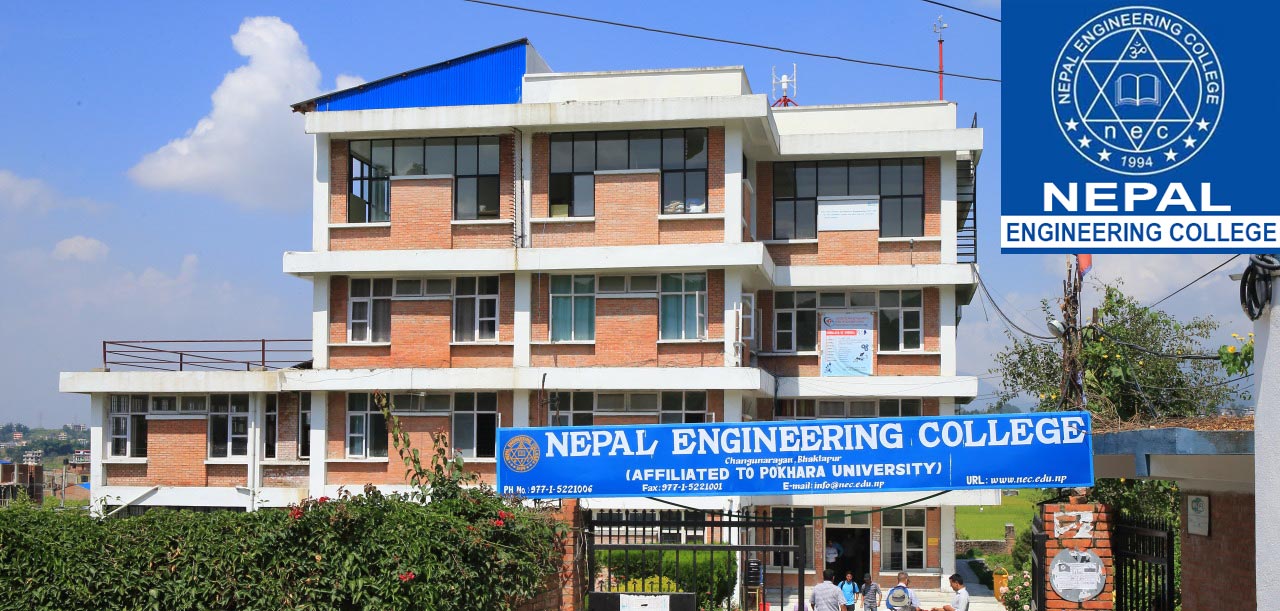
The Bachelor of Electrical and Electronics Engineering at Nepal Engineering College (nec) is a bachelor's-level engineering program affiliated with Pokhara University. It is conducted at the college's main campus in Changunarayan Municipality-4, Bhaktapur.
nec started the Bachelor of Electrical and Electronics Engineering program in 2006. The program has an intake of 48 seats and is associated with the Department of Electrical and Electronics Engineering.
The course brings together two related areas of engineering. Electrical engineering addresses larger electrical systems involving the generation, transmission, distribution, and utilization of electricity. Electronics deals with lower-voltage systems and applications associated with computers, communication systems, electronic circuits, and integrated circuits. The program combines these areas within one engineering degree.
| Particular | Details |
|---|---|
| Course | Bachelor of Electrical and Electronics Engineering |
| Degree | Bachelor of Engineering (B.E.) |
| Institution | Nepal Engineering College (nec) |
| Affiliation | Pokhara University |
| Department | Department of Electrical and Electronics Engineering |
| Academic level | Bachelor's |
| Program started | 2006 |
| Intake | 48 seats |
| Study location | Changunarayan Municipality-4, Bhaktapur |
Electrical and Electronics Engineering at nec combines the electrical-power side of engineering with electronic systems and control-related technologies.
The electrical side includes areas associated with:
electricity generation;
transmission;
distribution;
utilization of electrical energy;
power systems;
grid integration; and
alternative and renewable energy.
The electronics and control side is connected with:
electronic systems;
automation;
embedded technologies;
energy storage;
electric-vehicle infrastructure;
SCADA-based control systems; and
monitoring and control applications.
The Department of Electrical and Electronics Engineering identifies power generation, grid integration, energy storage, EV infrastructure, SCADA-based control, automation, embedded technologies, renewable energy, smart-grid applications, and digital power systems among the technical areas connected with contemporary EEE study.
This combined structure is useful for understanding the course title. Electrical and Electronics Engineering is not limited to electricity supply, nor is it solely an electronics course. It sits across power engineering, electrical systems, electronic technologies, control, and related applications.
For Pokhara University engineering programs, applicants are required to have completed Grade 12 in the Science stream or an equivalent qualification from a recognized institution.
The stated academic requirements include:
study of Physics, Chemistry, and Mathematics;
at least one course of a minimum 100 full marks or 5 credits in Physics, Chemistry, and Mathematics;
a minimum C grade or 45% in each of Physics, Chemistry, and Mathematics;
an overall GPA of 2.0 on a 4.0 scale or equivalent; and
Mathematics of at least 100 marks in Grade 11 or Grade 12.
The Pokhara University undergraduate admission framework includes application submission, an entrance examination, merit ranking, and enrollment.
Applicants complete the applicable admission process and sit for the entrance examination. Admission is based on merit and the availability of seats in the selected program.
Nepal Engineering College has 48 seats for Bachelor of Electrical and Electronics Engineering.
The program is conducted through the Department of Electrical and Electronics Engineering at nec.
At the institutional level, the college has both Electrical and Electronic laboratories among its instructional facilities. These laboratories correspond directly with the two technical areas brought together in the degree.
The main campus also has a library containing more than 40,000 books, journals, and magazines. BE programs at nec include two to three field visits or educational tours as part of the broader academic arrangement.
For an engineering course that involves electrical systems, electronic devices, control, power, and related technologies, practical exposure forms an important part of connecting technical principles with physical systems and equipment.
Based on the stated academic scope, students may develop knowledge and practical abilities related to:
electrical power systems;
electricity generation and transmission;
electrical distribution and utilization;
electronic systems;
automation and control;
embedded technologies;
renewable-energy applications;
grid-related systems;
energy-storage applications;
SCADA-based monitoring and control; and
analysis of electrical and electronic systems.
Skill development depends on academic performance, practical work, project involvement, and individual technical practice.
The program's stated career areas include agencies and organizations working with electricity generation, transmission, and distribution, as well as alternative and renewable energy, communication, manufacturing, and service sectors.
Graduates may therefore explore opportunities connected with:
power generation;
transmission and distribution systems;
electrical utilities;
renewable and alternative energy;
electrical and electronic systems;
automation and control;
manufacturing;
communication-related technical work; and
service-sector engineering.
These are broad professional areas rather than guaranteed job outcomes. Employment depends on technical ability, academic performance, practical experience, professional requirements, employer needs, and available opportunities.
Pokhara University includes Master of Science in Electrical Engineering in Power System among its graduate programs in Science and Technology.
This provides one documented postgraduate direction within the same university system. Entry to postgraduate study depends on the eligibility requirements of the individual master's program.
Electrical and Electronics Engineering may suit students who are interested in electricity, electronic systems, power networks, renewable energy, automation, and the interaction between electrical equipment and control technologies.
Students considering the course should be prepared for an engineering study environment involving mathematics, science, technical analysis, electrical systems, electronics, laboratory work, and practical problem-solving.
The combined nature of the degree is especially important when choosing between related programs. Electrical and Electronics Engineering has a stronger connection with electrical power and energy systems than a communication-focused electronics program, while electronics remains an integral part of the course.
Nepal Engineering College started the Bachelor of Electrical and Electronics Engineering program in 2006.
The program has an intake of 48 seats.
The Bachelor of Electrical and Electronics Engineering at nec is affiliated with Pokhara University.
The program is conducted at Nepal Engineering College's main campus in Changunarayan Municipality-4, Bhaktapur.
The course combines electrical-power systems with electronics and includes areas connected with generation, transmission, distribution, utilization of electricity, electronic systems, automation, renewable energy, grid integration, and control technologies.
The stated areas include electricity generation, transmission and distribution, alternative and renewable energy, communication, manufacturing, and service sectors.