



By 2035, 51% of Finance Professionals May Choose “Flexible Career Paths” Over Traditional Roles: ACCA Report
Kathmandu, 22 January 2026
According to a new research report published by the Association of Chartered Certified Accountants (ACCA), major changes are expected in how finance professionals work—covering work style, working time, and working location—by 2035.
The report titled “Career paths reimagined” states that 51% of respondents believe that, within the next decade, traditional linear career paths will be replaced by “Flexible Career Paths”.
This global research included participation from more than 2,600 ACCA members and future members, along with 145 employers. Another 35% of survey respondents expect both traditional and flexible career paths to co-exist equally.
New Career Patterns and Skills Needed
The report highlights that future career success will require a stronger focus on inter-personal, technological, and technical skills. It also places high priority on building a curious and adaptable mindset.
As professionals are likely to work for longer periods, the report suggests that the use of “career breaks” and “micro-retirements” may become more common.
According to ACCA Chief Executive Helen Brand:
Accountancy is being redefined in new ways, expanding the role of the profession. Skill-led, flexible, and personalised career paths are replacing traditional routes that were previously guided more by titles.
She added that to succeed in the future, finance professionals must move beyond old expectations and adopt “hyper-personalised” careers—where flexibility will be higher, but predictability will be lower.
Key Drivers of Change
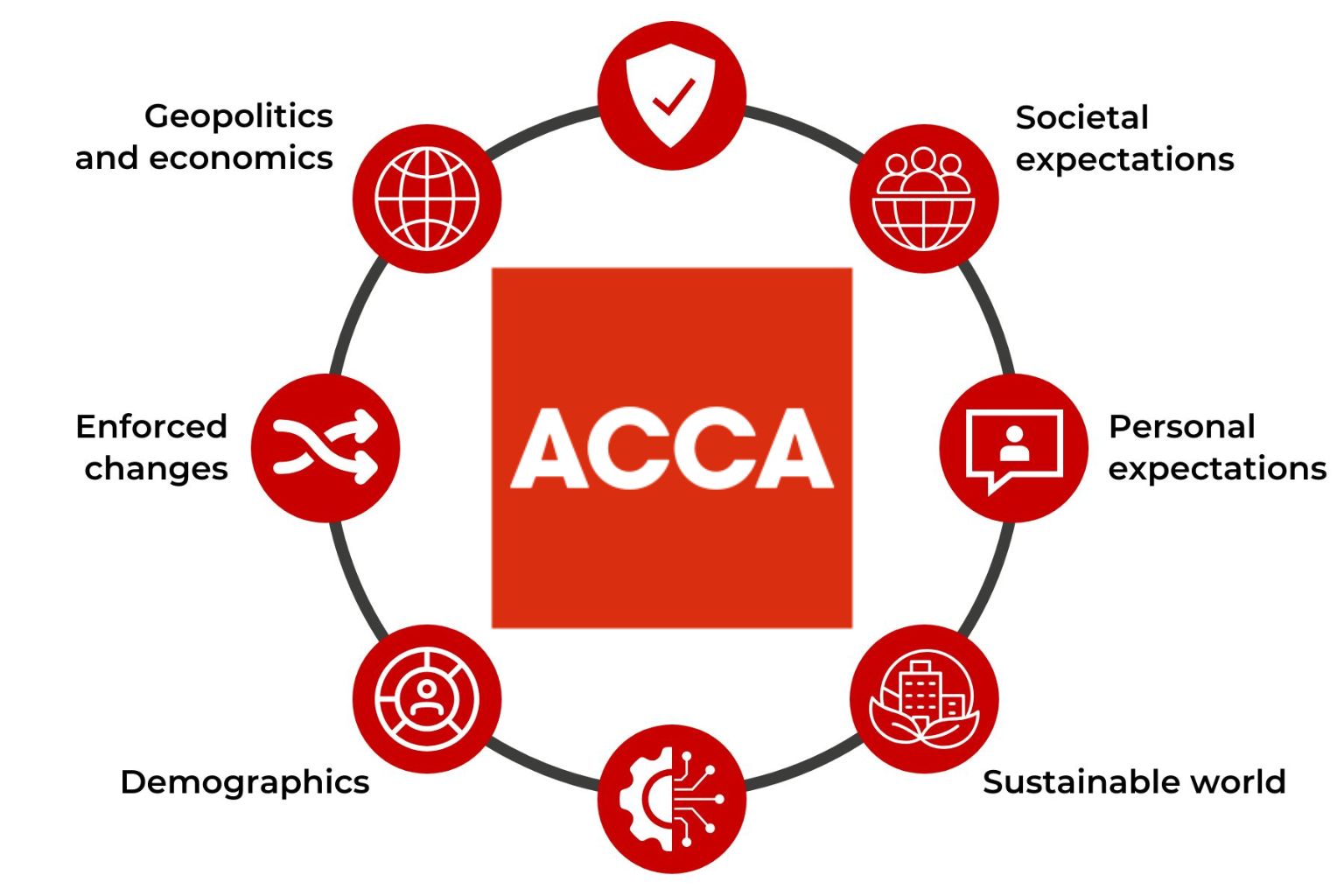
Survey respondents identified technology as the main factor shaping future workplaces and careers. AI, automation, and data analytics are expected to direct the nature of future work.
Other major drivers highlighted in the report include:
-
Changing personal expectations, especially priorities such as work-life balance, purpose at work, and flexibility
-
Geopolitical and economic pressures, including slow economic growth and global fragmentation that may challenge individual prosperity
-
Shifting professional roles, where finance professionals may move beyond being “guardians of knowledge” to becoming interpreters and trusted advisers
-
Growing compliance demands and ethical oversight, which may drive mandatory changes in work practices
-
Climate change and sustainability, creating new roles and responsibilities
-
Changing social attitudes toward work value and job roles
-
Demographic realities, including longer working lives and multi-generational workplaces
Changes in Traditional Career Structures
According to report author and ACCA Head of Business Management Clive Webb, employers need to review their traditional career models.
The report notes that middle-level roles in organisations are gradually disappearing, with specialist roles increasingly taking their place. It also states that technological development is reducing or transforming many entry-level roles.
With slower economic performance, “sideways moves” are becoming more important than promotions for career and financial progress. In addition, the report found growing reluctance among many professionals toward senior roles, mainly due to their impact on work-life balance.
ACCA (Association of Chartered Certified Accountants) is a global professional accounting body established in 1904. It supports more than 257,900 members and 530,100 future members across 180 countries.
The report recommends that employers should adopt change now in order to make the best use of talent and meet evolving skills demand.
22 January 2026
Also Read
Is ACCA a Good Choice to Study in Nepal?
Top ACCA Colleges in Nepal: A Verified, Neutral, and Practical Guide





Comments 0
No comments yet. Be the first to start the conversation.