



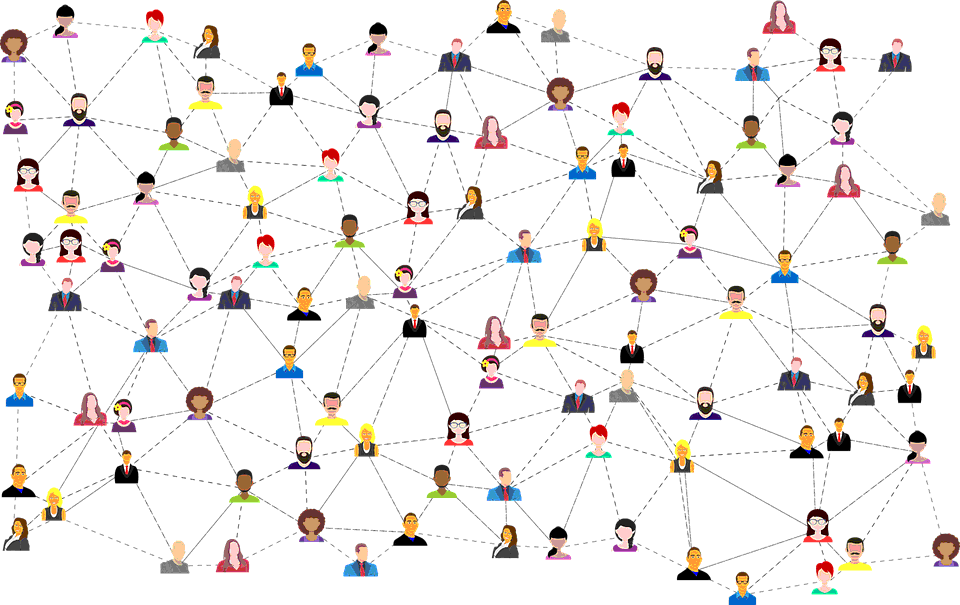
Nepal’s proposed Social Media Bill, 2081 sought to regulate the operation and use of social media platforms in the country. The bill was introduced in the National Assembly in early 2025 and was designed to make both platform operators and users more accountable for online content. It proposed rules on platform registration, content removal, user conduct, penalties, and government oversight.
The status of the bill changed in 2026. On February 3, 2026, the interim government approved the withdrawal of the Social Media Bill-2081 from the Federal Parliament. The bill had been registered during the 17th session of the National Assembly and was under consideration in the Committee for Legislation Management.
This makes the bill important not only as a legal proposal but also as a case study in how Nepal is trying to address online harms while facing concerns about free expression, privacy, and state control.
Table of Content
- Why the Bill Was Proposed
- Major Provisions in the Draft Bill
- Concerns Over Free Expression and Privacy
- The Registration Debate
- Content Removal and Government Oversight
- Election Integrity, Scams, and Online Harm
- Global Context: How Other Countries Regulate Social Media
- Lessons for Nepal
- Conclusion
Why the Bill Was Proposed
The government argued that social media platforms needed clearer legal rules because online spaces were increasingly being used for misinformation, cyberbullying, fake accounts, phishing, impersonation, and harmful content. The bill aimed to create a formal framework for managing social media platforms such as Facebook, Instagram, TikTok, YouTube, X, and similar services.
Nepal’s digital use has grown rapidly. DataReportal’s Digital 2026 Nepal report estimated that Nepal had 16.6 million internet users at the end of 2025, with internet penetration at 56.0 percent. It also estimated 14.8 million social media user identities in Nepal in October 2025, equal to 50.0 percent of the total population.
These figures show why social media regulation has become a major public policy issue. Online platforms are now closely linked with communication, education, business, politics, civic debate, and public information.
Major Provisions in the Draft Bill
The draft bill proposed rules for both social media platforms and individual users.
For platforms, the bill required companies operating in Nepal to register and obtain government approval. Analyses of the draft noted that failure to register could lead to fines of up to NPR 2.5 million. The bill also required platforms to appoint a point of contact and remove content flagged by authorities. Non-compliance with removal instructions could attract additional penalties.
For users, the draft targeted activities such as cyberbullying, cyberstalking, phishing, hacking, impersonation, deepfake content, misleading information, and anonymous or fake identities. Reported penalties varied by offence, with some provisions including imprisonment, fines, or both.
The bill also proposed stronger legal recognition of electronic evidence and allowed cases to proceed through the district court system. These provisions were intended to make investigation and prosecution of online offences easier.
Concerns Over Free Expression and Privacy
The bill drew criticism from journalists, digital rights advocates, civil society groups, and legal experts. The main concern was not that social media should remain completely unregulated, but that the proposed framework gave broad powers to government bodies without enough safeguards.
The International Federation of Journalists, the Federation of Nepali Journalists, and the Nepal Press Union warned that the bill could affect freedom of expression, the right to information, and press freedom. They urged the government to withdraw the bill or revise it through wider consultation.
The Centre for Law and Democracy also criticized the bill, arguing that it gave extensive regulatory powers to government actors, required platforms to obtain a government licence, and included broad content restrictions that could affect both users and platforms.
A major concern was the bill’s use of broad terms such as misleading, indecent, malicious, or harmful content. Without clear definitions, such language can be interpreted unevenly and may discourage citizens from expressing political opinions, criticism, satire, or unpopular views.
The Registration Debate
One of the most debated provisions was the requirement for platforms to register or obtain approval before operating in Nepal. Supporters argued that registration would make large platforms more accountable and easier for the government to contact during cybercrime investigations.
Critics argued that a licensing or approval system could give the government excessive control over whether platforms are allowed to operate. Pioneer Law Associates noted that the bill concentrated licensing power within the government and lacked enough checks and balances, including clear judicial oversight. It also argued that accountability could be achieved through less restrictive measures, such as requiring accessible points of contact, rather than full licensing.
This issue became more serious in 2025, when Nepal blocked several major social media platforms after they failed to comply with registration requirements. The Associated Press reported that platforms including Facebook, X, and YouTube were blocked, while TikTok, Viber, and some others were allowed to operate because they had registered.
That episode showed the practical risk of platform-blocking as a regulatory tool. It can disrupt communication, education, small businesses, media activity, and public debate.
Content Removal and Government Oversight
The bill required platforms to remove content when instructed by authorities. Such provisions can help address genuine harms, including scams, abuse, and unlawful content. However, they also need strong procedural safeguards.
A balanced law should clearly define what content is illegal, who can order removal, how quickly platforms must respond, how users can appeal, and how misuse of takedown powers will be prevented. Without these safeguards, content moderation can become a tool for censorship.
Legal criticism of the bill focused on the lack of independent review and appeal mechanisms. Pioneer Law Associates noted that the draft gave takedown authority to the Department without adequate judicial review or a clear appeal mechanism for platforms or users.
Election Integrity, Scams, and Online Harm
The bill also reflected wider concerns about misinformation, election influence, fraud, and online scams. These are legitimate regulatory issues. Fake accounts, manipulated images, phishing, coordinated false information, and impersonation can harm individuals, public trust, and democratic processes.
However, regulation must distinguish between harmful illegal conduct and lawful speech. Political criticism, satire, investigative reporting, whistleblowing, and public debate should not be treated as online harm simply because they are uncomfortable for those in power.
This distinction is essential for Nepal because social media is not only a source of risk; it is also a space for civic participation, public accountability, education, and community organizing.
Global Context: How Other Countries Regulate Social Media
India
India regulates social media and digital intermediaries mainly through the Information Technology Act, 2000 and the Information Technology (Intermediary Guidelines and Digital Media Ethics Code) Rules, 2021. The rules include due diligence duties for intermediaries, grievance redress mechanisms, and additional obligations for significant social media intermediaries. India has also amended the framework to address emerging issues such as synthetically generated information and deepfakes.
India’s model emphasizes platform accountability, but it has also faced debate over government takedown powers, traceability requirements, and the balance between online safety and free speech.
United States
The United States follows a more speech-protective model because of the First Amendment. A central legal provision is Section 230 of the Communications Decency Act, which generally prevents online platforms from being treated as the publisher or speaker of third-party user content. The provision also protects good-faith content moderation by platforms.
This model gives platforms significant freedom, but it has also led to debate over misinformation, platform accountability, child safety, harassment, and the power of large technology companies.
China
China follows a state-controlled digital governance model. Its official policy framework emphasizes law-based cyberspace governance, cybersecurity, information control, data governance, and enforcement against online fraud and content considered harmful to social stability or national security.
China’s model gives the state broad power over online platforms and content. It is often cited as an example of strict control, but it also raises major concerns about censorship, surveillance, and restricted political expression.
United Kingdom
The United Kingdom has adopted the Online Safety Act 2023, which places legal duties on social media companies and search services to protect users from illegal content and children from harmful content. Ofcom is the independent regulator responsible for implementation and enforcement. The UK government states that Ofcom can investigate non-compliance, impose fines of up to 10 percent of qualifying worldwide revenue, and seek court orders to block services in serious cases.
The UK model is more structured than Nepal’s withdrawn bill because it relies on an independent regulator and a phased implementation process, although it also continues to face debate over privacy, age assurance, and free expression.
Lessons for Nepal
Nepal does need a clear and modern framework for online safety, platform accountability, cybercrime response, and digital rights. However, any future law should avoid vague restrictions and excessive government control.
A better framework should include:
-
clear definitions of illegal online conduct;
-
independent oversight rather than direct political control;
-
transparent takedown procedures;
-
appeal rights for users and platforms;
-
judicial review for serious content-removal or platform-blocking decisions;
-
privacy safeguards;
-
protection for journalism, satire, criticism, and public-interest speech;
-
proportional penalties based on the seriousness of the offence;
-
consultation with civil society, journalists, legal experts, technology companies, and user groups.
The goal should be regulation that protects people from real harm without turning social media governance into a tool for surveillance or censorship.
Conclusion
Nepal’s Social Media Bill, 2081 highlighted an important policy challenge: how to make online platforms safer without weakening constitutional freedoms. The bill addressed genuine problems such as cyberbullying, scams, fake identities, misinformation, and platform accountability. However, it also raised serious concerns because of broad content restrictions, government-led oversight, licensing requirements, and weak safeguards for free expression and privacy.
The government’s 2026 decision to withdraw the bill gives Nepal an opportunity to reconsider its approach. Any future law should be narrower, clearer, rights-based, and developed through meaningful public consultation.
Social media regulation is necessary in the digital age, but it must be built on democratic principles. Nepal’s challenge is to protect users from online harm while preserving the open digital space that citizens need for communication, education, business, journalism, and public debate.

Comments 0
No comments yet. Be the first to start the conversation.