



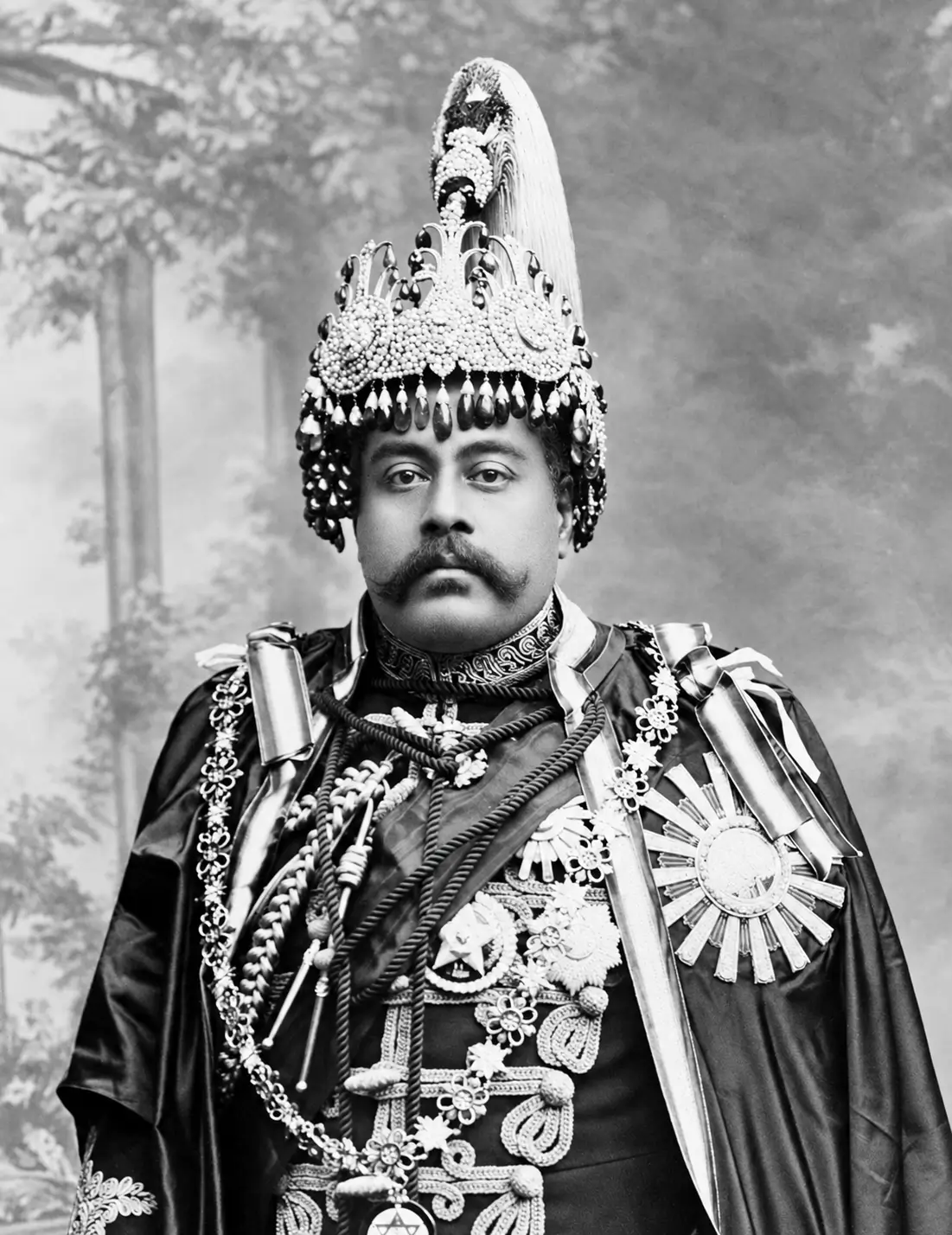
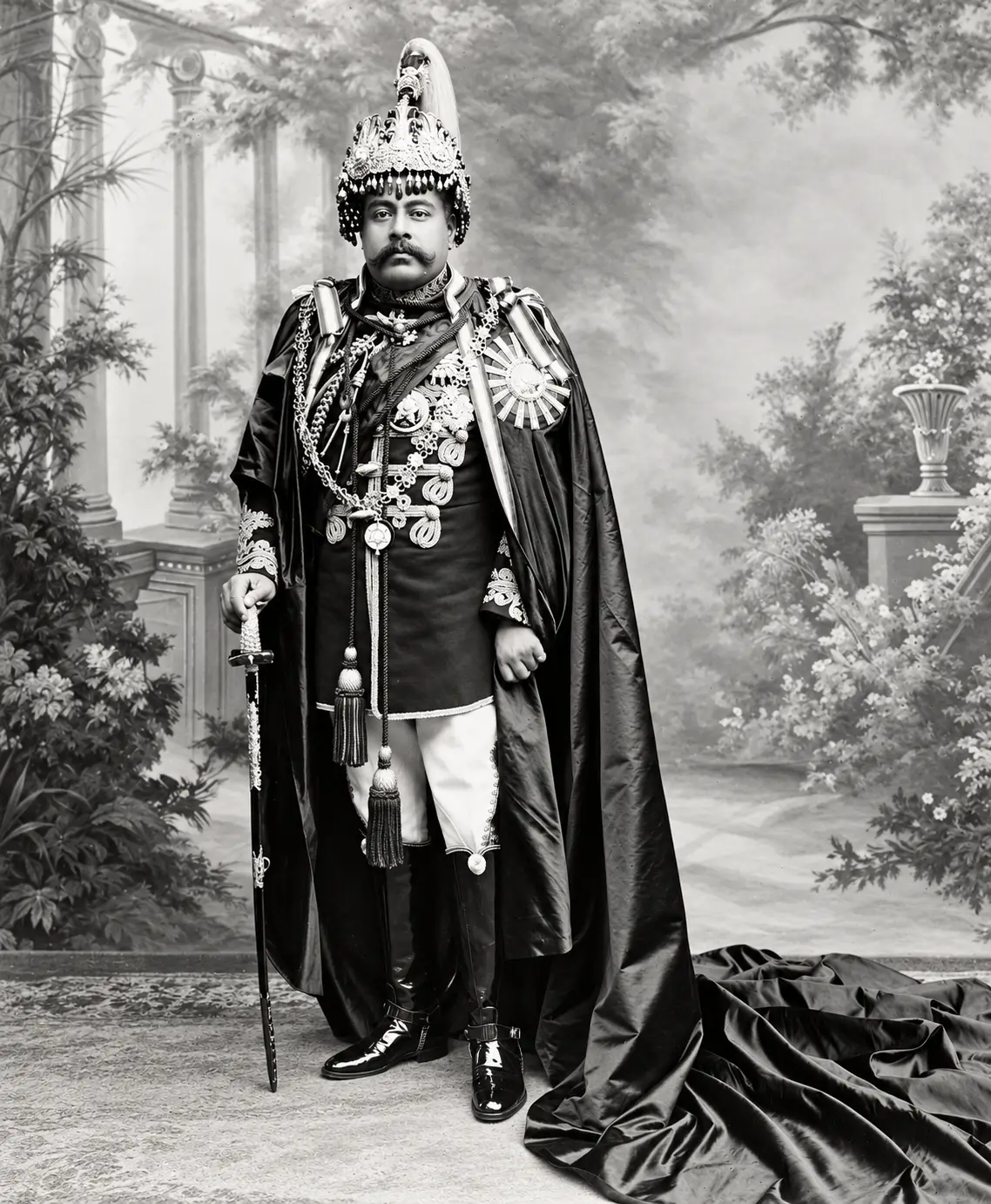
Juddha Shumsher Jung Bahadur Rana (19 April 1875 – 20 November 1952) was the 15th Prime Minister of Nepal and the seventh Shree 3 Maharaja of the Rana dynasty. He ruled Nepal for approximately 13 years, from 17 Bhadra 1989 BS to 14 Mangsir 2002 BS (1 September 1932 to 29 November 1945).
His reign occupies an important place in Nepal's modern history because of both institutional development and political repression. Major developments during this period included reconstruction following the devastating earthquake of 1990 BS (1934 AD), the establishment of Nepal Bank Limited, the opening of Biratnagar Jute Mill, the formation of the Industrial Council and the Pradhan Nyayalaya (Chief Court), and the development of the school-level examination system.
However, his administration was also marked by succession disputes within the Rana family, the exclusion of C-class Ranas, restrictions on political activities, and the execution of four civil rights activists in 1997 BS (1941 AD).
Juddha Shumsher resigned as Prime Minister in 1945, the year the Second World War ended, and transferred power to his nephew, Padma Shumsher Jung Bahadur Rana.
His reign is studied as a period that combined early attempts at Nepal's economic and administrative modernization with the continuation of the autocratic Rana system.
Juddha Shumsher Rana: Quick Facts
|
Particulars |
Details |
|---|---|
|
Full Name |
Juddha Shumsher Jung Bahadur Rana |
|
Date of Birth |
19 April 1875 |
|
Birthplace |
Narayanhiti Palace, Kathmandu |
|
Date of Death |
20 November 1952 |
|
Place of Death |
Dehradun, India |
|
Father |
Dhir Shumsher Jung Bahadur Rana |
|
Mother |
Juhar Kumari Devi |
|
Position |
Prime Minister and Shree 3 Maharaja |
|
Reign |
17 Bhadra 1989 BS to 14 Mangsir 2002 BS |
|
Reigning Monarch |
King Tribhuvan Bir Bikram Shah Dev |
|
Predecessor |
Bhim Shumsher Jung Bahadur Rana |
|
Successor |
Padma Shumsher Jung Bahadur Rana |
|
Major Historical Contributions |
Post-earthquake reconstruction, establishment of Nepal Bank, industrial development, introduction of the SLC examination system, and establishment of the Pradhan Nyayalaya |
Birth, Family and Early Life
Juddha Shumsher was born on 19 April 1875 at Narayanhiti Palace in Kathmandu. He was the son of Dhir Shumsher Jung Bahadur Rana and Juhar Kumari Devi.
His father, Dhir Shumsher, was the younger brother of Jung Bahadur Rana, the founder of Rana rule in Nepal. Dhir Shumsher held an influential military and political position within the Rana administration.
Juddha Shumsher was one of Dhir Shumsher's 17 sons. This branch of the family became known historically as the Shumsher lineage.
Among Dhir Shumsher's sons, Bir Shumsher, Dev Shumsher, Chandra Shumsher, Bhim Shumsher, and Juddha Shumsher served as Prime Ministers of Nepal.
Juddha Shumsher spent his childhood in the royal court setting. At that time, members of the Rana family were generally educated by private tutors and prepared for military and administrative responsibilities.
Under the Rana system, succession to the office of Prime Minister was determined by a family succession order. Seniority and family status influenced the likelihood of obtaining high-ranking positions.
Juddha Shumsher's political career was closely connected to this hereditary succession system.
Early Military and Administrative Career
Before becoming Prime Minister, Juddha Shumsher served for many years within the Rana administration's military and administrative structure.
After Bir Shumsher became Prime Minister in 1942 BS, the political influence of the Shumsher family grew stronger. Over the following decades, Juddha Shumsher gradually assumed higher military and administrative responsibilities.
During Chandra Shumsher's premiership, he rose to a senior military leadership position within the Rana administration.
During the First World War, Nepal provided military assistance to Britain. Military management, personnel mobilization, and logistical arrangements were important responsibilities within the Rana government's administrative structure during this period.
Following Chandra Shumsher's death in 1986 BS, Bhim Shumsher became Prime Minister. Under the Rana succession order, Juddha Shumsher also moved closer to the highest position in the government.
Senior military officers under the Rana system were not limited to military duties. They also exercised influence over civil administration, state decisions, and government operations.
Juddha Shumsher assumed the premiership with experience gained within this political and administrative system.
Appointment as Prime Minister and Shree 3 Maharaja
On 17 Bhadra 1989 BS (1 September 1932), following the death of Bhim Shumsher, Juddha Shumsher became Prime Minister and Shree 3 Maharaja of Nepal.
He was 57 years old when he assumed office.
King Tribhuvan Bir Bikram Shah Dev was Nepal's reigning monarch at the time. However, under the Rana system, actual executive authority was concentrated in the office of the Prime Minister and Shree 3 Maharaja.
When Juddha Shumsher came to power, disputes over succession continued within the Rana family. Different branches of the family competed over future succession to the premiership and appointments to senior military positions.
After assuming office, he maintained centralized control over the administration. Although some economic, industrial, and administrative changes occurred during his rule, hereditary control of government by the Rana family remained unchanged.
The Great Earthquake of 1990 BS and Reconstruction
The devastating earthquake of 2 Magh 1990 BS (15 January 1934) was the largest natural disaster during Juddha Shumsher's reign.
The earthquake caused extensive destruction in Nepal and the Bihar region of India. Historical records and modern scientific studies provide somewhat different estimates of its magnitude. Scientific research has placed it at approximately magnitude 8.0 to 8.2.
According to the contemporary account of Brahma Shumsher Jang Bahadur Rana, the earthquake occurred at 2:24 p.m.
Human Casualties and Physical Damage
The earthquake of 1990 BS caused widespread loss of life and property in the Kathmandu Valley, eastern Nepal, and surrounding areas.
Nepalko Mahabhukampa (1990 Sal), prepared by Brahma Shumsher Jang Bahadur Rana, is one of the principal historical documents concerning this disaster.
According to figures based on this account, 8,519 people died in Nepal as a result of the earthquake.
Dharahara, Ghantaghar, historic temples, palaces, public buildings, and private homes suffered extensive damage. Several settlements in eastern Nepal, outside the Kathmandu Valley, were also affected.
Historical and scientific analyses by geologist Som Nath Sapkota have provided further information about the earthquake's epicenter and the extent of its destruction.
Juddha Shumsher was on a hunting trip outside the capital when the earthquake struck. He subsequently returned to Kathmandu and became involved in decisions concerning relief and reconstruction.
Relief Assistance and Loans for Earthquake Victims
Following the earthquake, arrangements were made to provide relief and reconstruction assistance to affected residents.
Assistance was distributed to affected families through government resources and relief funds. Loans were also made available to help people rebuild their homes.
The remaining loans taken by ordinary citizens for reconstruction were later waived.
However, attributing the loan waiver solely to Juddha Shumsher's personal generosity would not provide a complete historical explanation.
According to historian John Whelpton's research, pressure from other members of the Rana family may also have influenced the decision. His analysis indicates that contemporary Nepali and British records present somewhat different perspectives on certain relief and reconstruction decisions.
This episode illustrates the relationship between government assistance, political authority, and administrative decision-making in disaster management at the time.
Juddha Sadak and the Reconstruction of Kathmandu
Kathmandu's urban structure underwent significant changes during post-earthquake reconstruction.
During Juddha Shumsher's administration, a broad road was constructed through central Kathmandu. Named Juddha Sadak in his honor, it later became popularly known as Naya Sadak or New Road.
The reconstruction of this area prioritized road expansion, building construction, and improvements to public movement.
Efforts were made to maintain architectural uniformity among buildings surrounding New Road. The development of public infrastructure along the road influenced Kathmandu's commercial and urban activities.
Dharahara, Ghantaghar, and other historical structures damaged by the earthquake were also reconstructed during this period.
Bhugol Park, associated with the memory of the earthquake, was developed in the New Road area.
The reconstruction following the 1990 BS earthquake therefore played an important role in reshaping Kathmandu's physical appearance.
Establishment of Juddha Barun Yantra
Juddha Barun Yantra was established in 1994 BS during Juddha Shumsher's reign.
The institution helped introduce organized firefighting services in Kathmandu.
At the time, modern firefighting equipment was not sufficiently available in urban areas. The establishment of Juddha Barun Yantra marked the beginning of institutional development in fire services.
The service was later expanded beyond Kathmandu to Lalitpur and Bhaktapur.
Exclusion of C-Class Ranas and Succession Disputes
The exclusion of C-class Ranas from the succession order in 1934 was an important event in the internal political history of the Rana family during Juddha Shumsher's reign.
Within the Rana family, descendants were classified into A, B, and C categories based on family and marital status.
This classification was connected to the hereditary succession system. Opportunities to obtain senior military and administrative positions could differ according to an individual's category.
Juddha Shumsher's decision to remove C-class members from the succession order changed the balance of power within the Rana family.
The decision affected the political and administrative standing of several family members, including Rudra Shumsher.
It also narrowed the group of Rana family members who were eligible to succeed to the premiership.
Historian John Whelpton has examined this exclusion in connection with the political circumstances following the earthquake of 1990 BS.
Following the exclusion, some affected Rana family members and their descendants later became associated with anti-Rana activities.
The internal succession dispute consequently influenced the political conditions in which opposition to Rana rule developed.
Economic and Industrial Development
During Juddha Shumsher's administration, Nepal began developing early institutional arrangements for modern banking, company law, and industrial production.
Nepal's economy at the time was primarily based on agriculture, traditional trade, and limited production activities. Access to modern banking and industrial institutions was also restricted.
Under these circumstances, the government began efforts to organize and regulate industrial and commercial activities.
Establishment of the Industrial Council
The Industrial Council was established in 1993 BS during Juddha Shumsher's reign.
According to Nepal's Ministry of Industry, Commerce and Supplies, the council was formed to promote industrial activities and create conditions necessary for trade and business.
Company-related legislation and legal provisions concerning industrial enterprises were also introduced during the same year.
These company laws established a formal basis for creating and operating business organizations.
However, industrial activity could not expand extensively because of the country's limited markets, transportation networks, and financial facilities.
Establishment of Nepal Bank Limited
Nepal Bank Limited was established on 30 Kartik 1994 BS (15 November 1937).
It was Nepal's first bank.
Established under the Nepal Bank Act, 1937, the bank was inaugurated by King Tribhuvan.
According to the official history of Nepal Bank Limited, Prime Minister Juddha Shumsher supported its establishment.
Before Nepal Bank was founded, financial transactions in Nepal depended primarily on private moneylenders, merchants, and traditional lending arrangements.
The bank's establishment provided an institutional basis for collecting deposits, extending loans, and conducting other financial transactions through an organized banking system.
Although its geographical reach was limited during its early years, Nepal Bank played an important role in the development of Nepal's modern financial system.
Establishment of Biratnagar Jute Mill
Biratnagar Jute Mill was established in 1993 BS.
It was among the earliest major industries in Nepal's modern industrial history.
Historical records concerning Nepal's public enterprises, published by the Government of Nepal, identify Biratnagar Jute Mill as one of the country's early public industrial establishments.
Established for jute processing and industrial production, the factory helped develop factory-based manufacturing and organized labor practices.
Industrial activities in the Biratnagar area subsequently influenced the development of labor organizations and political awareness.
Biratnagar Jute Mill thus became an institution associated with both Nepal's industrial development and its labor and political history.
Introduction of Paper Currency
Paper currency was introduced in Nepal for the first time during Juddha Shumsher's reign.
According to historical information published by Nepal Rastra Bank, Juddha Shumsher introduced arrangements for issuing and circulating paper currency through the Sadar Muluki Khana on 17 September 1945.
Banknotes in denominations of 5, 10, and 100 rupees were issued at that time.
These notes were issued by the Sadar Muluki Khana, which managed government treasury operations. Nepal Rastra Bank was established later.
Initially, the circulation of Nepali paper currency was limited to the Kathmandu Valley and certain hill regions. Indian rupees also continued to be used in many commercial transactions across the country.
The introduction of paper currency was an important development in Nepal's monetary and financial history.
Development of Education, Justice and Public Institutions
During Juddha Shumsher's reign, Nepal made progress in school examination administration, judicial organization, and the development of certain public institutions.
However, these changes took place within the existing Rana political system. Access to education, public participation, and political rights remained limited for ordinary citizens.
Introduction of the SLC Examination System
The School Leaving Certificate (SLC) examination system was introduced in Nepal in 1990 BS.
Before this development, secondary-level examinations for schools in Nepal were conducted under arrangements associated with examination authorities in India.
The introduction of the SLC system established an institutional basis for conducting secondary-level examinations and managing certification within Nepal.
It advanced the development of a national examination system for school education.
However, formal schooling was concentrated in limited areas at the time. Most citizens did not have easy access to secondary education.
This development formed part of the broader history of educational progress during the Rana regime in Nepal.
Establishment of the Pradhan Nyayalaya
The Pradhan Nyayalaya (Chief Court) was established in Nepal under a sanad, or official decree, issued on 12 Ashadh 1997 BS.
According to the historical records of the Ministry of Law, Justice and Parliamentary Affairs, Bahadur Shumsher was appointed Judge General of the Pradhan Nyayalaya.
The court's establishment marked an initial attempt to create an institutional distinction between judicial and administrative functions.
However, judicial independence remained limited under the political structure of the period.
Because the Rana Prime Minister retained supreme authority, the Pradhan Nyayalaya cannot be equated with the independent judiciary established under Nepal's present constitutional system.
Its historical significance lies in its role in the early development of Nepal's modern judicial institutions.
Establishment of the Central Zoo
In 1932, Juddha Shumsher established a private zoo at Jawalakhel in Lalitpur.
According to the official records of the National Trust for Nature Conservation, the zoo later came under government ownership.
Following political changes, the institution was placed under government management and is now known as the Central Zoo.
The private zoo established by Juddha Shumsher consequently developed into a public institution.
Foreign Policy and Nepal's Role in the Second World War
Juddha Shumsher's foreign policy primarily focused on maintaining Nepal's existing relationship with Britain and developing the country's institutional diplomatic representation.
During his administration, Nepal continued its traditional military and diplomatic relationship with Britain.
Nepal's First Diplomatic Mission in London
Nepal and Britain signed a Treaty of Friendship in 1923.
As diplomatic relations developed following the treaty, Nepal established its first diplomatic mission in London in 1934.
According to the Ministry of Foreign Affairs, high-level diplomatic exchanges between Nepal and Britain began during this period.
The establishment of the diplomatic mission in London contributed to the development of Nepal's formal international representation.
Military Assistance During the Second World War
Juddha Shumsher was Nepal's Prime Minister when the Second World War began in 1939.
His government provided military and other assistance to Britain during the war.
Units of the Nepali Army were deployed for duties associated with Britain's war effort. Recruitment of Nepali citizens into British Gurkha forces also continued.
A historical document concerning Juddha Shumsher from 1941, archived by the Heidelberg Academy of Sciences and Humanities, refers to the mobilization of additional troops to support Britain.
Nepal's participation in the Second World War was therefore closely associated with the foreign and military policies of the Rana government.
Political Awakening Against Rana Rule
During Juddha Shumsher's administration, organized political awareness and early democratic movements began to develop in Nepal.
Despite restrictions on political activities, some educated young people, social reformers, and advocates of civil rights began opposing Rana rule.
Establishment of Nepal Praja Parishad
Nepal Praja Parishad was established on 20 Jestha 1993 BS.
The Election Commission of Nepal identifies Nepal Praja Parishad as the country's first political party in its historical records.
Tanka Prasad Acharya, Dasharath Chand, and Dharma Bhakta Mathema were among the individuals associated with its early activities.
The organization opposed Rana rule and advocated civil rights and a democratic system of government.
Because independent political organizations and public criticism were restricted at the time, Praja Parishad conducted its activities secretly.
After the Rana government discovered the organization's activities, its members faced arrests and legal proceedings.
Execution of Four Martyrs in 1997 BS
In 1997 BS, four civil rights activists were executed during Juddha Shumsher's administration.
They were:
-
Shukraraj Shastri
-
Dharma Bhakta Mathema
-
Dasharath Chand
-
Gangalal Shrestha
These four individuals are honored as the four martyrs of Nepal's democratic movement.
According to historical information published by Kathmandu Metropolitan City, a tribunal at Singha Durbar, involving King Tribhuvan and Prime Minister Juddha Shumsher, sentenced five individuals to death on 7 Magh 1997 BS.
The sentence of one of them, Purna Narayan Pradhan, was later commuted to life imprisonment.
The remaining four were executed on 10, 13, and 15 Magh.
This event demonstrates the severe measures adopted against demands for civil rights and political dissent during Juddha Shumsher's reign.
The memory of the four martyrs remains closely associated with Nepal's democratic history and struggles for civil liberties.
Personal Life of Juddha Shumsher Rana
Juddha Shumsher's personal life was closely associated with the court traditions of the Rana family.
Several members of his family held military and administrative positions. His son Bahadur Shumsher and other descendants were involved in the Rana administration.
Juddha Shumsher was interested in hunting. Like other Rana rulers, he regularly participated in hunting expeditions.
His establishment of a private zoo at Jawalakhel was associated with his personal interests.
During this period, there was no clear separation between the political standing and private lives of Rana family members. Family relationships, official positions, and succession arrangements influenced the administration of government.
Resignation, Religious Life and Death
Juddha Shumsher resigned from the positions of Prime Minister and Shree 3 Maharaja on 14 Mangsir 2002 BS (29 November 1945).
Following his resignation, Padma Shumsher Jung Bahadur Rana became Prime Minister under the Rana succession system.
Juddha Shumsher resigned in the same year that the Second World War ended. Political changes were also developing across South Asia during this period.
After leaving office, he announced his withdrawal from public administration and his intention to pursue a religious life.
A historical photographic record held by the British Library states that, following his resignation in 1945, he went to Ridi to pursue a religious life.
He subsequently settled in Dehradun, India.
Juddha Shumsher died in Dehradun on 20 November 1952 at the age of 77.
By the time of his death, the hereditary rule of Rana Prime Ministers had already ended following Nepal's political transformation of 2007 BS.
Historical Assessment of Juddha Shumsher Rana
Juddha Shumsher's reign must be assessed in terms of both early economic and administrative development and political authoritarianism.
Post-earthquake reconstruction during his administration changed Kathmandu's urban structure. The construction of new roads, public buildings, and other physical infrastructure influenced the development of the capital.
The establishment of Nepal Bank Limited, the opening of Biratnagar Jute Mill, the formation of the Industrial Council, and the introduction of company-related legislation helped create an institutional basis for modern financial and industrial activities.
The introduction of the SLC examination system and the establishment of the Pradhan Nyayalaya contributed to institutional development in education and the judicial system.
However, these changes occurred within a political system controlled by the Rana family.
There was no significant progress toward providing ordinary citizens with representation in government, ensuring civil liberties, or accepting independent political activities.
The exclusion of C-class Ranas from the succession order deepened political divisions within the ruling family.
The execution of four civil rights activists in 1997 BS remains one of the clearest examples of the repressive character of his administration.
Therefore, while acknowledging the economic and institutional developments of his reign, it is equally necessary to recognize the restrictions on civil rights and the continuation of hereditary rule.
Juddha Shumsher's administration remains an important period for understanding the relationship between economic change, administrative development, disaster management, and democratic struggles in Nepal's modern history.
References
1. Nepal Bank Limited. NBL in Brief. Official information about the bank's establishment, historical background, and Juddha Shumsher's role.
2. Nepal Rastra Bank. Sixty Years of Nepal Rastra Bank. Historical information about Nepal's early paper currency and the development of its financial system.
3. Ministry of Industry, Commerce and Supplies. Introduction to the Ministry. Historical information concerning the Industrial Council and the development of industrial legislation.
4. Ministry of Law, Justice and Parliamentary Affairs. Historical Introduction to the Ministry. Information about company legislation and the establishment of the Pradhan Nyayalaya.
5. Nepal Law Journal. Historical information concerning Nepal's judicial history, the Pradhan Nyayalaya, and the development of judicial institutions.
6. Election Commission, Nepal. Historical Development of Political Parties. Information concerning the establishment of Nepal Praja Parishad.
7. National Trust for Nature Conservation. Central Zoo. Historical information about the private zoo established by Juddha Shumsher.
8. Ministry of Foreign Affairs. Nepal–United Kingdom Relations. Information about Nepal's diplomatic relationship with Britain and the establishment of the Nepali diplomatic mission in London.
9. Kathmandu Metropolitan City. Historical information concerning Martyrs' Week, the four martyrs of 1997 BS, and related historical dates.
10. Sapkota, S. N., et al. (2016). Fatality Rates of the Mw ~8.2, 1934, Bihar–Nepal Earthquake and Comparison with the April 2015 Gorkha Earthquake. Earth, Planets and Space. A scientific study of the 1990 BS earthquake.
11. Whelpton, John. (2018). Juddha Shamsher and the 1934 Earthquake. Annual Kathmandu Conference on Nepal and the Himalaya. A historical analysis of earthquake relief, reconstruction, and loan waivers.
12. British Library. The Photographic Collection from DirghaMan and GaneshMan Chitrakar Art Foundation. Historical photographic records concerning Juddha Shumsher's reign and life following his resignation.






Comments 0
No comments yet. Be the first to start the conversation.