



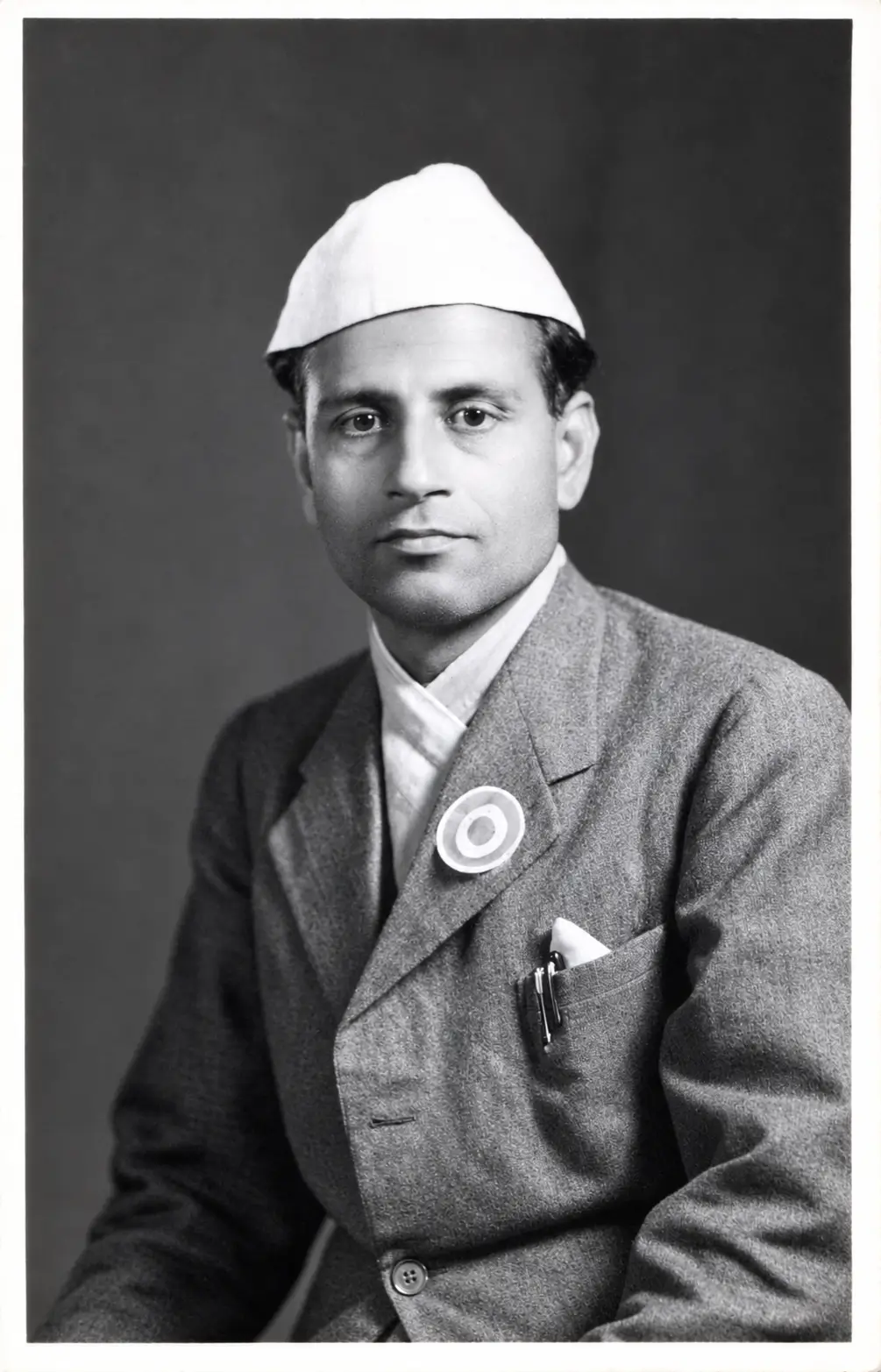
Matrika Prasad Koirala (17 Poush 1968 BS – 26 Bhadra 2054 BS; January 1, 1912 – September 11, 1997) was a Nepali politician, diplomat, and writer. He became Nepal's first prime minister from outside the Rana family following the democratic revolution of 1951. As the founding president of the Nepali Congress, Koirala played a leading role in the movement against Rana rule.
He served as Nepal's prime minister twice, from 1951 to 1952 and again from 1953 to 1955. During his first term, he led the transitional government established after the end of Rana rule. In his second term, he headed the government under the Rastriya Praja Party. Several significant events in Nepal's political history are associated with his premiership, including the country's first formal national budget, the Raksha Dal rebellion, administrative restructuring, and the 1954 Kosi Agreement.
After leaving the prime minister's office, Koirala served as Nepal's ambassador to the United States and permanent representative to the United Nations. Alongside his political career, he was active in Nepali literature from the Sharada period, writing short stories, poetry, essays, and other prose. His notable published works include Koshiko Katha, Matrika Prasad Koiralaka Kavita, and the English-language political memoir A Role in a Revolution.
He was the eldest brother of two former Nepali prime ministers, Bishweshwar Prasad (B. P.) Koirala and Girija Prasad Koirala.
Quick Facts
|
Particulars |
Details |
|---|---|
|
Full name |
Matrika Prasad Koirala |
|
Popular name |
M. P. Koirala |
|
Date of birth |
17 Poush 1968 BS (January 1, 1912) |
|
Date of death |
26 Bhadra 2054 BS (September 11, 1997) |
|
Age at death |
85 years |
|
Nationality |
Nepali |
|
Father |
Krishna Prasad Koirala |
|
Mother |
Mohan Kumari Koirala |
|
Major fields |
Politics, diplomacy, and literature |
|
Education |
Various educational institutions in India and Bihar Vidyapith |
|
First term as prime minister |
November 16, 1951 – August 14, 1952 |
|
Second term as prime minister |
June 1953 – April 1955 |
|
President of Nepali Congress |
Chaitra 2006 BS – Jestha 2009 BS |
|
Other political position |
President of Rastriya Praja Party |
|
Diplomatic positions |
Ambassador to the United States and Permanent Representative to the United Nations (1961–1964) |
|
Notable literary works |
Koshiko Katha, Matrika Prasad Koiralaka Kavita, A Role in a Revolution |
Birth, Family Background and Early Life
Matrika Prasad Koirala was born on 17 Poush 1968 BS (January 1, 1912). He was the son of Krishna Prasad Koirala, a social reformer involved in activities opposing Rana rule, and his first wife, Mohan Kumari Koirala.
Published sources provide conflicting accounts of his birthplace. The biography published by Nai Academy and the Nepali-language author profile published by Publication Nepalaya identify Biratnagar as his birthplace. However, Nepalaya's English-language profile and other accounts identify Varanasi, India. Because these sources are inconsistent, his birthplace cannot be stated with certainty on the basis of the available evidence.
The Koirala family had ancestral ties to the eastern hill region of Nepal. The family later settled in Biratnagar, Morang. Krishna Prasad Koirala was involved in trade, education, and social reform.
Krishna Prasad's second wife, Divya Koirala, was the mother of Bishweshwar Prasad, Harihar Prasad, Keshav Prasad, Tarini Prasad, Girija Prasad, and other children.
Matrika Prasad was therefore the eldest member of a group of brothers from the Koirala family who became influential in Nepal's political history.
Family Conflict With Rana Rule and Exile
Matrika Prasad's childhood was closely associated with his father's opposition to Rana rule and the family's experience of political exile.
Accounts of the Koirala family's history describe an incident in which Krishna Prasad sent a parcel containing worn-out clothes to the then Rana prime minister, Chandra Shumsher, to draw attention to the poverty of ordinary Nepalis.
Various biographies suggest that relations between Krishna Prasad and the Rana administration deteriorated following this incident, and the family subsequently faced political pressure and exile.
The family spent many years in India. During their exile, they lived in Varanasi, Bihar, and surrounding areas. This brought Matrika Prasad into contact with the Indian independence movement and the political activities of the period.
The Indian political atmosphere, Gandhian ideas, and his family's experiences influenced the development of his early political awareness.
Education and Participation in the Indian Independence Movement
Matrika Prasad Koirala received his early and further education in India.
According to biographical accounts, he studied at several institutions before passing the matriculation examination from a school in Darbhanga, Bihar.
He subsequently enrolled at Bihar Vidyapith, a nationalist educational institution established against the background of India's independence movement.
The institution encouraged students to participate in social service and political activities alongside formal education.
During his studies, Koirala participated in the promotion of khadi, teaching, and other community service activities.
Association With the Indian Independence Movement
Matrika Prasad became involved in activities associated with the Indian independence movement while he was still a student.
During his studies in Bihar, he came into contact with Mahatma Gandhi and other leaders of India's independence movement. His biographical accounts also mention his association with Dr. Rajendra Prasad.
The British Indian administration arrested Matrika Prasad and his brother B. P. Koirala in connection with political activities. Both spent some time in prison.
His experiences in India helped familiarize him with political organization and the methods of collective action that would later become relevant to the organized movement against Rana rule in Nepal.
Return to Nepal and Early Public Life
The Koirala family, which had spent many years in India, eventually found an opportunity to return to Nepal following the death of Chandra Shumsher.
After returning, Matrika Prasad worked briefly in government service. Biographical accounts indicate that he held a position up to the rank of Subba in the Rana administration.
His government employment did not continue for long. After leaving the service, he returned to Biratnagar and became involved in business and other public activities.
His interest in literature also developed during this period.
In the final years of Rana rule, activities relating to political organization, education, literature, and social reform were increasing within Nepali society.
His father, Krishna Prasad Koirala, died in prison during Rana rule. This family tragedy further influenced the Koirala family's political struggle against the regime.
Democratic Movement and Leadership of the Nepali Congress
Matrika Prasad Koirala played an active role in the political developments that led to Nepal's democratic revolution of 1951.
During efforts to build an organized movement against Rana rule, he became involved in the Nepali National Congress and subsequently assumed a leadership position in the unified Nepali Congress.
Formation of the Nepali National Congress
The convention of the Nepali National Congress was held in Calcutta, India, on 12–13 Magh 2003 BS.
At the convention, Tanka Prasad Acharya, who was imprisoned by the Rana government, was appointed president, while Bishweshwar Prasad Koirala was given the responsibility of acting president.
The party's principal objective was to organize a popular movement against Rana rule and establish a democratic system of government accountable to the people.
Matrika Prasad Koirala also became active in this political campaign. He took responsibility for organizational expansion and activities opposing the Rana administration.
Biratnagar Labour Movement and Satyagraha
The strike launched by workers at the Biratnagar Jute Mill in 2003 BS was an important event in the development of Nepal's labour and democratic movements.
Leaders including Girija Prasad Koirala, Tarini Prasad Koirala, and Manmohan Adhikari were active in the movement. B. P. Koirala also supported the workers' struggle.
After the Rana administration arrested movement leaders in an attempt to suppress the strike, the Nepali National Congress expanded its political protests.
During this period, Matrika Prasad assumed the party's acting leadership. He also remained active in the Satyagraha campaign of 2004 BS.
Leadership disputes subsequently emerged within the Nepali National Congress. Organizational disagreements between B. P. Koirala and Dilli Raman Regmi created divisions within the party.
Matrika Prasad continued his organizational activities within the political faction associated with B. P. Koirala.
Formation of the Nepali Congress and Its First President
Efforts began to unite the Nepali National Congress and Nepal Democratic Congress to strengthen the movement against Rana rule.
Leaders including Subarna Shumsher Rana and Mahendra Bikram Shah were active in Nepal Democratic Congress.
The two parties merged in Calcutta on 27 Chaitra 2006 BS (April 9, 1950), forming the Nepali Congress.
Matrika Prasad Koirala was selected as the president of the unified party, becoming its founding president.
According to the official records of the Nepali Congress, he served as party president from Chaitra 2006 BS to Jestha 2009 BS.
The party's primary political objective at the time was to end Rana rule and establish democracy in Nepal.
Bairgania Conference and Armed Revolution
In Asoj 2007 BS, the Nepali Congress held a conference in Bairgania, Bihar, India.
The conference decided to launch an armed struggle against Rana rule. Party president Matrika Prasad Koirala was given the responsibility of supreme commander of the movement.
Alongside Matrika Prasad, leaders including B. P. Koirala, Subarna Shumsher, and Ganesh Man Singh were active in the political and organizational leadership of the revolution.
Various Nepali Congress leaders were responsible for organizing the Mukti Sena, providing political direction, and coordinating activities associated with the movement.
Matrika Prasad's principal responsibility during this phase was the overall political leadership of the revolution.
The 1951 Revolution and the End of Rana Rule
In November 1950, Nepal's political crisis deepened after King Tribhuvan sought refuge at the Indian Embassy in Kathmandu.
He subsequently travelled to India. Meanwhile, the Mukti Sena, under the leadership of the Nepali Congress, conducted an armed struggle against Rana rule in different parts of Nepal.
Revolutionary forces established control over areas including Birgunj.
As the political crisis intensified, an understanding concerning a new political arrangement emerged through Indian mediation among King Tribhuvan, the Rana leadership, and the Nepali Congress.
This political process is commonly studied in Nepal's history in connection with the Delhi Agreement.
On 7 Falgun 2007 BS (February 18, 1951), King Tribhuvan announced the beginning of a democratic political system in Nepal.
This political change ended 104 years of hereditary rule by the Rana family.
As president of the Nepali Congress and supreme commander of the armed revolution, Matrika Prasad Koirala was among the principal political figures associated with this historic transformation.
First Term as Prime Minister (2008–2009 BS)
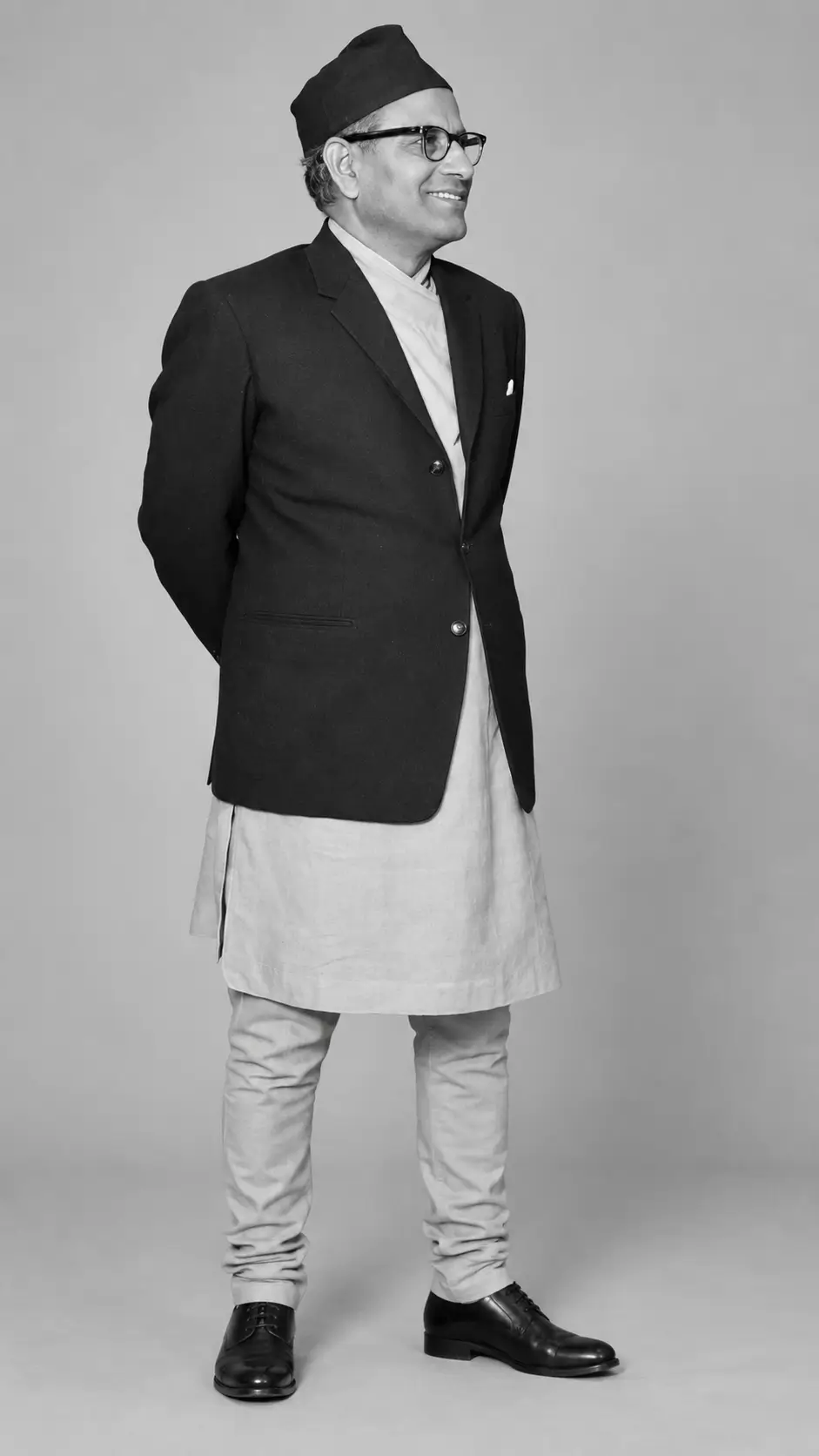
Matrika Prasad Koirala was appointed prime minister of Nepal on 1 Mangsir 2008 BS (November 16, 1951).
His appointment was historically significant because he became the first person outside the Rana family to hold the position of prime minister following the end of Rana rule.
Dissolution of the Rana–Congress Coalition Government
Following the political change of 1951, an interim government was formed under Mohan Shumsher Rana, comprising representatives of the Rana establishment and the Nepali Congress.
B. P. Koirala served as home minister, while Subarna Shumsher was finance minister.
However, disagreements between the Rana leadership and the Nepali Congress intensified over political authority, administrative practices, and government decisions.
The government led by Mohan Shumsher collapsed following the resignation of Congress ministers.
King Tribhuvan subsequently assigned Matrika Prasad Koirala, then president of the Nepali Congress, the responsibility of forming a new government.
A new Council of Ministers was established under his leadership.
Administrative Changes and Governance
Matrika Prasad's first term as prime minister took place during Nepal's transition from Rana rule towards democratic governance.
At the time, the country faced substantial challenges in defining the responsibilities of government ministries, developing the civil administration, organizing the judiciary, and establishing a public financial management system.
The Interim Government of Nepal Act, introduced after the political change of 1951, provided a basis for new administrative and constitutional arrangements.
Matrika Prasad's government operated under this transitional system.
However, political instability, the limited development of administrative institutions, and the influence of the royal palace prevented representative governance from becoming firmly established.
Nepal's First Formal National Budget
Nepal's first formal national budget was presented during Matrika Prasad Koirala's first term as prime minister.
On 21 Magh 2008 BS, the then finance minister, Subarna Shumsher Rana, publicly presented the budget.
The budget proposed total expenditure of NPR 52,529,000 (Rs. 5 crore 25 lakh 29 thousand).
The introduction of a formal national budget marked an important change in Nepal's administrative and financial management practices by establishing a process for publicly presenting government revenue and expenditure.
The direct responsibility for presenting this historic budget belonged to Finance Minister Subarna Shumsher, while its presentation took place under Matrika Prasad Koirala's government.
Raksha Dal Rebellion
In January 1952, Matrika Prasad's first government faced a rebellion involving the Raksha Dal, or Defence Corps.
The Raksha Dal was a security organization developed from personnel associated with the Mukti Sena following the 1951 revolution.
Dissatisfied members of the organization undertook activities against the government in Kathmandu.
The rebellion, associated with Dr. K. I. Singh, presented a significant security challenge to the government.
The government brought the rebellion under control with the assistance of the Nepal Army.
In the political and security situation that followed, the Communist Party of Nepal was banned.
The incident demonstrated the difficulties involved in managing security organizations and defining institutional authority during the period immediately following the revolution.
Nepal–India Security Relations
Security and military cooperation between Nepal and India increased following the Raksha Dal rebellion.
In a letter to King Tribhuvan dated January 27, 1952, Indian Prime Minister Jawaharlal Nehru referred to Nepal's security situation and an advisory visit by Indian military officers.
In the following years, Indian military assistance and the presence of an Indian Military Mission in Nepal became subjects of political debate.
Those who supported such cooperation cited the security challenges facing Nepal at the time.
Critics, however, expressed concern about the possible implications of a foreign military presence for Nepal's ability to make independent decisions.
The issue became one of the historical controversies associated with Matrika Prasad Koirala's premiership.
Disagreements Within the Nepali Congress and Resignation
After Matrika Prasad became prime minister, disagreements intensified between him and the leadership of the Nepali Congress over the respective authority of the party and the government.
The faction led by B. P. Koirala maintained that the government should remain accountable to party policies and decisions.
Matrika Prasad, however, interpreted the prime minister's constitutional responsibilities and the party organization's role in daily government administration differently.
At the fifth general convention of the Nepali Congress, held in Janakpur in Jestha 2009 BS, B. P. Koirala was elected party president.
Disagreements between the party leadership and the prime minister subsequently intensified.
The party directed Matrika Prasad to resign from the government, but he did not immediately comply.
The dispute between the party and the government eventually resulted in Matrika Prasad's departure from the Nepali Congress.
He resigned as prime minister on August 14, 1952.
King Tribhuvan subsequently exercised direct rule with the assistance of advisers.
Rastriya Praja Party and Second Term as Prime Minister
After separating from the Nepali Congress, Matrika Prasad Koirala established his own political organization.
In 1952, he founded the Rastriya Praja Party and assumed its leadership.
The party emerged from the political divisions that had developed within the Nepali Congress.
Appointment as Prime Minister for the Second Time
Following a period of direct rule by King Tribhuvan, Matrika Prasad Koirala was reappointed prime minister in June 1953.
During his second term, the Rastriya Praja Party provided the principal political support for his government.
The government was subsequently expanded in February 1954 to include representatives of other political parties in the Council of Ministers.
However, disagreements among political parties, the role of the royal palace, and disputes concerning constitutional authority continued throughout this period.
The 1954 Kosi Agreement
During Matrika Prasad Koirala's second term, Nepal and India signed an agreement concerning the Kosi Project.
The agreement, signed in Kathmandu on April 25, 1954, was intended to support flood control, irrigation, hydroelectric power generation, and the construction of infrastructure to prevent river erosion.
Mahabir Shumsher Rana signed the agreement on behalf of the Government of Nepal, while Gulzarilal Nanda signed on behalf of the Government of India.
The agreement contained provisions concerning land required for the project, construction activities, water resource utilization, compensation, jurisdiction, and project operations.
However, provisions relating to land and water resources generated political controversy in Nepal.
Critics questioned the benefits Nepal would receive, the use of land, and the country's long-term rights under the agreement.
Supporters of the project, on the other hand, emphasized flood control, irrigation, and infrastructure development as its principal objectives.
The original Kosi Agreement of 1954 was subsequently revised on December 19, 1966.
Consequently, historical and legal assessments of the Kosi Project need to distinguish between the original agreement and its revised version.
Because the original agreement was concluded during Matrika Prasad's government, his name remains associated with its political responsibility.
Constitutional Disputes and Royal Authority
During Matrika Prasad's second term, the process of expanding the monarchy's authority within Nepal's system of governance continued.
On January 10, 1954, King Tribhuvan issued a royal proclamation clarifying that executive, judicial, and legislative authority was vested in the monarchy.
This development intensified disagreements over the relationship between constitutional monarchy and representative government in Nepal.
Although institutions established under the Interim Government Act continued to operate, the royal palace remained a principal centre of political decision-making.
This situation is generally examined in relation to the political instability of the transitional period and the limited development of representative institutions.
End of the Second Term
During Matrika Prasad's second term, his government became increasingly vulnerable because of political disagreements and changing relations with the royal palace.
King Tribhuvan died in March 1955, and Mahendra succeeded him as king.
With the beginning of King Mahendra's reign, the royal palace's direct political role expanded further.
Matrika Prasad Koirala's second term as prime minister ended in April 1955.
Direct royal rule continued in Nepal afterward.
The process of forming a government through parliamentary elections did not proceed until after the general election of 1959.
Diplomatic Career and Later Political Activities
Matrika Prasad Koirala remained involved in politics and public affairs after leaving the prime minister's office.
He later re-established his association with the Nepali Congress.
Following the general election of 2015 BS, he also became involved in the political system as a member of the Mahasabha.
Ambassador to the United States
During King Mahendra's reign, Matrika Prasad Koirala was appointed Nepal's ambassador to the United States.
According to historical diplomatic records maintained by the United States Department of State, he was appointed ambassador on July 13, 1961, and formally assumed his responsibilities on August 3, 1961.
He represented Nepal in the United States until 1964.
During the same period, he also served as Nepal's permanent representative to the United Nations.
His diplomatic assignment took place during the Cold War.
At the time, Nepal was seeking to expand relations with India, China, the United States, and other countries while pursuing a non-aligned foreign policy.
Matrika Prasad's diplomatic career can be understood against this international political background.
Political Role During the Panchayat Period
On 1 Poush 2017 BS, King Mahendra dissolved the elected government led by B. P. Koirala and assumed direct rule.
A partyless Panchayat system subsequently developed in Nepal.
Under these political circumstances, Matrika Prasad adopted a different political approach from B. P. Koirala.
He maintained contact and cooperation with the monarchy while continuing to participate in public affairs.
During the Panchayat period, he was associated with institutions including the Rastriya Panchayat.
His later political role therefore differed from the position he had held during the early democratic movement.
Literary Career and Contributions
Matrika Prasad Koirala was involved in literary writing even before he became active in politics.
He was among the writers associated with the Sharada period of modern Nepali literature.
His literary contributions included short stories, poetry, essays, and other prose.
His writings explored subjects relating to social life, human experiences and emotions, nature, history, and personal experiences.
Short Story Writing
Matrika Prasad wrote stories addressing social life during the period when modern Nepali short-story writing was developing.
His stories portrayed contemporary social problems, human relationships, and individual experiences.
His work as a short-story writer has also been the subject of literary criticism.
One such critical study is Matrika Prasad Koiralaka Katha Ra Unko Kathashilpa (Matrika Prasad Koirala's Stories and His Storytelling Craft) by literary critic Dadhiraj Subedi.
Matrika Prasad's literary contributions should be considered separately from those of his brother, B. P. Koirala.
Although both brothers were active in politics and literature, their writings and forms of literary expression were distinct.
Koshiko Katha
Koshiko Katha is a collection of essays by Matrika Prasad Koirala.
It was first published in 2046 BS by Pratibha Puraskar Pratisthan in Biratnagar.
Publication Nepalaya subsequently republished the book in 2020.
The collection explores the Kosi River, the surrounding geography, social life, culture, history, and the author's personal experiences.
The essays examine not only the river's natural features but also the lives of people associated with it and the historical changes affecting the region.
The book also includes accounts drawn from the author's personal experiences and the Koirala family's period of exile.
Koshiko Katha is therefore both a literary work and a collection of personal reflections that can help readers understand aspects of the society and history of the period.
Poetry
Matrika Prasad Koirala also wrote poetry.
His poems were collected in a volume titled Matrika Prasad Koiralaka Kavita (Poems of Matrika Prasad Koirala).
The collection was edited by Jeevan Chandra Koirala.
His literary activities therefore extended beyond short stories and essays to include poetry.
A Role in a Revolution
A Role in a Revolution is an English-language political memoir by Matrika Prasad Koirala.
It was published posthumously in 2008 by Jagadamba Prakashan, Lalitpur.
The book contains accounts and documents relating to the movement against Rana rule, the formation and leadership of the Nepali Congress, the 1951 revolution, political negotiations, and the administration of government following the revolution.
Alongside the author's personal recollections, the book includes political correspondence and historical records from the period.
It is an important primary source for studying Nepal's democratic movement.
However, because it is a personal memoir, the author's interpretations and assessments of historical events are best examined alongside other historical sources.
Political Controversies and Historical Assessment
Matrika Prasad Koirala's political career included both significant contributions and controversies.
He played an important role in the movement against Rana rule and the early leadership of the Nepali Congress.
However, after becoming prime minister, his disagreements with the party, relations with the royal palace, and decisions concerning security and development cooperation with India attracted criticism.
Split With the Nepali Congress
Political disagreements between Matrika Prasad and B. P. Koirala were an important development in the early history of the Nepali Congress.
The two leaders held different views concerning the division of authority between the party and the government, the accountability of the prime minister, and the responsibilities of political leadership.
The disagreements eventually resulted in Matrika Prasad's departure from the Nepali Congress and the establishment of the Rastriya Praja Party.
The episode demonstrated the challenges of maintaining internal party unity during the development of Nepal's political system following the end of Rana rule.
Criticism Concerning Nepal–India Relations
Decisions involving Indian military assistance and the Kosi Agreement made Nepal–India relations an important subject of political debate during Matrika Prasad's premiership.
Critics questioned whether Nepal's sovereign rights and national interests had been adequately protected.
The government at the time, however, emphasized the importance of security management, development assistance, flood control, and infrastructure construction.
Assessing these decisions requires consideration of the political circumstances of the period, the available alternatives, and the actual provisions of the agreements.
Relations With the Monarchy
Matrika Prasad's relationship with the monarchy was another important aspect of his political career.
After playing a leadership role in the movement against Rana rule, he served twice as prime minister under King Tribhuvan.
During his second term, the expansion of royal authority continued.
Under King Mahendra, he was appointed to diplomatic positions and subsequently remained involved in public affairs during the Panchayat system.
His political career therefore included both leadership in the democratic movement and cooperation with the monarchy.
Social Contributions and Personal Life
Alongside his political and literary activities, Matrika Prasad Koirala was involved in social organizations.
His public life was associated with educational, social, and cultural development in Biratnagar.
At different times, he held leadership responsibilities in activities relating to educational institutions, healthcare, and social organizations.
His name is also associated with the development of educational institutions and public infrastructure in Biratnagar.
His wife was Manju Pokharel.
Among his children, Kamal Koirala was also active in political and public affairs.
Kamal Koirala later served as Nepal's ambassador to South Korea.
Death
Matrika Prasad Koirala died on 26 Bhadra 2054 BS (September 11, 1997), at the age of 85.
The posthumous publication of A Role in a Revolution in 2008 made his personal political experiences and historical records more widely accessible.
His involvement in politics, diplomacy, and literature connects his life with Nepal's political transformation and the development of governance after the end of Rana rule.
Matrika Prasad Koirala's Place in Nepal's History
Matrika Prasad Koirala's contributions are associated with Nepal's political transformation, early democratic governance, diplomacy, and literature.
Politically, his principal contributions were his early leadership of the Nepali Congress and his role in the 1951 revolution against Rana rule.
His appointment as prime minister represented the emergence of new political leadership following the end of Rana rule.
During his first term, he led a transitional government. During his second, he governed amid political instability and the expansion of royal authority.
Several important developments are associated with his premiership, including Nepal's first formal budget, the Raksha Dal rebellion, military cooperation with India, and the Kosi Agreement.
In diplomacy, he represented Nepal as ambassador to the United States and permanent representative to the United Nations.
In literature, he contributed to Nepali prose through Koshiko Katha and other writings.
An assessment of Matrika Prasad Koirala's historical position therefore requires consideration of his contributions to the democratic movement, his decisions as prime minister, his relations with the monarchy, and his literary work.
References and Sources
1. Office of the Prime Minister and Council of Ministers, Government of Nepal — Official List of Former Prime Ministers
2. Nepali Congress — Party History
3. Nepali Congress — Official Leadership Record of Matrika Prasad Koirala
4. Koirala, Matrika Prasad. A Role in a Revolution. Lalitpur: Jagadamba Prakashan, 2008. Library Record
5. Joshi, Bhuwan Lal, and Leo E. Rose. Democratic Innovations in Nepal: A Case Study of Political Acculturation. University of California Press, 1966.
6. Whelpton, John. A History of Nepal. Cambridge University Press, 2005.
7. Malagodi, Mara. Nepal's Constitutional Foundations between Revolution and Cold War (1950–60). Law and History Review, Cambridge University Press, 2022.
8. International Water Law Project — Agreement Between the Government of India and the Government of Nepal on the Kosi Project, April 25, 1954
9. United Nations ESCAP Policy Documents — Revised Agreement on the Kosi Project, December 19, 1966
10. Ministry of Foreign Affairs, Government of Nepal — Annual Report 2016/17. Historical records of former ambassadors and permanent representatives.
11. The Nehru Archive — The Crisis in the Coalition Cabinet, October 28, 1951
12. Publication Nepalaya — Koshiko Katha: Book and Author Information
13. Nai Academy — Biography of Matrika Prasad Koirala
14. CiNii Research — Matrika Prasad Koiralaka Kavita: Bibliographic Record
15. Nepali Times — The Other Brother: A Review of A Role in a Revolution, 2008






Comments 0
No comments yet. Be the first to start the conversation.