



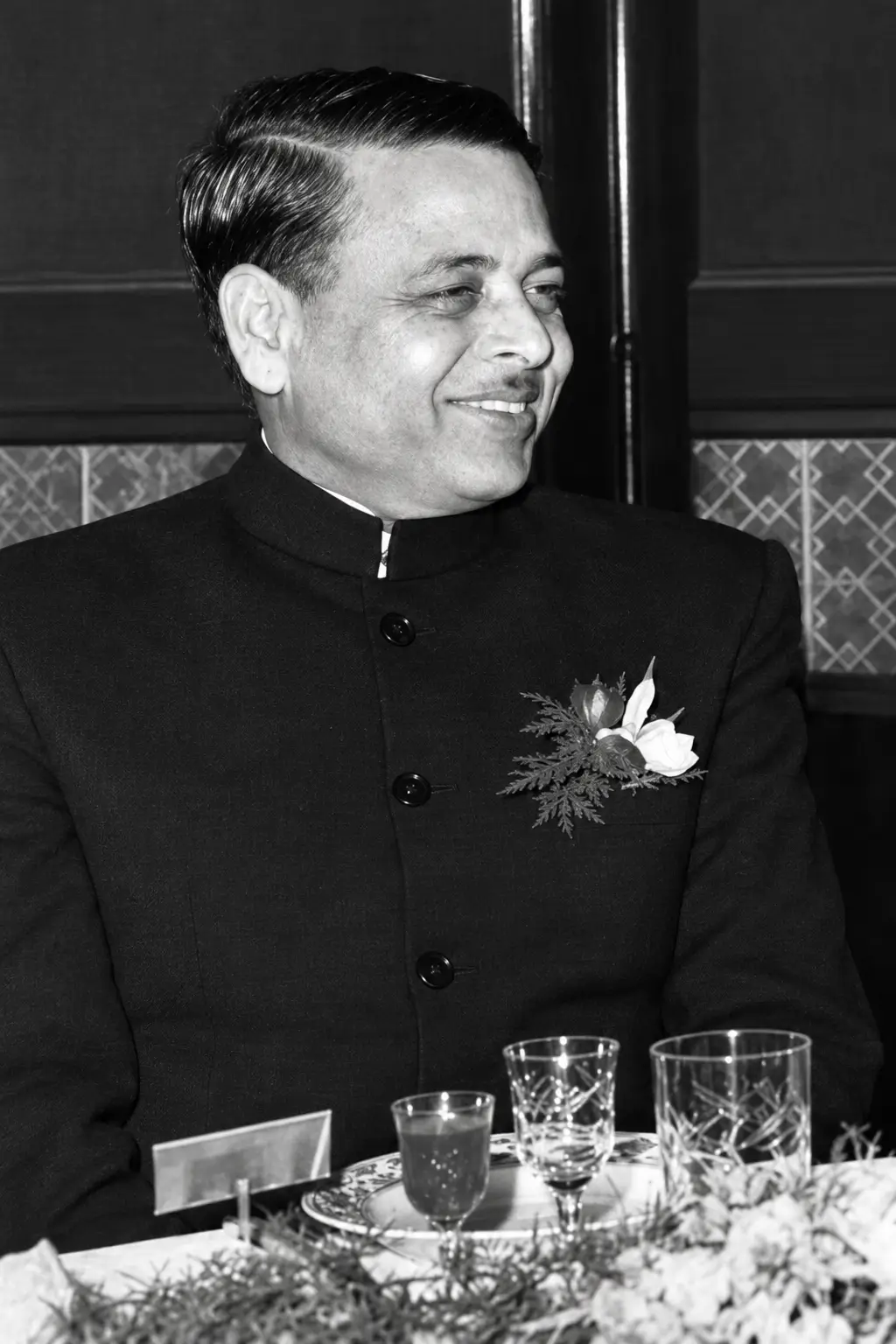
Tanka Prasad Acharya (BS 1969–2049) was a Nepali politician, leader of the anti-Rana movement, founding president of the Nepal Praja Parishad, and former Prime Minister of Nepal. He played an important role in the development of organized political parties and the struggle against the hereditary Rana regime.
Acharya led the Nepal Praja Parishad, established on BS 1993 Jestha 20. He was arrested during the anti-Rana movement of BS 1997. While several of his colleagues were sentenced to death, he received life imprisonment and confiscation of his property. Acharya spent approximately a decade in prison and became known as the "Living Martyr" because of these historical circumstances.
Following the political change of BS 2007, Acharya was released from prison and subsequently served as Home Minister and Prime Minister. King Mahendra appointed him Prime Minister on BS 2012 Magh 13. According to the official records of the Government of Nepal, he was the country's 18th Prime Minister.
During his premiership, Nepal began implementing its First Five-Year Plan, Nepal Rastra Bank was established, the Civil Service Act, 2013 (BS), was introduced, and changes were made to the legal structure governing the Supreme Court. Nepal also expanded diplomatic relations with several countries during this period.
However, his political career was not without controversy. His position in favor of parliamentary elections instead of elections to a Constituent Assembly became a subject of political debate at the time.
Tanka Prasad Acharya: Quick Facts
|
Details |
Information |
|---|---|
|
Full Name |
Tanka Prasad Acharya |
|
Date of Birth |
BS 1969 Mangsir 17 |
|
Place of Birth |
Parasi, present-day Nawalparasi (Bardaghat Susta West), Nepal |
|
Death |
BS 2049 (April 23, 1992) |
|
Father |
Tika Prasad Acharya |
|
Mother |
Tika Devi Acharya |
|
Spouse |
Revanta Kumari Acharya |
|
Nationality |
Nepali |
|
Political Party |
Nepal Praja Parishad |
|
Historical Recognition |
Living Martyr |
|
Major Political Role |
Founding President of Nepal Praja Parishad |
|
Government Positions |
Home Minister and Prime Minister |
|
Appointment as Prime Minister |
BS 2012 Magh 13 (January 27, 1956) |
|
Prime Ministerial Tenure |
BS 2012–2014 (1956–1957) |
|
Order as Prime Minister |
18th, according to the Government of Nepal's official list |
|
Major Institutional Contributions |
First Five-Year Plan, Nepal Rastra Bank, Civil Service Act, 2013 (BS), and legal reforms concerning the Supreme Court |
|
Diplomatic Contributions |
Expansion of Nepal-China relations and establishment of diplomatic relations with other countries |
The birth date of BS 1969 Mangsir 17 is based on information published in Gorkhapatra, while the order and tenure of his premiership are based on official records maintained by the Office of the Prime Minister and Council of Ministers. Some historical sources provide different Gregorian birth dates and different final dates for his premiership. Therefore, these details have not been presented as definitive dates here.
Birth and Family Background
Tanka Prasad Acharya was born on BS 1969 Mangsir 17 in Parasi. His birthplace is now located in the Ramgram area of Nawalparasi (Bardaghat Susta West) district in Lumbini Province.
His father, Tika Prasad Acharya, worked at the revenue office in Parasi under the Rana administration. Acharya was born in Parasi during his father's government service. According to an account published in Gorkhapatra, his birthplace was a building associated with the revenue office of that period.
Acharya spent his childhood under the social and administrative conditions of Rana rule. At the time, political power was concentrated within the Rana family. Activities such as forming political organizations, publicly criticizing the government, and demanding civil rights were strictly controlled.
During the same period, the Indian independence movement against British rule was underway. The ideas associated with India's independence movement and political change also influenced anti-Rana activists in Nepal.
Acharya later became involved with young people who wanted to organize political activities against Rana rule. This political involvement eventually led to the establishment of the Nepal Praja Parishad.
Establishment of the Nepal Praja Parishad
The Nepal Praja Parishad was established in Kathmandu on BS 1993 Jestha 20. It is regarded as Nepal's first organized political party.
Anti-Rana activities had occurred before its establishment. However, the Praja Parishad gave party-based organizational form to efforts involving defined political objectives, membership expansion, organizational development, and opposition to the ruling regime.
Founding Members of the Nepal Praja Parishad
The five principal founders of the Nepal Praja Parishad were:
-
Tanka Prasad Acharya
-
Dasharath Chand
-
Dharma Bhakta Mathema
-
Ram Hari Sharma
-
Jeeva Raj Sharma
The organization was formed at a secret meeting in the Ombahal area of Kathmandu. Tanka Prasad Acharya became its founding president.
Young activists, including Ganesh Man Singh and Gangalal Shrestha, later joined the organization.
The Praja Parishad's primary objective was to end hereditary Rana rule and establish civil rights and democratic governance.
Because forming political parties and opposing the Rana rulers were dangerous activities at the time, the organization conducted its meetings, membership expansion, and publicity campaigns secretly.
Tanka Prasad Acharya's Role in the Anti-Rana Movement
Tanka Prasad Acharya led the Praja Parishad in organizing political campaigns, conducting publicity activities, and coordinating members in opposition to Rana rule.
The activities of the Praja Parishad aimed to inform citizens about the existing political system, the absence of political rights, and the need for democratic change.
Political Campaigning Through Newspapers Published in India
During the Rana period, opportunities to publish independent political news and material criticizing the government within Nepal were limited.
Under these circumstances, Praja Parishad activists used newspapers published in India. Historical accounts indicate that anti-Rana views were publicized through Janata, a magazine published in Patna.
Members such as Dasharath Chand were actively involved in political writing and publicity, while Tanka Prasad Acharya played a coordinating role in organizational activities and campaigns.
The Leaflet Campaign of BS 1997
In BS 1997, the Nepal Praja Parishad distributed anti-Rana leaflets at various locations across the Kathmandu Valley.
The leaflets criticized the existing regime and attempted to raise public awareness about civil rights and the need for political change.
Printing equipment was brought from India for this purpose. Historical accounts mention that the preparation and distribution of leaflets were undertaken at the initiative of Tanka Prasad Acharya.
Following several rounds of anti-Rana leaflet distribution beginning in Ashadh BS 1997, the Rana government began searching for and arresting members of the organization.
The leaflet campaign became an important event in Nepal's political history as an organized effort to publicize opposition to Rana rule.
The Praja Parishad Case of BS 1997 and Life Imprisonment
In BS 1997, the Rana government arrested leaders and activists associated with the Praja Parishad and initiated legal proceedings against them.
Those arrested included Tanka Prasad Acharya, Dasharath Chand, Dharma Bhakta Mathema, Gangalal Shrestha, Ram Hari Sharma, and Jeeva Raj Sharma.
A special court was established at Singha Durbar to hear the cases.
In Magh BS 1997, Shukraraj Shastri, Dharma Bhakta Mathema, Dasharath Chand, and Gangalal Shrestha were executed. These four individuals are remembered as the four martyrs in Nepal's democratic history.
Shukraraj Shastri was not a founding member of the Praja Parishad. He was active in advocating civil rights and was also executed because of his activities against the prevailing regime.
Why Is Tanka Prasad Acharya Called the Living Martyr?
Tanka Prasad Acharya is known as the "Living Martyr" because he escaped execution but received life imprisonment and confiscation of his property for his involvement in the anti-Rana movement.
Under the legal and socio-religious norms and arrangements prevailing at the time, there was a belief and provision against imposing the death penalty on members of the Brahmin community. Consequently, Acharya and Ram Hari Sharma received life imprisonment instead of execution.
Acharya also faced punishments involving caste-based humiliation and confiscation of property.
The historical title "Living Martyr" became associated with him because his colleagues lost their lives while he survived in prison.
This designation reflects his political struggle and the repression experienced under Rana rule.
Nearly Ten Years in Prison
Tanka Prasad Acharya spent approximately ten years in prison, from BS 1997 to BS 2007.
He was imprisoned at Bhadragol Prison in Kathmandu, where he endured difficult conditions.
During his imprisonment, Acharya continued attempting to maintain contact with political figures outside the prison. Historical accounts describe the exchange of letters and political messages through family members and associates.
His wife, Revanta Kumari Acharya, assisted in these activities.
Selection as President of the Nepali National Congress
When the Nepali National Congress was established in BS 2003, Tanka Prasad Acharya, who was still imprisoned, was selected as its president.
He was appointed president following a proposal by Ganesh Man Singh, while B. P. Koirala assumed the responsibility of acting president.
Because Acharya remained in prison, he could not directly manage the party's daily executive activities. Nevertheless, his selection demonstrated his political standing and influence among leaders of the anti-Rana movement.
Acharya was released from prison following the political change of BS 2007. He subsequently resumed his participation in open political activities.
Political Role After BS 2007
Following the political change of BS 2007, Tanka Prasad Acharya worked to reactivate the Nepal Praja Parishad in open political activities.
With the end of Rana rule, Nepal began the process of establishing a new political system. However, disagreements persisted over the role of the monarchy, the rights of political parties, administrative structures, and elections.
During this period, Acharya expressed his views on national independence, political rights, administrative reform, and economic development.
His political role shifted from underground opposition to Rana rule toward open party politics and government responsibilities.
Responsibilities as Home Minister
On BS 2010 Falgun 7, Tanka Prasad Acharya was appointed Home Minister in the reconstituted cabinet led by Matrika Prasad Koirala.
The government was formed with the participation of various political parties.
As Home Minister, Acharya became directly involved in matters concerning internal administration, law and order, and the operation of government institutions.
Following the end of Rana rule, Nepal's administrative structure had to be operated in accordance with the new political circumstances. Civil service management, law enforcement, and defining the responsibilities of government agencies were among the major administrative challenges of the period.
After serving in this position, Acharya also had the opportunity to lead the government administration as Prime Minister.
Tanka Prasad Acharya's Premiership (BS 2012–2014)
Tanka Prasad Acharya was appointed Prime Minister on BS 2012 Magh 13 (January 27, 1956). King Mahendra formed a cabinet under his leadership.
According to the official list maintained by the Office of the Prime Minister and Council of Ministers, he was Nepal's 18th Prime Minister.
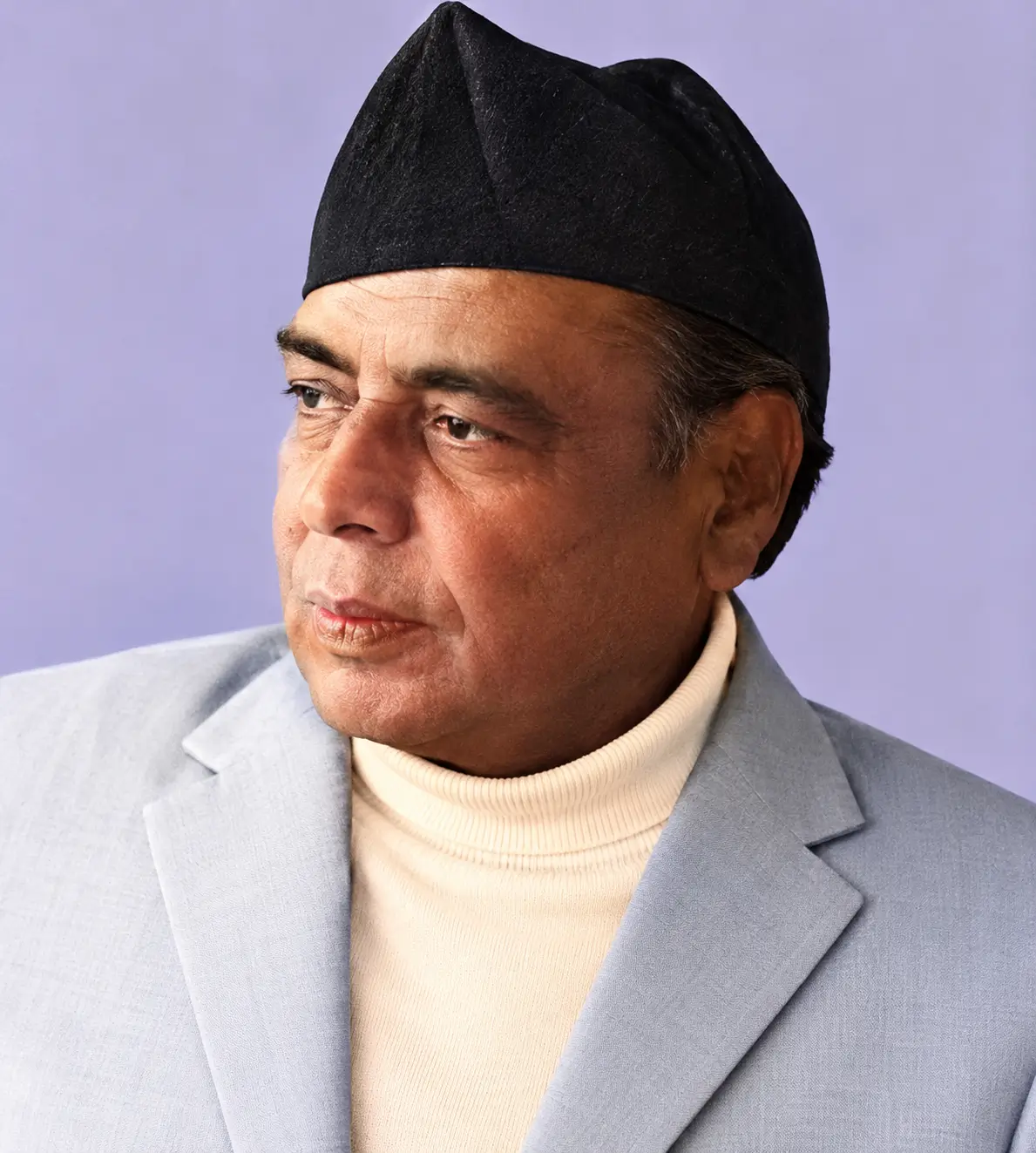
His government remained in office for approximately one and a half years. His tenure as Prime Minister ended in BS 2014, after which Dr. K. I. Singh became Prime Minister.
Acharya's premiership was an important period for Nepal's planned development, establishment of economic institutions, administrative restructuring, and expansion of foreign relations.
Major institutional developments during this period included:
-
Beginning the implementation of Nepal's First Five-Year Plan.
-
Establishing Nepal Rastra Bank.
-
Forming the Administrative Reorganization Planning Commission.
-
Formulating and implementing the Nepal Civil Service Act, 2013 (BS).
-
Introducing changes to the legal structure governing the Supreme Court.
-
Concluding trade and economic cooperation agreements with China.
-
Establishing diplomatic relations with countries including the former Soviet Union and Japan.
These developments should be understood as institutional changes associated with Acharya's period in government. Preparatory work for some initiatives had begun under previous governments, while subsequent governments continued their implementation and expansion.
Beginning of Nepal's First Five-Year Plan
Implementation of Nepal's First Five-Year Plan began during Tanka Prasad Acharya's premiership.
Nepal's first periodic development plan was prepared for BS 2013–2018, corresponding to 1956–1961.
Preparations for planned development had started before Acharya became Prime Minister. King Mahendra had announced plans to introduce periodic development planning in 1955.
During Acharya's tenure, the plan entered its implementation phase.
Priorities of the First Five-Year Plan
The plan established sectoral priorities for Nepal's economic and social development.
Its major areas included transportation, communication, agriculture, rural development, irrigation, education, health, and industrial development.
An expenditure of Rs. 33 crore was proposed for development activities under the First Five-Year Plan.
The plan helped establish an institutional basis for allocating government resources according to sectoral priorities, preparing development programs, and working toward objectives within a specified period.
However, implementation faced limitations involving financial resources, technical personnel, and administrative capacity. Not all proposed programs could be implemented fully.
The significance of the First Five-Year Plan therefore lies not only in its immediate achievements but also in its role in introducing the system of periodic development planning in Nepal.
Establishment of Nepal Rastra Bank
Nepal Rastra Bank was among the major economic institutions established during Tanka Prasad Acharya's premiership.
Nepal Rastra Bank was established on BS 2013 Baisakh 14 (April 26, 1956).
Established under the Nepal Rastra Bank Act, 2012 (BS), it serves as Nepal's central bank. Himalaya Shumsher J. B. Rana was appointed its first Governor.
The principal objectives behind establishing Nepal Rastra Bank included managing currency, developing the banking system, and institutionalizing monetary and foreign exchange functions.
Before its establishment, Nepal's currency and banking arrangements operated within a limited institutional structure. The circulation of Indian currency and management of exchange arrangements were also important economic concerns.
The establishment of Nepal Rastra Bank provided a separate institution responsible for central banking functions.
It helped create the legal and institutional foundation for the subsequent development of Nepal's monetary system and banking sector.
The establishment of Nepal Rastra Bank was a significant long-term institutional change in the economic sector during Acharya's government.
Administrative Reorganization Commission and Civil Service Act, 2013 (BS)
During Tanka Prasad Acharya's premiership, efforts were made to organize Nepal's public administration through legal and institutional reforms.
In BS 2013, the Administrative Reorganization Planning Commission was formed under his chairmanship.
The commission examined measures to improve government administrative structures, personnel management, service delivery, and administrative procedures.
Its recommendations helped lay the foundation for changes in the civil service, organizational structures, planning processes, and administrative management.
Nepal Civil Service Act, 2013 (BS)
During Acharya's government, the Nepal Civil Service Act, 2013 (BS), and related regulations were formulated and implemented.
The Act introduced legal provisions covering matters such as the appointment of civil servants, conditions of service, transfers, promotions, disciplinary action, and removal from service.
This was an important development in the transition from the Pajani system of personnel management under Rana rule toward a rule-based administrative system.
The Act provided a legal basis for protecting the conditions of service of government employees and contributed to the institutional management of public administration.
However, not all recommendations of the commission were implemented immediately. Administrative reform continued under subsequent governments.
Historical records concerning the Public Service Commission and government administration identify the commission of BS 2013 and the civil service legislation as important stages in Nepal's administrative development.
Development of the Supreme Court and Judicial Structure
During Tanka Prasad Acharya's premiership, changes were also introduced to the legal structure governing Nepal's highest judicial institution.
Before the establishment of the Supreme Court, Nepal had a judicial institution known as the Pradhan Nyayalaya. Its institutional history dates back to 1940.
Following the enactment of the Supreme Court Act in 1956, the Pradhan Nyayalaya was transformed into the Supreme Court.
According to the Supreme Court's official historical account, the 1956 legislation gave the institution its Supreme Court designation and legal foundation.
Contemporary records indicate that legal provisions concerning the Supreme Court were introduced on April 26, 1956, and Aniruddha Prasad Singh was appointed Chief Justice.
This change marked an important stage in the institutional development of Nepal's judiciary.
However, Nepal's judicial system did not begin during this period. Judicial institutions, including the Pradhan Nyayalaya, had already existed. Acharya's government's contribution is therefore more appropriately assessed in relation to the legal restructuring of the country's highest judicial institution.
Foreign Policy and Expansion of Diplomatic Relations
Nepal expanded its diplomatic relations with several countries during Tanka Prasad Acharya's premiership.
At the time, India occupied a major position in Nepal's international relations. During King Mahendra's reign, Nepal pursued policies aimed at increasing political, economic, and diplomatic engagement with other countries.
Under Acharya's government, high-level contacts with China increased, while formal diplomatic relations were established with the former Soviet Union, Japan, and other countries.
Nepal-China Relations
Formal diplomatic relations between Nepal and the People's Republic of China were established on August 1, 1955.
These relations had already been established before Tanka Prasad Acharya became Prime Minister.
However, important agreements concerning trade, movement of people, political contact, and economic cooperation were concluded during his tenure.
On September 20, 1956, Nepal and China signed an agreement concerning the maintenance of friendly relations and trade and intercourse between Nepal and China's Tibet region.
The agreement was signed by Nepal's then Foreign Minister Chuda Prasad Sharma and Chinese Ambassador Pan Chuli.
The agreement recognized the principles of Panchsheel as a basis for bilateral relations. It also contained provisions replacing earlier treaty arrangements governing relations between the two countries.
The 1956 Visit to China and Economic Assistance Agreement
Prime Minister Tanka Prasad Acharya made an official visit to China in 1956.
During the visit, he held discussions with Chinese Premier Zhou Enlai and other leaders on bilateral relations, economic cooperation, and development.
On October 7, 1956, Nepal and China concluded an economic assistance agreement in Beijing.
Under the agreement, China was to provide Nepal with grants worth six crore Indian rupees over three years.
One-third of the assistance was to be provided in foreign exchange, while the remaining two-thirds would consist of machinery, equipment, and other materials needed by Nepal.
The agreement created a basis for Nepal to obtain additional international economic assistance for development activities.
The 1956 agreement was among the important early documents in Nepal-China economic relations.
Diplomatic Relations With Other Countries
Nepal established formal diplomatic relations with several countries during Acharya's government.
According to the official records of the Ministry of Foreign Affairs, the diplomatic relations established during this period included:
|
Country |
Date of Establishment of Diplomatic Relations |
|---|---|
|
Former Soviet Union |
July 20, 1956 |
|
Japan |
September 1, 1956 |
|
Switzerland |
November 10, 1956 |
|
Sri Lanka |
July 1, 1957 |
|
Egypt |
July 16, 1957 |
These dates are based on the Ministry of Foreign Affairs' current list of bilateral relations.
The diplomatic activities undertaken during this period provided Nepal with opportunities to expand relations with countries following different political and economic systems.
Acharya's government is considered important in the diversification of Nepal's foreign relations.
Controversy Over the Constituent Assembly and Parliamentary Elections
Questions concerning a Constituent Assembly and parliamentary elections became major political controversies during Tanka Prasad Acharya's premiership.
Following the political change of BS 2007, a commitment had been made to prepare a constitution through elected representatives.
However, during King Mahendra's reign, disagreements emerged among political parties over who should hold the authority to draft the constitution and what type of election should be conducted.
In June 1956, Prime Minister Acharya expressed support for holding parliamentary elections under a constitution issued by the King rather than electing a Constituent Assembly.
This position differed from the demands of political parties that supported drafting the constitution through a Constituent Assembly.
Political forces, including the Nepali Congress, demanded that the constitution be drafted by elected representatives.
Acharya and King Mahendra, on the other hand, supported parliamentary elections under a constitution promulgated by the King.
This disagreement reflected the broader struggle between monarchical authority and elected representation in Nepal's constitutional development at the time.
Ultimately, elections to a Constituent Assembly were not held. Parliamentary general elections were conducted after the Constitution of the Kingdom of Nepal was promulgated in BS 2015.
An assessment of Acharya's political career must therefore consider both his role in the democratic struggle against Rana rule and his position regarding the Constituent Assembly.
Departure From the Office of Prime Minister
Tanka Prasad Acharya's government came to an end in BS 2014.
At the time, disagreements persisted over the nature of elections, constitution-making, the monarchy's role, and the rights of political parties.
Political difficulties in running the government and disputes concerning elections affected his premiership.
Following Acharya's government, King Mahendra formed another cabinet under the leadership of Dr. K. I. Singh.
Acharya remained active in Nepal Praja Parishad politics after leaving the office of Prime Minister.
Nepal's First Parliamentary General Election of BS 2015
The Nepal Praja Parishad participated in Nepal's first parliamentary general election, held in BS 2015.
By the time of the election, the Praja Parishad had split into two factions. One was led by Tanka Prasad Acharya, while the other was led by Bhadrakali Mishra.
The election was held to fill 109 seats in the House of Representatives.
The Nepali Congress secured a majority by winning 74 seats, while the Nepal Rastrabadi Gorkha Parishad won 19 seats.
The Acharya faction of the Nepal Praja Parishad won two seats, while the Mishra faction secured one seat.
These results showed that the Praja Parishad, despite its historical role in the anti-Rana movement, obtained limited representation in Nepal's first parliamentary election.
The political recognition it had gained during the movement did not translate into an equivalent level of electoral support.
The division within the Praja Parishad and the political competition of that period are important considerations when examining its electoral performance.
Tanka Prasad Acharya During the Panchayat Period
On BS 2017 Poush 1, King Mahendra dismissed the elected government led by B. P. Koirala and dissolved Parliament.
A partyless Panchayat system was subsequently introduced in Nepal.
With political party activities prohibited under the Panchayat system, the open political activities of the Nepal Praja Parishad and other parties were affected.
Tanka Prasad Acharya expressed disagreement with the Panchayat system.
According to published historical accounts of his political life, he distinguished between a limited period of direct royal rule and a long-term partyless political system.
He did not accept the partyless Panchayat system as an alternative to democracy.
Role in the People's Movement of BS 2046
In the later years of his life, Tanka Prasad Acharya supported cooperation among political parties and the restoration of democratic rights.
During the BS 2040s, his residence became a place for discussions concerning political rights, human rights, and the release of political prisoners.
In BS 2044, leaders from the Nepali Congress and various left-wing political groups attended a program organized at his residence on the occasion of Human Rights Day.
The program contributed to increased contact and cooperation among political forces opposed to the Panchayat system.
Later, the People's Movement of BS 2046 led to the restoration of multiparty democracy in Nepal.
During his lifetime, Acharya witnessed the end of Rana rule, the establishment of a multiparty system, the Panchayat period, and the restoration of multiparty democracy.
Personal Life and Contributions of Revanta Kumari Acharya
Tanka Prasad Acharya received significant support from his wife, Revanta Kumari Acharya, throughout his political life.
Following Acharya's arrest in BS 1997, his family faced difficult circumstances due to property confiscation and political repression.
Revanta Kumari managed family responsibilities while also helping political prisoners maintain contact with individuals outside prison.
Historical accounts indicate that she helped deliver letters from Tanka Prasad Acharya and other prisoners to political leaders and associates in India.
According to a family recollection by economist Meena Acharya published in Kantipur, Revanta Kumari traveled to different locations in Nepal and India to exchange political messages.
Revanta Kumari's Social Role
In addition to her political activities, Revanta Kumari Acharya was interested in women's rights and social reform.
Her involvement was particularly significant in opposing child marriage and addressing issues concerning women's social conditions.
Economist and researcher Meena Acharya is the daughter of Tanka Prasad and Revanta Kumari Acharya.
Meena's recollections about her parents provide insights into how the anti-Rana political struggle affected family members.
An examination of Tanka Prasad Acharya's biography should also consider Revanta Kumari's contributions. Her experiences help explain both the supportive and independent roles played by family members in the political movements of that period.
Death and Historical Remembrance
Tanka Prasad Acharya died on April 23, 1992.
He lived through a period of major political change, from the emergence of organized anti-Rana political activities to the restoration of multiparty democracy in Nepal.
Following his death, his contributions to the democratic movement and Nepal's institutional development have continued to be remembered and studied.
The Tanka Prasad Acharya Memorial Foundation was established in his name. The organization has worked to preserve, study, and publish historical materials concerning his life.
Efforts have also been made to preserve his birthplace in Parasi as a historical heritage site.
According to a report published in Gorkhapatra, a proposal was made to develop the house where he was born into a museum. However, challenges concerning the implementation of the proposal and preservation of the property have also been reported.
Historical Contributions and Assessment of Tanka Prasad Acharya
Tanka Prasad Acharya's contributions are primarily associated with political organization, the anti-Rana struggle, administrative reform, and the expansion of Nepal's international relations.
1. Institutional Development of Political Parties
The establishment and leadership of the Nepal Praja Parishad were among Acharya's principal political contributions.
Forming an organized political party in BS 1993 was a challenging undertaking under the Rana regime.
The Praja Parishad helped establish the practice of pursuing demands for political change through an organized political party.
2. Struggle Against Rana Rule
The leaflet campaign of BS 1997 and Acharya's subsequent imprisonment were major events in his political career.
He played a leadership role in the campaign against Rana rule. Because he received life imprisonment and confiscation of his property, he became known as the "Living Martyr."
3. Development of Economic and Administrative Institutions
Implementation of Nepal's First Five-Year Plan began during Acharya's premiership.
The establishment of Nepal Rastra Bank and the introduction of the Civil Service Act, 2013 (BS), were also important institutional changes during this period.
Similarly, the restructuring of the legal framework governing the Supreme Court contributed to the development of the judicial institution.
4. Expansion of Foreign Relations
During Acharya's premiership, Nepal established diplomatic relations with countries including the former Soviet Union and Japan.
Agreements concerning trade, movement of people, and economic cooperation were also concluded with China.
These activities advanced the process of expanding Nepal's international relations.
5. Constitutional Position and Political Controversies
Some aspects of Acharya's political career were controversial.
One was his position in favor of parliamentary elections under a constitution issued by the King rather than elections to a Constituent Assembly.
His party also achieved limited success in the general election of BS 2015.
Therefore, an assessment of his contributions must consider his anti-Rana struggle and institutional achievements alongside his constitutional views, political decisions, and electoral results.
Conclusion
Tanka Prasad Acharya was an important figure in Nepal's anti-Rana movement, the development of organized political parties, and the history of modern public administration.
As the founding president of the Nepal Praja Parishad, he led organized political activities against hereditary Rana rule. He became known as the "Living Martyr" after receiving life imprisonment and confiscation of his property in BS 1997.
During his premiership, implementation of Nepal's First Five-Year Plan began, Nepal Rastra Bank was established, the Civil Service Act, 2013 (BS), was introduced, and changes were made to the legal structure governing the Supreme Court. His government also played a role in expanding foreign relations.
However, controversies concerning the Constituent Assembly and parliamentary elections, along with the later political position of the Praja Parishad, reveal the complexities of his political career.
Acharya's life remains an important subject of study for understanding Nepal's democratic movement, the development of political institutions, relations between monarchy and democracy, and the history of modern public administration.
References
1. Government of Nepal, Office of the Prime Minister and Council of Ministers. Former Prime Ministers of Nepal.
2. Gorkhapatra. Plans to Develop Tanka Prasad Acharya's Birthplace into a Museum.
3. Himal Khabarpatrika. Sushil Raj Pyakurel. Tanka Prasad Acharya: A Key Figure in the Restoration of Democracy. 2021.
4. Kantipur. Saved from Execution Because of Caste. 2021.
5. Government of Nepal, National Planning Commission. First Plan.
6. Nepal Rastra Bank. About Nepal Rastra Bank — Establishment, Legal Basis, and Governors.
7. Government of Nepal, Public Service Commission. Historical Study of Civil Administration.
8. Government of Nepal, Supreme Court. Introduction of the Nepali Judiciary, Supreme Court Booklet, 2080.
9. Government of Nepal, Ministry of Foreign Affairs. Bilateral Relations — Official List of Nepal's Diplomatic Relations.
10. Ministry of Foreign Affairs of the People's Republic of China. Agreement to Maintain the Friendly Relations Between China and Nepal and on Trade and Intercourse Between the Tibet Region of China and Nepal. September 20, 1956.
11. United Nations. Economic Survey of Asia and the Far East, 1956.
12. Law and History Review, Cambridge University Press. Nepal's Constitutional Foundations between Revolution and Cold War (1950–60).
13. Kantipur. The 2015 BS General Election: The People Formed the First Government. 2025.
14. Kantipur. Revanta Kumari, Who Stopped the Marriage of Her Nine-Year-Old Daughter. 2024.






Comments 0
No comments yet. Be the first to start the conversation.