



BSc Medical Laboratory Technology (BSc MLT) at National Medical College, Birgunj is a bachelor-level program affiliated with Tribhuvan University. The course runs for four years and has an approved intake of 6 seats at the college. It is offered within a single-campus medical college environment that includes academic departments, a teaching hospital, a central library, hostels, and student support facilities in Birgunj, Parsa. The program is designed for students seeking academic and practical training in laboratory medicine through a structured course that combines theory, laboratory work, and project-based learning.
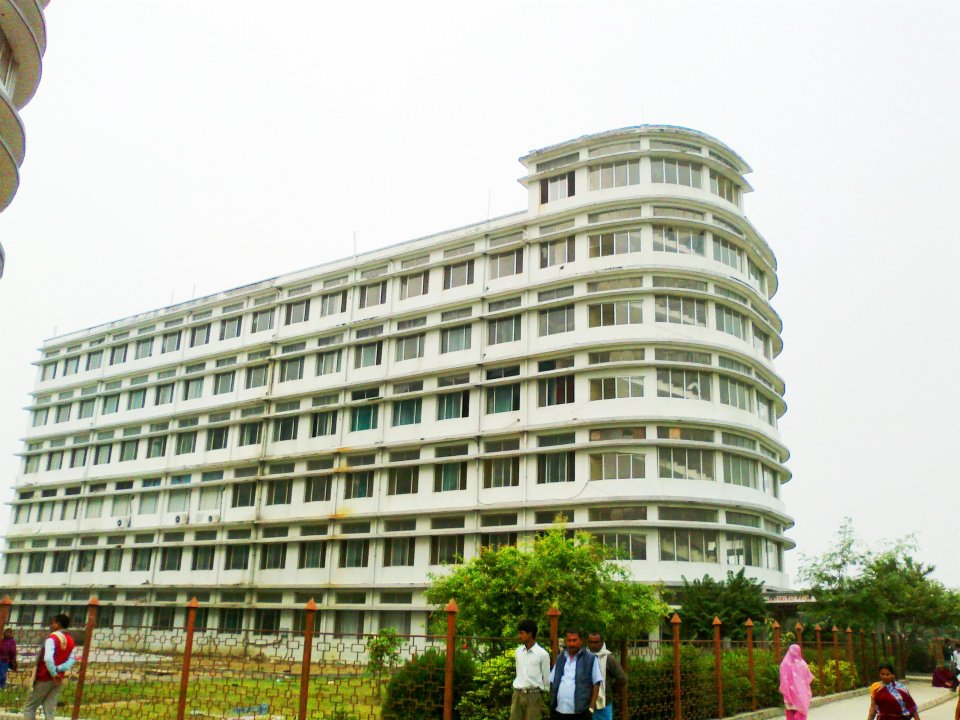
National Medical College was established in 2001 and operates from a unified campus in Birgunj. Its pre-clinical departments, clinical departments, teaching hospital, nursing school, hostels, staff quarters, and library are located within the same campus area. For BSc MLT students, this setting supports a connected learning environment where academic study, practical exposure, laboratory-focused training, and campus facilities remain closely linked.
Course: BSc Medical Laboratory Technology (BSc MLT)
Institution: National Medical College
Location: Birgunj, Parsa, Nepal
Affiliation: Tribhuvan University
Level: Bachelors
Duration: 4 years
Seat Capacity: 6
Entrance Exam: MECEE-BL
Email: info@nmcbir.edu.np
Phone: +977-51-591014, +977-591320
Address: Post Box No. 78, Birgunj, Parsa, Nepal
BSc MLT is a four-year undergraduate program focused on medical laboratory science and diagnostic investigation. The course prepares students for laboratory-based work involving routine and special investigations in areas such as hematology, biochemistry, microbiology, pathology, and histocytopathology. The academic structure combines scientific subjects, laboratory techniques, practical learning, and project work.
At National Medical College, the program is part of a broader health science institution that already offers medical, dental, nursing, and paramedical education. This wider academic setting supports laboratory education within a medical college environment connected to hospital-based services and academic infrastructure.
Duration: 4 years
The BSc MLT program is completed over four academic years. The course moves from foundational laboratory sciences and clinical basic sciences to advanced laboratory subjects, research methodology, health systems, and project work. Students attend both theory and practical classes during the program.
The academic scope of the course includes laboratory investigation, interpretation of results, preparation and use of laboratory materials and reagents, research participation, quality control in laboratory settings, and managerial responsibilities related to laboratory work.
The BSc MLT program is intended to prepare graduates who can work competently in medical laboratory settings. Its academic direction includes the development of skills and knowledge required to:
perform routine and special laboratory investigations on clinical and non-clinical samples
understand and explain the principles behind laboratory investigations
interpret laboratory findings in a professional setting
assist in research and laboratory-based academic work
support teaching and learning activities in the field
contribute to the setup and functioning of higher-level medical laboratory services
apply quality control practices for reliable laboratory results
carry out managerial responsibilities such as supervision, reporting, and inventory-related work
Applicants must meet one of the following academic routes:
Physics, Chemistry, and Biology studied from a recognized educational institution with at least 50 percent marks or 2.4 CGPA or GPA in Proficiency Certificate Level or Grade 12 Science Group
A-Level or another similar qualification with Physics, Chemistry, and Biology, with at least 50 percent marks or 2.4 CGPA or GPA, along with an equivalence letter
Proficiency Certificate Level or Diploma in Medical Lab Technology with at least 50 percent aggregate marks and registration with the Nepal Health Professional Council
Proficiency Certificate or Diploma in Health Science in Medical Lab Technology, Ophthalmic Science, Dental Science, Pharmacy, Radiography, Ayurveda, or Physiotherapy with at least 50 percent aggregate marks, along with Physics, Chemistry, and Biology from the National Examination Board with at least 50 percent aggregate marks or 2.4 CGPA or GPA, equivalence to Grade 12 Science Group, and registration with the concerned council
Entrance Exam: MECEE-BL
Admission to the BSc MLT program follows the integrated admission process under MECEE-BL. Candidates must obtain at least the required 50 percentile to pass the entrance process. The examination awards one mark for each correct answer and deducts 0.25 marks for each incorrect answer.
Candidates selected for admission are required to submit original documents and photocopies at the time of admission. These include academic certificates, transcripts, character certificates, citizenship or passport copy, entrance admit card, reservation-related documents where applicable, and equivalence documents for students with foreign qualifications.
Foreign candidates applying for vacated seats for foreign students must complete the required online application within the specified timeline and indicate the chosen academic program.
The BSc MLT curriculum under Tribhuvan University is arranged across four academic years and covers major laboratory science areas along with practical and project-based work.
The first year establishes the scientific and laboratory foundation of the program. It includes:
Medical Microbiology
Clinical Biochemistry
Hematology
Pathology
Clinical Anatomy
Clinical Physiology
The second year continues laboratory science training and introduces additional applied subjects. It includes:
Medical Microbiology
Clinical Biochemistry
Hematology
Histocytopathology
Clinical Pharmacology
Forensic Medicine and Medical Jurisprudence
The third year strengthens laboratory specialization and research-related learning. It includes:
Medical Microbiology
Clinical Biochemistry
Hematology
Histocytopathology
Biostatistics
Research Methodology
The final year focuses on advanced laboratory study, health systems, and academic application. It includes:
Medical Microbiology
Clinical Biochemistry
Hematology
Histocytopathology
Health Policy and Health System
Project Work
Students in the BSc MLT program must pass all subjects within the course duration plus four additional years from the start of the academic session. If a student does not complete the program within that time limit, admission is canceled after the expiry of the permitted period.
Scholarship provisions for BSc MLT are governed by the National Medical Education Act, 2018 and the National Medical Education Regulations, 2020.
National Medical College provides a single-campus setting of about 40 acres where major academic and support facilities are located together. For BSc MLT students, this campus arrangement supports access to academic departments, hospital-linked learning, library resources, and residential facilities in one institutional space.
The central library is one of the major academic resources of the college. It is housed in a separate double-storied building and has seating capacity for 250 readers. The collection includes textbooks, reference books, print and electronic journals, WHO publications, research reports, theses, Nepalese health literature, Ministry of Health publications, and other academic materials. HINARI journal access, photocopy support, and audiovisual learning facilities are also available.
Hostel accommodation is available separately for boys and girls. Internet access is available through Fiber Optic LAN and WiFi in hostels and residential quarters. The campus also includes canteens, sports facilities, an auditorium, a gymnasium, an aerobic exercise hall, and banking support with ATM service.
The BSc MLT program prepares graduates for laboratory-based responsibilities in healthcare and related settings. The course supports the development of skills relevant to work in hospital laboratories, research laboratories, blood banks, and other laboratory environments where diagnostic testing and technical laboratory procedures are central.
The program also supports competence in conducting and supervising laboratory investigations, maintaining quality standards, assisting research activity, and handling professional responsibilities within clinical laboratory services.
National Medical College
Post Box No. 78, Birgunj, Parsa, Nepal
Email: info@nmcbir.edu.np
Phone: +977-51-591014, +977-591320
The BSc Medical Laboratory Technology program runs for four years.
The program is affiliated with Tribhuvan University.
The approved seat capacity for BSc MLT at the college is 6.
Admission follows the MECEE-BL entrance examination framework.
The course focuses on medical laboratory science, including routine and special investigations in microbiology, biochemistry, hematology, pathology, and histocytopathology.
Yes. The program includes practical learning throughout the course and project work in the final year.
Students must pass all subjects within the course duration plus four additional years from the start of the academic session.
Students have access to the teaching hospital, academic departments, central library, hostels, internet services, canteens, sports facilities, auditorium, and banking support within one campus.






