The BSc Nursing program at National Medical College, Birgunj is a bachelor-level nursing course affiliated with Tribhuvan University. The program runs for four years and is offered within the college’s integrated academic and clinical environment in Birgunj, Parsa. At this institution, nursing education is supported by the wider medical college setting, including the teaching hospital, nursing school, library, hostels, and campus facilities. The program is intended to prepare graduate nurses with the academic foundation, clinical competence, and professional attitude required for patient care, nursing education, middle-level management, and research-oriented practice in hospital and community settings.
National Medical College was established in 2001 and operates on a single campus in Birgunj. Its pre-clinical and clinical departments, teaching hospital, nursing school, hostels, staff quarters, and library are located within the same campus area. For nursing students, this structure supports a connected learning environment where classroom study, practical training, academic support, and residential facilities remain closely linked. The college is affiliated with Tribhuvan University and recognized by the Nepal Nursing Council, which is central to the nursing education framework of the institution.
Course: BSc Nursing
Institution: National Medical College
Location: Birgunj, Parsa, Nepal
Affiliation: Tribhuvan University
Level: Bachelors
Duration: 4 years
Seat Capacity: 40
Entrance Exam: MECEE-BL
License Exam: National Licensure Examination for Nurses (NLEN)
Regulatory Recognition: Nepal Nursing Council
Email: info@nmcbir.edu.np
Phone: +977-51-591014, +977-591320
Address: Post Box No. 78, Birgunj, Parsa, Nepal
BSc Nursing is a four-year academic program designed to develop competent graduate nurses for clinical, community, educational, and supervisory roles. The course combines nursing theory, practical learning, health science foundations, and field-based exposure in a structured undergraduate format. The academic goal of the program is to prepare nurses who can function as care providers, teachers, managers, and researchers in different nursing settings.
At National Medical College, the course is delivered within an institution that already supports medical, dental, nursing, and paramedical education. This broader academic setting gives BSc Nursing students access to a medical campus environment with hospital-based exposure, library services, hostel accommodation, and student support facilities. The nursing program is part of the institution’s larger health science framework and fits within its focus on education, clinical service, and professional development.
Duration: 4 years
The BSc Nursing course is completed over four academic years. The curriculum is arranged progressively, beginning with integrated health sciences and the fundamentals of nursing, then moving into adult nursing, geriatric nursing, psychiatric nursing, midwifery, child health, reproductive health, management, education, research, and practicum components.
This structure allows students to build nursing knowledge step by step. Early years establish scientific and foundational nursing understanding, while later years expand into specialty areas, applied nursing practice, teaching, management, and research-related learning.
The program aims to prepare academically sound nursing graduates who can work effectively in different professional roles. The learning direction of the course includes:
providing patient care in hospital and community settings
developing nursing knowledge, practical skills, and professional attitude
preparing graduates for teaching and supervisory responsibilities
supporting middle-level management functions in nursing services
strengthening the ability to engage in research-related work in nursing
The overall academic orientation of the course is professional and practice-focused, while also giving students a foundation in educational and management responsibilities.
Entrance Exam: MECEE-BL
Admission to the BSc Nursing program follows the integrated entrance process under MECEE-BL. To qualify through the admission process, candidates must secure at least the required 50 percentile. The entrance system awards one mark for each correct answer and deducts 0.25 marks for each wrong answer.
Candidates selected for admission are required to submit the necessary original documents along with photocopies at the time of enrollment. These include academic certificates, transcripts, character certificates, entrance admit card, citizenship or passport copy, reservation-related documents where applicable, and equivalence documents for students with foreign qualifications.
Foreign applicants seeking admission in vacated seats for foreign students must complete the required online application within the specified period.
Eligibility:
Applicants must meet one of the following academic routes:
10+2 Science or equivalent with Physics, Chemistry, and Biology, with at least 50 percent aggregate marks or CGPA 2.4
A-Level or another equivalent qualification with a grading system considered equivalent to the above academic requirement
Health Science Proficiency Certificate Level or Diploma in General Medicine, Medical Lab Technology, Ophthalmic Science, Dental Science, Pharmacy, Ayurveda, Radiography, or Physiotherapy, with Physics, Chemistry, and Biology included, along with equivalence to Grade 12 Science from the National Examination Board
For diploma-based applicants, at least 50 percent aggregate marks are required in both the diploma qualification and the equivalence examination. Registration in the relevant council is also required according to the educational background.
The BSc Nursing curriculum under Tribhuvan University is organized across four academic years.
The first year introduces students to the scientific and foundational components of nursing education. It includes integrated health sciences, fundamentals of nursing, community health nursing, and nutrition with diet therapy. The year combines theory and practical learning so that students begin building both academic and applied nursing competence.
Subjects in the first year include:
Integrated Health Sciences I
Integrated Health Sciences II
Integrated Health Sciences Practical
Fundamentals of Nursing Theory
Fundamentals of Nursing Practical
Community Health Nursing Theory
Community Health Nursing Practical
Nutrition and Diet Therapy Theory
The second year develops competence in adult care, geriatric care, psychiatric nursing, and nursing concepts. It also introduces social and behavioural science in relation to healthcare practice. Theory and practical training continue together, allowing students to connect classroom learning with nursing application.
Subjects in the second year include:
Adult Nursing I Theory
Adult Nursing II Theory
Geriatric Nursing Theory
Adult and Geriatric Nursing Practical
Psychiatric Nursing Theory
Psychiatric Nursing Practical
Nursing Concepts Theory
Social and Behavioural Science Theory
The third year focuses on midwifery, child health, and family and reproductive health nursing. This phase strengthens maternal and child health understanding while also developing practice-based learning in reproductive and family health settings.
Subjects in the third year include:
Midwifery I Theory
Midwifery I Practical
Midwifery II Theory
Midwifery II Practical
Child Health Nursing Theory
Child Health Nursing Practical
Family and Reproductive Health Nursing Theory
Family and Reproductive Health Nursing Practical
The final year places greater emphasis on management, educational science, research, and practicum work. This stage supports the development of leadership, educational responsibility, and research orientation in nursing.
Subjects in the fourth year include:
Management and Health Economics
Management Practicum
Educational Science
Education Practicum
Research and Biostatistics
Research Practicum
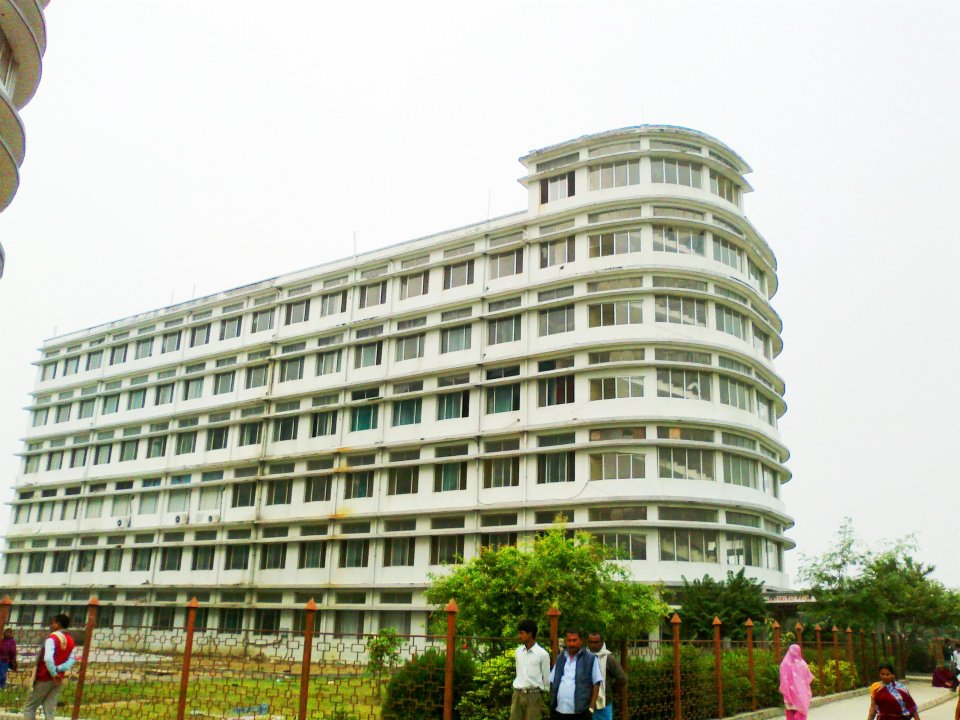
National Medical College provides a single-campus setting of about 40 acres where major academic and support facilities are located together. For BSc Nursing students, this environment brings practical value because the nursing school, teaching hospital, library, hostels, and academic departments are part of the same campus structure.
The central library is one of the major academic resources of the college. It is housed in a separate double-storied building and can accommodate 250 readers at a time. The library includes textbooks, reference books, journals, WHO publications, research reports, theses, Nepalese health literature, Ministry of Health publications, and other academic materials. Access to HINARI online journals is also available, along with photocopy and audiovisual learning support.
Hostel accommodation is available separately for boys and girls. Hostel and staff residential areas have internet access through Fiber Optic LAN and WiFi. The campus also includes canteens, an auditorium, sports facilities, a gymnasium, an aerobic exercise hall, transportation support for local staff, and banking services including ATM access. For nursing students, these facilities contribute to a stable academic and residential environment.
The BSc Nursing program has an academic time limit for completion.
Exit Barrier:
Students must pass all subjects within the course duration plus four additional years from the start of the academic session. If this requirement is not met within the permitted period, admission is canceled after the expiry of that time limit.
This provision sets the maximum period within which students are expected to complete the program successfully.
Scholarships:
Scholarship provisions for BSc Nursing are governed by the National Medical Education Act, 2018 and the National Medical Education Regulations, 2020. The undergraduate scholarship distribution framework includes both open competition and reserved categories.
According to the stated scholarship structure, 55 percent of the scholarship seats are distributed through open competition and 45 percent are allocated within reservation categories. The reservation distribution includes female, Khas Arya, Aadibasi Janajati, Madhesi, Dalit, Tharu, backward communities, Muslim, disabled candidates, and families of martyrs, disappeared persons, injured warriors, and conflict victims.
After completing the BSc Nursing program, graduates proceed toward the National Licensure Examination for Nurses (NLEN) under the Nepal Nursing Council. This licensing route is part of the professional pathway for nursing graduates after academic completion.
The program is designed to prepare nurses who can function in hospital and community settings with the required knowledge, skills, and professional attitude expected at the graduate level. Its curriculum supports clinical nursing, community-based service, education-related roles, supervisory responsibilities, and research-oriented development.
The BSc Nursing program at National Medical College benefits from being located in an established medical college environment rather than in a standalone academic setting. The presence of a teaching hospital, nursing school, academic departments, library, and student facilities within one campus helps create continuity between theoretical study and practical nursing education.
The Birgunj location also places the college within a major urban and commercial center near the Indo-Nepal border. This broader regional setting supports accessibility and connects the institution to a diverse social environment. Within the campus itself, the college maintains an academic structure focused on health science education, clinical service, and professional training.
National Medical College
Post Box No. 78, Birgunj, Parsa, Nepal
Email: info@nmcbir.edu.np
Phone: +977-51-591014, +977-591320
The BSc Nursing program runs for four years.
The program is affiliated with Tribhuvan University.
The approved seat capacity for BSc Nursing is 40.
Admission follows the MECEE-BL entrance examination framework.
Graduates proceed to the National Licensure Examination for Nurses (NLEN) under the Nepal Nursing Council.
Applicants need a qualifying science background with Physics, Chemistry, and Biology and at least 50 percent marks or CGPA 2.4, or an equivalent qualification under the stated eligibility routes.
Yes. The curriculum includes practical and practicum components across nursing, community health, adult and geriatric care, psychiatric nursing, midwifery, management, education, and research.
Students have access to the teaching hospital, nursing school, central library, hostels, internet facilities, canteens, sports spaces, auditorium, and banking support within the campus.