



The MD Anaesthesiology program at National Medical College, Birgunj is a master’s-level postgraduate medical course affiliated with Tribhuvan University. The program runs for 3 years and has an approved intake of 4 seats at the college. It is offered within a single-campus medical college setting in Birgunj, Parsa, where academic departments, a teaching hospital, a central library, hostels, and student support services are part of one institutional environment.
National Medical College was established in 2001 and is affiliated with Tribhuvan University. The college is recognized by the Nepal Medical Council, Nepal Nursing Council, and Nepal Professional Health Council. For postgraduate medical students, the campus supports academic study in a broader health science environment connected to hospital services, library resources, and residential facilities. Within this setting, MD Anaesthesiology is positioned as an advanced program for doctors seeking specialist training in anaesthesia, perioperative care, pain management, and critical care.
Course: MD Anaesthesiology
Institution: National Medical College
Location: Birgunj, Parsa, Nepal
Affiliation: Tribhuvan University
Level: Masters
Duration: 3 years
Seat Capacity: 4
Entrance Exam: MECEE-PG
Regulatory Recognition: Nepal Medical Council
Email: info@nmcbir.edu.np
Phone: +977-51-591014, +977-591320
Address: Post Box No. 78, Birgunj, Parsa, Nepal
MD Anaesthesiology is a postgraduate medical program intended for doctors who want advanced specialist training in anaesthesia and related areas of patient care. The course covers patient assessment, life support, pain relief for surgery and childbirth, management of critically ill patients, and care related to painful conditions. It is designed for candidates aiming to work in specialist anaesthesia services, academic settings, critical care, and pain management.
At National Medical College, the program is offered within a broader health science institution that already supports undergraduate and postgraduate education in medicine, dentistry, nursing, and allied health sciences. This wider academic setting supports specialist medical study through access to academic departments, hospital-based learning, library resources, and campus facilities.
Duration: 3 years
The MD Anaesthesiology program is a three-year postgraduate course under Tribhuvan University. It is structured to support specialist development in anaesthesia through academic study, clinical training, practical assessment, and thesis-related work. The course combines theoretical understanding with progressive clinical responsibility across the training years.
The course is centered on specialist preparation in anaesthesia and related patient care areas. Its academic and professional scope includes:
preoperative patient assessment
anaesthesia care for surgical and obstetric procedures
life support and resuscitation
management of critically ill patients
pain assessment and pain management
teaching and academic contribution in the specialty
research and scholarly development in anaesthesiology
The program is intended for doctors who want to contribute to anaesthesia services as well as education, research, and professional development within the field.
The course is designed to prepare graduates who can function in higher specialist roles in anaesthesiology. The broader direction of the program supports the development of doctors who can:
practice as specialist anaesthesiologists
participate in teaching and professional education
organize and implement service and educational programs
conduct and supervise research activities
communicate effectively with teachers, colleagues, patients, and families
continue professional learning through self-directed study and continuing medical education
The training is intended to help candidates develop the ability to:
assess and prepare patients for anaesthesia
provide pain relief and patient management during surgical, obstetric, therapeutic, and diagnostic procedures
monitor and maintain homeostasis in critically ill or seriously injured patients
manage and teach cardiopulmonary and cerebral resuscitation
manage painful syndromes
supervise, teach, and evaluate medical and other health personnel involved in anaesthesia, respiratory care, and critical care
undertake clinical and basic science research related to patient care
develop initiative, sound judgment, and leadership in anaesthesia
Applicants must meet the following requirements:
MBBS or an equivalent qualification recognized by the Government of Nepal
Registration with the Nepal Medical Council
Registration with the respective medical council of the applicant’s own country in the case of foreign candidates
One year of experience, except where excluded under the stated rules
At least 50 percent marks in the entrance examination conducted by the Medical Education Commission for eligibility to be placed on the merit list
Entrance Exam: MECEE-PG
Admission to the MD Anaesthesiology program follows the common entrance system under MECEE-PG. Nepalese and foreign applicants are required to appear in the common entrance examination. Merit lists for Nepalese and foreign students are published separately, and admission is made on a merit basis in open house counseling where applicable.
Candidates must secure at least 50 percent marks in the entrance examination to qualify for admission consideration.
The entrance examination follows a multiple-choice format with single best response questions. The stated structure includes:
Question Type: Single best response multiple-choice questions
Options: Four options
Number of Questions: 200
Full Marks: 200
Duration: 3 hours
Cognitive Distribution: Recall, understanding, and application in a 30:50:20 ratio
This format covers clinical subjects, basic medical sciences, community medicine, research methodology, forensic medicine, and mandatory professional topics.
The entrance examination includes the following subject areas and marks distribution:
Medicine: 18
Surgery: 18
Obstetrics and Gynecology: 12
Pediatrics: 12
Orthopedics: 10
Otorhinolaryngology: 10
Ophthalmology: 7
Anaesthesiology: 7
Psychiatry: 7
Radiology: 7
Dermatology: 7
Anatomy: 12
Physiology: 12
Pathology: 10
Pharmacology: 10
Biochemistry: 8
Microbiology: 8
Community Medicine and Research Methodology: 10
Forensic Medicine: 5
Questions related to mandatory CPD: 10
The mandatory CPD-related area includes medical ethics, rational use of drugs, infection prevention, BLS or ACLS, and communication skills.
The MD Anaesthesiology curriculum includes theory, practical assessment, and staged clinical development over the three years of training.
The theory component includes three main papers:
Paper I: Applied Basic Sciences
Paper II: Principles and Practice of Anaesthesia
Paper III: Subspecialties and Recent Advances in Anaesthesia
The practical and viva structure includes:
clinical long, semi-long, and short cases
OSCE with multiple stations
viva examination with internal and external examiners
This structure reflects the clinical and applied nature of the specialty and supports assessment across knowledge, decision-making, and practical performance.
The first year focuses on foundational clinical preparation in anaesthesia. This stage includes:
anaesthesia management for lower-risk patients
demonstration of CPR
thesis planning and thesis protocol submission
development of communication skills
interpretation of radiological findings, ECG, and common laboratory investigations
The second year expands training into more complex clinical situations. This stage includes:
anaesthesia management for higher-risk patients
regional anaesthesia and intravenous anaesthesia
anaesthesia for specialized surgery such as obstetric and paediatric cases
posting in the medical department
teaching junior trainees
completion of thesis work
participation in departmental academic activities
The final year focuses on advanced specialist exposure and wider professional responsibility. This stage includes:
anaesthesia for super-specialized surgery such as cardiac and neurosurgery
management of patients requiring long-term ventilation
elective exposure in selected clinical or basic science areas
pain management
thesis defense
organizational responsibilities
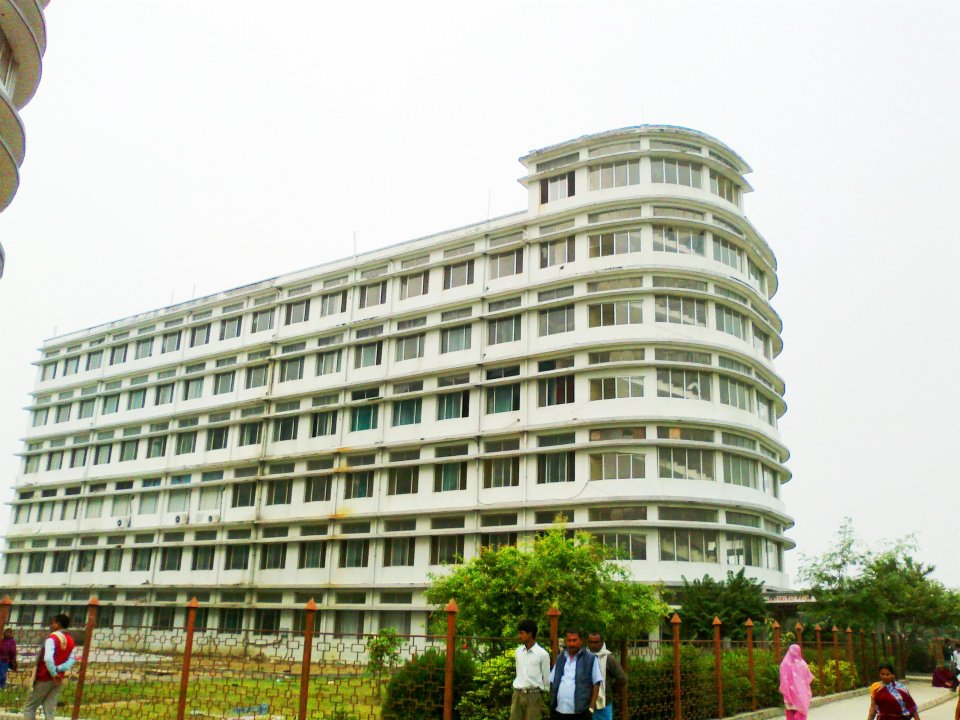
National Medical College provides a single-campus setting of about 40 acres where major academic and support facilities are located together. The campus includes pre-clinical departments, clinical departments, a teaching hospital, a nursing school, hostels, staff quarters, and a central library.
For MD Anaesthesiology students, this environment supports academic work within a broader health science institution. The central library is housed in a separate double-storied building and has seating capacity for 250 readers. Its collection includes textbooks, reference books, print and electronic journals, WHO publications, research reports, theses, Nepalese health literature, Ministry of Health publications, and related academic materials. HINARI journal access is also available, along with photocopy and audiovisual learning support.
Hostel accommodation is available within the campus setting. Internet access is available through Fiber Optic LAN and WiFi in hostels and residential quarters. The campus also includes canteens, sports facilities, an auditorium, a gymnasium, an aerobic exercise hall, and banking services including ATM support.
The MD Anaesthesiology program at National Medical College benefits from being located within an established medical college environment. The presence of academic departments, a teaching hospital, library resources, and student facilities within one campus supports the academic context of postgraduate medical education.
The location in Birgunj places the college within a major urban and commercial center near the Indo-Nepal border. Within the institution, the academic setting is organized around health science education, clinical service, and professional training. This supports a learning environment relevant to specialist anaesthesia training and broader medical practice.
National Medical College
Post Box No. 78, Birgunj, Parsa, Nepal
Email: info@nmcbir.edu.np
Phone: +977-51-591014, +977-591320
FAQ:
The MD Anaesthesiology program runs for 3 years.
The program is affiliated with Tribhuvan University.
The approved seat capacity for MD Anaesthesiology at the college is 4.
Admission follows the MECEE-PG entrance examination framework.
Applicants need MBBS or an equivalent qualification recognized by the Government of Nepal, registration with the Nepal Medical Council, and the required entrance score. Foreign candidates must also be registered with the respective medical council of their own country.
The program focuses on patient assessment, anaesthesia care, life support, critical care, pain management, resuscitation, teaching, and research-related development in the specialty.
Yes. The training includes thesis planning, thesis work, and thesis defense during the course period.
Students have access to academic departments, the teaching hospital environment, the central library, hostels, internet services, canteens, sports facilities, auditorium, and banking support within one campus.






