National Medical College is a medical institution in Birgunj, Parsa, Nepal, established in 2001. It is promoted by National Medical College Company Pvt. Ltd. under the chairmanship of Prof. Dr. Jainuddin Ansari. The college is affiliated with Tribhuvan University and holds recognition and accreditation from the Nepal Medical Council, Nepal Nursing Council, and Nepal Professional Health Council. Located in Birgunj near the Indo-Nepal border, the institution brings its teaching hospital, academic departments, nursing school, hostels, staff quarters, and library together within a single campus. Its academic structure covers medical, dental, nursing, and paramedical education, along with postgraduate study in several disciplines.
Established: 2001
College Name: National Medical College
Location: Birgunj, Parsa, Nepal
Promoted By: National Medical College Company Pvt. Ltd.
Chairmanship: Prof. Dr. Jainuddin Ansari
Affiliation: Tribhuvan University
Recognition / Accreditation: Nepal Medical Council, Nepal Nursing Council, Nepal Professional Health Council
Campus Setting: Single-campus medical college and teaching hospital complex
Main Academic Areas: Medical, dental, nursing, and paramedical education
Entrance Framework: MECEE-BL for undergraduate programs and MECEE-PG for postgraduate programs under Medical Education Commission rules
Contact Email: info@nmcbir.edu.np
Phone: +977-51-591014, +977-591320
Address: Post Box No. 78, Birgunj, Parsa, Nepal
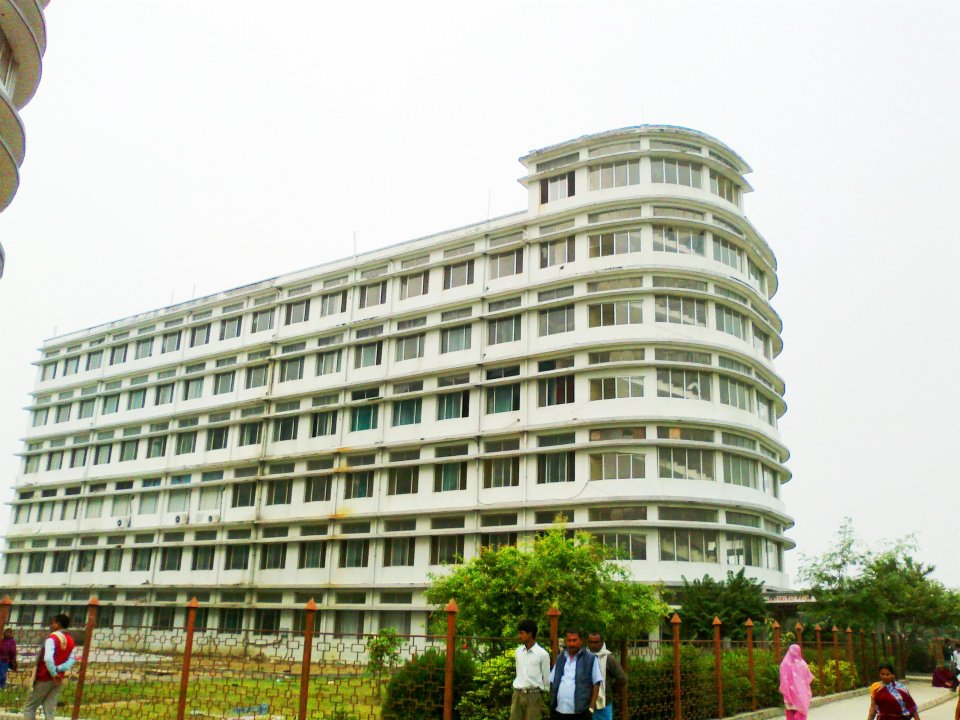
National Medical College was established with a health science focus that combines academic instruction, clinical training, scientific study, and health service delivery. Its institutional setup connects pre-clinical departments, clinical departments, a teaching hospital, a nursing school, residential facilities, and academic support services within one campus. This arrangement supports daily academic and hospital functions in one location.
The college presents itself as an institution for medical education with a stated aim of preparing competent medical doctors and para-medical personnel. Its broader institutional direction includes scientific research and quality health services for patients. Human resource development in health science is central to this framework, alongside the academic preparation of students in medicine, nursing, and related disciplines.
Affiliation with Tribhuvan University places National Medical College within one of Nepal’s established university systems for health science education. The academic structure also follows the curriculum, syllabus, and teaching methodology of the affiliated university, identified as TU IOM in the available material. Undergraduate and postgraduate admissions, fees, scholarships, and quota arrangements are linked to the rules and regulations of the Medical Education Commission, Nepal.
National Medical College began in 2001 in Birgunj, Parsa district. The institution is promoted by National Medical College Company Pvt. Ltd. The chairmanship of the institution is held by Prof. Dr. Jainuddin Ansari, whose role is directly associated with the college’s promotion and leadership framework.
From its founding context, the college has been organized as a health science institution with a focus on both education and service. Its stated objectives bring together medical education, research, and patient care. The institutional mission also reflects an emphasis on producing technically capable graduates while developing professional attitudes such as compassion, benevolence, and sympathy toward patients.
The college situates its academic identity within standards associated with medical education and regulatory expectations. Its mission narrative refers to international standards for medical education and to norms associated with professional medical councils. In practical terms, its present academic profile is most clearly defined by its affiliation with Tribhuvan University and its recognition and accreditation from relevant professional councils in Nepal.
National Medical College is affiliated with Tribhuvan University. This affiliation applies across its academic offerings and forms the basis for the curriculum and teaching structure referenced in the available material. The college also identifies TU IOM as the framework for curriculum, syllabus, and teaching methodology.
Its professional recognition and accreditation are linked to three named regulatory bodies:
Nepal Medical Council
Nepal Nursing Council
Nepal Professional Health Council
These institutional links are important to understanding how the college operates within Nepal’s medical and health science education system. The available information also notes that undergraduate entrance examinations follow MECEE-BL and postgraduate entrance examinations follow MECEE-PG. Fees, admission procedures, scholarships, and quota rules are governed by the Medical Education Commission, Nepal, and are to be followed by both candidates and educational institutions.
National Medical College is situated in Birgunj, described as a south-eastern sub-metropolitan city and a commercial center of Nepal along the Indo-Nepal border. The college is located about 3 kilometers from Raxaul, the nearby Indian border town in Bihar. This cross-border position shapes accessibility for students, staff, and visitors arriving from different parts of Nepal and neighboring regions.
The location also connects the college to road and railway links through Raxaul and to road connections with cities and towns across Nepal. The available material notes that Birgunj is about a 15-minute flight from Kathmandu. This geographic setting gives the college a distinct border-city context within Nepal’s medical education landscape.
Birgunj is described as a multicultural and multilingual city. Languages identified in the city include Nepali, Bhojpuri, Hindi, Urdu, English, Newari, and other local dialects. The social setting includes Hindu, Muslim, Buddhist, and other ethnic communities living together in the city. This wider environment helps explain the diversity of the region in which the college operates.
One of the notable structural features of National Medical College is that its major institutional components are located within a single campus spread over about 40 acres of land. The material identifies the following facilities as part of this unified campus arrangement:
Pre-clinical departments
Clinical departments
Teaching hospital
School of Nursing
Student hostels
Quarters for faculty and staff
Library
This single-campus setup supports the daily integration of teaching, clinical exposure, administration, and residential life. Academic units and support services being placed together can simplify movement between classrooms, hospital settings, and student accommodation.
The campus is located on the outskirts of Birgunj in a peaceful and pollution-free environment. Local transport is available between the campus and market areas and other city utility points. The college’s location therefore combines a relatively self-contained academic setting with regular access to the city. The material also notes the presence of a bank branch and 24-hour ATM service within the campus area, which adds a practical support layer for students, staff, and patients.
National Medical College offers a wide range of programs affiliated with Tribhuvan University. These include undergraduate, postgraduate, dental, nursing, and allied health science programs. The available list identifies the following programs and approved seat capacities:
MBBS – 120 seats
Bachelor of Dental Surgery (BDS) – 25 seats
BSc Nursing – 40 seats
Bachelor of Nursing Science (BNS) – 10 seats
Bachelor in Medical Laboratory Technology (BSc MLT) – 6 seats
BSc Medical Imaging Technology (BSc MIT) – 6 seats
Master of Public Health (MPH) – 3 seats
Master in Nursing – 12 seats
MD Pathology – 6 seats
MD Biochemistry – 4 seats
MD Microbiology – 1 seat
MD in Psychiatry – 3 seats
MD in Obstetrics and Gynaecology – 6 seats
MD Dermatology – 1 seat
MD Clinical Pharmacology – 2 seats
MD Clinical Physiology – 1 seat
MD Forensic Medicine – 1 seat
MD in Radio Diagnosis – 6 seats
MD Paediatrics – 4 seats
MD Internal Medicine – 4 seats
MD General Practice (MDGP) – 4 seats
MD Anaesthesiology – 4 seats
MD in Ophthalmology – 1 seat
DM Cardiology – 1 seat
MS Clinical Anatomy – 1 seat
MS Clinical Otorhinolaryngology and Head and Neck Surgery – 2 seats
MS in Orthopaedic and Trauma Surgery – 6 seats
MS General Surgery – 6 seats
The academic structure is also described through broad program streams:
Medical Program
Dental Program
Paramedical Program
Nursing Program
In faculty terms, the college identifies two major areas:
Basic Science
Clinical Science
Taken together, these academic offerings show that National Medical College operates across a broad segment of health science education, from undergraduate medical study to postgraduate specialization and allied health education.
The available material places admissions within Nepal’s national medical education framework. For undergraduate admission, the entrance examination is MECEE-BL. For postgraduate admission, the entrance examination is MECEE-PG. The same material states that fees, admission procedures, scholarships, and quota arrangements are governed by the rules and regulations of the Medical Education Commission, Nepal.
This means the college’s admission system operates under nationally regulated procedures rather than an independently described internal process in the available source. The academic curriculum, syllabus, and teaching methodology are also stated to follow the affiliated university system under TU IOM. These points help define the administrative and academic route through which students enter and progress within the institution.
National Medical College presents its academic purpose around professional competence, scientific knowledge, and patient-centered values. Its mission emphasizes the preparation of medical doctors and para-medical personnel for the country’s technical workforce and wider health service needs. Alongside academic teaching, the college frames scientific research and service to the sick and needy as part of its institutional direction.
The college’s mission language also highlights the importance of keeping students informed by current research findings and contemporary scientific knowledge in medical and nursing subjects. Another recurring institutional idea is the combination of technical competence with humane conduct in professional practice. The source material repeatedly links medical education with compassion and responsibility toward patients.
These themes help explain the college’s broader educational identity. Rather than functioning only as a place for classroom teaching, it is presented as a medical college connected to hospital-based training, academic study, and service responsibilities within the health sector.
The central library is presented as one of the major academic support services of National Medical College. It is located at the center of the campus and is housed in a separate double-storied structure. The library has seating capacity for 250 readers at a time, with separate reading rooms for faculty members and for postgraduate and undergraduate students.
Its collections include:
Text books and reference books
Print journals and electronic journals
National and international magazines
WHO publications
Research reports and theses
CDs and slides
Nepalese health literature
Ministry of Health publications
INGO and Nepal Health Sector NGO reports and other publications
The library also has access to HINARI online journals through username and password access, allowing users to reach national and international medical journals for study and research purposes. Additional services include photocopying, audiovisual learning sections, and a home issue system through which members can borrow books according to library rules. The library therefore functions as a central academic resource for study, reading, and research.
The college identifies a wide range of facilities and services that support student and institutional life.
National Medical College provides residential accommodation for undergraduate and postgraduate students, faculty members, nursing staff, and other technical staff. Separate hostels are available for boys and girls. Hostel provisions include furniture, food, and recreation arrangements. The material also notes indoor and outdoor games, a gymnasium, and an aerobic exercise hall as part of student fitness and recreation support.
Hostels and staff quarters are equipped with high-speed internet through Fiber Optic LAN as well as WiFi. Students can access internet facilities in their hostel rooms.
The campus has an auditorium with a capacity of about 1000 persons. It is used for cultural programs as well as scientific activities such as seminars, conferences, and workshops.
Separate canteens for boys and girls students are identified in the available material.
Sports infrastructure includes a football ground, cricket ground, basketball court, and badminton court near the hostel and quarters area.
Transportation facilities are available for local staff who stay outside the campus.
A bank and ATM facility are available inside the hospital premises. The broader campus description also refers to a branch of a major banking network with 24-hour ATM service. These services support regular financial transactions for students, staff, and patients.
Birgunj provides an urban setting with access to hotels, restaurants, shopping centers, recreation areas, places of worship, and banking services. The source also identifies the city as Nepal’s second largest city and notes a population of nearly six hundred thousand people. This wider city context matters because it shapes the environment in which students live and study outside formal academic spaces.
The material refers to temples, mosques, gurdwaras, and churches in and around the city, indicating religious diversity in the surrounding area. Banking infrastructure in Birgunj is also described as strong, with branches of major public and private sector banks, including joint venture links with banks from India and other SAARC nations. For students arriving from outside Birgunj, especially across the nearby border region, this financial and transport connectivity is part of the institution’s practical setting.
National Medical College includes a detailed code of conduct within its institutional framework. The rules prohibit political activity linked to students inside or outside the college premises, the hospital, and community satellite centers. Students are also not permitted to form or take part in student parties, unions, or similar organizations in connection with the college environment.
The rules further prohibit teasing, abuse, manhandling, physical assault, strikes, demonstrations, disruption of college or hospital functioning, postering, pamphleting, defacement of notices, damage to institutional property, and inhuman acts such as locking up faculty members, staff, administrators, or any person. Use of alcohol in hostels or anywhere inside the campus is also strictly forbidden. Students are required to follow the college dress code during and outside college hours within the campus.
For disciplinary action, the source identifies suspension from class, fines, and expulsion as possible consequences. The principal may place a student’s name before the Disciplinary Committee for determination of punishment. The Executive Committee’s decision is described as final. These rules show that the college places strong emphasis on institutional discipline and uninterrupted academic functioning.
Contact National Medical College's administrative office for detailed information on the course, admissions, location, fees, scholarships, facilities, counseling, or eligibility.
Email: info@nmcbir.edu.np
Phone: +977-51-591014, +977-591320
Website: http://nmcbir.edu.np
Location: Post Box No. 78, Birgunj, Parsa, Nepal
These details identify the formal communication channels associated with the college.
FAQ:
National Medical College was established in 2001.
The college is located in Birgunj, Parsa, Nepal, near the Indo-Nepal border and about 3 kilometers from Raxaul in Bihar, India.
National Medical College is affiliated with Tribhuvan University.
MECEE-BL applies to undergraduate admission and MECEE-PG applies to postgraduate admission, under Medical Education Commission rules.
The college offers MBBS, BDS, BSc Nursing, BNS, BSc MLT, BSc MIT, MPH, Master in Nursing, and multiple MD, MS, and DM programs.
Yes. The college provides residential accommodation for undergraduate and postgraduate students, with separate hostels for boys and girls.
The campus includes a central library, teaching hospital, academic departments, school of nursing, hostels, auditorium, canteens, sports facilities, internet services, banking support, and staff quarters.
The college identifies Medical, Dental, Paramedical, and Nursing programs, supported by Basic Science and Clinical Science faculties.